Market Overview
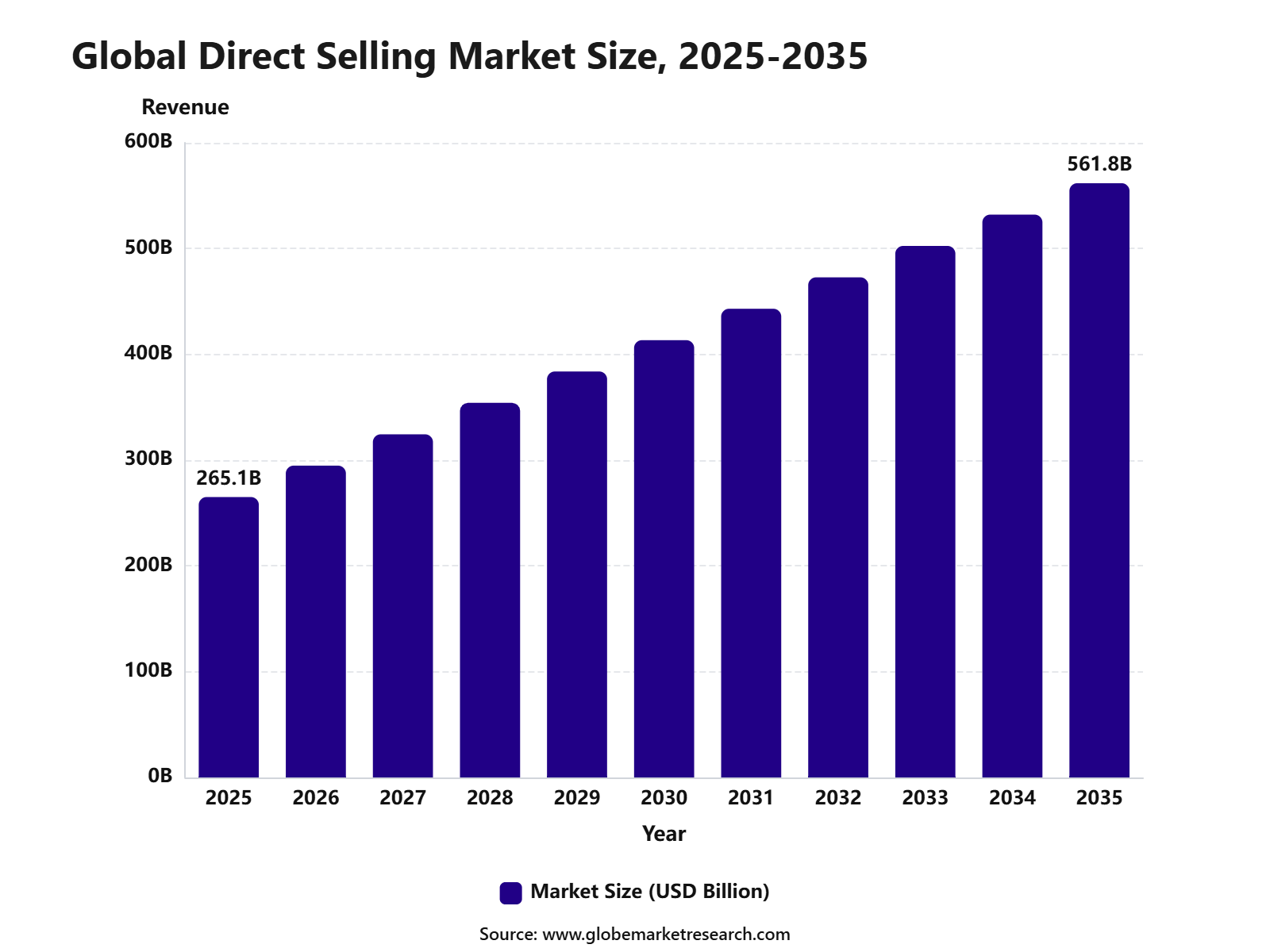
According to a new data-driven study by Globe Market Research, the global Direct Selling Market was valued at USD 265.1 billion in 2025 and is projected to reach USD 561.8 billion by 2035, growing at a CAGR of 7.8% during the forecast period. The growth of the market can be attributed to the rising demand for wellness products, personal care solutions, flexible income opportunities, and relationship-based selling models.
The market is being supported by strong demand for health, nutrition, beauty, household, and lifestyle products. Wellness remained one of the most attractive product categories, supported by higher consumer spending on preventive health and daily self-care. The global wellness economy was estimated at USD 6.8 trillion in 2024, which reflects strong consumer preference for health-focused products and services.
Key Market Segment Highlights
Multi-level marketing remained the leading business model, accounting for 71.5% share of the direct selling market. Growth was supported by strong distributor networks, personal selling methods, and commission-based income opportunities.
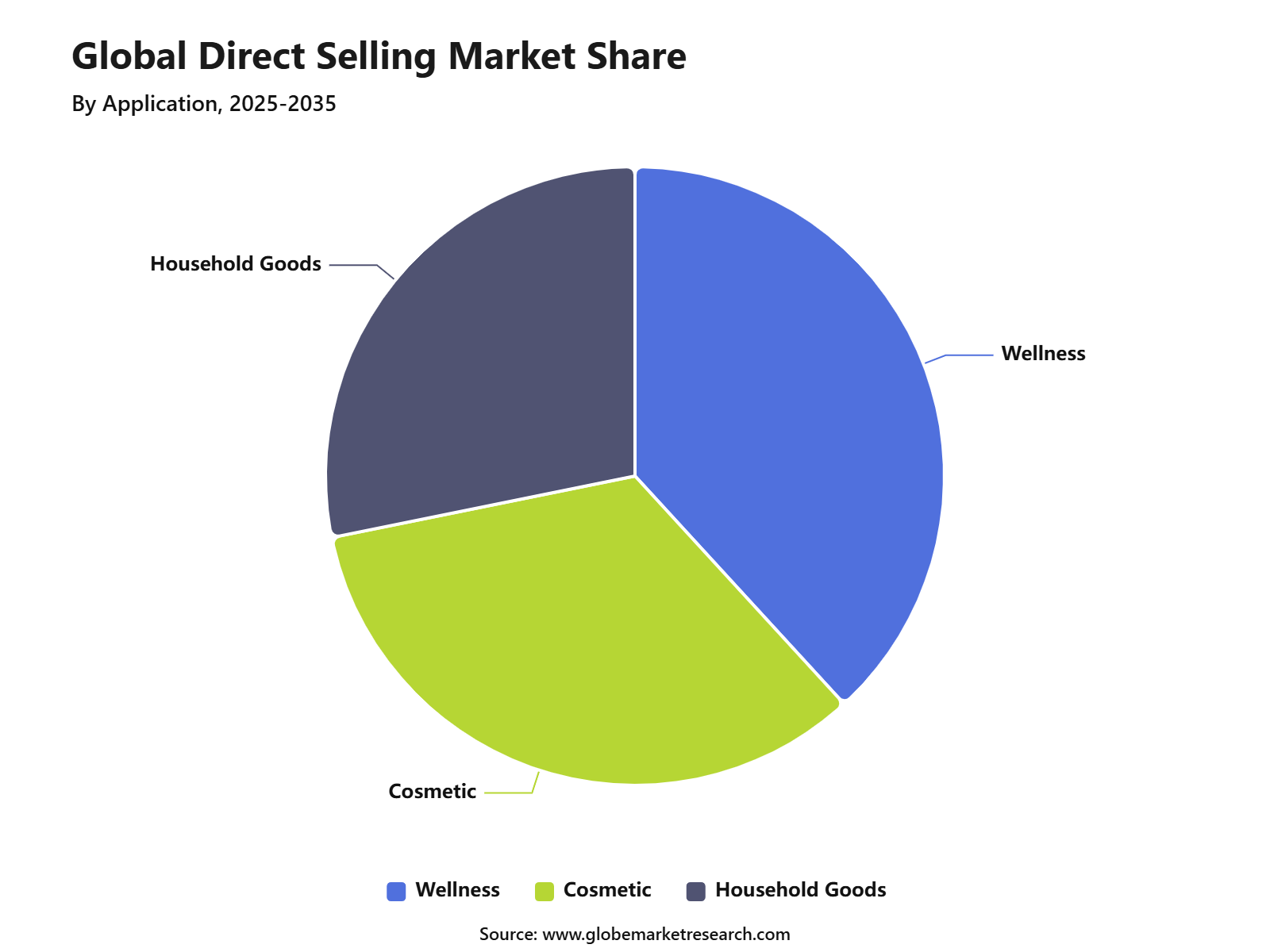
Wellness emerged as the top product category, capturing 35.9% share of the direct selling market. Demand was driven by rising consumer spending on health products, nutrition supplements, personal care, and preventive wellness solutions.
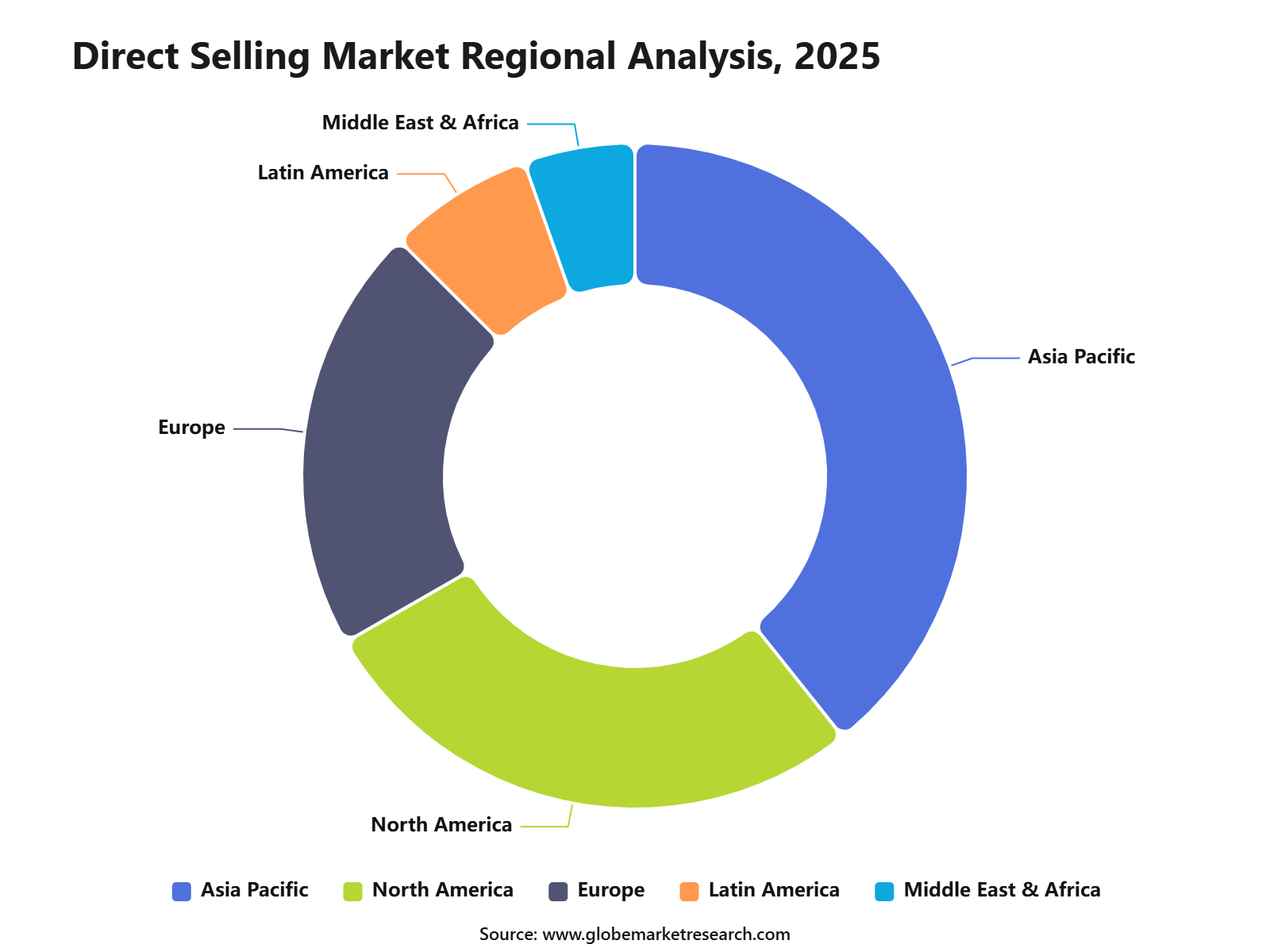
Asia Pacific held the leading regional position, accounting for 39.3% share of the direct selling market. The region benefited from a large consumer base, expanding middle-class income, and strong acceptance of relationship-based selling.
China remained a high-growth country market, with the direct selling market valued at USD 18.5 billion. The market is projected to expand at a CAGR of 23.1%, supported by rising wellness demand, digital sales channels, and a growing consumer base.
The 35 to 44 years and 45 to 54 years age groups were the largest workforce segments, with each group accounting for 24.1% of global direct selling representatives. These age groups continued to show strong participation due to income diversification and established social networks.
Younger adults aged 25 to 34 years represented 16.4% of the global direct selling workforce. Their participation was supported by digital selling tools, social media-based outreach, and interest in flexible earning opportunities.
Market Growth Drivers
The growth of the Direct Selling Market is mainly supported by increasing demand for flexible work and income opportunities. Many individuals are choosing direct selling as a part-time or full-time income source because it offers low entry costs, flexible working hours, and the ability to build customer relationships within local communities. This has strengthened the role of independent representatives in product promotion and customer engagement.
Rising consumer demand for wellness, nutrition, beauty, and personal care products is also supporting market expansion. Consumers are becoming more focused on preventive health, active lifestyles, skincare, and nutritional products. Direct selling companies are benefiting from this trend because many products require explanation, trust-building, and personalized recommendations before purchase.
Digital adoption has become another important growth factor for the market. Independent sellers are using online platforms to manage leads, share product information, host virtual sessions, process orders, and provide after-sales support. This has improved the efficiency of direct selling networks and has allowed companies to reach younger, digitally active customer groups.
Segmental Insights
By Business Model: Multi-Level Marketing
Multi-level marketing remained the leading business model, accounting for 71.5% share of the Direct Selling Market. The segment’s growth was supported by strong distributor networks, personal selling methods, and commission-based income opportunities.
This model continues to gain traction because it allows companies to expand product reach through independent representatives. It is also effective for categories where product education, trust-building, referrals, and repeat customer engagement play an important role.
By Product Category: Wellness
Wellness emerged as the top product category, capturing 35.9% share of the Direct Selling Market. Demand was driven by rising consumer spending on health products, nutrition supplements, personal care, and preventive wellness solutions.
The segment is benefiting from stronger consumer focus on daily health, fitness, immunity, skincare, and active living. Direct selling companies are using personal consultations, product demonstrations, and community-based recommendations to increase wellness product adoption.
Regional Analysis: Asia Pacific
Asia Pacific held the leading regional position, accounting for 39.3% share of the Direct Selling Market. The region benefited from a large consumer base, expanding middle-class income, and strong acceptance of relationship-based selling.
Growth in the region is also supported by rising digital adoption, mobile commerce, and flexible income opportunities. Countries such as China, India, Indonesia, Japan, South Korea, and Australia remain important markets due to strong consumer demand and active distributor participation.
China Direct Selling Market
China remained a high-growth country market, with the Direct Selling Market valued at USD 18.5 billion. The market is projected to expand at a CAGR of 23.1%, supported by rising wellness demand, digital sales channels, and a growing consumer base.
The country’s growth is being supported by health-focused consumption, social commerce, and wider acceptance of personal selling through digital tools. However, companies operating in China need to maintain strong compliance, transparent distributor practices, and product quality standards to build long-term consumer trust.
Competitive Landscape
The Direct Selling Market is competitive, with leading companies focusing on product innovation, wellness portfolios, distributor training, customer engagement, and digital selling tools. Companies are strengthening their business models by improving compliance systems, expanding online platforms, and supporting independent representatives with better product education and sales resources.
Competition is also increasing as consumers demand trusted brands, transparent product claims, and convenient purchase options. Companies that combine personal selling with digital tools are expected to gain stronger market positions. Wellness, nutrition, beauty, and personal care brands are likely to remain highly active due to strong consumer demand and repeat purchase behavior.
Key Players in the Direct Selling Market
Amway
Herbalife
Natura &Co
Nu Skin Enterprises
Oriflame
Mary Kay
Tupperware
Vorwerk
Forever Living Products
PM-International
USANA Health Sciences
Belcorp
Shaklee
Atomy
Young Living
Recent Developments
May 2026 – Vorwerk Group reported record 2025 revenue of EUR 3.6 billion, up 14.1% year over year. Operating result increased 28.2% to EUR 278 million. The company sold more than 1.4 million Thermomix devices in 2025, supported by strong direct sales activity and the launch of Thermomix TM7.
April 2026 – Amway was ranked as the No. 1 direct selling company globally for the 14th consecutive year in the 2026 Direct Selling News Global 100 list. The ranking was based on 2025 revenue, and the list included 59 companies with more than USD 100 million in annual revenue.
February 2026 – Herbalife reported Q4 2025 net sales of USD 1.3 billion, up 6.3% year over year. Full-year 2025 net sales were just over USD 5.0 billion, supported by wellness demand, distributor engagement, and stronger performance across key markets.
February 2026 – Nu Skin Enterprises reported 2025 revenue of USD 1.49 billion and provided a 2026 revenue outlook of USD 1.35 billion to USD 1.50 billion. The company also reported USD 142.3 million remaining under its stock repurchase authorization. This reflects a continued focus on margin recovery and shareholder value.
Future Outlook
The Direct Selling Market is expected to grow steadily through 2035 as consumers continue to value personalized product recommendations, flexible buying options, and trusted seller relationships. Growth is expected to remain strong in wellness, nutrition, beauty, personal care, and household product categories. The market is also likely to benefit from expanding digital selling tools and wider use of social commerce.
Long-term opportunities are expected to remain strong across Asia Pacific, where rising income levels, a large consumer base, and growing entrepreneurial activity continue to support market expansion. Companies that focus on ethical selling, transparent product information, seller training, and digital customer engagement are expected to gain a stronger position in the market.
Report Scope
Report Attribute | Details |
|---|---|
Market Name | Direct Selling Market |
Base Year | 2025 |
Forecast Period | 2026 to 2035 |
Market Size in 2025 | USD 265.1 Billion |
Market Size by 2035 | USD 561.8 Billion |
CAGR | 7.8% |
Leading Region | Asia Pacific |
Asia Pacific Market Share | 39.4% in 2025 |
China Market Size | USD 18.5 Billion in 2025 |
China Market CAGR | 23.1% |
Leading Business Model | Multi-Level Marketing |
Multi-Level Marketing Share | 71.5% |
Leading Product Category | Wellness |
Wellness Share | 35.9% |
Key Product Categories | Wellness, Beauty, Personal Care, Household Goods, Nutrition, Consumer Products |
Key Sales Models | Single-Level Marketing, Multi-Level Marketing |
Key End Users | Individual Consumers, Households, Wellness Buyers, Beauty and Personal Care Consumers |
About GMR
GMR is a global market research and consulting company providing syndicated research, custom market research, competitive analysis, business strategy consulting, and data-driven industry insights. The company supports businesses, investors, and decision-makers with in-depth market intelligence, reliable forecasts, and strategic recommendations across major global industries.
Media Contact
Company: GMR
Email: [email protected]
Website: www.globemarketresearch.com