

Revenue, 2025
$8.9Bn
Forecast, 2035
$17.1Bn
CAGR, 2025-2035
6.8%
Report Coverage
Global
Market Size and Forecast
The Global Black Hair Care Market was valued at USD 8.9 bn in 2025 and is projected to reach USD 17.1 bn by 2035, growing at a CAGR of 6.8% during the forecast period. The growth of the market can be attributed to rising demand for textured hair care products, increasing awareness of scalp health, higher spending on natural and clean-label formulations, and growing preference for products designed specifically for curls, coils, waves, and protective hairstyles. Demand is also being supported by stronger representation of Black beauty consumers across retail, e-commerce, salons, and premium personal care brands.
North America held the leading regional position in 2025, accounting for 40.4% of the global market and generating USD 3.5 billion in revenue. The region leads due to a large consumer base, strong brand availability, wider multicultural beauty aisles, and high use of specialized Black hair care products. The U.S. market was valued at USD 1.4 billion in 2025 and is expected to grow at a CAGR of 4.6%, driven by rising consumer focus on hair identity, product personalization, salon-led recommendations, and continued demand for premium Black hair care solutions.
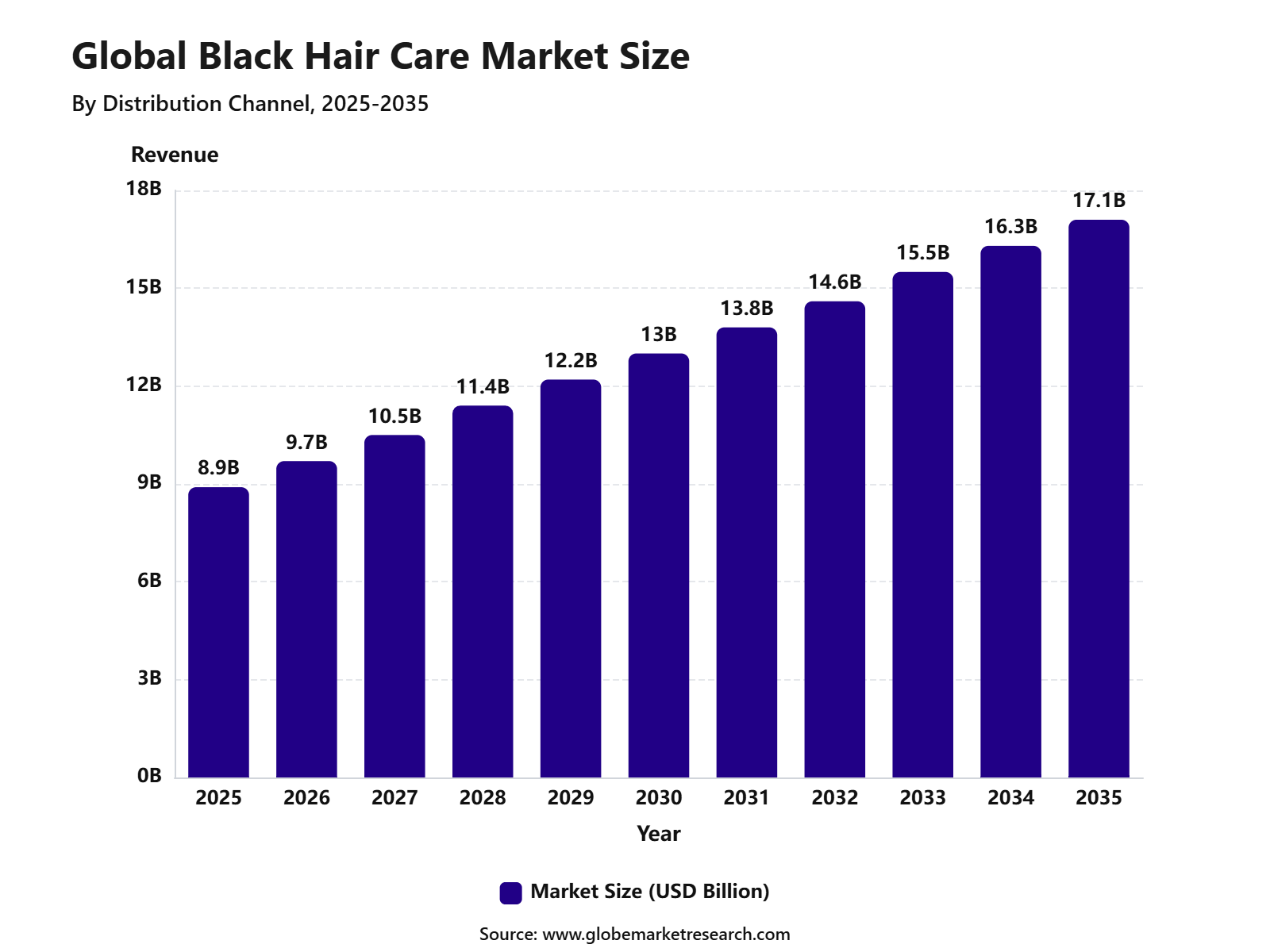 iThe graph shows projected market growth until 2035 based on CAGR analysis. Actual outcomes may vary depending on changing demand, competition, and economic factors.To gain greater insights - request a sample report PDF
Key Market Insights
Shampoo held the leading position by type with around 30.1% share, supported by regular usage, wide product availability, and strong demand for cleansing products designed for textured and curly hair.
Household applications accounted for more than 59.2% share, driven by growing use of specialized black hair care products for daily grooming, scalp care, styling, and moisture protection at home.
Offline channels held around 62.6% share, supported by strong sales through supermarkets, beauty supply stores, pharmacies, salons, and specialty retail outlets.
Women represented 51.2% share of the end-user segment, driven by higher product usage across cleansing, conditioning, styling, protective care, and hair treatment routines.
Moisture retention and dryness care dominated hair concern with 76.6% share, supported by strong demand for hydrating shampoos, leave-in conditioners, oils, masks, curl creams, and scalp care products.
North America held 40.4% share of the black hair care market and was valued at USD 3.5 billion in 2025, supported by a large consumer base, strong retail presence, and high adoption of textured hair care products.
The U.S. black hair care market was valued at USD 1.4 billion and is projected to grow at a CAGR of 4.6%.
Black Hair Care Statistics
Based on data from Silent Spring Institute, more than 70% of Black women reported wearing hair extensions at least once in the previous year, compared with less than 10% of women from other racial and ethnic groups. This highlights the strong role of braids, weaves, wigs, and extensions in Black hair routines.
A 2026 peer-reviewed study tested 43 hair extension products and detected over 900 chemical signatures, identifying 169 chemicals across nine major chemical classes. All but two samples contained hazardous chemicals, and 48 chemicals appeared on major hazard lists.
In 2026 hair extension study found 17 chemicals related to breast cancer across 36 samples. Nearly 10% of samples contained organotin compounds, some at levels above European Union safety limits for consumer products.
A 2026 study of 150 "clean" textured hair products found that 70% listed fragrance or parfum as an ingredient. Only 41% of the products were listed in EWG’s Skin Deep database, and more than 90% of those listed were classified as a moderate risk to human health.
The NIH Sister Study followed 33,497 U.S. women aged 35 to 74 for almost 11 years and recorded 378 uterine cancer cases. Women who used chemical hair straighteners more than four times in the previous year were more than twice as likely to develop uterine cancer as non-users.
NIH estimated that 1.64% of women who never used hair straighteners would develop uterine cancer by age 70, compared with 4.05% among frequent users. Around 60% of participants who reported using straighteners in the previous year were self-identified Black women.
Market Overview
The growth of the market can be attributed to stronger demand for products that are made for natural hair patterns and protective styles. Consumers are shifting away from generic hair care products toward formulas that address dryness, scalp comfort, frizz, curl definition, and long-term hair strength. The market is also being supported by wider retail availability, social media education, and higher visibility of Black-owned and inclusive beauty brands. In 2026 and beyond, the category is expected to become more science-led, with stronger focus on scalp health, safer ingredients, and personalized routines.
Demand in the Black hair care market is being supported by frequent product use and the need for routine-based care. Textured hair often requires multiple products in the same routine, including cleansers, conditioners, oils, creams, gels, masks, and scalp products. This creates repeat purchase demand across both household and professional use. The market also benefits from a younger consumer base that is highly active in beauty discovery, social media reviews, and online product education.
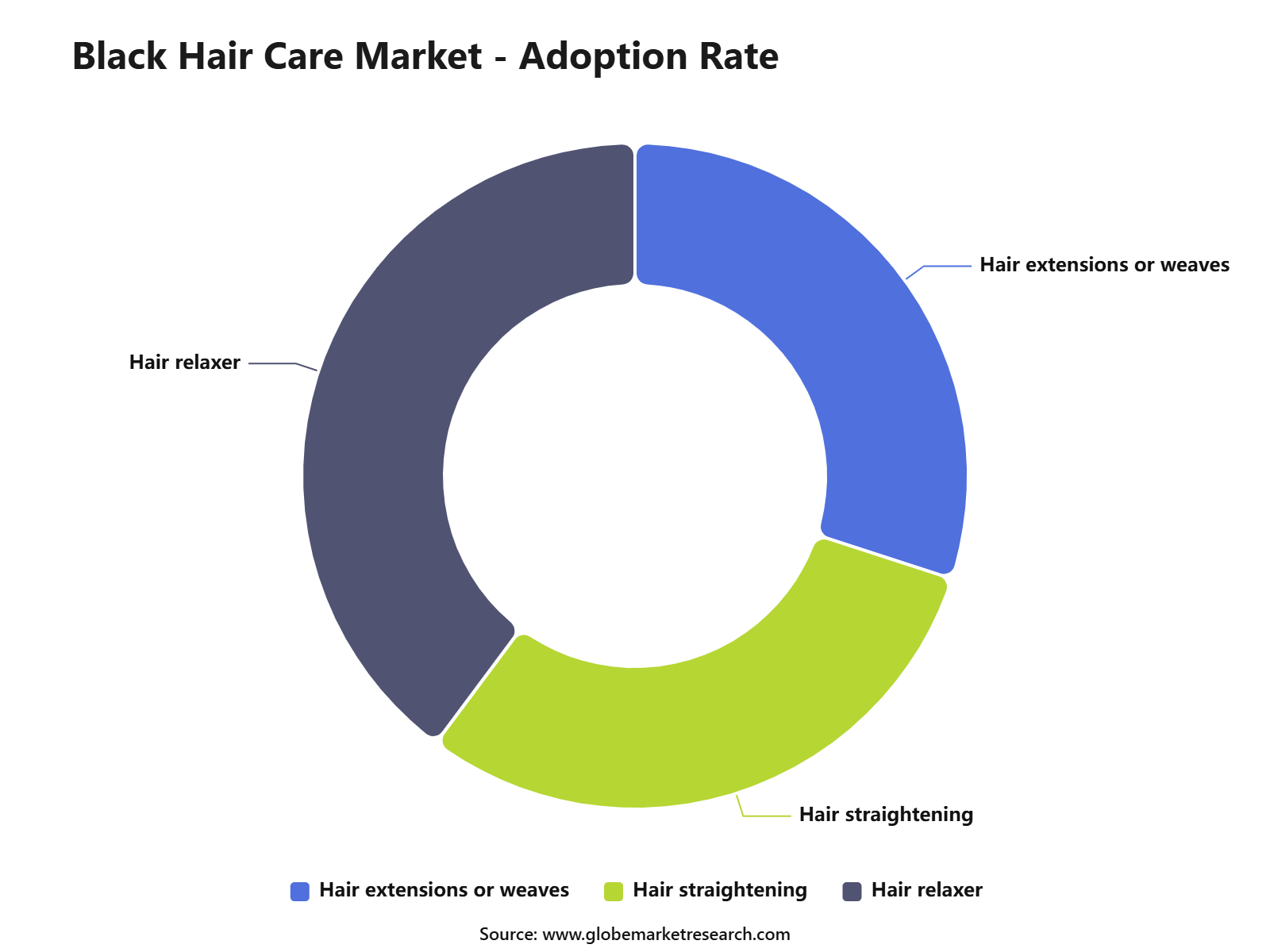 iThe graph shows projected market growth until 2035 based on CAGR analysis. Actual outcomes may vary depending on changing demand, competition, and economic factors.To gain greater insights - request a sample report PDF
Type Analysis
Shampoo held the leading position in the Black Hair Care Market with around 30.1% share in 2025. The segment’s leadership can be attributed to regular product use, wide retail availability, and the need for scalp cleansing across textured, curly, coily, relaxed, braided, and protective hairstyles. Consumers are increasingly choosing shampoos that clean the scalp without removing natural oils, as dryness control remains a key part of Black hair care routines.
Demand is also being supported by the shift toward sulfate-free, moisturizing, clarifying, and scalp-focused shampoo formulas. Many buyers now look for products that support hydration, reduce buildup, and protect hair strength during frequent styling. As a result, shampoo remains a core entry product in both basic and specialized Black hair care routines.
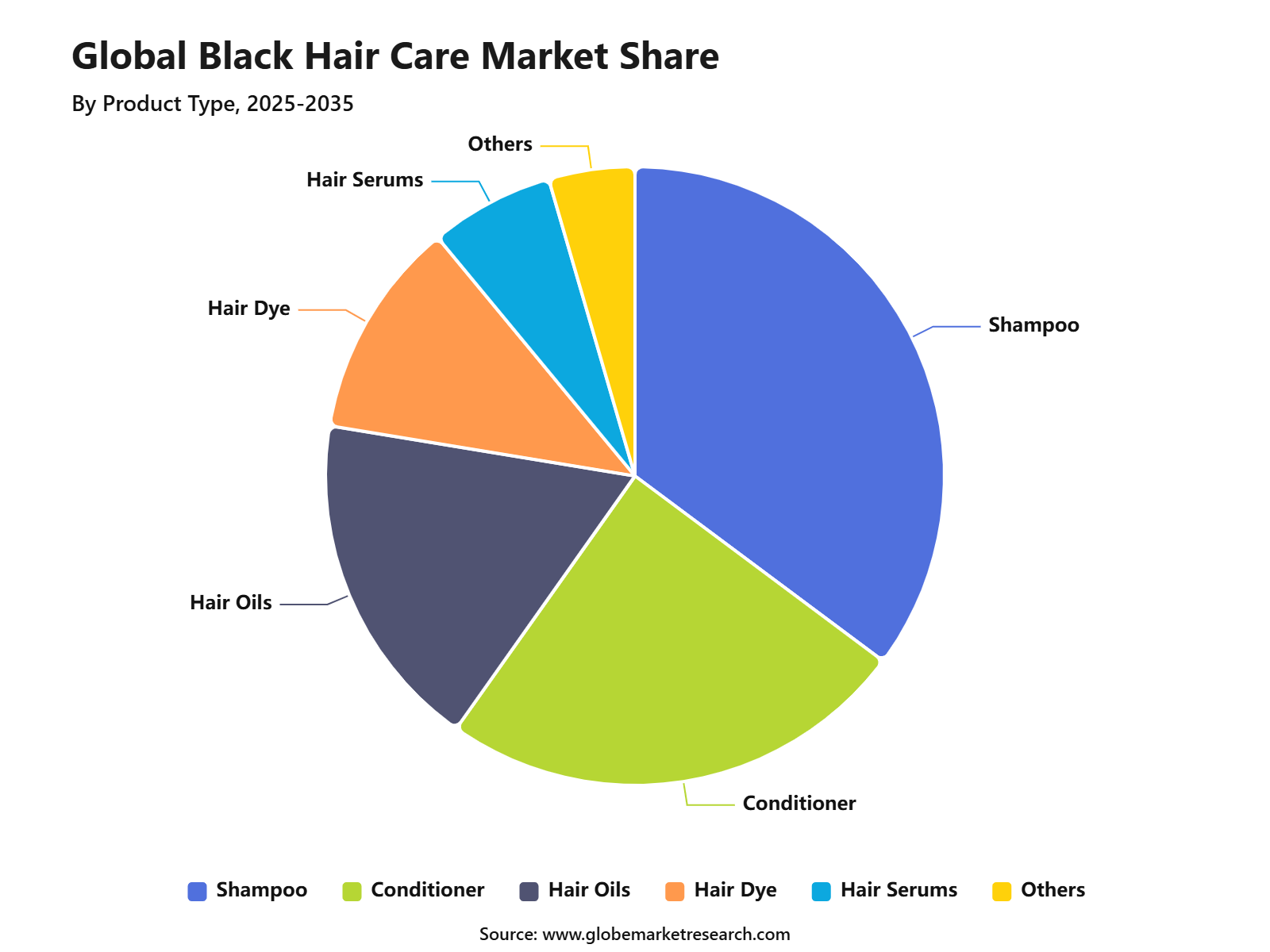 iThe graph shows projected market growth until 2035 based on CAGR analysis. Actual outcomes may vary depending on changing demand, competition, and economic factors.To gain greater insights - request a sample report PDF
Application Analysis
Household use held more than 59.2% share in 2025, making it the leading application segment. This dominance is supported by frequent at-home hair care routines, including washing, conditioning, oiling, detangling, curl maintenance, scalp care, and protective style upkeep. Many consumers prefer managing daily or weekly hair care at home due to cost control, product familiarity, and convenience.
The household segment is also supported by the growing availability of textured hair products across supermarkets, beauty stores, pharmacies, and online platforms. Consumers are becoming more informed about ingredients, hair porosity, scalp needs, and moisture retention. This has increased demand for home-use products that provide salon-like care with easier access and lower recurring expense.
Distribution Channel Analysis
Offline channels held around 62.6% share in 2025, supported by strong sales through supermarkets, hypermarkets, beauty supply stores, pharmacies, salons, and specialty retail outlets. Black hair care purchases often involve product comparison by texture, scent, ingredients, price, and suitability for specific hair concerns. This gives offline stores a strong advantage, especially for consumers who prefer to check labels and product formats before buying.
Beauty supply stores and specialty outlets continue to play an important role because they offer wider product variety for curly, coily, braided, relaxed, and natural hair needs. Offline retail also supports impulse buying, professional recommendations, and access to trusted local brands. While online sales are growing, physical retail remains important because textured hair care is often highly personal and product-specific.
End User Analysis
Women represented the leading end-user group with 51.2% share in 2025. This leadership is driven by higher product usage across cleansing, conditioning, styling, protective care, scalp care, edge control, curl definition, and hair growth support. Women also tend to use a wider range of products due to diverse hairstyle choices, including natural curls, braids, twists, wigs, weaves, relaxed styles, and locs.
The segment is further supported by stronger awareness of hair health, ingredient safety, and moisture protection. Many women are actively shifting toward products that reduce breakage, support scalp comfort, and maintain style longevity. This has increased demand for specialized shampoos, deep conditioners, leave-in conditioners, oils, curl creams, serums, gels, and styling protectants.
Hair Concern Analysis
Moisture retention and dryness care led the hair concern segment with 76.6% share in 2025. This strong position is linked to the structure of textured hair, which can make it harder for natural scalp oils to move along the hair shaft. As a result, hydration, softness, elasticity, and breakage reduction remain central needs in Black hair care.
Demand in this segment is being supported by products such as moisturizing shampoos, leave-in conditioners, deep conditioners, hair masks, butters, oils, creams, and curl hydrators. Consumers are also paying closer attention to formulas that support moisture without heavy buildup. This makes dryness care one of the most important purchase drivers across both natural and chemically treated hair.
Region Analysis
North America held 40.4% share of the Black Hair Care Market in 2025, valued at USD 3.5 Bn. The region’s leadership is supported by a large Black consumer base, strong multicultural beauty aisles, mature retail networks, and wide availability of products made for textured hair. Demand is also supported by higher awareness of natural hair care, protective styling, scalp health, and ingredient-focused product selection.
The region has a strong ecosystem of beauty supply stores, salons, mass retailers, e-commerce platforms, and textured hair care brands. Product innovation is active across moisturizers, curl creams, scalp oils, edge control products, sulfate-free shampoos, and deep conditioning treatments. This makes North America the most established regional market for specialized Black hair care products.
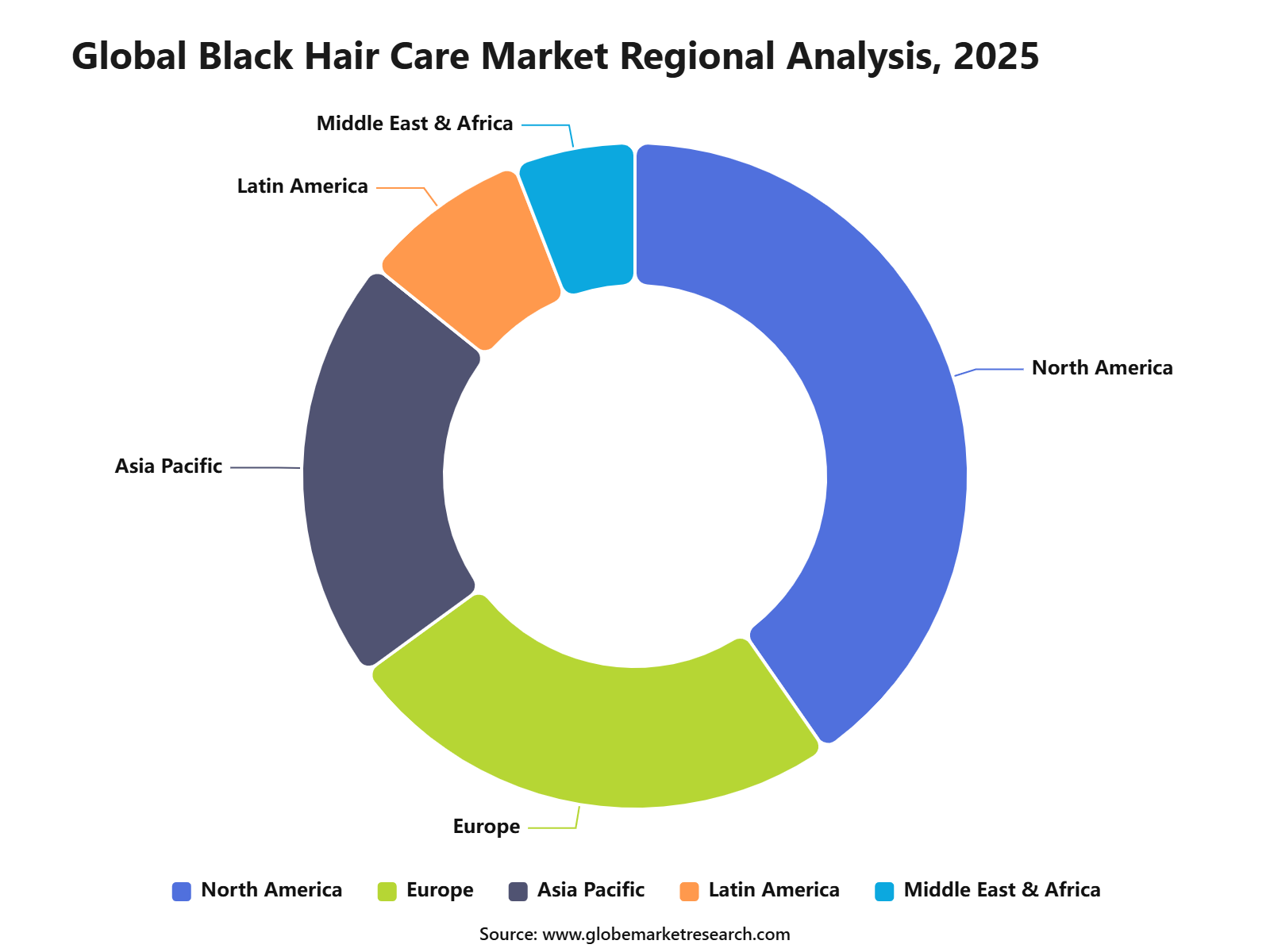 iThe graph shows projected market growth until 2035 based on CAGR analysis. Actual outcomes may vary depending on changing demand, competition, and economic factors.To gain greater insights - request a sample report PDF
The U.S. Black Hair Care Market was valued at USD 1.4 Bn in 2025 and is expected to grow at a 4.6% CAGR. The country represents a strong demand base due to its large Black population, strong cultural connection with hair care, and high product use across natural, relaxed, braided, wig, weave, and protective styles. Hair care is not only a grooming category in the U.S. market but also an important part of identity, personal care, and beauty expression.
Growth in the U.S. is being supported by wider retail access, social media education, influencer-led product discovery, and rising demand for safer and more inclusive formulas. Consumers are looking for products that address dryness, breakage, scalp comfort, curl definition, and long-lasting style maintenance. As product choices continue to expand, the U.S. is expected to remain one of the most important country-level markets for Black hair care.
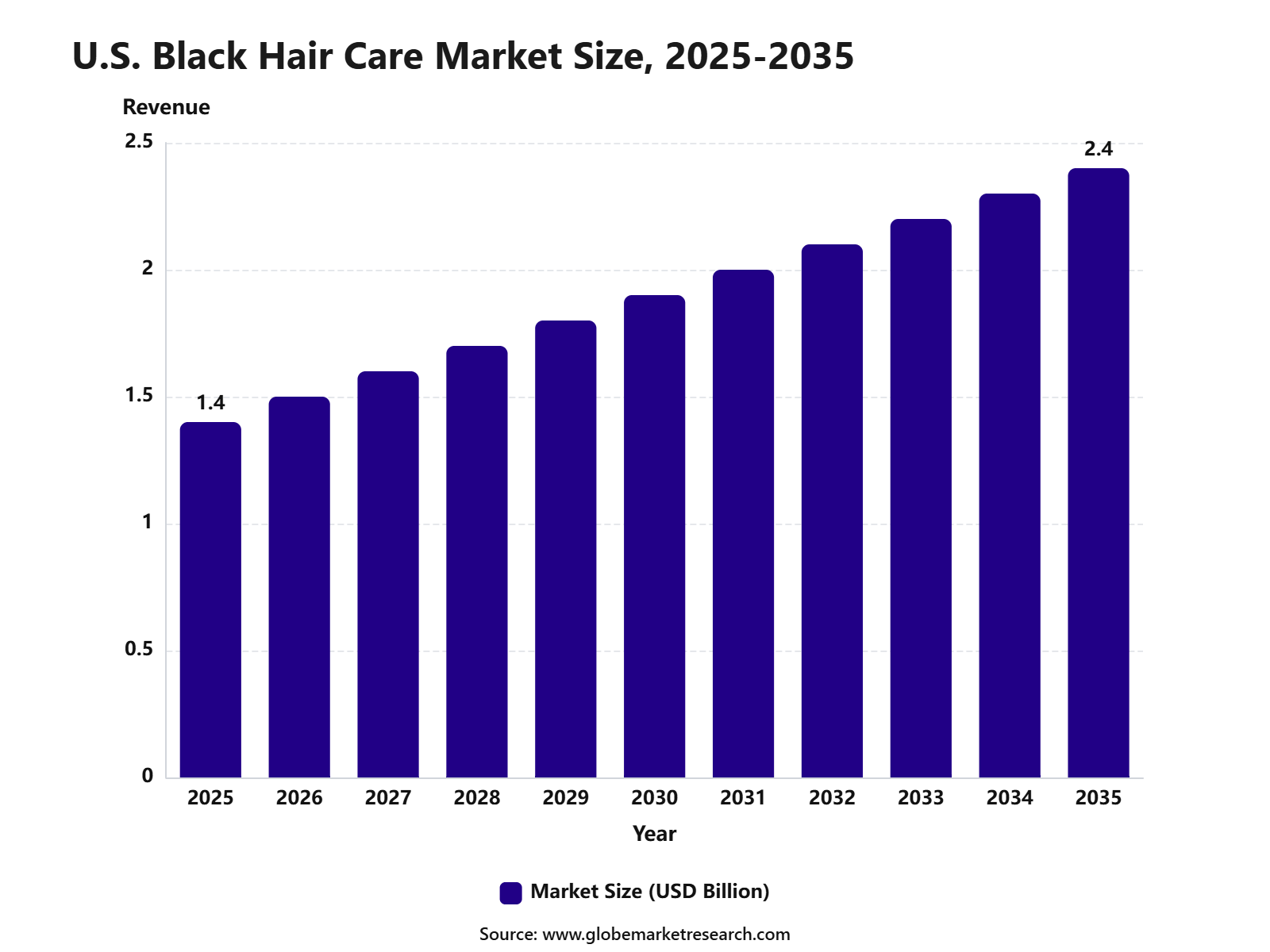 iThe graph shows projected market growth until 2035 based on CAGR analysis. Actual outcomes may vary depending on changing demand, competition, and economic factors.To gain greater insights - request a sample report PDF
Market Trend Analysis
Impact Factor | Estimated CAGR Impact | Regional Relevance | Market Impact |
|---|---|---|---|
Natural hair movement | +1.7% | U.S., UK, South Africa, Brazil | Supports textured hair products. |
Growth of moisturizing and hydration products | +1.5% | Global | Drives core demand. |
Rise of protective styling products | +1.2% | North America, Africa, Europe | Increases styling product use. |
Scalp-first hair care trend | +1.1% | U.S., Europe, urban Africa | Expands treatment category. |
Inclusive beauty retail expansion | +1.0% | North America, Europe | Improves shelf presence. |
Investor Type Impact Matrix
Investor Type | Estimated CAGR Impact | Regional Relevance | Market Impact |
|---|---|---|---|
Beauty and Personal Care Companies | +1.6% | Global | Expands product portfolios. |
Private Equity Firms | +1.2% | North America, Europe | Supports brand scaling. |
Venture Capital Firms | +1.0% | U.S., UK, Africa, Brazil | Funds niche beauty brands. |
Retail and E-commerce Investors | +1.1% | Global | Strengthens sales channels. |
Ingredient and Formulation Investors | +0.9% | U.S., Europe, Brazil | Improves product quality. |
Segments Covered in the Report
By Product Type
Shampoo
Conditioner
Hair Dye
Hair Oils
Hair Serums
Others
By Application
Household
Commercial Use
Salons
Beauty Parlors
Professional Hair Care Services
By Distribution Channel
Offline Stores
Online Platforms
Supermarkets and Hypermarkets
Specialty Beauty Stores
Retail Stores
Pharmacies
Direct-to-Consumer Channels
By End User
Women
Men
Kids
Professional Stylists
Salons
By Hair Concern
Dryness and Moisture Retention
Scalp Health
Breakage Repair
Curl Definition
Frizz Control
Protective Styling
Hair Growth Support
Chemical-Free Hair Care
By Region
North America
Europe
Asia Pacific
Latin America
Middle East and Africa
Drivers Impact Analysis
Impact Factor | Estimated CAGR Impact | Regional Relevance | Market Impact |
|---|---|---|---|
Rising demand for textured hair care products | +1.8% | North America, Europe, Africa, Brazil | Drives product adoption. |
Growth in natural and organic hair care | +1.5% | U.S., Canada, UK, France | Supports premium demand. |
Increasing focus on scalp and curl health | +1.3% | North America, Europe, urban Africa | Expands treatment products. |
Strong influence of social media and beauty creators | +1.2% | U.S., UK, Brazil, South Africa | Boosts brand visibility. |
Wider retail availability of multicultural beauty products | +1.0% | North America and Europe | Improves product access. |
Restraints Impact Analysis
Impact Factor | Estimated CAGR Impact | Regional Relevance | Market Impact |
|---|---|---|---|
High cost of premium hair care products | -1.1% | Price-sensitive consumers | Limits premium adoption. |
Product formulation sensitivity | -0.9% | Global | Affects repeat purchases. |
Limited availability in smaller markets | -0.8% | Rural and emerging regions | Restricts market reach. |
Competition from general hair care brands | -0.7% | Global | Pressures niche brands. |
Ingredient safety and allergy concerns | -0.6% | North America, Europe | Raises trust issues. |
Opportunities Impact Analysis
Impact Factor | Estimated CAGR Impact | Regional Relevance | Market Impact |
|---|---|---|---|
Expansion of leave-in conditioners and curl creams | +1.6% | U.S., UK, Canada, South Africa | Supports daily usage. |
Growth in scalp care products | +1.4% | North America, Europe, Africa | Opens treatment demand. |
Rising demand for clean-label formulations | +1.3% | U.S., Europe, urban Asia | Builds premium growth. |
E-commerce and D2C brand expansion | +1.2% | Global | Improves brand reach. |
Men’s textured hair care products | +1.0% | North America, Europe, Africa | Creates new demand. |
Challenges Impact Analysis
Impact Factor | Estimated CAGR Impact | Regional Relevance | Market Impact |
|---|---|---|---|
Brand trust and product efficacy concerns | -0.9% | Global | Affects loyalty. |
Fast-changing beauty trends | -0.8% | North America, Europe | Requires quick innovation. |
Supply chain issues for natural ingredients | -0.7% | Global | Pressures production. |
Price competition in mass retail | -0.6% | Global | Reduces margins. |
Limited product education among new users | -0.5% | Emerging markets | Slows adoption. |
Customer Acquisition Economics
Customer acquisition in the Black hair care market is strongly influenced by repeat product use, community trust, and visible product performance. Consumers often build a routine with several products, which increases the value of each acquired customer over time. A single buyer may purchase shampoo, conditioner, leave-in cream, oil, gel, edge control, scalp treatment, and styling products across different months. This makes retention, replenishment, and routine-based selling more important than one-time product promotion.
Digital channels have improved customer acquisition efficiency because consumers search for tutorials, ingredient checks, curl care guidance, and real user results before buying. Social media creators, salon professionals, dermatologists, and textured hair educators play an important role in building trust. U.S. retail e-commerce reached USD 302.3 billion in the first quarter of 2026 on a not adjusted basis, and e-commerce represented 16.9% of total retail sales, showing that online discovery remains important for beauty categories.
Risk Factors & Market Barriers
The Black hair care market faces risks from product safety concerns, changing consumer expectations, pricing pressure, and stronger competition from both large beauty companies and emerging independent brands. Consumers are becoming more careful about ingredients, chemical treatments, fragrance sensitivity, scalp health, and long-term hair damage. This has increased the need for clear claims, transparent labeling, safety testing, and strong customer service. Brands that fail to prove product safety and performance may face weak repeat purchases, negative reviews, and lower trust.
Another market barrier is the difficulty of serving different textured hair needs with one product line. Hair porosity, density, curl pattern, scalp condition, protective styles, climate, and styling habits can change product performance from one consumer to another. This makes product education essential because many consumers still experience trial and error before finding a suitable routine. The market also remains sensitive to price because daily-use products must be affordable while still offering quality ingredients and visible results.
Regulatory & Compliance Risks
Regulatory compliance is becoming more important in the Black hair care market as cosmetics oversight continues to strengthen. Under the Modernization of Cosmetics Regulation Act, cosmetic manufacturers and processors must register facilities with the FDA and renew registration every two years. Companies also need to manage product listing, safety substantiation, adverse event records, labeling accuracy, and responsible manufacturing practices. These requirements may increase operating costs, especially for smaller brands that are scaling from local sales to national retail or e-commerce distribution.
Hair smoothing and chemical straightening products also face higher scrutiny because of safety concerns linked with formaldehyde-releasing products and other chemical exposure risks. FDA information has noted health concerns related to formaldehyde release when some smoothing products are heated, including eye, respiratory, skin, and nervous system reactions. Scientific research has also increased public concern around frequent use of chemical hair straighteners and possible long-term health risks. As a result, Black hair care brands may need to invest more in safer formulations, supplier audits, claim review, and consumer safety communication.
Market Adoption Barriers
Market adoption can be limited when consumers do not trust a product’s claims or do not see clear evidence that it works for textured hair. Many buyers rely on reviews, tutorials, ingredient lists, and recommendations from people with similar hair types before trying a new product. This slows adoption for new brands that lack strong community proof or professional support. Sampling, small pack sizes, routine guides, and visible before-and-after results can help reduce this barrier.
Retail access is another adoption challenge because Black hair care consumers often need products that are easy to find both online and in stores. If a product is only available through limited channels, repeat buying can become difficult. Brands also face strong competition for shelf space, paid media visibility, and creator partnerships. In 2026 and beyond, wider adoption is expected to depend on product performance, fair pricing, retail reach, inclusive testing, and clear education around how each product should be used.
Recent Developments
April 2026 - The Doux received a minority investment from VMG Partners to scale its textured haircare business in U.S. mass retail and international markets. The brand reached about USD 38 million in sales and USD 7.3 million EBITDA in 2025.
April 2026 - Cécred and BeyGOOD Foundation announced the 2026 Cécred x BeyGOOD Fund to support the beauty industry. Since 2024, the program has awarded USD 1 million in student scholarships and salon business grants across 133 students and salon owners. The initiative supports cosmetology education, salon ownership, and professional growth in textured hair care.
Report Scope
Report Highlights | Details |
|---|---|
Market Revenue (2025) | USD 8.9 Bn |
Forecast Revenue (2035) | USD 17.1 Bn |
CAGR (2025-2035) | 6.8% |
Base Year for Estimation | 2025 |
Historic Data | 2020-2024 |
Forecast Period | 2025-2035 |
Report Coverage | AI market impact analysis, market surveys, trade analysis, Industry & competitive intelligence, Revenue projections, company positioning, competitive analysis, growth drivers, and emerging market trends, Strategic Consultation & Advisory Services |
Segments Covered | By Product Type (Shampoo, Conditioner, Hair Dye, Hair Oils, Hair Serums, Others.), By Application (Household, Commercial Use, Salons, Beauty Parlors, Professional Hair Care Services), By Distribution Channel (Offline Stores, Online Platforms, Supermarkets and Hypermarkets, Specialty Beauty Stores, Retail Stores, Pharmacies, Direct-to-Consumer Channels), By End User (Women, Men, Kids, Professional Stylists, Salons), By Hair Concern (Dryness and Moisture Retention, Scalp Health, Breakage Repair, Curl Definition, Frizz Control, Protective Styling, Hair Growth Support, Chemical-Free Hair Care) |
Regional Analysis | North America - US, Canada; Europe - Germany, France, The UK, Spain, Italy, Russia, Netherlands, Rest of Europe; Asia Pacific - China, Japan, South Korea, India, New Zealand, Singapore, Thailand, Vietnam, Rest of Latin America; Latin America - Brazil, Mexico, Rest of Latin America; Middle East & Africa - South Africa, Saudi Arabia, UAE, Rest of MEA |
Key companies profiled | Procter & Gamble, Unilever, L’Oréal, Revlon, Estée Lauder, Johnson & Johnson, Avon Products, Carol’s Daughter, Mielle Organics, Cantu Beauty, Shea Moisture, Dark & Lovely, African Pride, SoftSheen Carson, Amka Products (Pty) Ltd, Alodia Hair Care, Ouidad, Afrocenchix Ltd., Uhuru Naturals LLC, Pattern Beauty, Other Key Players |
Customization Scope | Tailored insights for specific regions, countries, and market segments can be provided. Additional report customization is available upon request. |
Competitive Landscape
The market is characterized by intense competition among established players and emerging companies. Strategic partnerships, mergers and acquisitions, and product innovation are key strategies employed by market participants.
Key Market Players
Procter & Gamble
Unilever
L’Oréal
Revlon
Estée Lauder
Johnson & Johnson
Avon Products
Carol’s Daughter
Mielle Organics
Cantu Beauty
Shea Moisture
Dark & Lovely
African Pride
SoftSheen Carson
Alodia Hair Care
Ouidad
Other Key Players
Meet the Team
This report was prepared by our expert analysts with deep industry knowledge and research experience.
Pratiksha is market research analyst with strong experience in industry research, market forecasting, and competitive analysis. She specializes in identifying market trends, evaluating growth opportunities, and preparing data-driven insights across global industries. Her work supports businesses in understanding market dynamics, customer demand, regional opportunities, and strategic investment areas.
Sayali brings more than 5 years of experience to Globe Market Research, supporting the accuracy, clarity, and relevance of research content across multiple industries. She reviews market data, segment analysis, competitive insights, and industry trends to ensure each report meets strong quality standards and provides practical value to business decision-makers. Her expertise spans healthcare, information technology, consumer goods, and diverse cross-industry domains. With a strong focus on data reliability, structured analysis, and clear presentation, Sayali helps ensure that each research output delivers well-reviewed insights for clients, investors, consultants, and industry stakeholders.
Frequently Asked Questions
Related Reports
More in Consumer Goods
Pet Toys Market to hit USD 35.6 billion by 2035
Global Pet Toys Market Size, Share Analysis By Product Type (Plush, Rope, Balls, Others), By Pet Type (Dogs, Cats, Others), By Distribution Channel (Offline, Online), By Regional Insights, Business plan and Project Report, Investment Opportunities, Profitability, Industry Trends, Leading Companies and Growth Forecasts By 2025-2035
Halloween Costumes Market to hit 12.2 Bn by 2035
Global Halloween Costumes Market By Product Type (Adult Costumes, Kids Costumes, Pet Costumes, Accessories), By Theme (Superheroes, Movies and TV Characters, Horror, Fantasy, Historical, Others), By Distribution Channel (Online Stores, Specialty Stores, Supermarkets and Hypermarkets, Others), By Regional Insights, Business plan and Project Report, Investment Opportunities, Profitability, Industry Trends, Leading Companies and Growth Forecasts by 2025-2035
Residential Air Purifier Market to Surpass USD 42.1 Billion by 2035
Global Residential Air Purifier Market Size, Share Analysis Report By Product Type (Portable Air Purifiers, Whole-House Air Purifiers, Desktop Air Purifiers), By Technology (HEPA Filtration, Activated Carbon Filtration, UV-C Purification, Ionic Filtration, Hybrid Filtration), By Application (Dust and Allergen Removal, Smoke and Odor Control, Pet Dander Removal, Mold and Bacteria Reduction), By Regional Insights, Business plan and Project Report, Investment Opportunities, Profitability, Industry Trends, Leading Companies and Growth Forecasts by 2025-2035
Trampoline Park Market Revenue to Hit USD 13.8 Billion by 2035
Global Trampoline Park Market Size, Surveys, Revenue, Volume, Production, Trade Analysis Report By Type (Indoor Trampoline Parks, Outdoor Trampoline Parks), By Age Group (Children, Teenagers, Adults), By Revenue Source (Entry Fees, Food & Beverages, Merchandise, Events & Parties, Others), By Ownership (Franchise, Independent), By Regional Insights, Leading Companies and Growth Forecasts by 2025-2035