
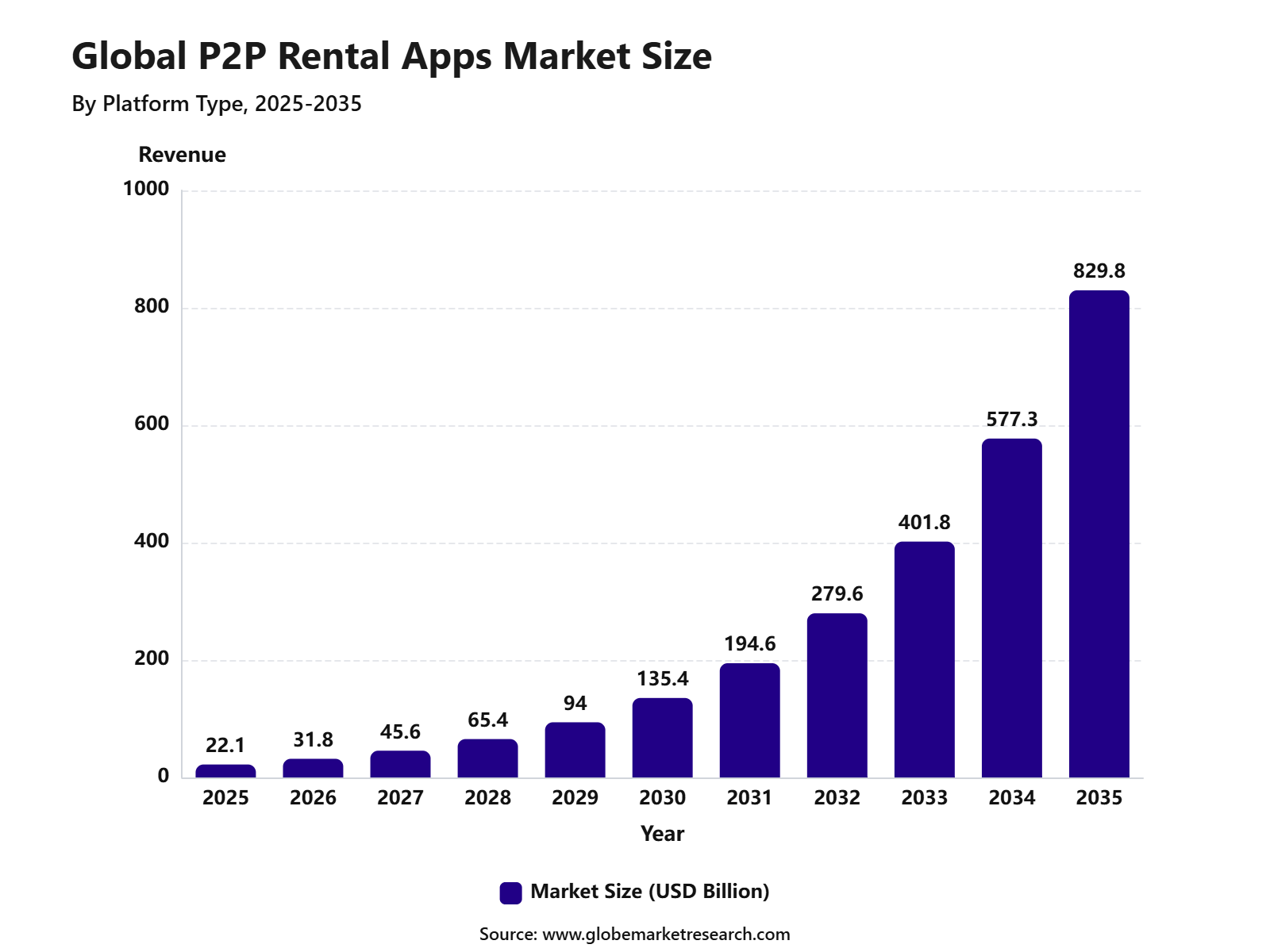
According to Globe Market Research, the global P2P Rental Apps Market is moving into a strong growth phase, rising from USD 22.1 billion in 2025 to USD 829.8 billion by 2035 at a CAGR of 43.7%. This growth is being driven by wider acceptance of shared access, rising digital platform usage, and growing demand for affordable short-term rentals. Consumers are using these apps to reduce ownership costs while gaining flexible access to products and spaces when needed.
P2P rental apps are digital platforms that allow individuals to rent homes, vehicles, tools, fashion items, electronics, sports equipment, furniture, and household goods directly from other individuals. These platforms help owners earn income from underused assets while giving renters a more flexible and often lower-cost option. The model is gaining strong acceptance because it supports convenience, affordability, asset sharing, and wider product access through mobile apps.
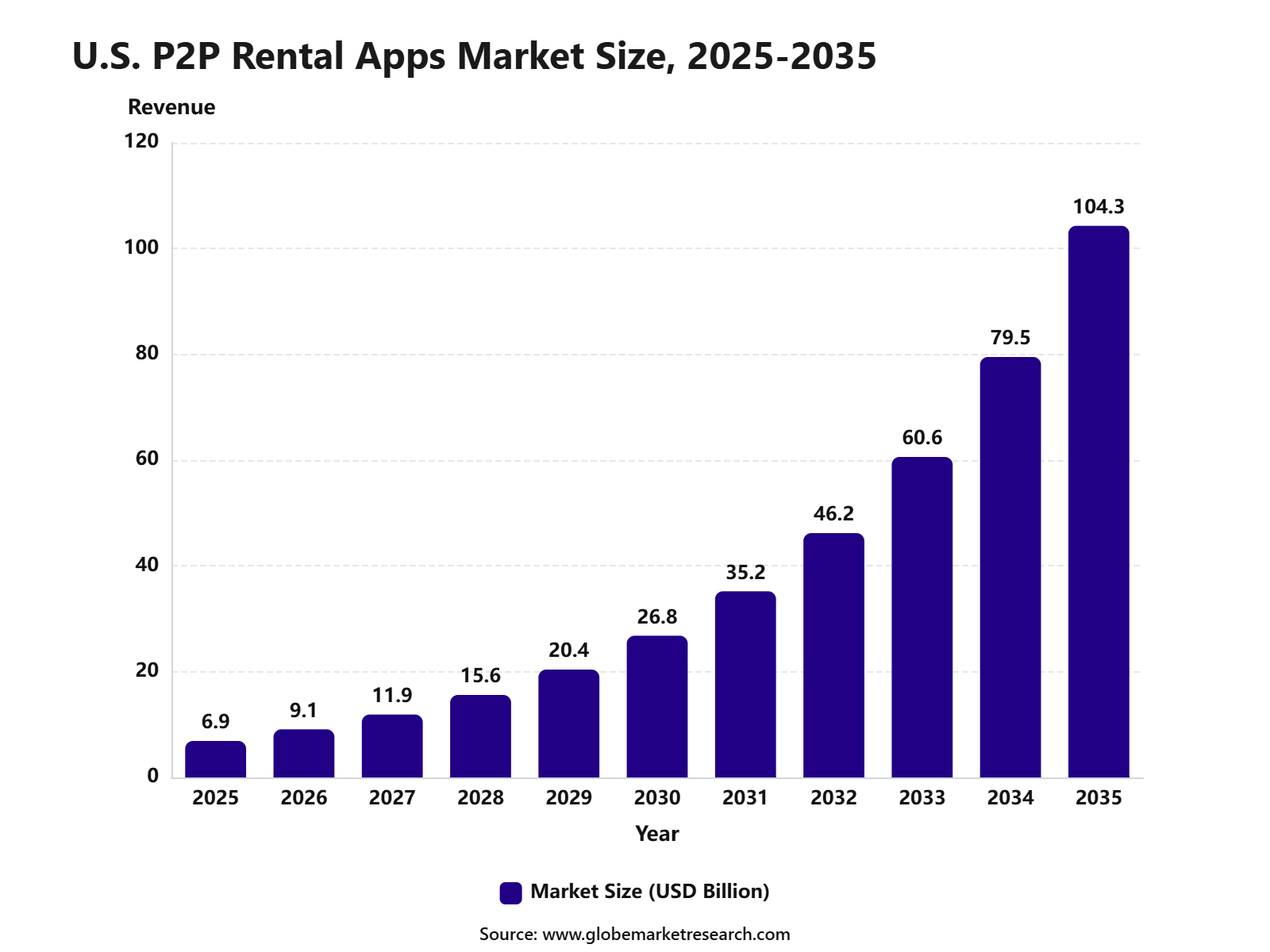
North America led the P2P Rental Apps Market with a 35.6% share in 2025. The region’s leadership can be attributed to high smartphone usage, mature digital payment systems, strong platform trust, and wider consumer acceptance of app-based rentals. The U.S. market reached USD 6.9 billion in 2025 and is expected to grow at a CAGR of 31.2%, supported by rising demand for short-term rentals across housing, cars, equipment, fashion, electronics, and household goods.
Key Insights
Property rental led the market with 70.8% share, supported by increasing demand for short-term stays, flexible housing options, and peer-to-peer accommodation services.
Mobile apps held 66.2% share, driven by easy booking, real-time availability, secure payments, and location-based rental discovery.
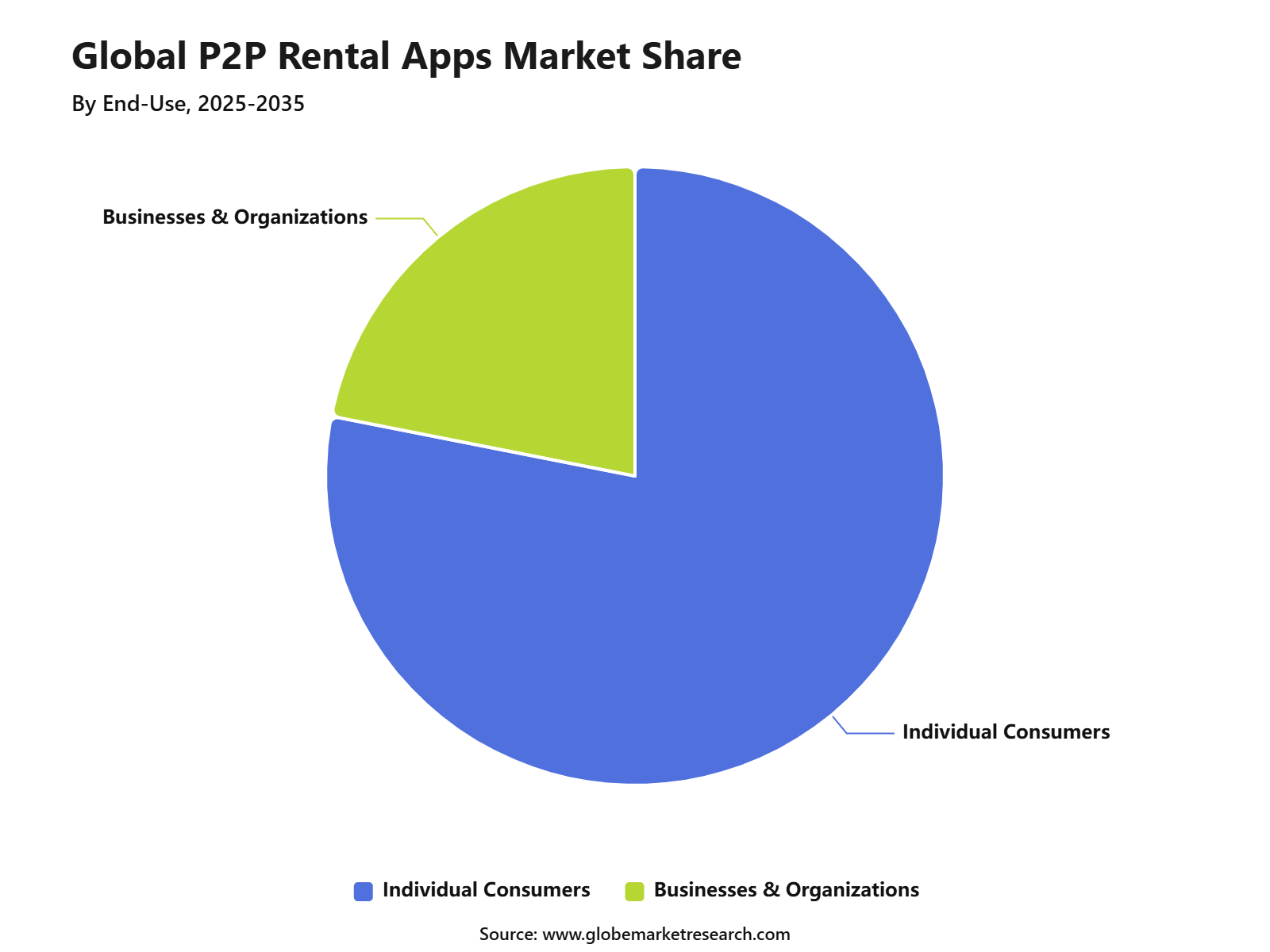
Individual consumers accounted for 78.1% share, supported by rising preference for affordable, convenient, and flexible rental options over traditional rental models.
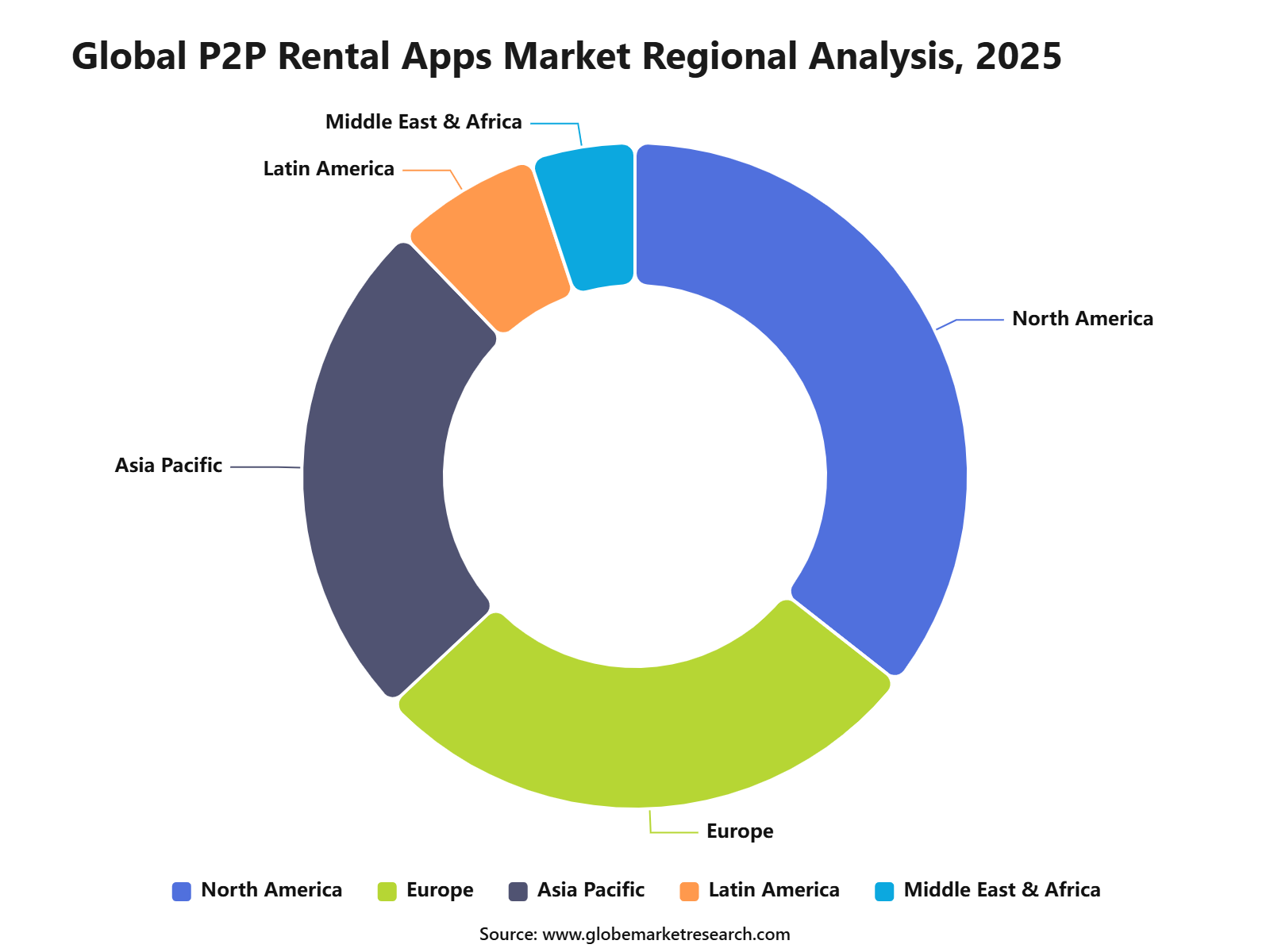
North America represented 35.6% share, supported by strong digital adoption, high urban rental activity, and established peer-to-peer rental platforms.
The U.S. P2P rental apps market was valued at USD 6.9 billion and is projected to expand at a CAGR of 31.2%.
Latest P2P Rental Apps Statistics
Airbnb recorded 533.0 million Nights and Seats Booked in full-year 2025, up 8% year over year. Its Gross Booking Value reached USD 91.3 billion in 2025, rising 12% year over year.
Airbnb’s Q1 2026 performance showed continued demand for app-based stays. The platform reported 156.2 million Nights and Seats Booked and USD 29.2 billion in Gross Booking Value, with GBV rising 19% year over year.
Mobile-first bookings are becoming central to P2P rental growth. In Q1 2026, nights booked through Airbnb’s app increased 22% year over year and accounted for 63% of total nights booked, compared with 58% one year earlier.
Flexible payment options are improving conversion in online rental apps. Airbnb reported that its Reserve Now, Pay Later feature achieved more than 70% adoption among eligible bookings after its U.S. launch, and the company planned wider rollout in 2026.
In the European Union, 951.6 million short-stay guest nights were booked through Airbnb, Booking, and Expedia in 2025. This represented an 11.4% increase compared with 2024, showing strong demand for platform-based accommodation rentals.
EU platform-based short-stay accommodation reached 172.3 million guest nights in Q4 2025, up 10.9% from Q4 2024. October 2025 reached 72.0 million guest nights, while December 2025 reached 58.7 million nights.
International tourism continued to expand in early 2026. UN Tourism reported that international tourist arrivals grew 2% in Q1 2026, despite disruption from the Middle East crisis in March.
In the U.S., Turo hosts welcomed guests in 8,495 cities during 2025. The platform recorded 5.5 million total trips, 26.6 million total trip days, and USD 1.4 billion in total host earnings.
By Rental Type
The property rental segment dominated the P2P rental apps market with 70.8% share, supported by rising demand for short-term accommodations, vacation homes, shared stays, serviced apartments, and flexible rental solutions. The growth of this segment can be attributed to changing consumer preference for affordable, location-based, and experience-driven stays over traditional hotel bookings.
The segment is also gaining momentum as property owners use digital platforms to monetize unused homes, rooms, apartments, villas, and vacation properties. For instance, a homeowner can list an unused apartment on a P2P rental app, set nightly or monthly pricing, verify guests, manage bookings, and receive payments through the platform without depending on offline brokers.
By Platform
Mobile apps remained the leading platform with 66.2% share, driven by convenience, real-time booking, instant notifications, secure payments, map-based search, customer reviews, and easy communication between owners and renters. Consumers prefer mobile apps because they allow quick comparison of rental options, prices, availability, location, ratings, and cancellation policies.
The growth of mobile apps is strongly linked to rising smartphone use and the shift toward app-based consumer services. For instance, a traveler can use a mobile rental app to search for nearby stays, check host ratings, complete identity verification, pay securely, and receive booking confirmation within minutes.
By End Use
Individual consumers represented the largest end-use segment with 78.1% share, supported by growing preference for peer-to-peer rentals over traditional rental services. This demand is increasing among travelers, students, working professionals, digital nomads, urban renters, and consumers looking for short-term access to assets instead of ownership.
The segment is expanding as consumers seek flexible, cost-effective, and convenient rental options for housing, vehicles, equipment, fashion, electronics, and household goods. For instance, a young professional moving to a new city can rent a furnished apartment, bike, furniture, or home appliance through a P2P rental app instead of making large upfront purchases.
By Region
North America accounted for 35.6% share of the P2P rental apps market, supported by strong urban rental demand, high digital adoption, mature payment infrastructure, and broad use of mobile-first platforms. The region has witnessed strong adoption of rental apps across property rentals, vehicle sharing, equipment rentals, fashion rentals, and household goods rentals.
The regional growth is also supported by high consumer comfort with digital payments, online reviews, location-based booking, and platform-based trust systems. For instance, a user in a large U.S. city can rent a vacation home, private car, camera equipment, or event furniture through a mobile app and complete the transaction with in-app verification and payment protection.
The U.S. P2P rental apps market was valued at USD 6.9 billion and is projected to grow at a CAGR of 31.2%. Growth in the country is supported by strong demand for flexible rentals, high smartphone penetration, rising urban housing mobility, and increasing consumer preference for access-based usage models.
The U.S. market is also benefiting from strong participation by hosts, asset owners, travelers, and individual renters across major cities and tourism hubs. For instance, a U.S.-based consumer can use P2P rental apps to book a short-term stay, rent a car for a weekend trip, lease furniture for a temporary apartment, or rent tools for a home improvement project.
Market Trend Analysis
Impact Factor | Estimated CAGR Impact | Regional Relevance | Market Impact |
|---|---|---|---|
Mobile-first rental platforms | +10.4% | Global | Increases booking convenience. |
Growth of property and stay rentals | +9.8% | North America, Europe, Asia Pacific | Strengthens revenue base. |
Short-term vehicle sharing | +8.6% | U.S., Europe, China, India | Supports flexible mobility. |
AI-based matching and pricing | +7.9% | North America, Europe, Asia Pacific | Improves rental efficiency. |
Subscription-based rental access | +7.2% | Urban markets | Builds recurring usage. |
Technology Adoption Analysis
Impact Factor | Estimated CAGR Impact | Regional Relevance | Market Impact |
|---|---|---|---|
Mobile app platforms | +10.7% | Global | Drives core adoption. |
Digital payments and escrow systems | +9.4% | Global | Improves payment security. |
AI-based recommendation engines | +8.1% | U.S., Europe, India, China | Enhances user matching. |
Identity verification and KYC tools | +7.8% | North America, Europe, Asia Pacific | Builds platform trust. |
GPS tracking and asset monitoring | +7.1% | Vehicle and equipment rentals | Reduces misuse risk. |
Demand Analysis
Impact Factor | Estimated CAGR Impact | Regional Relevance | Market Impact |
|---|---|---|---|
Demand for cost-effective rentals | +10.6% | Global | Drives user adoption. |
Demand from individual consumers | +10.1% | North America, Europe, Asia Pacific | Leads market usage. |
Demand for flexible property rentals | +9.3% | Urban markets | Supports high transaction volume. |
Demand for vehicle and mobility rentals | +8.5% | U.S., Europe, China, India | Expands app-based mobility. |
Demand from small businesses | +7.6% | Global | Supports tool and equipment rentals. |
Investor Type Impact Matrix
Investor Type | Estimated CAGR Impact | Regional Relevance | Market Impact |
|---|---|---|---|
Venture Capital Firms | +10.4% | U.S., India, Southeast Asia, Europe | Supports platform innovation. |
Strategic Technology Investors | +9.2% | Global | Improves app capabilities. |
Private Equity Firms | +8.1% | North America, Europe, Asia Pacific | Supports platform scaling. |
Real Estate and Mobility Investors | +8.7% | U.S., Europe, China, India | Expands core rental categories. |
Insurance and Fintech Investors | +7.4% | Global | Strengthens trust and payments. |
Real-Time Use Cases
A real-time use case can be seen in short-term property rentals, where platforms connect property owners with travelers looking for flexible stays. A user can search for a stay, compare prices, check host ratings, confirm availability, and complete payment through the app. This model is widely used for vacation stays, business travel, weekend trips, and temporary relocation. The growth of digital travel booking has made property rental the leading segment, supported by strong demand for flexible accommodation options.
Vehicle sharing is another strong use case in the P2P rental apps market. Turo is a clear example, as it allows private car owners to list their vehicles and earn income while renters access cars without using traditional rental counters. In 2024, the platform reported 3.5 million active guests, 140,000 active hosts, and 340,000 active vehicles. This shows how peer-to-peer vehicle rental apps can improve asset utilization and create income opportunities for owners.
Equipment rental is also gaining adoption through platforms that allow users to rent cameras, power tools, camping gear, drones, party equipment, and other high-cost items for short periods. Fat Llama represents this model by allowing people to rent unused items nearby with insurance support. This use case is especially relevant for creators, small businesses, event planners, homeowners, and students who may need products for only a few days. The model reduces upfront purchase costs and helps owners generate value from underused assets.
Recent Developments
May 2026 - Getaround Europe and GoMore merged to create one of Europe’s largest peer-to-peer car-sharing networks. The combined platform serves more than 5 million users across 11 countries. It also manages around 70,000 shared vehicles and nearly 1.5 million rentals per year. This deal shows strong consolidation in the mobility rental segment.
April 2025 - Turo reduced its workforce by about 15%, equal to nearly 150 employees, after withdrawing its IPO plan in February 2025. The peer-to-peer car rental company reported about USD 958 million in 2024 revenue and had around 340,000 vehicle listings as of March 2025.