AI Agents Market Overview
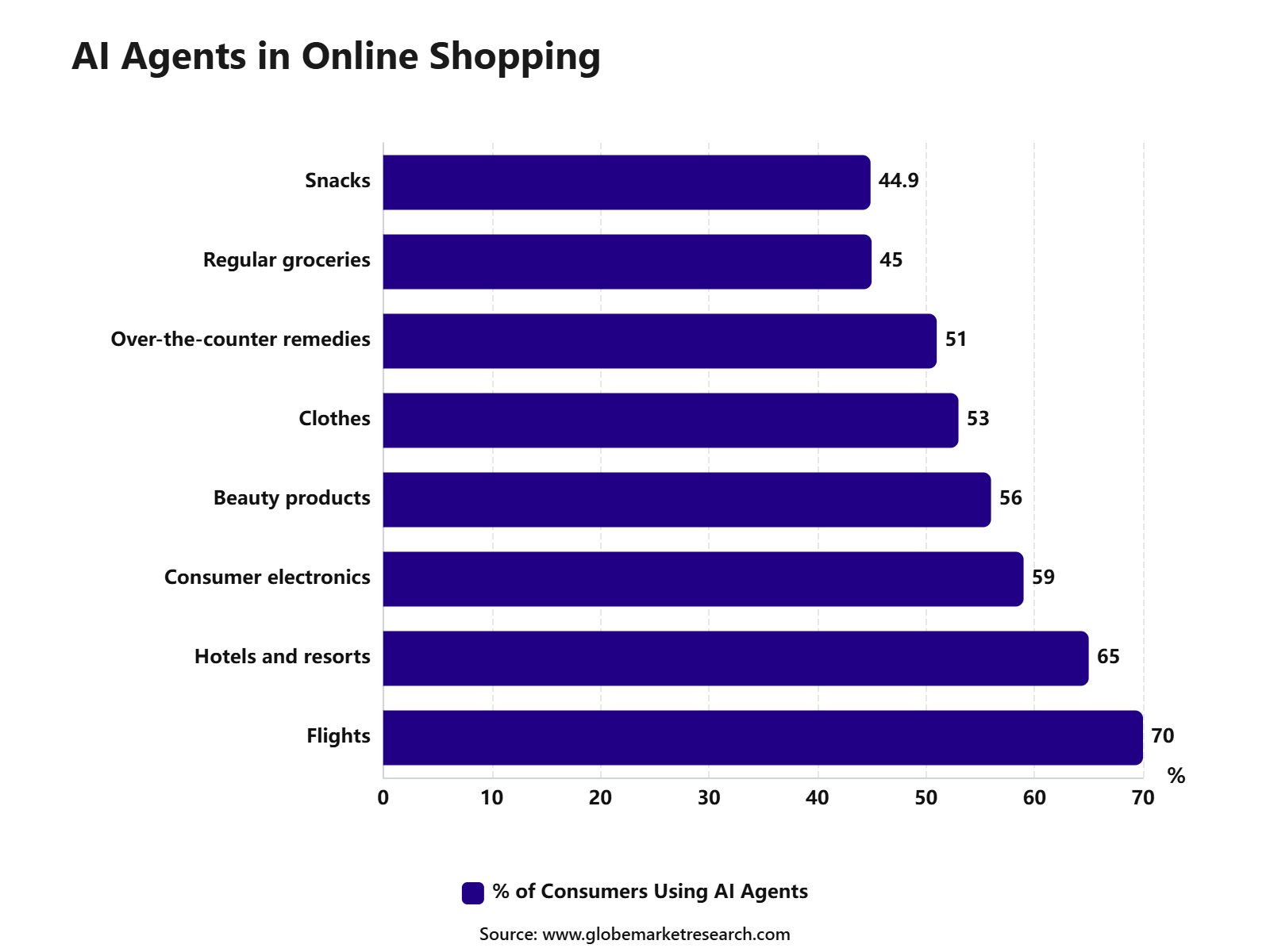
According to Globe Market Research, The Global AI Agents Market was valued at USD 9.9 billion in 2025 and is projected to reach USD 567.1 billion by 2035, growing at a CAGR of 49.9%. North America led the market with a 42.3% share in 2025, supported by strong enterprise AI adoption, advanced cloud infrastructure, higher digital spending, and early use of autonomous workflow systems across banking, retail, healthcare, software, and customer service operations.
The AI agents market includes intelligent software systems that can understand user goals, plan tasks, use digital tools, make decisions, and complete multi-step actions with limited human support. These agents are being adopted across business functions such as sales, customer support, finance, IT operations, marketing, human resources, supply chain, and data analytics. The market is moving from simple chatbot use toward goal-based automation, where AI systems can manage workflows, summarize information, create reports, support decisions, and connect with enterprise applications.
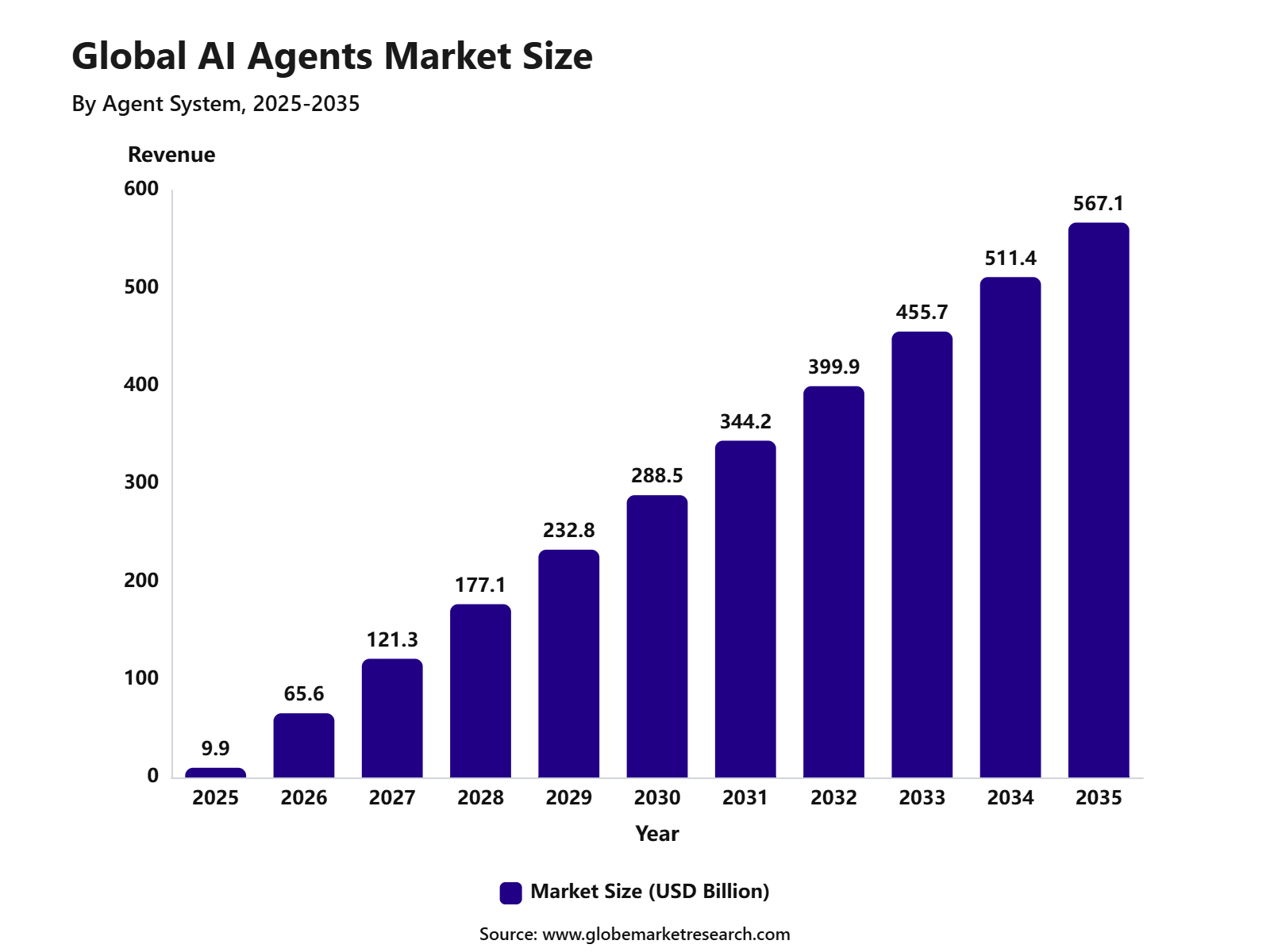
The growth of the AI agents market can be attributed to rising demand for automation, faster decision-making, improved productivity, and lower operating costs. Enterprises are under pressure to reduce manual work, improve response times, and manage large volumes of customer and business data. A 2025 executive survey found that 79% of companies were already adopting AI agents, while 88% planned to increase AI-related budgets because of agentic AI. Among companies using AI agents, 66% reported measurable productivity value.
The market is also supported by the rapid shift of AI spending from testing to core business use. Enterprises are investing in AI agents to support customer service, software development, knowledge management, financial analysis, compliance review, and sales support. In 2025, executives reported that 64% of AI budgets were being spent on core business functions, while 69% identified improved decision-making as the leading benefit of agentic AI systems. This shows that AI agents are becoming part of business operations rather than remaining limited to experimental projects.
Enterprise demand is expected to strengthen further as organizations build connected AI systems across departments. By 2027, 74% of surveyed organizations expect to use AI agents at least moderately, including 23% expecting extensive use and 5% expecting full integration into core business operations. Workforce adoption is also rising, with employee interactions with AI agents growing at an average monthly rate of 65% during the first half of 2025. This reflects a clear movement toward AI-supported daily work across large organizations.
Key Insights
The AI Agent Market is being shaped by strong enterprise adoption, rising automation needs, and the growing use of intelligent systems across daily business functions. In 2025, single agent systems held a 65.3% share, mainly because they are easier to deploy, simpler to manage, and suitable for focused business tasks.
Ready-to-deploy agents accounted for 69.7% of the market in 2025, showing that companies prefer faster implementation over complex custom development.
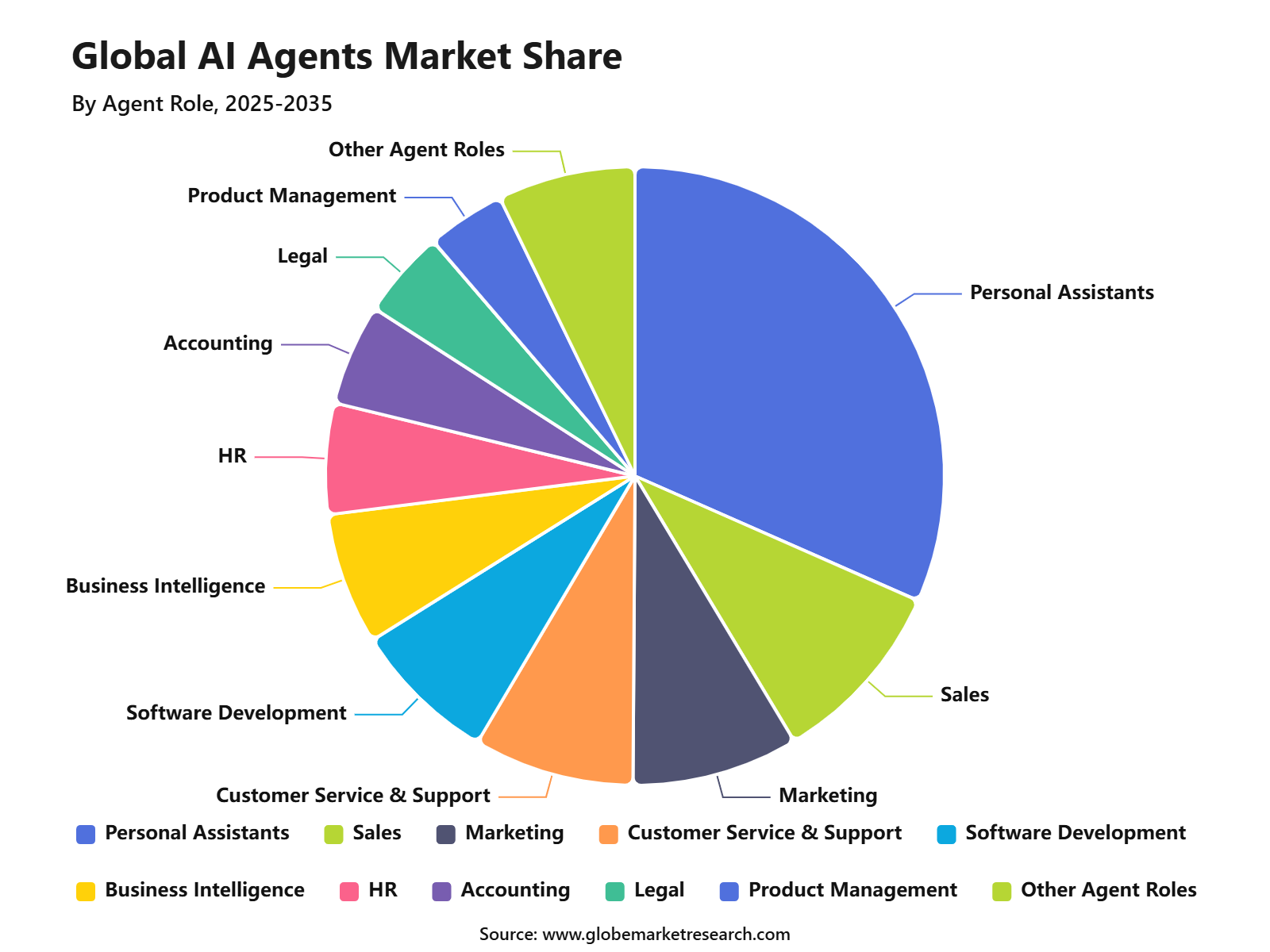
Productivity and personal assistants represented 31.6% of the market by agent role in 2025.
Enterprises remained the leading end-use segment with a 68.1% share in 2025. The growth of this segment can be attributed to the increasing use of AI agents to reduce repetitive work, improve operational speed, and support better business decisions.
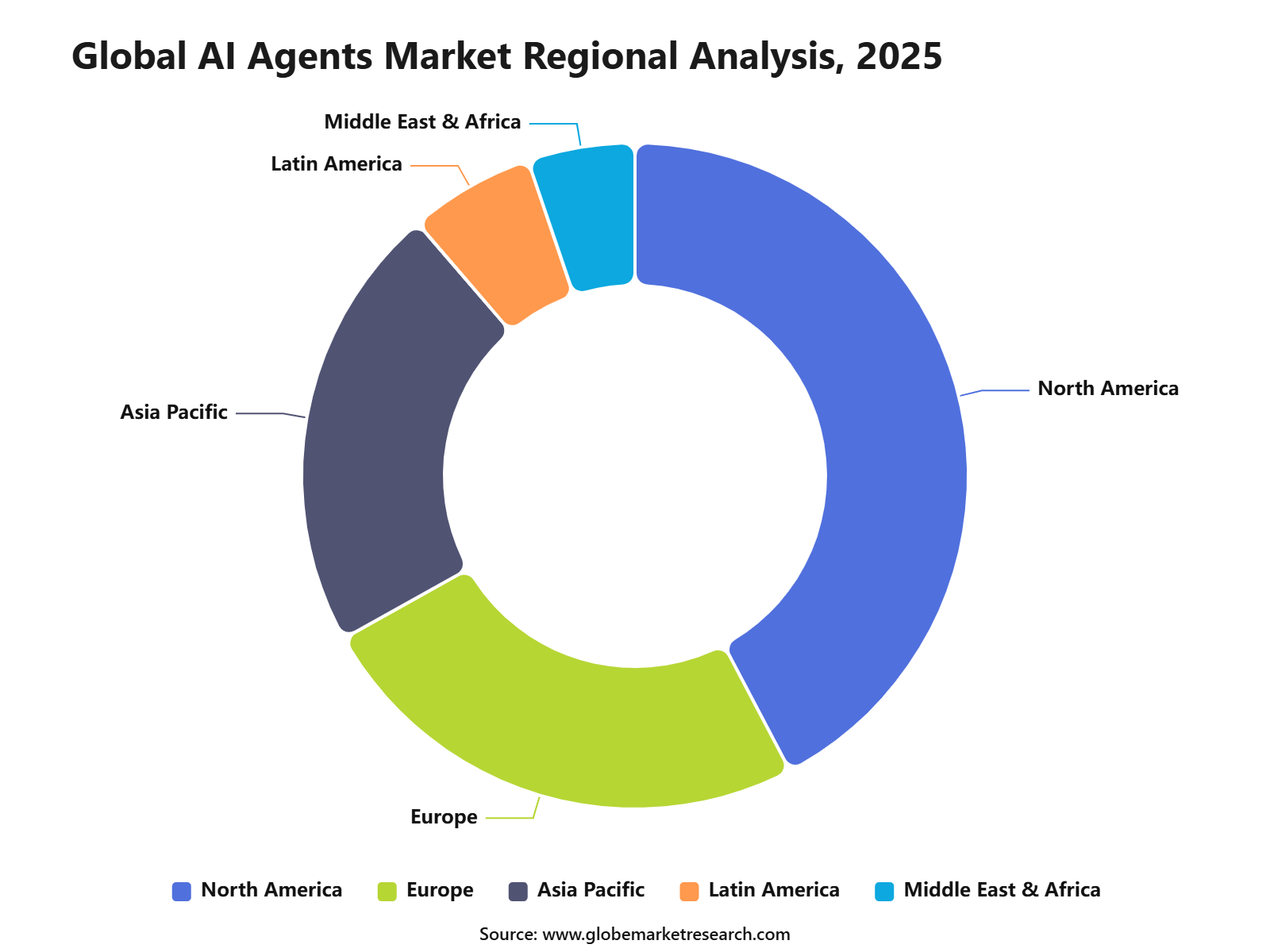
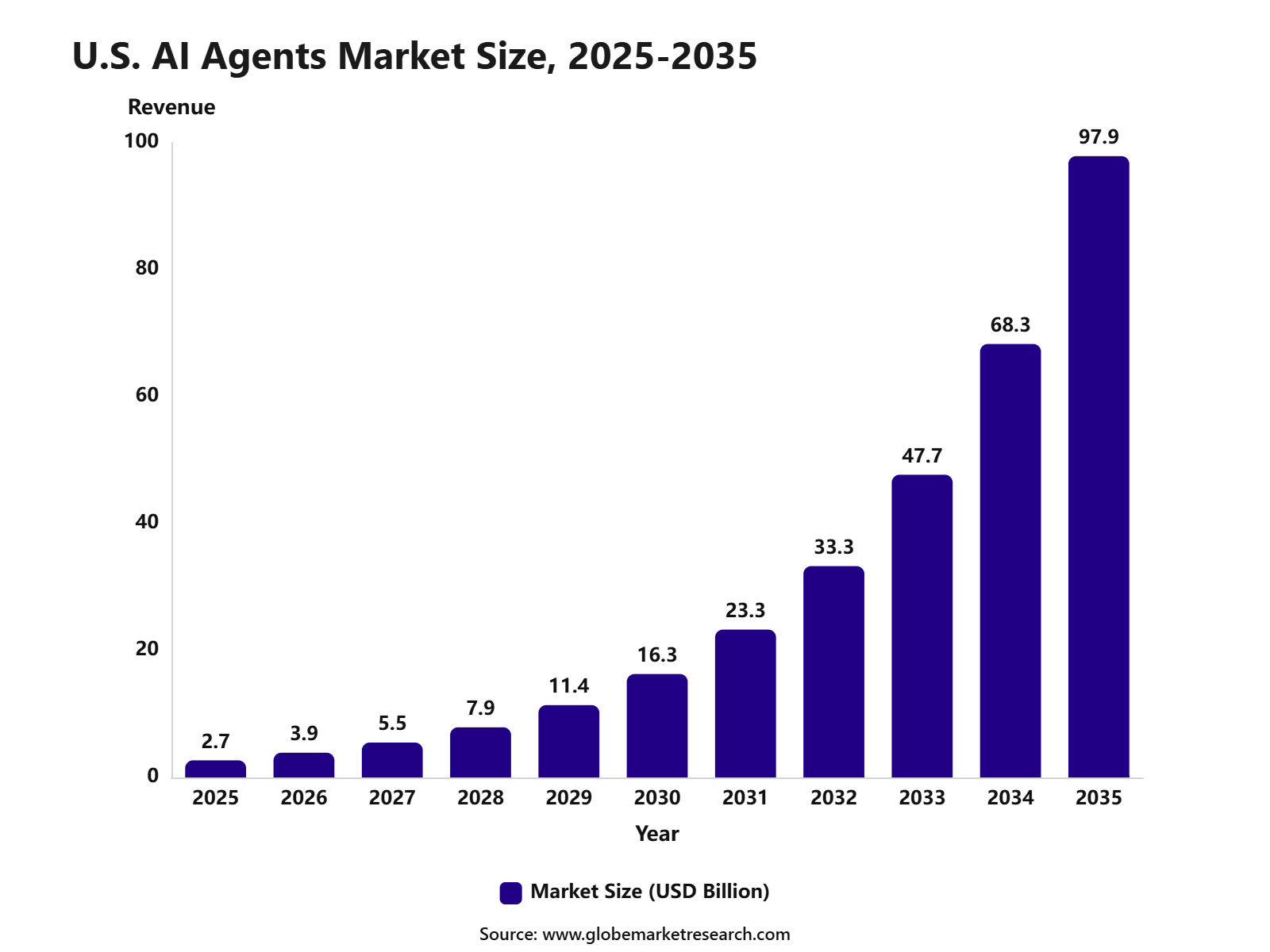
North America led the AI Agent Market with a 42.3% share in 2025, supported by strong cloud infrastructure, early AI adoption, and high enterprise technology spending. The U.S. market reached USD 2.7 billion in 2025 and is projected to grow at a 43.2% CAGR, driven by expanding investment in automation, AI platforms, and digital business operations.
AI-enabled workflows are expected to expand rapidly as companies move from pilot projects to practical business use. Business leaders expect AI-enabled workflows to increase from 3% today to 25% by the end of 2025, indicating a clear shift toward agent-led automation.
Around 64% of AI budgets are now being directed toward core business functions.
Improved decision-making is emerging as one of the strongest benefits of agentic AI systems, with 69% of executives identifying it as the top advantage.
Process efficiency is another major adoption driver, as 83% of executives expect AI agents to improve productivity and output by 2026. This trend highlights the growing role of AI agents in reducing manual steps, improving response times, and supporting scalable business workflows.
Autonomous workflow adjustment is becoming an important capability, with 71% of executives expecting agents to adapt to workflow changes without constant human input. This points to a gradual shift from simple task automation toward more flexible, context-aware AI systems.
Revenue Potential Analysis
Revenue Landscape Across
Software platforms are expected to capture strong revenue potential from AI agents. Revenue is likely to come from subscription pricing, usage-based pricing, enterprise automation modules, API consumption, and premium AI features inside business software. Rising budget support is visible, as 88% of surveyed executives said their team or business function planned to increase AI-related budgets due to agentic AI.
Customer service, IT service management, sales operations, finance operations, and HR support are expected to be high-revenue areas. These functions have large volumes of repeated tasks, clear workflows, and measurable service targets. AI agents can support ticket handling, query resolution, CRM updates, invoice review, employee support, and knowledge search.
Enterprise integration and managed services will also create revenue opportunities. Many organizations need support for workflow mapping, data preparation, system integration, governance design, security testing, and employee training. This is important because AI agents deliver stronger value when they are connected to business systems rather than used as stand-alone assistants.
Industry-specific AI agents are expected to gain demand across banking, healthcare, telecom, retail, manufacturing, and professional services. These sectors have high document volume, customer interaction volume, compliance pressure, and strong demand for faster decisions. The growth of AI-enabled workflows from 3% to 25% shows that enterprises are preparing to move more processes into AI-supported operating models.
Financial Impact
AI agents can reduce operating costs by automating repetitive tasks and lowering manual workload. The strongest financial impact can be achieved in workflows where employees spend large time on document processing, data entry, ticket triage, customer queries, reporting, scheduling, and internal support.
Productivity improvement is one of the clearest financial benefits. Among companies adopting AI agents, 66% reported measurable productivity gains. This supports the case for investment in AI agents where task volume is high and output quality can be monitored through clear KPIs.
Revenue growth can be supported through faster customer response, better lead follow-up, improved sales preparation, and more personalized service. AI agents can help teams respond to customers faster without increasing headcount at the same rate. This creates financial value through higher conversion, better retention, and improved service capacity.
The financial impact depends on governance quality. Companies with clean data, clear approval workflows, secure access controls, audit trails, and human review are more likely to scale AI agents safely. Companies without these controls may face higher cost from errors, rework, compliance gaps, or user distrust.
Business Impact
Online Buying Preferences
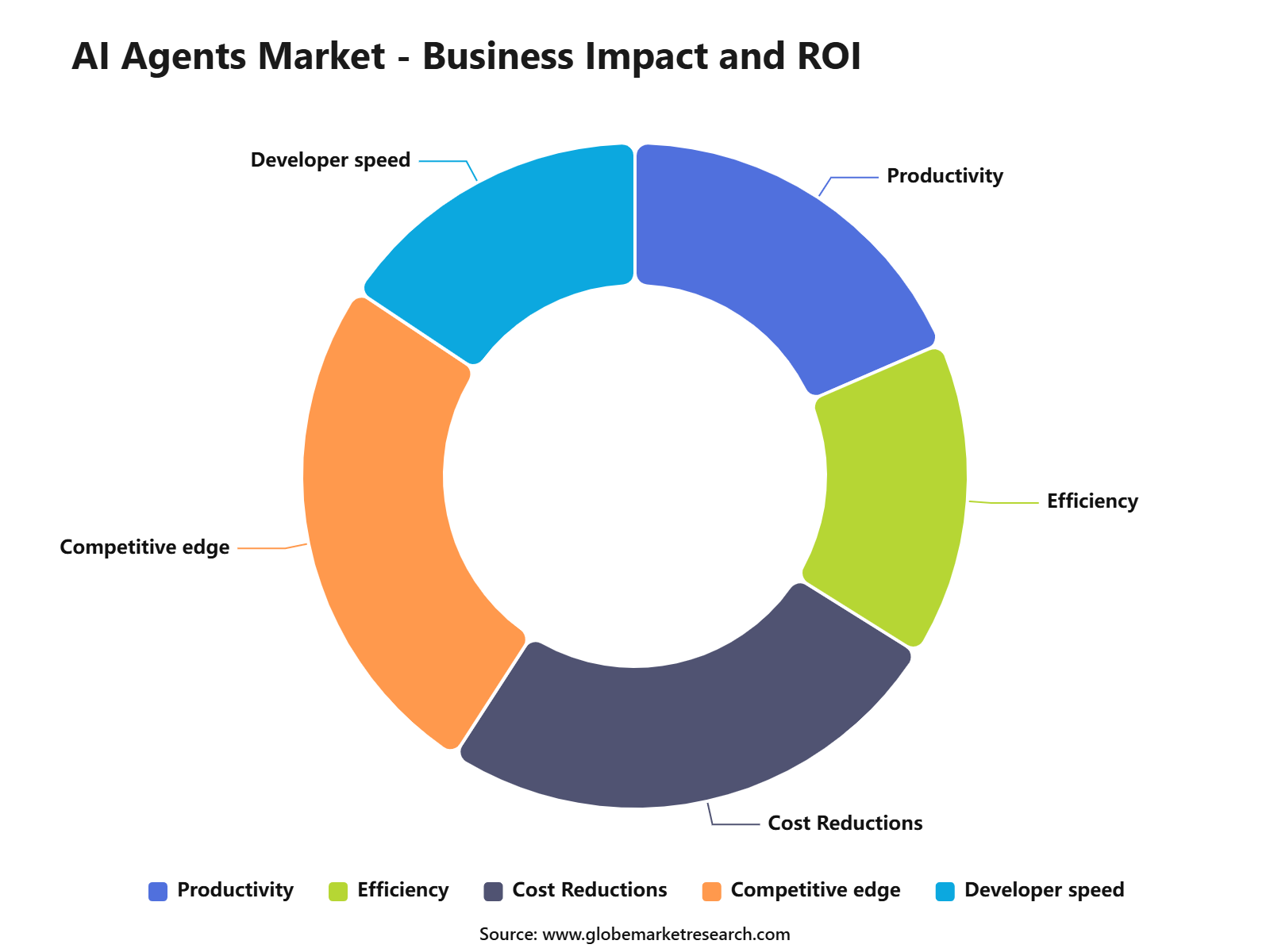
Flights recorded the highest online purchase preference at 70%.
Hotels and resorts followed with 65%, showing strong consumer comfort with booking travel services online.
Consumer electronics ranked third at 59%, supported by high online comparison and purchase activity.
Beauty products stood at 56%, indicating steady digital buying behavior in personal care categories.
Clothes accounted for 53%, reflecting continued demand for online fashion shopping.
Over-the-counter remedies reached 51%, showing moderate consumer acceptance for online health-related purchases.
Regular groceries recorded 45%, while snacks were slightly lower at 44.9%.
Overall, travel-related services showed stronger online purchase preference than daily grocery and snack categories.
By Agent System Analysis
Single agent systems led the AI Agent Market with a 65.3% share in 2025. This leadership can be attributed to their simple structure, faster deployment, and lower need for complex system integration. Enterprises preferred single agent systems for focused business tasks such as document handling, customer response support, internal search, reporting, and routine workflow assistance.
The growth of this segment was also supported by the early stage of enterprise agent adoption. Many organizations are still moving from basic AI assistants to more advanced agent-based workflows, which makes single agent systems a practical starting point. Their controlled design also helps businesses reduce implementation risk, manage output quality, and test AI agents before expanding into multi-agent environments.
By Product Type Analysis
Ready-to-deploy agents accounted for the largest share of 69.7% in 2025. Demand was supported by the need for faster setup, lower development effort, and quicker use across business teams. These agents are commonly preferred for customer service, productivity support, HR assistance, sales workflows, IT helpdesk tasks, and knowledge management.
The segment gained strong traction as enterprises looked for usable AI tools without building everything from the ground up. Ready-to-deploy agents also reduce the burden on internal technical teams because they come with pre-built workflows, integrations, and task-specific functions. This makes them suitable for companies that want measurable productivity gains while keeping customization needs limited.
By Agent Role Analysis
Productivity and personal assistants held a 31.6% share in 2025. Their adoption increased due to rising use in email drafting, meeting support, scheduling, task tracking, document summarization, data search, and daily office workflows. These assistants are becoming useful because they save time on repetitive work and help employees manage information more effectively.
The segment is also benefiting from the shift toward AI-supported knowledge work. Public workplace data shows that AI tools are increasingly used for analysis, decision support, content creation, and information discovery. As employees become more comfortable with AI-assisted work, productivity and personal assistants are expected to remain one of the most widely used agent roles across enterprises.
North America AI Agents Market
North America led the AI Agent Market with a 42.3% share in 2025. The U.S. market reached USD 2.7 billion in 2025 and is projected to grow at a 43.2% CAGR, supported by strong cloud adoption, advanced AI infrastructure, and higher enterprise spending on automation. The region also benefits from a mature software ecosystem, large technology workforce, and early adoption of AI tools across business functions.
The regional lead was further supported by strong AI infrastructure and active enterprise experimentation. The U.S. continues to hold a major position in AI data centers, AI start-up formation, and business use of AI across industries. These factors are helping North America remain a preferred region for AI agent deployment, testing, and commercial scaling.
Driver Analysis
Rising Use of AI Agents in Enterprise Applications
The growth of the AI agents market is being supported by the fast adoption of agents across enterprise software. AI agents are now being used for task execution, workflow support, data search, customer interaction, and decision assistance. Their use is increasing across IT, finance, customer service, HR, sales, and operations as companies look for faster and more efficient ways to manage routine work.
This driver is important because enterprises prefer tools that can work inside their existing business systems. AI agents can help employees prepare summaries, update records, answer internal queries, and trigger workflow actions with less manual effort. As adoption grows, demand is expected to rise for secure, integrated, and business-focused AI agent platforms.
Strong Focus on Productivity and Cost Efficiency
Productivity improvement remains one of the strongest growth drivers for the AI agents market. Companies are adopting AI agents to reduce repetitive tasks, shorten response times, and support employees in daily decision-making. This is creating steady demand from businesses that want better output without adding large operational teams.
Cost efficiency is also supporting market growth, especially in customer service, back-office operations, and IT support. AI agents can handle common queries, route requests, summarize cases, and support faster issue resolution. These benefits are encouraging enterprises to expand AI agent use from pilot projects to wider business functions.
Restraint Analysis
Governance and Security Risks
Governance remains a major restraint for the AI agents market because agents can access systems, data, and workflow tools. If permissions, approval rules, and monitoring systems are weak, agents may create compliance, operational, and security risks. This is a serious concern in banking, healthcare, insurance, government, and other regulated sectors.
Security concerns are increasing as more companies move AI agents into production use. Many enterprises still lack clear visibility into agent actions, system access, and decision responsibility. As a result, buyers are demanding stronger audit trails, identity controls, human approval layers, and risk management systems before large-scale adoption.
Poor Data Readiness and Unclear Return on Investment
AI agents depend on clean, connected, and reliable enterprise data. Many organizations still work with fragmented data systems, inconsistent formats, and limited data ownership. These issues can reduce agent accuracy and make it difficult for companies to fully trust automated outputs.
Unclear return on investment is another restraint for the AI agents market. Deployment requires spending on models, integration, security, employee training, and workflow redesign. If business value is not measured clearly, enterprises may delay adoption or restrict AI agents to low-risk use cases.
Opportunity Analysis
Growth in AI-Led B2B Buying and Digital Commerce
AI agents are expected to create strong opportunities in B2B buying, procurement, and digital commerce. Agents can help buyers compare suppliers, read product details, check pricing, review compliance documents, and support purchase decisions. This will increase the need for structured product data, agent-friendly websites, and automated sales support systems.
This opportunity is important for software vendors, e-commerce platforms, procurement providers, and CRM companies. Businesses that prepare their catalogs, pricing data, service details, and compliance documents for AI-based discovery may gain a stronger position. AI agents are likely to change how business buyers search, compare, and select products or services.
Expansion into Industry-Specific Workflow Automation
Industry-specific AI agents offer a major opportunity because each sector has different processes, documents, rules, and compliance needs. In healthcare, agents can support patient documentation and administrative work, while in finance they can assist with reporting, risk review, and customer support. In manufacturing, logistics, and telecom, agents can help monitor exceptions, coordinate operations, and speed up issue resolution.
The strongest opportunity is expected where AI agents are connected to real business workflows. Companies will prefer agents that understand sector language, follow internal policies, and work with existing enterprise systems. This creates demand for specialized agent platforms, integration services, secure orchestration tools, and vertical AI solutions.
Challenge Analysis
Difficulty in Moving from Pilot Use to Production Deployment
A key challenge in the AI agents market is the gap between testing and production deployment. Many companies can experiment with agents in controlled settings, but they struggle to use them in live business workflows. The main concern is that agent output must be verified before it can be trusted for important business actions.
This challenge is stronger in regulated and safety-sensitive industries. Non-fixed behavior, limited explainability, and weak validation processes make companies cautious. Until better testing, monitoring, and approval systems are developed, many AI agents will remain under human supervision.
Infrastructure and Integration Complexity
AI agents require strong infrastructure because they interact with several systems, process large volumes of data, and may coordinate actions in real time. This increases the need for secure networks, scalable cloud systems, reliable APIs, and strong data infrastructure. Companies with older IT systems may face higher costs and longer deployment timelines.
Integration complexity is also a major challenge for enterprise adoption. AI agents must connect with ERP, CRM, data platforms, security systems, and workflow tools while maintaining strict access controls. If integration is not managed properly, companies may face delays, higher risks, and limited business value from deployment.
Competitive Landscape
The AI Agents Market is becoming highly competitive as leading technology companies shift from basic AI assistants to task-based agents that can connect with enterprise data, applications, APIs, and business workflows. Alibaba Group Holding Limited, Amazon Web Services, Inc., Apple Inc., Baidu, Google, IBM Corporation, Meta, Microsoft, NVIDIA Corporation, Salesforce, Inc., and other players are competing through cloud platforms, foundation models, agent builders, AI infrastructure, governance tools, and workflow automation.
Microsoft is strengthening its position through Copilot Studio, Microsoft Foundry, and Agent 365 for creating, deploying, scaling, governing, and securing agents, while AWS is expanding Amazon Bedrock Agents and AgentCore to support multistep automation, enterprise system connection, and secure production deployment. Google and Salesforce are also increasing their competitive focus on enterprise-ready AI agents. Google’s Gemini Enterprise Agent Platform supports the creation, deployment, governance, and optimization of AI agents on a secure platform, including Google-made, custom-built, and third-party agents.
Salesforce is building its Agentforce platform for autonomous business agents across customer service, sales, marketing, and commerce, and its planned USD 3.6 billion acquisition of Fin highlights the rising value of customer support agents in enterprise automation. IBM, NVIDIA, Meta, Apple, Alibaba, and Baidu are strengthening the broader ecosystem through different market roles. IBM is focused on trusted enterprise orchestration and governance, NVIDIA is supporting agent development with AI infrastructure and deployment software, Meta is enabling open model adoption through its Llama ecosystem, and Apple is moving toward privacy-focused personal agents through device and app-level intelligence.
Top Companies
Alibaba Group Holding Limited
Amazon Web Services, Inc.
Apple Inc.
Baidu
Google
IBM Corporation
Meta
Microsoft
NVIDIA Corporation
Salesforce, Inc.
Others
AI Agents Market Report Scope
Report Highlights | Details |
|---|---|
Market Revenue (2025) | USD 9.9 Bn |
Forecast Revenue (2035) | USD 567.1 Bn |
CAGR (2025-2035) | 49.9% |
Base Year for Estimation | 2025 |
Historic Data | 2020-2024 |
Forecast Period | 2025-2035 |
Report Coverage | AI market impact analysis, Market surveys, trade analysis, Industry & competitive intelligence, Revenue projections, company positioning, competitive analysis, growth drivers, and emerging market trends, Strategic Consultation & Advisory Services |