

Revenue, 2025
$ 6.9 Bn
Forecast, 2035
$ 13.7 Bn
CAGR, 2025-2035
7.1%
Report Coverage
Global
Market Size and Forecast
The Global High-Efficiency Air Filtration Media Market was worth USD 6.9 billion in 2025 and is expected to reach USD 13.7 billion by 2035, growing at a CAGR of 7.1% from 2025 to 2035. Asia Pacific held the largest regional share of 39.6% in 2025, supported by rapid industrialization, rising air quality concerns, expanding healthcare infrastructure, and strong demand from manufacturing, cleanrooms, HVAC systems, and electronics production.
The High-Efficiency Air Filtration Media Market includes advanced filtration materials used to capture fine particles, dust, allergens, microbes, smoke, and other airborne contaminants. These media are widely used in HEPA filters, ULPA filters, HVAC filters, industrial dust collectors, cleanroom systems, medical facilities, laboratories, and commercial buildings. The market is closely linked with indoor air quality standards, pollution control, healthcare safety, and industrial contamination management.
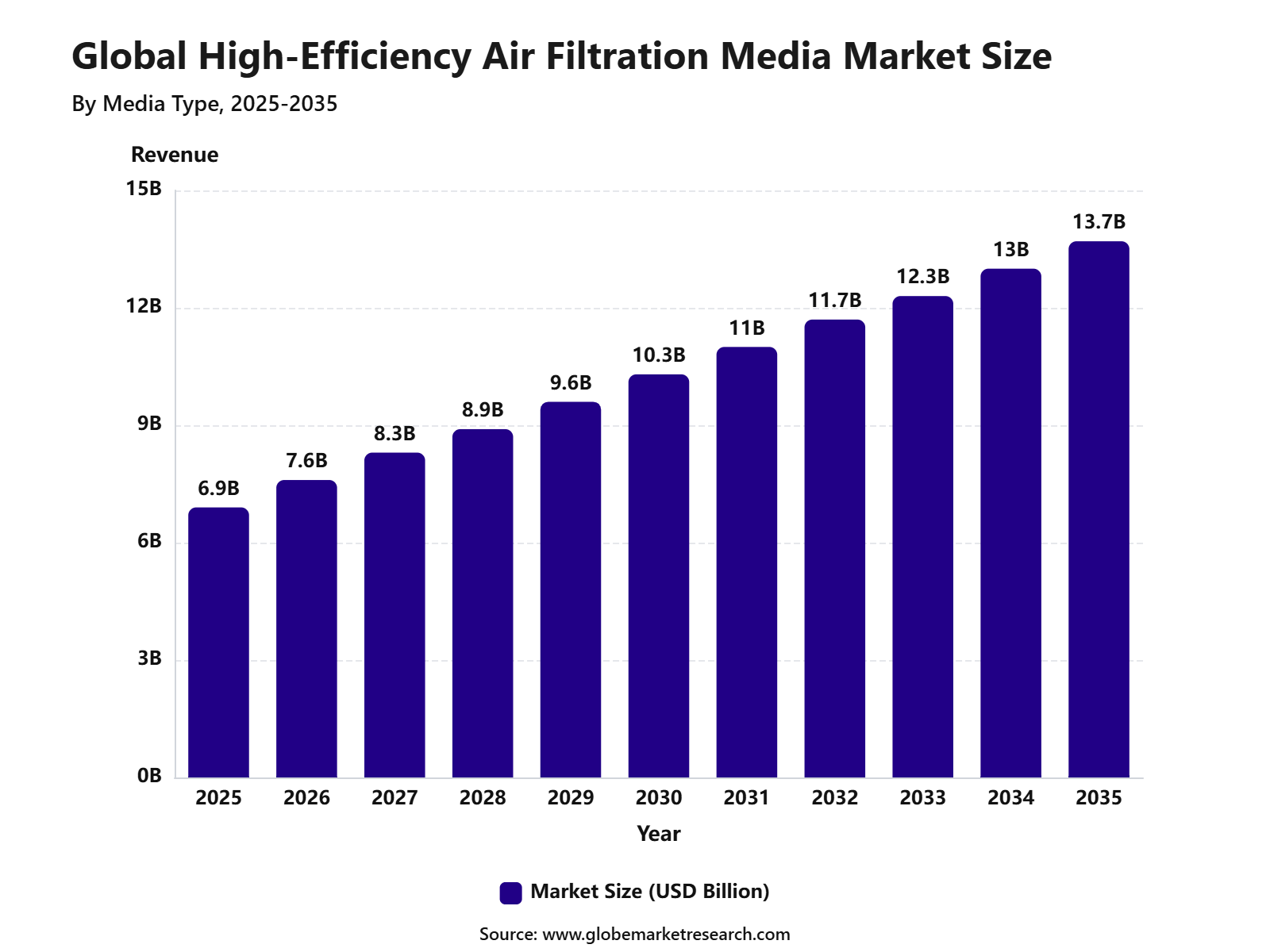 iThe graph shows projected market growth until 2035 based on CAGR analysis. Actual outcomes may vary depending on changing demand, competition, and economic factors.To gain greater insights - request a sample report PDF
The market outlook remains positive as industries and public facilities continue to prioritize cleaner and safer air environments. Growth can be attributed to increasing use of high-performance filtration in hospitals, semiconductor plants, pharmaceutical manufacturing, and commercial buildings. The expansion of cleanroom facilities, stricter air quality regulations, and rising adoption of energy-efficient filtration systems are expected to support long-term market demand.
Report Highlights | Details |
|---|---|
Market Revenue (2025) | USD 6.9 Billion |
Forecast Revenue (2035) | USD 13.7 Billion |
CAGR (2025-2035) | 7.1% |
Base Year for Estimation | 2025 |
Historic Data | 2020-2024 |
Forecast Period | 2025-2035 |
Key Market Insights
Glass fiber media led the media type segment with 37.1% share, supported by its high particle capture efficiency, thermal stability, durability, and wide use in advanced filtration systems.
HEPA media accounted for 55.4% share by efficiency grade, driven by strong demand for fine particle removal in cleanrooms, healthcare facilities, commercial buildings, and industrial air filtration.
Pleated media held 43.1% share by filter format, supported by its larger surface area, better dust-holding capacity, longer service life, and improved airflow performance.
HVAC systems captured 33.8% share by application, driven by rising demand for indoor air quality, energy-efficient ventilation, and high-performance filtration in buildings.
Commercial buildings represented 30.4% share by end-use industry, supported by growing use of advanced air filtration in offices, malls, hotels, hospitals, airports, and institutional facilities.
Asia Pacific led the high-efficiency air filtration media market with 39.6% share, supported by rapid urbanization, industrial growth, rising air quality concerns, and expanding demand for HVAC and cleanroom filtration systems.
Top Funding and Investment Highlights
Parker Hannifin announced a USD 9.25 billion cash deal to acquire Filtration Group in November 2025. Filtration Group is expected to generate USD 2.0 billion in 2025 sales, with about 85% from aftermarket sales, showing strong capital interest in HVAC/R, industrial filtration, and proprietary media technologies.
Atmus Filtration completed the acquisition of Koch Filter in January 2026, strengthening its industrial air filtration platform across commercial HVAC, data centers, and power generation. The deal was announced at USD 450.0 million, while Koch Filter generated USD 156.0 million in FY2025 revenue.
EPA awarded USD 34.0 million across five grants to improve indoor air quality in schools, with individual awards ranging from USD 5.0 million to USD 8.0 million. More than 50 applications requested over USD 350.0 million, indicating high institutional demand for filtration, ventilation, and air-quality upgrades.
The U.S. American Rescue Plan provided USD 122.0 billion for the ESSER Fund, which can be used for school indoor air quality improvements, including ventilation and filtration upgrades. CDC data showed 33% of K-12 public schools used HEPA systems in high-risk areas, while 28% used HEPA systems in classrooms.
Hollingsworth & Vose announced a USD 40.2 million expansion in Floyd County, Virginia, adding over 28,000 square feet and creating 25 jobs. The company supplies advanced materials used in filtration, battery, and industrial applications, supporting capacity growth in high-performance filtration media.
How AI Impacts the High-Efficiency Air Filtration Media Market?
AI is improving the High-Efficiency Air Filtration Media Market by making filtration systems more intelligent, performance-based, and connected with indoor air quality data. Traditional filters are selected mainly by efficiency grade, pressure drop, and replacement cycle, but AI allows facility teams to monitor filter loading, airflow, particle levels, humidity, occupancy, and outdoor pollution in real time.
This supports better use of HEPA, MERV 13, MERV 14, glass fiber media, synthetic media, meltblown media, PTFE membrane media, and nanofiber media across commercial buildings, healthcare facilities, schools, laboratories, data centers, and industrial plants. AI has a strong impact on filter replacement and predictive maintenance. Instead of changing filters only on fixed schedules, AI can analyze pressure differential, fan energy use, particle sensors, runtime hours, and air quality changes to predict when media performance is declining.
Johnson Controls’ 2026 AI and Digitalization Survey found that 65% of business leaders and 67% of facility managers already use AI to improve facility operation, utilization, and maintenance, while 47% of facility managers using AI apply it for predictive maintenance. This creates direct value for high-efficiency filtration media because filters can be replaced based on actual condition rather than guesswork.
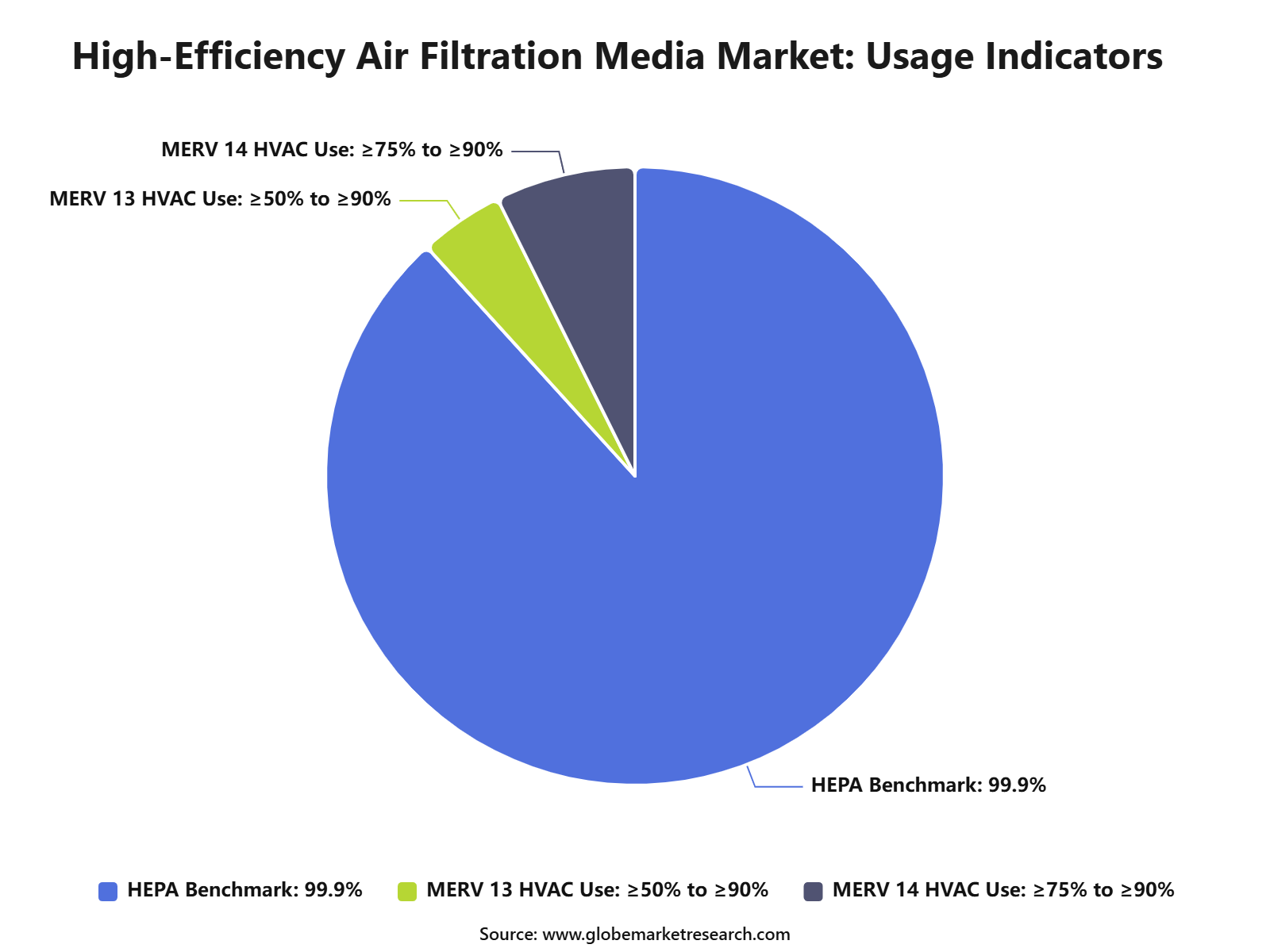 iThe graph shows projected market growth until 2035 based on CAGR analysis. Actual outcomes may vary depending on changing demand, competition, and economic factors.To gain greater insights - request a sample report PDF
By Media Type
Glass fiber media accounted for 37.1% of the High-Efficiency Air Filtration Media Market. Its strong position can be attributed to its high particle capture efficiency, thermal stability, and suitability for demanding filtration environments. The material is widely used where fine particulate removal is required across industrial and institutional facilities.
The segment benefits from rising demand for clean indoor air, strict workplace air quality standards, and the growth of advanced HVAC systems. Glass fiber media is preferred in applications that require stable performance under high airflow and pressure conditions. Its use is also supported by longer service life compared with several conventional filtration materials.
Growth is expected to remain steady as healthcare, semiconductor, pharmaceutical, and commercial building sectors continue to invest in high-performance filtration systems. The segment is also supported by increased focus on energy-efficient filters, where media strength and dust-holding capacity are important purchasing factors.
By Efficiency Grade
HEPA media held the leading share of 55.4% in the market. This dominance is mainly supported by its ability to remove very fine airborne particles, including dust, allergens, bacteria, and other contaminants. HEPA filtration is widely used in critical environments where air purity is a key operational requirement.
The demand for HEPA media has increased across hospitals, laboratories, cleanrooms, pharmaceutical manufacturing, and premium HVAC systems. The segment is also gaining traction in residential and commercial air purifiers as consumers and building owners become more aware of indoor air quality risks.
The growth of this segment can be linked to stricter filtration standards and higher adoption of controlled-environment facilities. As industries continue to prioritize contamination control, HEPA media is expected to remain a core technology in high-efficiency air filtration solutions.
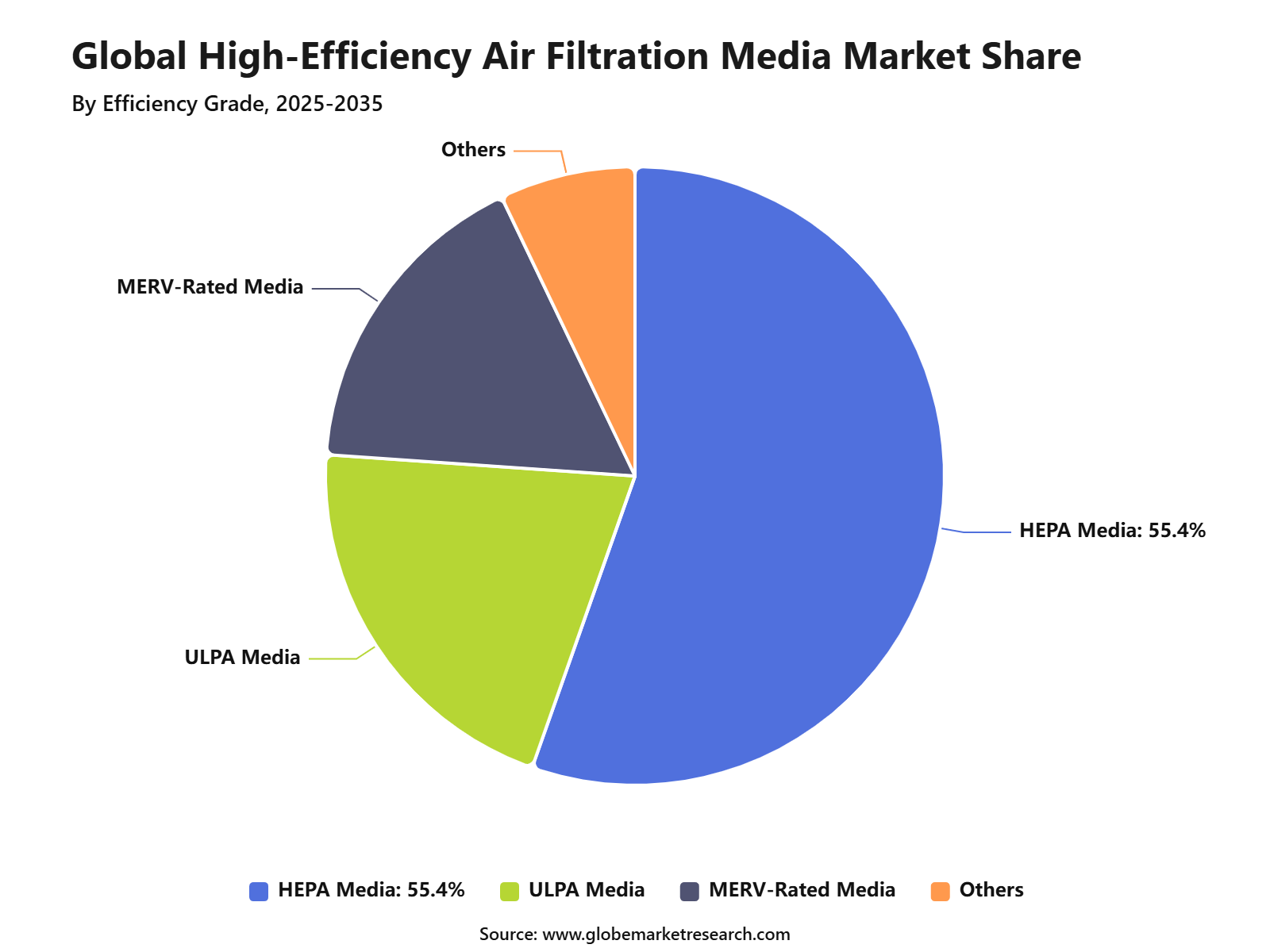 iThe graph shows projected market growth until 2035 based on CAGR analysis. Actual outcomes may vary depending on changing demand, competition, and economic factors.To gain greater insights - request a sample report PDF
By Filter Format
Pleated media represented 43.1% of the market, making it the leading filter format. Its strong share is driven by a larger filtration surface area, improved dust-holding capacity, and better airflow management. Pleated designs help filters deliver high efficiency while maintaining practical operating performance.
This format is widely used in HVAC systems, air purifiers, industrial filtration units, and commercial building ventilation systems. The pleated structure allows more media to be fitted into a compact filter frame, which improves filtration performance without requiring large installation space.
The segment is expected to grow due to rising replacement demand, building modernization, and the need for compact yet efficient filtration products. Pleated media is also suitable for both standard and high-performance filtration systems, making it a preferred format across multiple end-use industries.
By Application
HVAC systems accounted for 33.8% of the High-Efficiency Air Filtration Media Market. The segment leads due to the growing need for cleaner indoor air in commercial, residential, healthcare, and industrial buildings. HVAC systems are increasingly being designed with high-efficiency filters to improve air quality and occupant safety.
Demand is supported by urbanization, rising construction activity, and stronger focus on ventilation standards. Commercial offices, malls, hospitals, educational institutions, and manufacturing facilities are using advanced HVAC filtration to reduce airborne pollutants and improve comfort.
The segment is expected to maintain strong growth as building owners continue to upgrade air handling systems. Energy-efficient HVAC filters with high particulate capture performance are gaining importance as companies aim to balance clean air requirements with operating cost control.
By End-Use Industry
Commercial buildings held the leading share of 30.4% in the market. The segment includes offices, retail spaces, hotels, educational buildings, public facilities, and mixed-use infrastructure. High footfall and continuous indoor air circulation create strong demand for reliable filtration media in these spaces.
The growth of this segment is supported by rising awareness of indoor air quality and the need to reduce dust, allergens, smoke particles, and other airborne pollutants. Building owners are also investing in better filtration systems to improve occupant health, comfort, and compliance with facility standards.
Commercial buildings are expected to remain a major demand center as retrofitting and HVAC modernization continue across developed and emerging economies. The shift toward green buildings and energy-efficient infrastructure is further increasing the use of advanced filtration media.
Regional Analysis
Asia Pacific accounted for 39.6% of the market, making it the leading regional segment. The region’s dominance is supported by rapid industrialization, expanding healthcare infrastructure, rising commercial construction, and strong manufacturing activity across China, India, Japan, South Korea, and Southeast Asia.
Demand is also being driven by air pollution concerns, stricter cleanroom requirements, and growth in semiconductor, pharmaceutical, automotive, and electronics manufacturing. These industries require high-quality air filtration media to protect products, workers, and production environments from contamination.
Asia Pacific is expected to remain a high-growth region due to increasing investment in smart buildings, industrial facilities, hospitals, and clean manufacturing plants. Rising consumer demand for air purifiers and improved indoor air quality is also strengthening the regional market outlook.
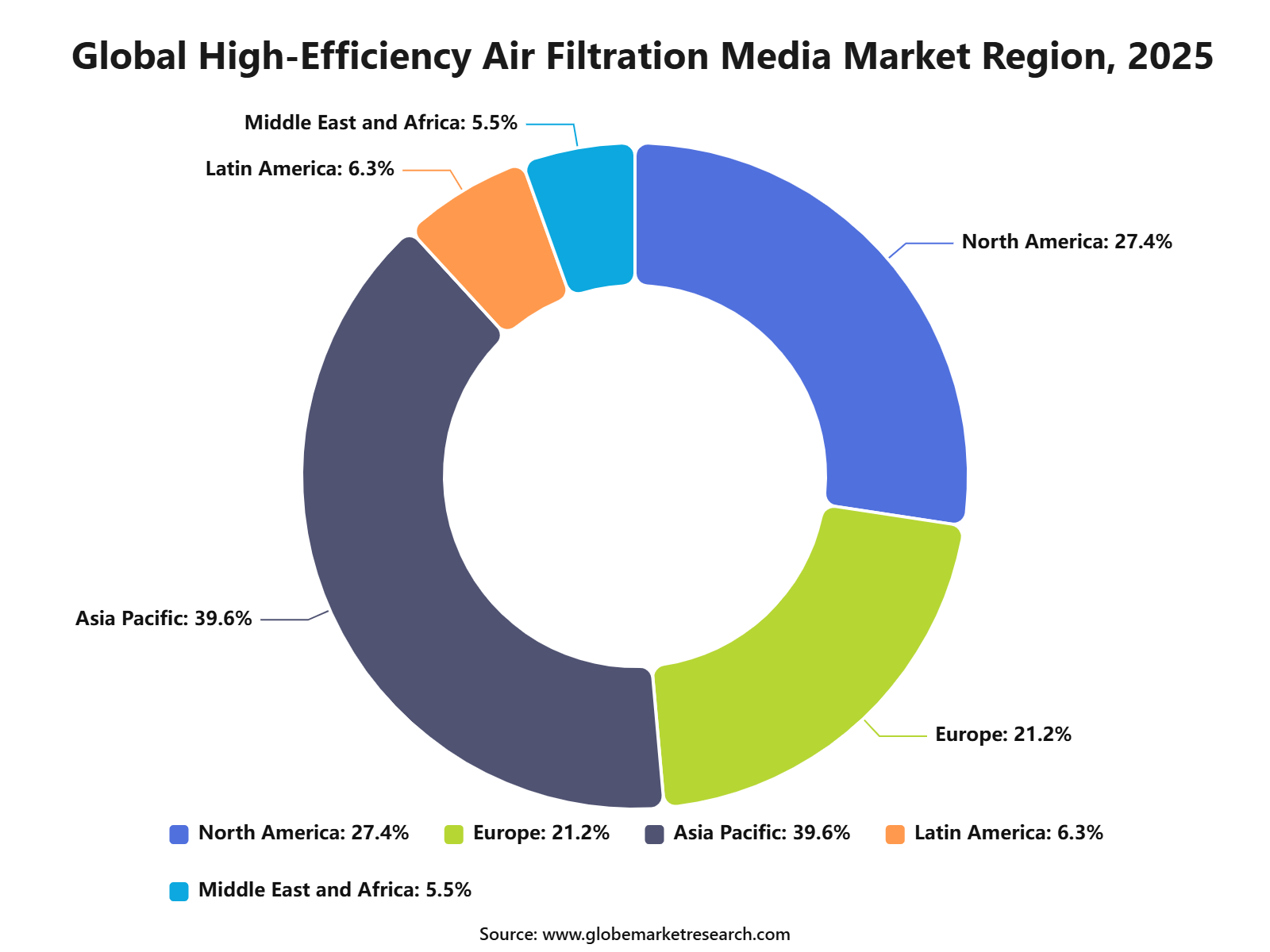 iThe graph shows projected market growth until 2035 based on CAGR analysis. Actual outcomes may vary depending on changing demand, competition, and economic factors.To gain greater insights - request a sample report PDF
Go-to-Market and Sales Economics
The go-to-market approach for the High-Efficiency Air Filtration Media Market should focus on performance, compliance and lifecycle cost savings. Demand is being supported by HVAC upgrades, cleanrooms, hospitals, laboratories, data centers, semiconductor fabs and industrial dust collection systems. In April 2026, U.S. shipments of central air conditioners and air-source heat pumps reached 837,098 units, up 5.1% from April 2025, which supports recurring demand for replacement filters and high-efficiency media in HVAC systems.
Sales economics should be built around OEM partnerships, filter converter relationships and technical selling to end-use industries. Buyers need media with stable airflow, high dust-holding capacity, lower pressure drop and reliable particle capture. Global air quality concerns are also supporting demand, as the 2025 IQAir report found that only 13 countries and territories met the WHO PM2.5 safety guideline of less than 5 micrograms per cubic meter.
The strongest commercial route is expected to come from application-specific media supply. HVAC buyers prioritize energy efficiency and replacement cycles, while cleanroom and healthcare buyers focus on contamination control. CDC guidance notes that HEPA filtration can be used when recirculating air from airborne infection isolation rooms where outside exhaust is not practical, which supports high-efficiency filtration demand in critical healthcare spaces.
Risk Factors & Market Barriers
The main barrier is the trade-off between filtration efficiency and airflow resistance. Higher-efficiency media can increase pressure drop if poorly designed, raising fan load, energy use, noise, and maintenance frequency. Buyers therefore require media that can combine high particle capture with stable airflow, long service life, and lower replacement cost.
Technical qualification is also a challenge. ASHRAE recommends MERV 13 filters where possible, with MERV-A 13-A or MERV 14 preferred, but not every HVAC system can handle higher-resistance filters. This creates a need for proper system assessment, sealing, filter fit, airflow testing, and maintenance support before upgrade decisions.
Raw material and production-cost pressure can affect margins. High-efficiency filtration media depends on glass fiber, synthetic fibers, meltblown polypropylene, PTFE, adhesives, frames, gaskets, and pleating systems. FRED reported the nonwoven fabrics producer price index at 200.902 in May 2026, indicating that media input costs must be managed carefully.
Revenue Potential Analysis
Revenue Landscape Across
Revenue opportunities are strongest across commercial HVAC, residential air purifiers, hospitals, laboratories, pharmaceutical manufacturing, semiconductor cleanrooms, schools, airports, data centers, food processing, industrial dust control, and wildfire smoke protection. Demand is supported by indoor air quality standards, clean manufacturing needs, infection control, and growing awareness of PM2.5 exposure.
Cleanroom-linked demand is expected to remain important because semiconductor and life-science facilities require highly controlled air. SEMI reported that worldwide 300mm fab equipment spending is expected to increase 18% to USD 133.0 billion in 2026 and 14% to USD 151.0 billion in 2027, supporting filter media used in fabs.
Building retrofit and new construction also create a large revenue base. U.S. construction spending reached a seasonally adjusted annual rate of USD 2,172.4 billion in April 2026, up 0.9% from April 2025. This supports demand for filtration media in HVAC systems used across offices, schools, healthcare buildings, and industrial facilities.
Financial Impact
The financial impact in 2026 will depend on media cost, energy performance, filter life, replacement cycle, certification, pleating efficiency, and customer segment mix. FRED reported nonreusable media for filters and strainers at an index level of 150.722 in May 2026, showing cost stability compared with earlier months.
Air purification equipment pricing also affects downstream demand. FRED reported the U.S. air purification equipment manufacturing producer price index at 171.302 in May 2026, compared with 171.052 in January 2026. Stable equipment pricing can support replacement demand, while high media costs can pressure filter manufacturers and private-label suppliers.
Profitability can improve where suppliers provide application-specific media for HEPA filters, cleanroom panels, HVAC upgrades, air purifiers, and industrial cartridges. Higher-margin opportunities are expected in healthcare, electronics, pharmaceuticals, laboratories, and data centers. Stronger returns will be supported by low-pressure-drop design, longer filter life, compliance documentation, and reliable batch quality.
Drivers Impact Analysis
The High-Efficiency Air Filtration Media Market is driven by rising demand for cleaner indoor air, stricter air quality standards, and growing use of advanced filtration in HVAC systems, cleanrooms, healthcare facilities, commercial buildings, and industrial plants. These media help capture fine particles, dust, allergens, smoke, microbes, and process contaminants.
Asia Pacific supports strong growth due to urbanization, industrial expansion, semiconductor manufacturing, healthcare infrastructure, and commercial building development. China, India, Japan, South Korea, and Southeast Asia are key demand centers because of rising air pollution concerns and growing adoption of high-efficiency filtration systems.
Impact Factor | Estimated CAGR Impact | Regional Relevance | Market Impact |
|---|---|---|---|
Rising indoor air quality awareness | +1.8% | Asia Pacific, North America, Europe | Drives adoption. |
Growth in HVAC system installations | +1.5% | Commercial and residential markets | Supports media demand. |
Expansion of cleanrooms and controlled spaces | +1.3% | Semiconductor, pharma, healthcare | Builds premium usage. |
Increasing industrial air pollution control | +1.1% | Asia Pacific, Europe, North America | Supports compliance demand. |
Demand from healthcare facilities | +0.9% | Global hospitals and labs | Strengthens filtration need. |
Restraints Impact Analysis
The market faces restraints from high replacement cost, pressure drop concerns, and performance limitations in poorly maintained systems. High-efficiency media can improve air quality, but it may also increase energy consumption if the system design is not optimized.
Cost sensitivity is another restraint, especially in small commercial buildings and emerging markets. Buyers may select lower-grade filtration when upfront cost is prioritized over lifecycle performance, indoor air quality, or regulatory compliance.
Impact Factor | Estimated CAGR Impact | Regional Relevance | Market Impact |
|---|---|---|---|
Higher filter replacement cost | -1.0% | Price-sensitive markets | Limits adoption. |
Energy penalty from pressure drop | -0.8% | HVAC-heavy buildings | Raises operating cost. |
Limited maintenance practices | -0.7% | Emerging commercial markets | Reduces performance. |
Competition from lower-grade filters | -0.6% | Residential and small facilities | Slows premium uptake. |
Disposal concerns for used filters | -0.5% | Europe, North America, Asia Pacific | Adds waste burden. |
Opportunities Impact Analysis
Opportunities are strong in HEPA media, ULPA media, glass fiber media, meltblown media, nanofiber media, and pleated filter formats. Demand is increasing in industries that need reliable particle capture, such as pharmaceuticals, electronics, healthcare, laboratories, and advanced manufacturing.
Commercial buildings also offer strong opportunity as facility managers invest in better air quality, energy-efficient HVAC upgrades, and filtration systems that support occupant health. Suppliers that improve filtration efficiency while reducing pressure drop can capture better value.
Impact Factor | Estimated CAGR Impact | Regional Relevance | Market Impact |
|---|---|---|---|
HEPA media expansion | +1.7% | Healthcare, commercial, industrial sectors | Builds premium demand. |
Nanofiber filtration development | +1.4% | Advanced filtration markets | Improves performance value. |
Semiconductor cleanroom demand | +1.2% | Asia Pacific, U.S., Europe | Supports high-grade media. |
Smart HVAC upgrade projects | +1.0% | Commercial buildings | Expands replacement demand. |
Low-pressure-drop media innovation | +0.8% | Global HVAC systems | Improves energy efficiency. |
Challenges Impact Analysis
The main challenge is balancing filtration efficiency, airflow, energy use, and cost. High-efficiency media must capture fine particles while allowing enough airflow to keep HVAC systems efficient and reliable.
Another challenge is proving long-term performance under real operating conditions. Dust loading, humidity, air speed, maintenance schedules, and installation quality can affect filter life and actual filtration results.
Impact Factor | Estimated CAGR Impact | Regional Relevance | Market Impact |
|---|---|---|---|
Balancing efficiency and airflow | -0.9% | Global HVAC users | Affects system design. |
Managing pressure drop over time | -0.8% | Commercial and industrial buildings | Increases energy use. |
Ensuring consistent media quality | -0.7% | Global producers | Protects product reliability. |
Meeting sector-specific standards | -0.6% | Healthcare, cleanrooms, pharma | Raises testing needs. |
Reducing filter waste generation | -0.5% | Regulated and sustainability-focused markets | Requires better design. |
Segment Covered in the Report
By Media Type
Glass Fiber Media
Synthetic Fiber Media
Meltblown Media
PTFE Membrane Media
Nanofiber Media
Others
By Efficiency Grade
HEPA Media
ULPA Media
MERV-Rated High-Efficiency Media
Others
By Filter Format
Pleated Media
Mini-Pleat Media
Flat Sheet Media
Roll Media
Pocket/Bag Media
By Application
HVAC Systems
Cleanrooms
Industrial Air Filtration
Healthcare Facilities
Automotive Cabin Filtration
Air Purifiers
Others
By End-Use Industry
Commercial Buildings
Healthcare and Pharmaceuticals
Semiconductor and Electronics
Industrial Manufacturing
Automotive
Residential
Others
By Region
North America
Europe
Asia Pacific
Latin America
Middle East and Africa
Market Trend Analysis
The market trend is moving toward HEPA media, glass fiber media, pleated formats, and advanced synthetic filtration materials. Glass fiber media holds strong importance due to its performance in high-efficiency filtration, while HEPA media remains a key efficiency grade for critical air-cleaning applications.
Pleated media is gaining preference because it increases surface area and improves dust-holding capacity within compact filter designs. HVAC systems and commercial buildings remain major demand areas as air quality becomes a stronger part of facility planning.
Impact Factor | Estimated CAGR Impact | Regional Relevance | Market Impact |
|---|---|---|---|
Glass fiber media remains important | +1.6% | High-efficiency filtration systems | Supports core performance. |
HEPA media adoption increases | +1.5% | Healthcare, HVAC, cleanrooms | Leads efficiency demand. |
Pleated filter formats gain share | +1.2% | Commercial and industrial HVAC | Improves dust capacity. |
HVAC applications remain dominant | +1.1% | Global building sector | Drives replacement cycles. |
Commercial building demand expands | +0.9% | Asia Pacific, North America, Europe | Supports steady usage. |
Investor Type Impact Matrix
Investors should focus on filtration media producers with strong technical capability, reliable quality control, and exposure to HVAC, healthcare, cleanrooms, and industrial air filtration. These end-use areas provide stable replacement demand and recurring revenue potential.
Strategic investors can also target nanofiber media, smart filtration systems, energy-efficient filter designs, and cleanroom-grade products. Companies that combine filtration performance with lower energy impact are better positioned for long-term growth.
Investor Type | Estimated CAGR Impact | Regional Relevance | Market Impact |
|---|---|---|---|
Filtration Media Manufacturers | +1.6% | Global | Expands media capacity. |
HVAC System Suppliers | +1.3% | Asia Pacific, Europe, North America | Drives filter demand. |
Cleanroom and Healthcare Suppliers | +1.1% | Semiconductor, pharma, hospitals | Supports premium usage. |
Industrial Filtration Companies | +0.9% | Manufacturing and processing hubs | Builds compliance demand. |
Private Equity and Strategic Investors | +0.7% | Advanced filtration markets | Supports capacity scaling. |
Recent Developments
In May 2026, Ahlstrom launched a new generation of glass microfiber media for HVAC filtration. The media is produced in Turin, Italy, and is made without intentionally added PFAS. It delivers up to 20% lower initial pressure drop compared with standard glass media, while covering particulate efficiencies from ePM1 65% to ePM1 80% under ISO 16890. This supports demand for energy-efficient filtration in residential, commercial, and industrial HVAC systems.
In March 2026, Freudenberg Filtration Technologies launched micronAir neo, a next-generation cabin air filter for automotive original equipment manufacturers. The product uses advanced neo fiber and melt-blown technology to capture particles down to PM 0.1, while maintaining moderate pressure drop and long-term stability. The filter can also be made from up to 60% recycled or renewable materials by weight and contains no intentionally added PFAS.
Competitive Landscape
The market is characterized by intense competition among established players and emerging companies. Strategic partnerships, mergers and acquisitions, and product innovation are key strategies employed by market participants.
Key Market Players
3M Company
Freudenberg Filtration Technologies
Ahlstrom
Hollingsworth & Vose
Johns Manville
Donaldson Company, Inc.
MANN+HUMMEL
Camfil Group
Parker Hannifin Corporation
Lydall Inc.
American Air Filter Company, Inc.
Filtration Group Corporation
Fibertex Nonwovens
Clean & Science Co., Ltd.
Other Key Players
Research Methodology
This market study is prepared using a combination of primary and secondary research. Primary research includes discussions with manufacturers, suppliers, distributors, consultants, industry experts, and end users. Secondary research covers company reports, government databases, trade associations, technical publications, regulatory sources, and trusted industry documents. The collected information is used to assess market demand, pricing trends, technology adoption, competitive activity, and regional performance.
AI language models are not used as primary data sources, and publicly available AI-generated content is not treated as market evidence. Computational tools may be used to support data processing, translation, data classification, and pattern identification. However, every published assessment is supported by verified sources, human review, and primary market discussions.
Market estimates are developed through top-down and bottom-up approaches and validated using data triangulation. Revenue, production, shipment, pricing, and application-level data are compared across multiple sources. Forecasts consider economic conditions, regulatory changes, investment activity, innovation, supply chain developments, and industry risks. All findings are reviewed through source verification and internal quality checks before publication.
Part I
Source Management & Input Data Standards
Who provides data, how sources are qualified, and what types of evidence are admissible.
Part II
Research Scope & Market Coverage
How we define the markets we assess and the parameters that govern each product.
Part III
Data Collection, Verification & Submission
The mechanics of gathering, cross-checking, and hierarchically ranking evidence.
Part IV
Assessment Determination & Quality Controls
How raw data becomes a published assessment — normalisation, expert judgement, and outlier exclusion.
Part V
Publication, Corrections & Revision
Our publication schedule, corrections policy, and methodology review cycle.
Part VI
Independence, Ethics & Complaints
Conflict-of-interest policies, editorial independence, and how clients raise concerns.
Google · Preferred Sources
Don't miss the latest market research insights and industry updates on Google.
Add Globe Market Research as a preferred source in the Google app to see our reports, analysis, and market stories in your news suggestions.
Meet the Team
This report was prepared by our expert analysts with deep industry knowledge and research experience.
Pratiksha K. is a Senior Research Analyst with more than five years of experience in market research, industry analysis, competitive intelligence, and business strategy. She has contributed to detailed market reports, customized research studies, company profiling, market sizing, trend analysis, and strategic consulting projects for clients across different regions. Her industry expertise covers Chemical and Material, Consumer Goods, Food & Beverages and Energy & Power. She closely evaluates changing customer requirements, technology developments, regulatory conditions, supply chain structures, investment activity, and competitive strategies to provide clear and practical market insights.
Sayali brings more than 7 years of experience to Globe Market Research, supporting the accuracy, clarity, and relevance of research content across multiple industries. She reviews market data, segment analysis, competitive insights, and industry trends to ensure each report meets strong quality standards and provides practical value to business decision-makers. Her expertise spans healthcare, information technology, consumer goods, and diverse cross-industry domains. With a strong focus on data reliability, structured analysis, and clear presentation, Sayali helps ensure that each research output delivers well-reviewed insights for clients, investors, consultants, and industry stakeholders.
Frequently Asked Questions
Related Reports
More in Chemical and Material
Sulfuric Acid Market to Hit USD 61.5 Billion by 2035
Sulfuric Acid Market Size, Share, Analysis By Raw Material (Elemental Sulfur, Base Metal Smelters, Pyrite Ore, Others), By Application (Fertilizers, Chemical Manufacturing, Metal Processing, Petroleum Refining, Textile, Automotive, Pulp and Paper, Others), By Distribution Channel (Direct Sales, Distributors), By Regional Insights, Business plan and Project Report, Investment Opportunities, Profitability, Industry Trends, Leading Companies and Growth Forecasts by 2026-2035
Powder Metallurgy Market to Hit USD 17.0 Billion by 2035
Powder Metallurgy Market Size, Share, Analysis By Material (Ferrous Metals, Non-Ferrous Metals, Others), By Process (Additive Manufacturing, Powder Metal Hot Isostatic Pressing, Conventional Powder Metallurgy), By Application (Automotive, Aerospace and Defense, Healthcare, Electrical and Electronics, Industrial Machinery, Others) , By Regional Insights, Business plan and Project Report, Investment Opportunities, Profitability, Industry Trends, Leading Companies and Growth Forecasts by 2026-2035
Bromine Market to Hit USD 1.5 Billion by 2035
Bromine Market Size, Share, Analysis By Derivative (Organobromine, Clear Brine Fluids, Hydrogen Bromide, Others), By Application (Flame Retardants, Oil and Gas Drilling, Biocides, PTA Synthesis, Plasma Etching, Pharmaceuticals, Energy Storage, Others), By End-Use Industry (Chemicals, Oil and Gas, Pharmaceuticals, Electrical and Electronics, Automotive, Agriculture, Others), By Regional Insights, Business plan and Project Report, Investment Opportunities, Profitability, Industry Trends, Leading Companies and Growth Forecasts by 2026-2035
Hydrogen Cyanide Market to Hit USD 5.95 Billion by 2035
Hydrogen Cyanide Market Size, Share, Analysis By Product Form (Hydrogen Cyanide Liquid, Hydrogen Cyanide Gas), By Application (Adiponitrile, Acetone Cyanohydrin, Sodium Cyanide and Potassium Cyanide, Methionine, Cyanuric Chloride, Others), By End-Use Industry (Chemicals, Mining and Metallurgy, Pharmaceuticals, Agriculture, Textiles, Others), By Regional Insights, Business plan and Project Report, Investment Opportunities, Profitability, Industry Trends, Leading Companies and Growth Forecasts by 2026-2035