

Revenue, 2026
USD 3.4 Bn
Forecast, 2035
USD 5.8 Bn
CAGR, 2026-2035
6.2%
Report Coverage
Global
Market Size and Forecast
The Global Bromine Market was worth USD 3.4 billion in 2026 and is expected to reach USD 5.8 billion by 2035, growing at a CAGR of 6.2% from 2026 to 2035. Asia Pacific held the largest regional share of 46.7% in 2026, valued at around USD 1.5 billion, supported by strong demand from flame retardants, oilfield chemicals, water treatment, pharmaceuticals, and industrial chemical production.
The Bromine Market includes bromine and bromine-based derivatives used across flame retardants, drilling fluids, biocides, pesticides, pharmaceuticals, batteries, and specialty chemicals. Bromine compounds are widely used to improve fire safety in plastics, electronics, textiles, construction materials, and automotive components. The market is closely linked with chemical manufacturing, energy production, electronics, and public safety regulations.
Market growth is being supported by rising demand for flame-retardant materials, especially in electrical equipment, building materials, consumer electronics, and transportation applications. Bromine-based chemicals are also used in oil and gas drilling fluids, water disinfection, and pharmaceutical intermediates. Demand is increasing as industries require reliable chemical performance, safety compliance, and specialized formulations for high-value applications.
Key Parameter | Report Details |
|---|---|
Market Revenue, 2026 | USD 3.4 Billion |
Projected Revenue, 2035 | USD 5.8 Billion |
CAGR (2026-2035) | 6.2% |
Largest Region | Asia Pacific (46.7%, USD 1.5 Bn) |
Fastest Growing Region | North America |
Market Concentration | Medium |
Base Year | 2025 |
Forecast Period | 2026-2035 |
Asia Pacific is expected to remain the leading region due to its large manufacturing base, expanding electronics industry, growing construction activity, and strong demand from China, India, Japan, South Korea, and Southeast Asian markets. Long-term market growth will depend on raw material availability, environmental regulations, safe handling practices, flame-retardant demand, and continued use of bromine derivatives in industrial applications.
Key Market Insights
Organobromine led the derivative segment with 56.2% share, supported by its strong use in flame retardants, drilling fluids, water treatment chemicals, pharmaceuticals, and specialty chemical applications.
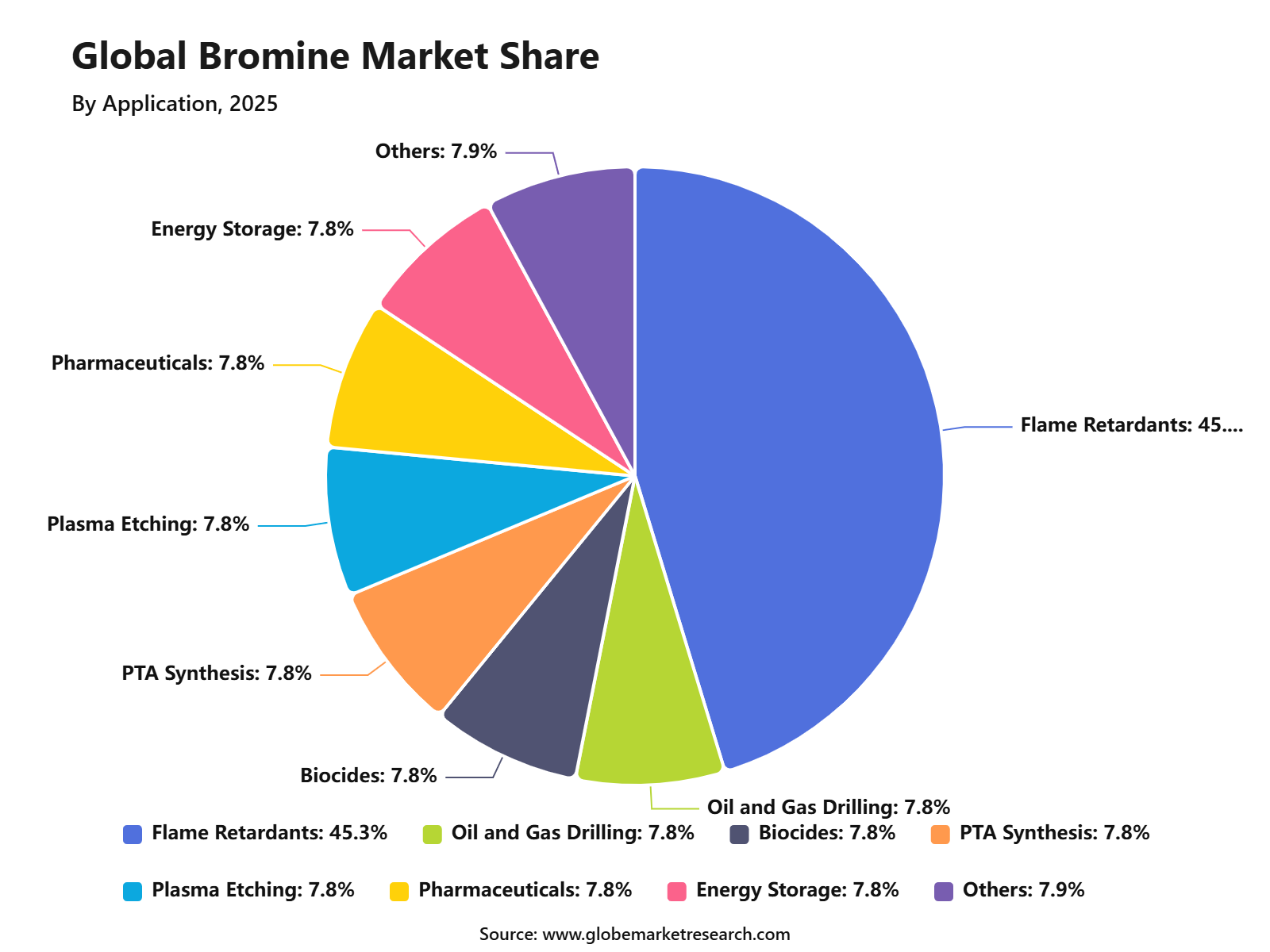
Flame retardants accounted for 45.3% share by application, driven by rising demand from electronics, construction materials, textiles, plastics, and automotive components requiring fire-resistant performance.
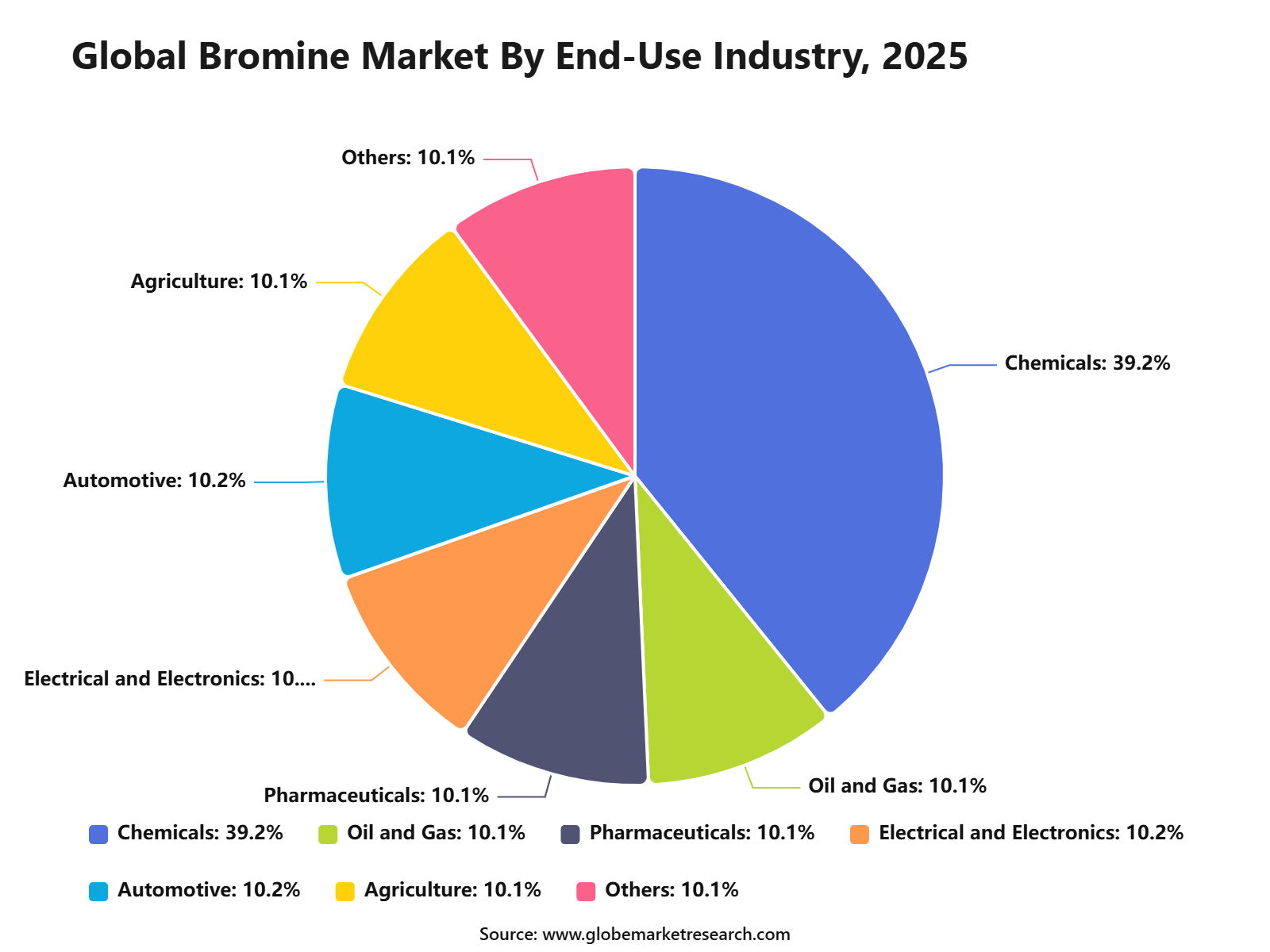
Chemicals held 39.2% share by end-use industry, supported by broad use of bromine derivatives in intermediates, additives, polymers, industrial processing, and specialty formulations.
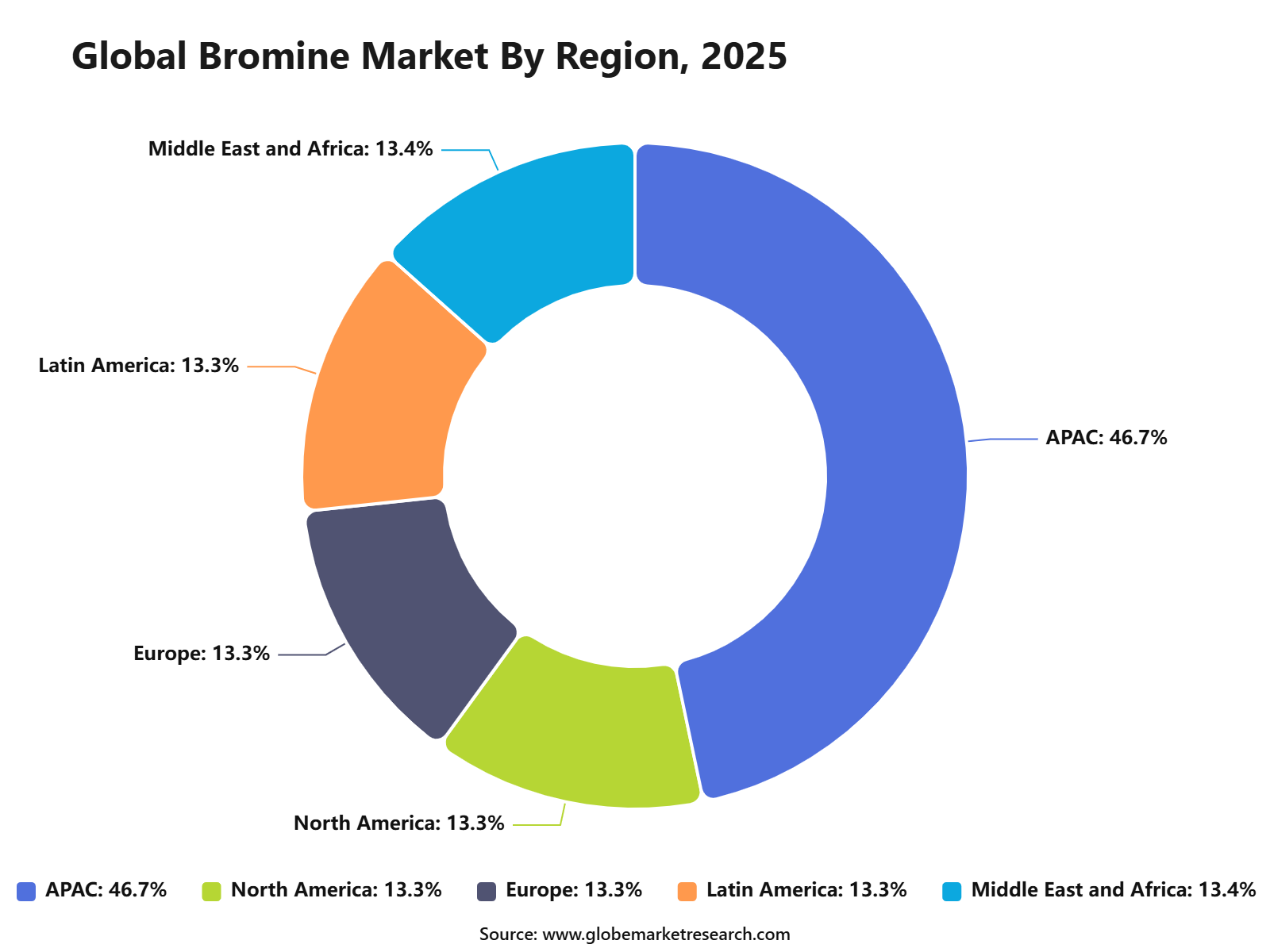
Asia Pacific led the bromine market with 46.7% share, valued at USD 1.5 billion, supported by strong chemical manufacturing, expanding electronics production, rising flame-retardant demand, and high industrial consumption across China, India, Japan, and Southeast Asia.
Top Funding and Investment
Top Investments
In May 2026, TETRA Technologies approved the final investment decision for its Evergreen bromine facility in Southwest Arkansas. Approximately USD 220 million of capital expenditure remained, while the vertically integrated bromine business was assigned an estimated net present value of USD 607 million using a 10% discount rate. The project will extract bromine from the company’s brine resources and produce bromine-based completion fluids for energy applications.
Albemarle recorded approximately USD 590 million in company-wide capital expenditure during 2025, including sustaining expenditure and completed capacity projects within its Specialties division, which contains its bromine operations. However, the company did not publicly separate the amount allocated specifically to bromine extraction, brominated flame retardants, or bromine derivatives.
Top Funding Developments
In June 2026, TETRA Technologies priced an approximately USD 100 million public equity offering to finance strategic growth projects, including construction of its Arkansas bromine production facility. The financing supports development of the company’s vertically integrated bromine and calcium bromide supply platform.
Industrial Applications Sustain Bromine Demand
Flame retardants and clear-brine drilling fluids are the most important factors influencing the Bromine Market. USGS identifies these as the leading global applications, while bromine compounds also serve water treatment, chemical intermediates and industrial processes. World production excluding undisclosed U.S. output reached approximately 430,000 metric tons, including 200,000 tons from Israel, 110,000 tons from Jordan and 90,000 tons from China.
Supply concentration is equally important. U.S. imports fell to about 40,000 metric tons, down nearly 30%, while the average import value increased 12% to USD 3.00 per kilogram. Israel and Jordan supplied 95% of U.S. imports during the reported period, and U.S. production remained concentrated among two Arkansas companies. These figures show why geographic diversification, recycling and long-term supply agreements are central market factors.
By Derivative
Organobromine accounted for 56.2% share of the Bromine Market. This leading position is supported by its wide use in flame retardants, pharmaceuticals, agrochemicals, water treatment chemicals, and specialty chemical production.
The segment is widely preferred because organobromine compounds provide strong chemical performance in applications that require fire resistance, microbial control, and reactive intermediates. These derivatives are important in plastics, electronics, textiles, construction materials, and industrial chemical formulations.
Demand is expected to remain strong as industries continue to require bromine-based compounds for safety, performance, and specialty applications. Growth will be supported by flame retardant demand, chemical processing, and the use of organobromine in high-value downstream products.
By Application
Flame retardants accounted for 45.3% share of the Bromine Market. This dominance is driven by the strong use of brominated flame retardants in plastics, electronics, electrical components, building materials, textiles, and automotive parts.
Bromine-based flame retardants are valued because they help slow ignition, reduce flame spread, and improve fire safety performance in finished products. Their use is especially important in applications where heat exposure, electrical risk, and safety compliance are major concerns.
The segment is expected to remain a key application area as demand for safer materials grows across electronics, construction, transportation, and consumer goods. Product reformulation and regulatory compliance will continue to shape demand for bromine-based flame retardant solutions.
 iThe graph shows projected market growth until 2035 based on CAGR analysis. Actual outcomes may vary depending on changing demand, competition, and economic factors.To gain greater insights - request a sample report PDF
By End-Use Industry
The chemicals industry accounted for 39.2% share of the Bromine Market. This leading position is supported by the use of bromine and its derivatives as intermediates in specialty chemicals, flame retardants, drilling fluids, biocides, pharmaceuticals, and agrochemical products.
Chemical manufacturers use bromine because it supports a wide range of reactions and performance-based formulations. Its derivatives are used in products that require fire resistance, stability, reactivity, disinfection, and controlled chemical behavior.
Demand from the chemicals industry is expected to remain strong as downstream sectors continue to rely on bromine-based compounds. Growth will be supported by specialty chemical production, industrial processing, water treatment, and material safety applications.
 iThe graph shows projected market growth until 2035 based on CAGR analysis. Actual outcomes may vary depending on changing demand, competition, and economic factors.To gain greater insights - request a sample report PDF
By Region
Asia Pacific accounted for 46.7% share of the Bromine Market, reaching USD 1.5 billion. The region’s leadership is supported by strong chemical manufacturing, electronics production, plastic processing, construction activity, and expanding demand for flame retardant materials.
China, India, Japan, South Korea, and Southeast Asian countries are key contributors to regional demand. The region benefits from large-scale industrial production, growing electronics exports, expanding automotive manufacturing, and high consumption of bromine derivatives in chemical applications.
Asia Pacific is expected to maintain its leading position as flame retardants, organobromine compounds, and specialty chemicals continue to see strong industrial use. Demand will remain supported by chemical sector growth, safety-focused material requirements, and expanding downstream manufacturing across the region.
 iThe graph shows projected market growth until 2035 based on CAGR analysis. Actual outcomes may vary depending on changing demand, competition, and economic factors.To gain greater insights - request a sample report PDF
Regional Impact Analysis
Asia Pacific leads the Bromine Market with 46.7% share in 2026, valued at around USD 1.6 billion, supported by strong electronics manufacturing, chemical processing, plastics production, construction material demand, and pharmaceutical intermediates. China, India, Japan, South Korea, and Southeast Asia remain major regional markets.
North America remains important due to oilfield chemicals, specialty chemicals, water treatment, and regulated fire safety applications. Europe supports steady value growth through stricter safety standards, specialty intermediates, and demand for compliant bromine-based formulations.
Impact Factor | Estimated CAGR Impact | Regional Relevance | Market Impact |
|---|---|---|---|
Asia Pacific market leadership | +1.9% | Asia Pacific, 46.7% share in 2026 | Leads global value demand. |
China chemical and electronics scale | +1.4% | China | Drives high-volume bromine derivative use. |
India pharma and specialty chemical growth | +1.1% | India | Supports intermediate demand expansion. |
Japan and South Korea electronics demand | +0.8% | Japan, South Korea | Adds high-performance material demand. |
North America and Europe specialty demand | +0.7% | U.S., Canada, Germany, France, UK | Supports regulated and higher-value uses. |
Go-To-Market and Sales Economics
Bromine suppliers should prioritise direct specification sales to electronics manufacturers, polymer compounders, cable producers, and data-centre equipment companies. Global semiconductor sales reached USD 120.6 billion in May 2026, rising 104.1% year over year. Application laboratories, fire-testing support, regulatory documentation, and multi-year supply agreements can improve qualification rates for brominated flame-retardant systems.
Oilfield sales should be developed through drilling-fluid formulators, completion-service companies, and offshore operators requiring high-density clear brines. U.S. marketed natural gas production is forecast to average 120.8 billion cubic feet per day in 2026. Regional blending capacity, emergency inventory, fluid-reclamation services, and performance-based contracts can improve customer retention and asset utilisation.
Product portfolios should match the bromide salts most frequently purchased by industrial users. The 2026 USGS data show that ammonium, calcium, zinc, sodium, and potassium bromides represented almost 90% of imported bromine products by weight and bromine content in 2025. Distributor stocking, smaller pack sizes, purity certificates, and technical dosing support can widen access to mid-sized customers.
Risk Factors & Market Barriers
Supply concentration is a major commercial risk. USGS reported that Israel supplied 83% of U.S. bromine imports during 2021–2024, while Jordan supplied 12%, and no government stockpile was maintained. Producers and buyers should diversify origins, hold strategic inventories, qualify substitute grades, and establish contingency logistics for regional conflict, port disruption, or plant outages.
Input and logistics inflation can rapidly weaken fixed-price contracts. LANXESS raised prices by up to 35% for flame retardants and specialty additives in March 2026, citing higher energy, critical-material, and logistics costs. Bromine suppliers should use indexed pricing, shorter quotation periods, freight pass-through clauses, and disciplined inventory management to protect margins and supply reliability.
Regulatory scrutiny can reduce demand for selected brominated molecules even when fire-safety requirements remain strong. ECHA began preparing a restriction proposal in 2026 for certain non-polymeric aromatic brominated flame retardants used in electronics, construction products, and textiles. Suppliers should expand polymeric and reactive alternatives, strengthen toxicology documentation, and support customer reformulation before compliance deadlines emerge.
Revenue Potential Analysis
Revenue Landscape Across
Electronics and electrical applications provide a high-value revenue channel through enclosures, connectors, circuit boards, cables, and data-centre equipment. ICL’s Industrial Products segment recorded first-quarter 2026 sales of USD 349 million, while bromine-based flame-retardant sales benefited from higher pricing and improved electronics demand. Customised formulations and compliance support can increase revenue per customer.
Oil and gas applications create revenue through calcium, zinc, and sodium bromide clear brines used in high-pressure completion and workover operations. EIA expects U.S. crude oil production to average 13.8 million barrels per day in 2026. Regional fluid reclamation, density adjustment, testing, and offshore logistics can extend supplier revenue beyond chemical supply alone.
Data-centre expansion can support bromine demand across flame-resistant electrical systems, cooling-water treatment, and long-duration zinc-bromine storage. The IEA expects global data-centre electricity use to rise from 485 TWh in 2025 to 950 TWh by 2030. Suppliers should target equipment manufacturers, utilities, and facility developers with application-specific products and lifecycle technical services.
Financial Impact
Albemarle’s Specialties segment shows the earnings potential of differentiated bromine and specialty products. First-quarter 2026 sales reached USD 358.4 million, increasing 11.7%, while adjusted EBITDA rose 29.8% to USD 76.1 million. Higher volumes, pricing, and productivity supported results, demonstrating the financial value of premium applications, customer qualification, and operational efficiency.
ICL’s Industrial Products segment generated first-quarter 2026 sales of USD 349 million and EBITDA of USD 86 million, up 1% and 13%, respectively. Higher prices supported growth despite lower elemental-bromine volumes and delayed clear-brine activity. Integrated extraction, downstream conversion, portfolio breadth, and disciplined pricing can therefore protect earnings during uneven end-market demand.
LANXESS reported first-quarter 2026 Specialty Additives sales of EUR 521 million and EBITDA before exceptional items of EUR 44 million, producing an 8.4% margin. Increased bromine-based flame-retardant demand did not offset currency pressure and broader weakness. Producers should prioritise high-margin grades, plant utilisation, cost recovery, and customer diversification to improve cash generation.
Drivers Impact Analysis
The Bromine Market is driven by demand from flame retardants, drilling fluids, water treatment chemicals, pharmaceuticals, agrochemicals, oil and gas, and specialty chemical intermediates. Bromine derivatives are widely used because they support fire safety, process performance, chemical synthesis, and high-density fluid applications.
Asia Pacific leads the market due to strong electronics manufacturing, construction materials, automotive production, chemical processing, and industrial demand. China, India, Japan, South Korea, and Southeast Asia remain key contributors because of rising use in flame-retardant plastics, specialty chemicals, and downstream manufacturing.
Impact Factor | Estimated CAGR Impact | Regional Relevance | Market Impact |
|---|---|---|---|
Rising flame retardant demand | +1.8% | Asia Pacific, Europe, North America | Drives core bromine derivative consumption. |
Growth in electronics and electrical goods | +1.4% | China, Japan, South Korea, India | Supports brominated flame retardant use. |
Oil and gas drilling fluid applications | +1.1% | Middle East, North America, Asia Pacific | Adds demand for clear brine fluids. |
Expansion of pharmaceutical intermediates | +0.9% | India, China, Europe, U.S. | Supports specialty bromine chemistry. |
Water treatment chemical demand | +0.7% | Industrial and municipal markets | Adds steady application growth. |
Restraints Impact Analysis
The market faces restraints from regulatory pressure on selected brominated flame retardants, environmental concerns, raw material availability, high handling requirements, and volatility in end-use industries. Bromine and its derivatives require careful storage, transport, and safety compliance because of their reactive and corrosive nature.
Another restraint is substitution risk in some flame retardant and chemical applications. Manufacturers may shift toward phosphorus-based, nitrogen-based, mineral-based, or halogen-free alternatives where regulations, sustainability targets, or customer specifications require lower environmental impact.
Impact Factor | Estimated CAGR Impact | Regional Relevance | Market Impact |
|---|---|---|---|
Regulatory pressure on selected derivatives | -0.9% | Europe, North America, export markets | Limits use in sensitive applications. |
Environmental and toxicity concerns | -0.8% | Global chemical supply chains | Raises compliance cost. |
Competition from halogen-free alternatives | -0.7% | Electronics and construction sectors | Reduces selected flame retardant demand. |
Raw material and brine supply constraints | -0.5% | Bromine-producing regions | Affects production stability. |
Handling and transport complexity | -0.4% | Chemical producers and distributors | Adds safety-related cost. |
Opportunities Impact Analysis
Opportunities are strong in organobromine derivatives, brominated flame retardants, clear brine fluids, pharmaceutical intermediates, water treatment biocides, agrochemical intermediates, and specialty chemical synthesis. These areas benefit from industrial growth and demand for performance chemicals.
Higher-value opportunities are emerging in bromine-based energy storage, high-purity bromine compounds, advanced flame-retardant systems, and specialty intermediates for electronics and pharmaceuticals. Producers with safer formulations, reliable supply, and downstream integration can capture stronger value.
Impact Factor | Estimated CAGR Impact | Regional Relevance | Market Impact |
|---|---|---|---|
Organobromine derivative expansion | +1.7% | Asia Pacific and global chemical markets | Builds core market opportunity. |
Flame-retardant polymer applications | +1.3% | Electronics, construction, automotive | Supports safety-driven demand. |
Clear brine fluid demand | +1.0% | Oil and gas drilling regions | Adds high-density fluid use. |
Pharmaceutical and agrochemical intermediates | +0.8% | India, China, Europe, U.S. | Supports specialty chemical growth. |
Bromine-based energy storage | +0.6% | Grid storage and renewable markets | Adds future technology opportunity. |
Challenges Impact Analysis
The main challenge is balancing demand growth with environmental compliance and safe handling. Bromine producers must manage emissions, waste streams, corrosion control, worker safety, and transportation rules while remaining cost competitive.
Another challenge is maintaining supply reliability. Bromine production depends on brine resources, extraction economics, regional production capacity, and downstream conversion facilities, so supply disruptions can affect derivative availability and pricing.
Impact Factor | Estimated CAGR Impact | Regional Relevance | Market Impact |
|---|---|---|---|
Environmental compliance complexity | -0.8% | Bromine and derivative producers | Raises operating requirements. |
Safe handling and corrosion control | -0.7% | Chemical plants and logistics | Increases safety investment. |
Supply concentration risk | -0.6% | Bromine-producing regions | Affects pricing and availability. |
End-use regulation uncertainty | -0.5% | Flame retardants and specialty chemicals | Creates planning risk. |
Price competition in derivatives | -0.4% | Asia Pacific chemical markets | Pressures margins. |
Segment Covered in the Report
By Derivative
Organobromine
Clear Brine Fluids
Hydrogen Bromide
Others
By Application
Flame Retardants
Oil and Gas Drilling
Biocides
PTA Synthesis
Plasma Etching
Pharmaceuticals
Energy Storage
Others
By End-Use Industry
Chemicals
Oil and Gas
Pharmaceuticals
Electrical and Electronics
Automotive
Agriculture
Others
By Region
North America
Europe
Asia Pacific
Latin America
Middle East and Africa
Market Trend Analysis
The market trend is moving toward higher-value bromine derivatives, safer flame-retardant formulations, pharmaceutical intermediates, water treatment applications, and bromine-based energy storage research. Buyers are seeking products that meet performance needs while supporting compliance and safer use.
Asia Pacific remains the largest value region because of its strong electronics, plastics, chemicals, automotive, and construction material manufacturing base. North America and Europe support value growth through specialty chemicals, oil and gas fluids, regulated flame-retardant use, and pharmaceutical applications.
Impact Factor | Estimated CAGR Impact | Regional Relevance | Market Impact |
|---|---|---|---|
Specialty bromine derivatives grow | +1.6% | Asia Pacific, Europe, North America | Supports higher-value applications. |
Safer flame retardant systems increase | +1.2% | Electronics and construction markets | Improves regulatory acceptance. |
Pharmaceutical intermediate demand rises | +0.9% | India, China, Europe, U.S. | Adds specialty chemistry value. |
Water treatment use remains steady | +0.7% | Industrial and municipal users | Supports recurring demand. |
Energy storage interest expands | +0.5% | Renewable power markets | Adds long-term growth potential. |
Investor Type Impact Matrix
Investors should focus on companies with secure brine access, strong derivative chemistry, safety compliance, downstream customer relationships, and specialty product portfolios. Raw material security, regulatory readiness, product quality, and application support are key success factors.
Strategic investors can also target bromine producers, organobromine derivative companies, flame-retardant suppliers, specialty chemical manufacturers, oilfield chemical firms, and energy storage material developers. Companies that combine supply security with compliant and high-value derivatives are better positioned for long-term growth.
Investor Type | Estimated CAGR Impact | Regional Relevance | Market Impact |
|---|---|---|---|
Bromine Producers | +1.3% | Asia Pacific and global supply hubs | Expands core raw material supply. |
Organobromine Derivative Companies | +1.1% | Specialty chemical markets | Builds downstream value. |
Flame-Retardant Chemical Suppliers | +0.9% | Electronics and construction sectors | Supports fire safety applications. |
Oilfield Chemical Providers | +0.7% | North America, Middle East, Asia Pacific | Adds clear brine fluid demand. |
Strategic Specialty Chemical Investors | +0.5% | Global bromine value chain | Funds capacity and product innovation. |
Recent Developments
April 2026: Solaris ChemTech’s bank facilities were expanded to ₹60 crore long-term and ₹40 crore short-term, supporting its integrated bromine chemicals operations, export business, specialty derivatives, and manufacturing activities in Gujarat’s Greater Rann of Kutch.
February 2026: Tata Chemicals approved a ₹515 crore greenfield IVSD salt facility in Tamil Nadu with 210,000-tonne annual capacity, strengthening production, improving supply-chain efficiency, reducing logistics costs, and diversifying manufacturing beyond its Mithapur site.
February 2026: Shouguang Derun Chemistry received a renewed Chinese pollutant-discharge permit valid through February 2031, supporting continued production of chemical reagents, bromides, phosphorus-based flame retardants, and additives at its Shandong manufacturing operations.
Competitive Landscape
The market is characterized by intense competition among established players and emerging companies. Strategic partnerships, mergers and acquisitions, and product innovation are key strategies employed by market participants.
Key Market Players
Albemarle Corporation
ICL Group
LANXESS AG
Jordan Bromine Company
Tosoh Corporation
Tata Chemicals
Gulf Resources, Inc.
Solaris ChemTech Industries
Shandong Haiwang Chemical
Shouguang Derun Chemistry
Chemtura Corporation
Morre-Tec Industries
Israel Chemicals Limited
Hindustan Salts Limited
Honeywell International
Other Key Players
Research Methodology
This market study is prepared using a combination of primary and secondary research. Primary research includes discussions with manufacturers, suppliers, distributors, consultants, industry experts, and end users. Secondary research covers company reports, government databases, trade associations, technical publications, regulatory sources, and trusted industry documents. The collected information is used to assess market demand, pricing trends, technology adoption, competitive activity, and regional performance.
AI language models are not used as primary data sources, and publicly available AI-generated content is not treated as market evidence. Computational tools may be used to support data processing, translation, data classification, and pattern identification. However, every published assessment is supported by verified sources, human review, and primary market discussions.
Market estimates are developed through top-down and bottom-up approaches and validated using data triangulation. Revenue, production, shipment, pricing, and application-level data are compared across multiple sources. Forecasts consider economic conditions, regulatory changes, investment activity, innovation, supply chain developments, and industry risks. All findings are reviewed through source verification and internal quality checks before publication.
Part I
Source Management & Input Data Standards
Who provides data, how sources are qualified, and what types of evidence are admissible.
Part II
Research Scope & Market Coverage
How we define the markets we assess and the parameters that govern each product.
Part III
Data Collection, Verification & Submission
The mechanics of gathering, cross-checking, and hierarchically ranking evidence.
Part IV
Assessment Determination & Quality Controls
How raw data becomes a published assessment — normalisation, expert judgement, and outlier exclusion.
Part V
Publication, Corrections & Revision
Our publication schedule, corrections policy, and methodology review cycle.
Part VI
Independence, Ethics & Complaints
Conflict-of-interest policies, editorial independence, and how clients raise concerns.
Google · Preferred Sources
Don't miss the latest market research insights and industry updates on Google.
Add Globe Market Research as a preferred source in the Google app to see our reports, analysis, and market stories in your news suggestions.
Meet the Team
This report was prepared by our expert analysts with deep industry knowledge and research experience.
Pratiksha K. is a Senior Research Analyst with more than five years of experience in market research, industry analysis, competitive intelligence, and business strategy. She has contributed to detailed market reports, customized research studies, company profiling, market sizing, trend analysis, and strategic consulting projects for clients across different regions. Her industry expertise covers Chemical and Material, Consumer Goods, Food & Beverages and Energy & Power. She closely evaluates changing customer requirements, technology developments, regulatory conditions, supply chain structures, investment activity, and competitive strategies to provide clear and practical market insights.
Sayali brings more than 7 years of experience to Globe Market Research, supporting the accuracy, clarity, and relevance of research content across multiple industries. She reviews market data, segment analysis, competitive insights, and industry trends to ensure each report meets strong quality standards and provides practical value to business decision-makers. Her expertise spans healthcare, information technology, consumer goods, and diverse cross-industry domains. With a strong focus on data reliability, structured analysis, and clear presentation, Sayali helps ensure that each research output delivers well-reviewed insights for clients, investors, consultants, and industry stakeholders.
Frequently Asked Questions
Related Reports
More in Chemical and Material
Sulfuric Acid Market to Hit USD 61.5 Billion by 2035
Sulfuric Acid Market Size, Share, Analysis By Raw Material (Elemental Sulfur, Base Metal Smelters, Pyrite Ore, Others), By Application (Fertilizers, Chemical Manufacturing, Metal Processing, Petroleum Refining, Textile, Automotive, Pulp and Paper, Others), By Distribution Channel (Direct Sales, Distributors), By Regional Insights, Business plan and Project Report, Investment Opportunities, Profitability, Industry Trends, Leading Companies and Growth Forecasts by 2026-2035
Powder Metallurgy Market to Hit USD 17.0 Billion by 2035
Powder Metallurgy Market Size, Share, Analysis By Material (Ferrous Metals, Non-Ferrous Metals, Others), By Process (Additive Manufacturing, Powder Metal Hot Isostatic Pressing, Conventional Powder Metallurgy), By Application (Automotive, Aerospace and Defense, Healthcare, Electrical and Electronics, Industrial Machinery, Others) , By Regional Insights, Business plan and Project Report, Investment Opportunities, Profitability, Industry Trends, Leading Companies and Growth Forecasts by 2026-2035
Hydrogen Cyanide Market to Hit USD 5.95 Billion by 2035
Hydrogen Cyanide Market Size, Share, Analysis By Product Form (Hydrogen Cyanide Liquid, Hydrogen Cyanide Gas), By Application (Adiponitrile, Acetone Cyanohydrin, Sodium Cyanide and Potassium Cyanide, Methionine, Cyanuric Chloride, Others), By End-Use Industry (Chemicals, Mining and Metallurgy, Pharmaceuticals, Agriculture, Textiles, Others), By Regional Insights, Business plan and Project Report, Investment Opportunities, Profitability, Industry Trends, Leading Companies and Growth Forecasts by 2026-2035
Ferroalloys Market to Hit USD 280.3 Billion by 2035
Ferroalloys Market Size, Share, Analysis By Type (Ferro-Manganese, Silico-Manganese, Ferro-Silicon, Ferro-Chrome, Ferro-Molybdenum, Ferro-Vanadium, Ferro-Tungsten, Magnesium Ferro-Silicon, Ferro-Silicon-Zirconium, Ferro-Titanium, Ferro-Boron, Ferro-Niobium), By Production (Blast Furnace, Electric Arc Furnace), By End Users (Steel, Construction, Electronics, Automotive & Transportation, Others), By Regional Insights, Business plan and Project Report, Investment Opportunities, Profitability, Industry Trends, Leading Companies and Growth Forecasts by 2026-2035