
Market Size and Growth Forecast
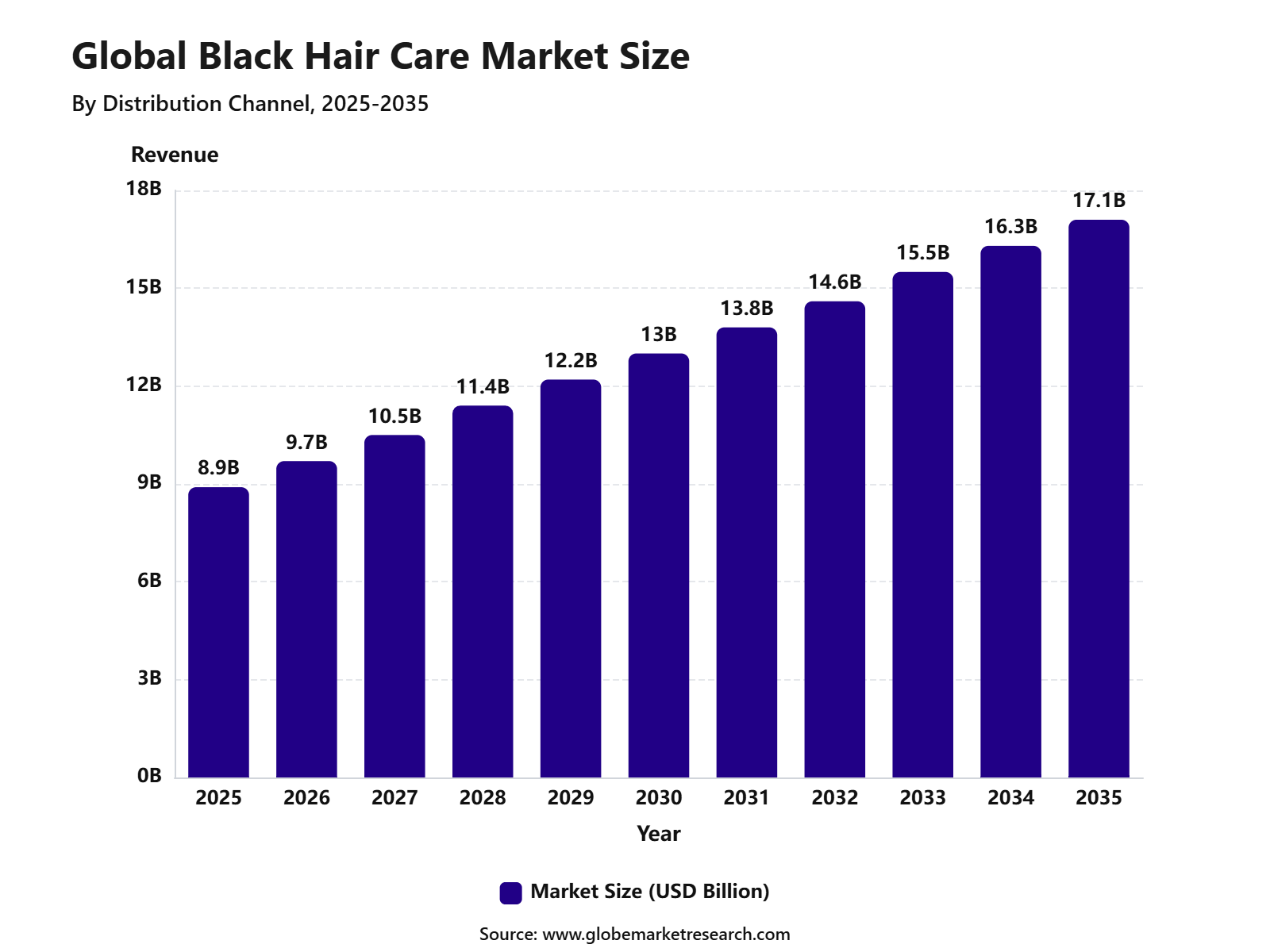
According to Globe Market Research, The Black hair care market is moving from a specialized beauty category into a stronger textured hair care segment supported by moisture retention, scalp health, protective styling, and product personalization. The market was valued at USD 8.9 billion in 2025 and is projected to reach USD 17.1 billion by 2035, growing at a 6.8% CAGR. North America led with 40.4% share in 2025, valued at USD 3.5 billion, while the U.S. market stood at USD 1.4 billion.
Key Parameter | Report Details |
|---|---|
Market Revenue, 2025 | USD 8.9 Billion |
Projected Revenue, 2035 | USD 17.1 Billion |
CAGR, 2025-2035 | 6.8% |
Largest Region | North America, 40.4% Share |
North America Revenue, 2025 | USD 3.5 Billion |
U.S. Market Revenue, 2025 | USD 1.4 Billion |
U.S. CAGR | 4.6% |
Market Concentration | Medium |
Base Year | 2025 |
Forecast Period | 2025-2035 |
Black hair care includes products designed for textured, curly, coily, relaxed, braided, wig, weave, loc, and protective hairstyles. The category includes shampoos, conditioners, oils, serums, curl creams, leave-in products, edge control, scalp treatments, hair masks, and styling products. Demand is being supported by higher awareness of hair identity, product safety, natural hair routines, and inclusive beauty retail.
Why is Black Hair Care Market Growing?
The growth of the Black hair care market can be attributed to rising demand for products made specifically for textured hair. Consumers are moving away from generic hair care products and choosing formulas that support moisture, curl definition, scalp comfort, breakage repair, and long-term hair strength. The market is also benefiting from stronger visibility of Black-owned and inclusive beauty brands across retail stores, salons, e-commerce, and social media.
Product usage frequency is another important growth factor. Textured hair care often involves multi-step routines that include cleansing, conditioning, detangling, moisturizing, oiling, styling, and protective care. This creates repeat purchase demand and makes routine-based selling important for brands operating in the category. Digital retail is also supporting product discovery. U.S. retail e-commerce sales reached USD 326.7 billion in Q1 2026, and e-commerce accounted for 16.9% of total retail sales. This matters for Black hair care because many consumers research product reviews, tutorials, ingredient lists, and hair type guidance before buying.
Shampoo Remains the Leading Product Type
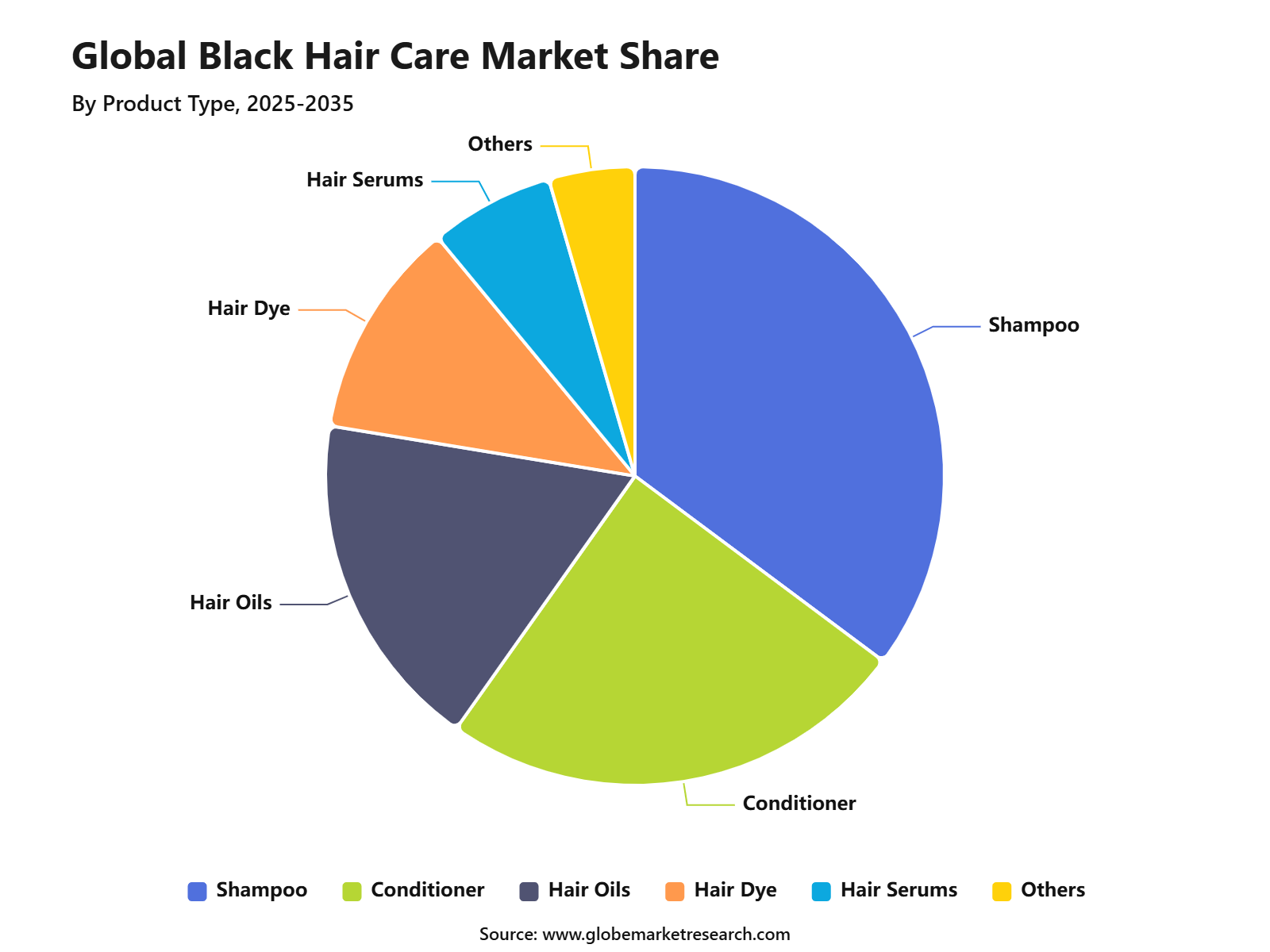
Shampoo held the leading position in the Black hair care market with around 30.1% share in 2025. This leadership is supported by regular usage, wide retail availability, and strong demand for cleansing products designed for textured, curly, coily, relaxed, braided, and protective hairstyles. Consumers are increasingly choosing shampoos that clean the scalp without stripping natural oils.
Sulfate-free, moisturizing, clarifying, and scalp-focused shampoos are gaining attention because dryness control and buildup removal are central needs in textured hair routines. For brands, shampoo is often an entry product that introduces customers to a wider routine. A consumer who trusts a shampoo may later purchase conditioner, leave-in cream, oil, curl gel, mask, or scalp treatment from the same brand. This makes shampoo important for both customer acquisition and repeat sales.
Household Use Dominates Black Hair Care Applications
Household applications accounted for more than 59.2% share in 2025, making at-home care the largest application segment. This dominance is driven by frequent home routines such as washing, conditioning, detangling, oiling, curl maintenance, scalp care, and protective style upkeep.
At-home use is growing because consumers want convenience, cost control, and more control over product selection. Many buyers now understand hair porosity, moisture balance, scalp needs, ingredient sensitivity, and protective styling maintenance. This has increased demand for home-use products that provide salon-like performance at a lower recurring cost.
Salons and professional hair care services remain important, especially for braiding, relaxing, wigs, weaves, coloring, treatments, and protective styling. However, the strongest daily and weekly demand is still being generated inside households, where consumers build full product routines over time.
Offline Retail Still Holds a Strong Position
Offline channels held around 62.6% share in 2025, supported by supermarkets, hypermarkets, pharmacies, salons, specialty beauty stores, and beauty supply stores. Black hair care purchases often require label checking, scent comparison, texture evaluation, price comparison, and suitability checks for specific hair concerns. Beauty supply stores and specialty outlets remain important because they carry wider product choices for curls, coils, braids, relaxed hair, natural hair, wigs, and protective styles.
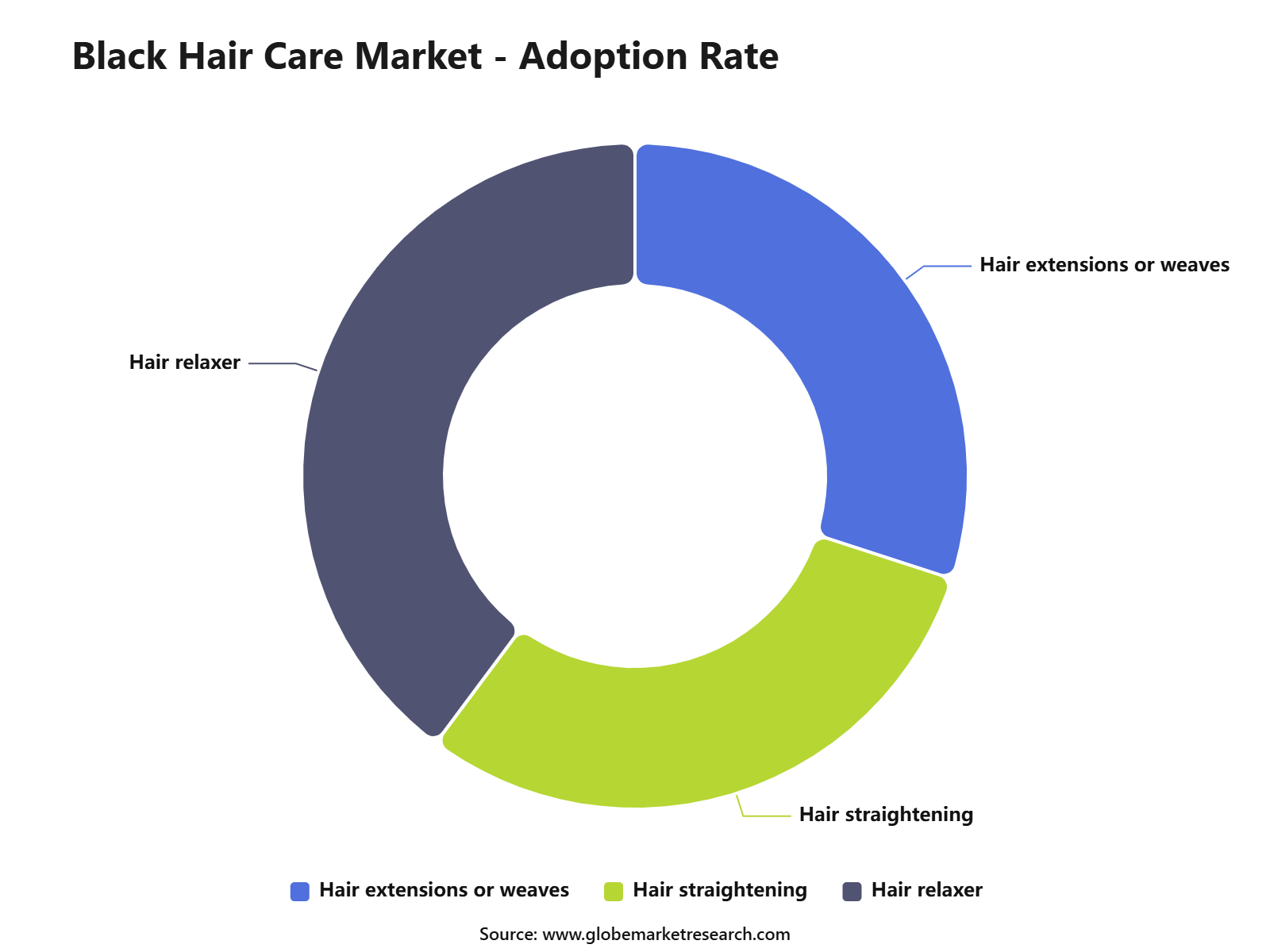
Offline retail also supports impulse buying, professional recommendations, and local brand access. Online channels are still gaining relevance. Tutorials, influencer reviews, before-and-after content, and ingredient education are influencing purchase behavior. Brands that combine strong offline availability with direct-to-consumer sales are better positioned to serve both discovery-led and repeat buyers.
Women Remain the Leading End-User Group
Women represented 51.2% share of the Black hair care market in 2025. This leadership is supported by higher product usage across cleansing, conditioning, styling, protective care, scalp care, curl definition, edge control, and hair treatment routines. The women’s segment is also supported by diverse hairstyle choices, including natural curls, braids, twists, locs, wigs, weaves, relaxed styles, and silk press routines.
These styles often require different products across moisture care, heat protection, scalp care, hold, shine, and breakage prevention. Men’s textured hair care is also emerging as a growth opportunity. Demand is rising for beard care, wave products, scalp care, moisturizers, grooming creams, curl products, and clean-label hair care. Brands that build simple, targeted routines for men may benefit from a still-underdeveloped segment.
Moisture Retention Is the Strongest Hair Concern
Moisture retention and dryness care dominated the hair concern segment with 76.6% share in 2025. This strong position is linked to the structure of textured hair, where natural scalp oils may not move easily along the hair shaft. As a result, hydration, softness, elasticity, and breakage reduction remain central purchase drivers. Demand is being supported by moisturizing shampoos, leave-in conditioners, deep conditioners, hair masks, butters, oils, creams, curl hydrators, and scalp care products.
Consumers are also looking for products that support moisture without heavy buildup, which is especially important for daily styling and protective hairstyles. This creates a strong opportunity for brands that can prove product performance clearly. Claims such as "hydration", "repair", "curl definition" and "growth support" must be backed by visible results, clear instructions, and ingredient transparency.
Clean-Label and Safety Concerns Are Reshaping Product Development
Ingredient safety is becoming one of the most important trends in Black hair care. A 2026 study of 150 clean textured hair products found that 70% listed fragrance or parfum as an ingredient, while only 41% were listed in the EWG Skin Deep database. This shows that even clean-positioned products may still face transparency and safety questions.
Hair extensions are also under greater scrutiny. A 2026 study tested 43 hair extension products and detected over 900 chemical signatures, including 169 chemicals across major chemical classes. The findings increased concern about chemical exposure from products used in braids, weaves, wigs, and extensions.
Chemical straightening products remain another concern area. NIH reported that women who used chemical hair straighteners more than four times in the previous year were more than twice as likely to develop uterine cancer compared with non-users. This does not mean every product has the same risk, but it shows why safer formulations, better labeling, and clearer consumer education are becoming essential.
Regulatory Pressure Is Increasing
Regulatory compliance is becoming more important for beauty and hair care companies. Under the Modernization of Cosmetics Regulation Act, cosmetic manufacturers and processors must register facilities with the FDA and renew registration every two years. This increases the need for product listing, safety substantiation, adverse event records, labeling accuracy, and stronger quality systems.
For Black hair care brands, this creates both pressure and opportunity. Smaller brands may face higher compliance costs, but stronger safety systems can also improve trust with retailers, salons, and consumers. Ingredient documentation, supplier audits, product testing, and claim review will become more important in 2026 and beyond.
The market is likely to reward brands that combine inclusive formulation with safety credibility. Consumers are not only asking whether a product works. They are also asking what is inside the product, whether it is suitable for long-term use, and whether the brand understands textured hair needs.
North America Leads the Black Hair Care Market
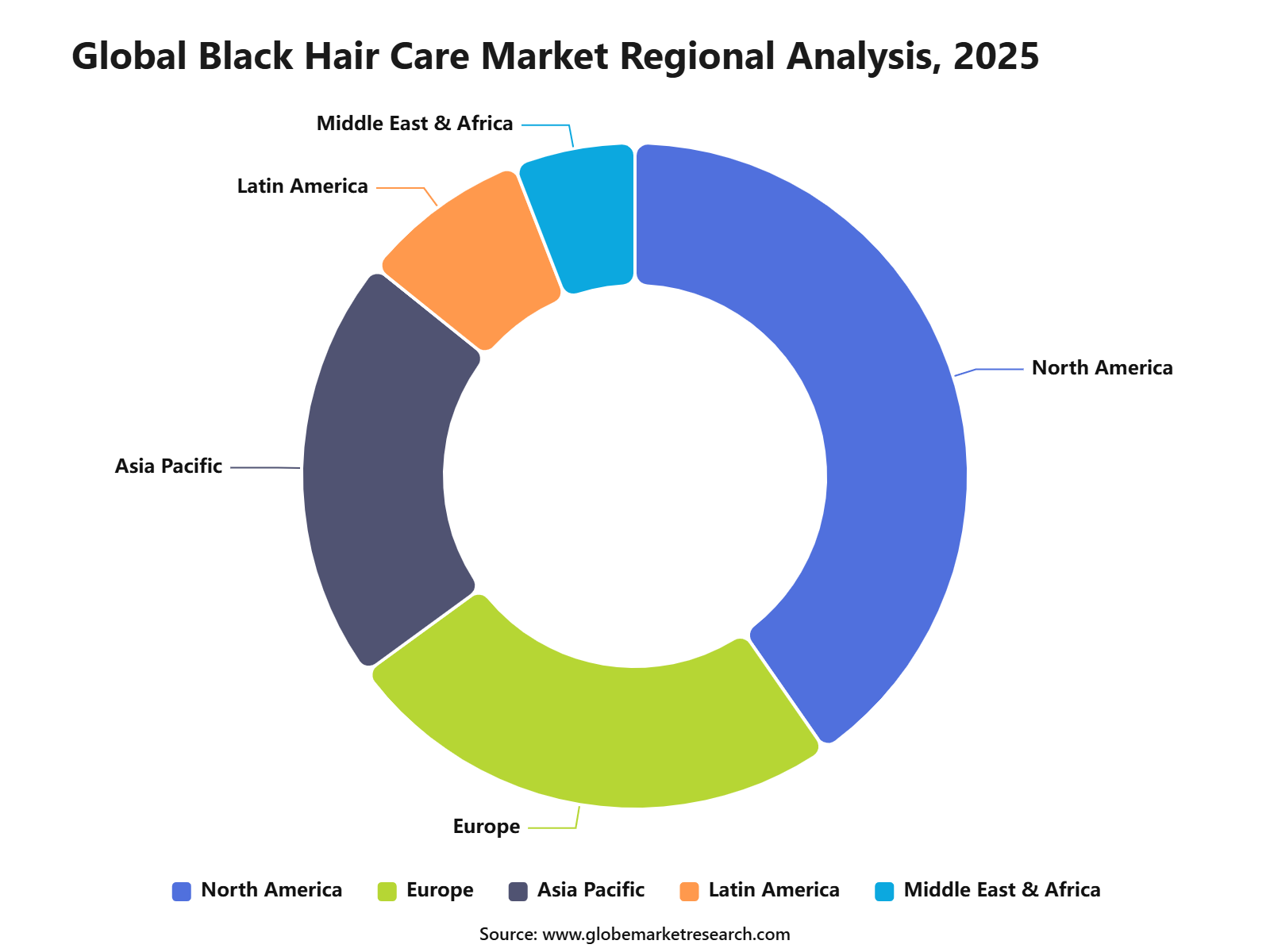
North America held 40.4% share of the Black hair care market in 2025, generating USD 3.5 billion in revenue. The region leads due to a large consumer base, strong multicultural beauty aisles, mature retail networks, and high adoption of textured hair care products. The U.S. market was valued at USD 1.4 billion in 2025 and is projected to grow at a 4.6% CAGR.
Demand is supported by hair identity, natural hair care, salon-led recommendations, product personalization, social media education, and premium Black hair care solutions. Local opportunity is strongest in products that solve clear hair concerns. Moisturizing shampoos, deep conditioners, leave-in creams, scalp oils, edge control, curl creams, braid sprays, wig care products, and protective style maintenance products are expected to remain important in the U.S. and wider North American market.
Analyst Perspective
What the Data Is Telling Black hair care Companies?
From an analyst perspective, the data shows that the Black hair care market is becoming more performance-led, safety-led, and routine-led. The market is not only growing because of beauty demand. It is growing because consumers need products that solve repeated concerns such as dryness, breakage, scalp discomfort, curl definition, and protective style maintenance.
The opportunity is strongest in moisture retention, scalp care, leave-in conditioners, curl creams, clean-label formulations, men’s textured hair care, and direct-to-consumer retail. Moisture retention already holds 76.6% share by hair concern, which shows that hydration-focused innovation should remain a top product development priority.
The key risks are product safety concerns, high premium product prices, weak product education, and trust gaps around ingredient claims. Clients should focus next on safer formulation, transparent labeling, affordable routine bundles, retail access, creator-led education, and product testing across different textured hair types.
What Opportunities Are Emerging?
The first major opportunity is in hydration and repair-focused products. Leave-in conditioners, hair masks, oils, butters, curl creams, and scalp treatments are likely to gain stronger demand because moisture retention remains the largest hair concern.
The second opportunity is in scalp-first hair care. Consumers are paying more attention to scalp comfort, buildup control, itch relief, and healthy hair growth support. Brands that connect scalp science with textured hair routines can build stronger product credibility.
The third opportunity is in clean-label and safety-positioned products. The latest public studies show rising concern around fragrance disclosure, hair extension chemicals, and chemical straighteners. Brands that provide clearer ingredient information and safer alternatives can build stronger trust with informed consumers.
What Risks Should Companies Be Aware Of?
The biggest risk is weak product performance. Black hair care consumers often test products through real routines, and repeat purchases depend on visible results. If a product does not improve moisture, softness, curl definition, scalp comfort, or breakage control, loyalty can decline quickly.
The second risk is pricing pressure. Premium products may attract interest, but daily-use products must remain affordable because many consumers use multiple items in one routine. Brands must balance high-quality ingredients with practical price points.
The third risk is regulatory and trust pressure. Safety claims, clean-label messaging, fragrance disclosure, and chemical exposure concerns are becoming more important. Companies that fail to improve transparency may face lower trust, weaker reviews, and stronger scrutiny from retailers and consumers.
Competitive Landscape
The Black hair care market includes large beauty companies, specialized textured hair brands, salon-led brands, and emerging independent players. Key companies profiled in the report include Procter & Gamble, Unilever, L’Oréal, Revlon, Estée Lauder, Johnson & Johnson, Carol’s Daughter, Mielle Organics, Cantu Beauty, Shea Moisture, Dark & Lovely, African Pride, SoftSheen Carson, Alodia Hair Care, Ouidad, Afrocenchix, Uhuru Naturals, and Pattern Beauty.
Competition is increasing as mainstream retailers expand multicultural beauty shelves and more brands launch products for textured hair. Product innovation is active across shampoos, conditioners, curl creams, edge control, oils, scalp treatments, braid care, and chemical-free hair care.
The companies likely to perform better are those with strong product efficacy, fair pricing, ingredient transparency, inclusive testing, clear education, and wide retail availability. Community trust will remain one of the most important success factors in this market.
Recent Developments
Market News
In 2026, tgin launched its Balance Collection, a scalp-focused range including Scalp Clarifying Shampoo, Scalp Serum, and Scalp Exfoliator. The line is available through tginatural.com, Sally Beauty, Target, and Ulta Beauty, showing stronger retail demand for scalp-first textured hair care.
In 2026, Cécred launched its Styling Collection with six new styling products focused on heat protection, humidity resistance, shine, volume, and hair movement. The launch strengthened the brand’s move from repair-led hair care into daily styling for textured, curly, wavy, and straight hair needs.
In 2026, Mielle Organics continued expanding under P&G Beauty, with the brand reaching more than 10,000 retail doors across 90 countries. The company also strengthened cultural visibility through HBCU partnerships and its role as the NFL’s first official textured haircare partner.
In 2026, Cardi B launched Grow-Good Beauty, a hair care line focused on hair health and growth. The brand entered the market with affordable products such as shampoo, conditioner, serum, and hair mask, and early pre-orders reportedly sold out.
Funding
In 2026, Ruka raised USD 4.5 million in funding co-led by Freedom Trail Capital and Henkel Ventures. The capital is being used to scale its lab-grown synthetic hair fiber technology and support U.S. expansion for textured hair extensions.
In 2026, Cécred and BeyGOOD announced the 2026 Cécred x BeyGOOD Fund, after the program had already awarded USD 1.0 million in student scholarships and salon business grants since its 2024 launch. The 2026 program is focused on cosmetology education support across selected institutions in the U.S. and U.K.
In 2025, Sienna Naturals received the Sephora Beauty Grant, which provided USD 100,000 in funding to support its mission and growth. The grant came alongside the brand’s placement on Sephora’s curly, coily, and textured hair gondola in 178 stores.
Mergers and Acquisitions
In 2026, Henkel agreed to acquire Olaplex for about USD 1.4 billion, strengthening its position in premium hair repair. Although Olaplex is not a Black hair care brand, the deal is relevant because repair, bond-building, and premium hair science are increasingly important across textured hair care portfolios.
In 2025, L’Oréal signed an agreement to acquire Color Wow, a professional hair care brand known for high-performance styling and anti-frizz products. The transaction shows that major beauty groups are increasing exposure to premium hair care, including categories that overlap with textured hair needs such as frizz control, humidity protection, and salon-led innovation.
Conclusion
The Black hair care market is entering a stronger growth phase supported by textured hair routines, moisture care, scalp health, protective styling, clean-label demand, and inclusive retail expansion. The market is expected to grow from USD 8.9 billion in 2025 to USD 17.1 billion by 2035, supported by a 6.8% CAGR. Future growth will be shaped by products that solve real hair concerns and build consumer trust. Brands should focus on hydration, scalp care, safer ingredients, product education, affordable routines, salon partnerships, and omnichannel retail.