

Revenue, 2026
USD 30.1 Bn
Forecast, 2035
USD 198.3 Bn
CAGR, 2026-2035
23.3%
Report Coverage
Global
Market Size and Forecast
AI companion apps use large language models, natural language processing, voice technology , memory systems and user-defined personalities to create responsive digital characters. These applications can provide conversation, storytelling, creative role-play, language practice, productivity support and general companionship. Developers are also adding voice calls, persistent memory, animated avatars, user-created characters and interactive content to strengthen engagement and paid subscription opportunities.
Globe Market Research estimates that global AI Companion App Market was valued at USD 30.1 billion in 2026 and is projected to reach approximately USD 198.3 billion by 2035, growing at a CAGR of 23.3% from 2026 to 2035. North America accounted for around 42.6% of the market in 2025. Market growth is being supported by wider smartphone access, improving conversational AI models and increasing demand for personalised digital interaction, entertainment, role-playing, coaching and virtual assistance.
Key Parameter | Report Details |
|---|---|
Market Revenue, 2026 | USD 30.1 Billion |
Projected Revenue, 2035 | USD 198.3 Billion |
CAGR, 2026-2035 | 23.3% |
Largest Region | North America, around 42.6% Share |
Market Concentration | Medium | 2025 |
Forecast Period | 2026-2035 |
Demand is also being influenced by rapid growth in downloads and consumer spending. As of July 2025, AI companion apps had recorded approximately 220 million cumulative downloads across the Apple App Store and Google Play. Downloads reached 60 million during the first half of 2025, increasing by 88% year over year, while consumer spending reached USD 221 million and first-half revenue increased by 64% . These figures indicate rising user acceptance and stronger monetisation across subscription-based companion platforms.
Agentic AI is transforming companion apps by enabling persistent memory, personalized conversations, autonomous activity planning and multimodal interactions across text, voice, images and video. By July 2025, AI companion apps had generated approximately 220 million global downloads and USD 221 million in cumulative consumer spending. Revenue during the first seven months of 2025 was 64% higher than in the same period of 2024, indicating growing demand for paid subscriptions and advanced personalized features.
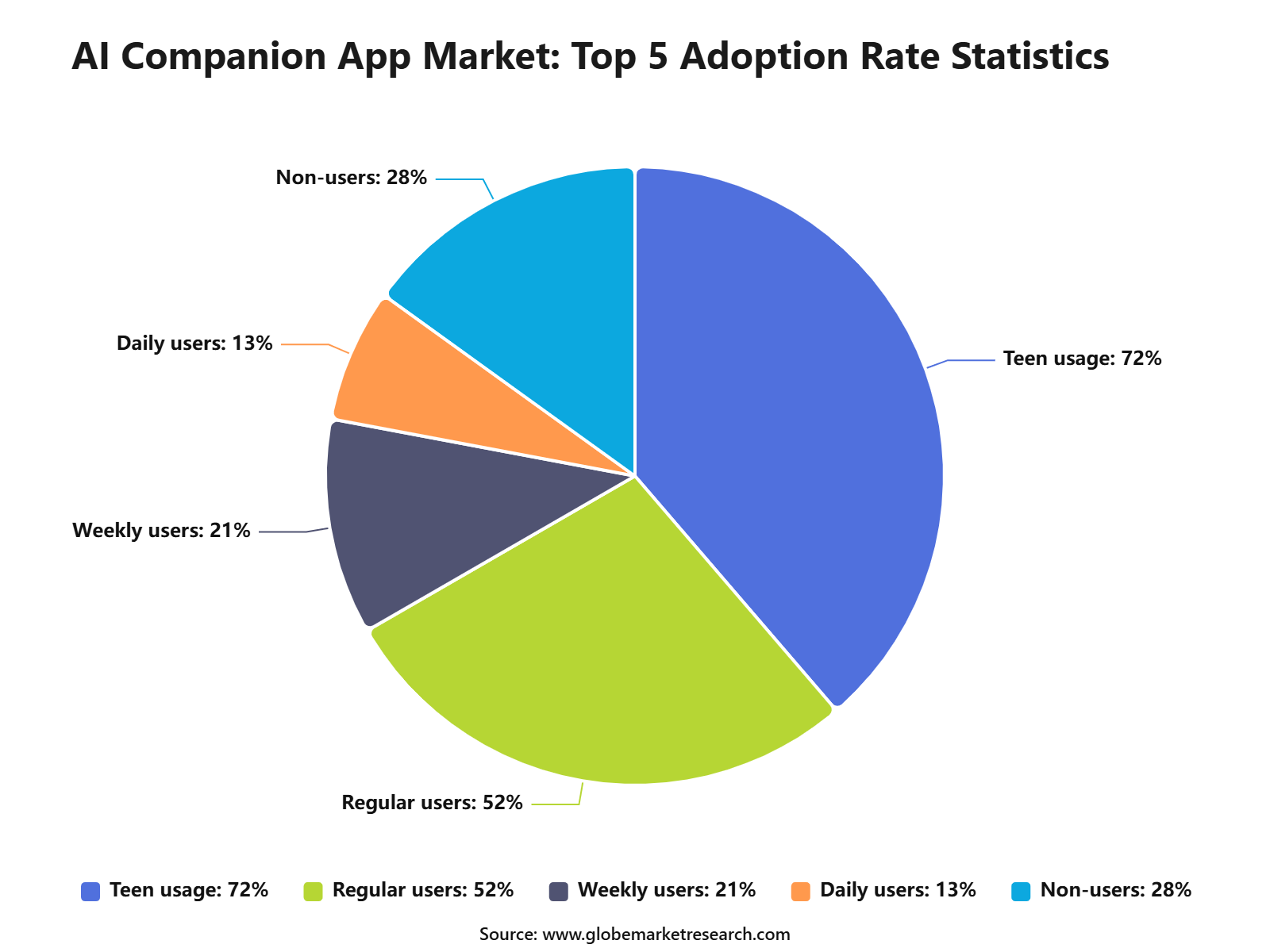
User adoption is also supporting the development of more responsive and context-aware companions. Character.AI reported more than 20 million monthly active users in February 2025, while a Common Sense Media survey found that 72% of U.S. teens had used AI companions and 52% used them regularly. However, one-third of teen users had experienced uncomfortable interactions, increasing the need for age verification, privacy protection, content controls and human-led safety oversight.
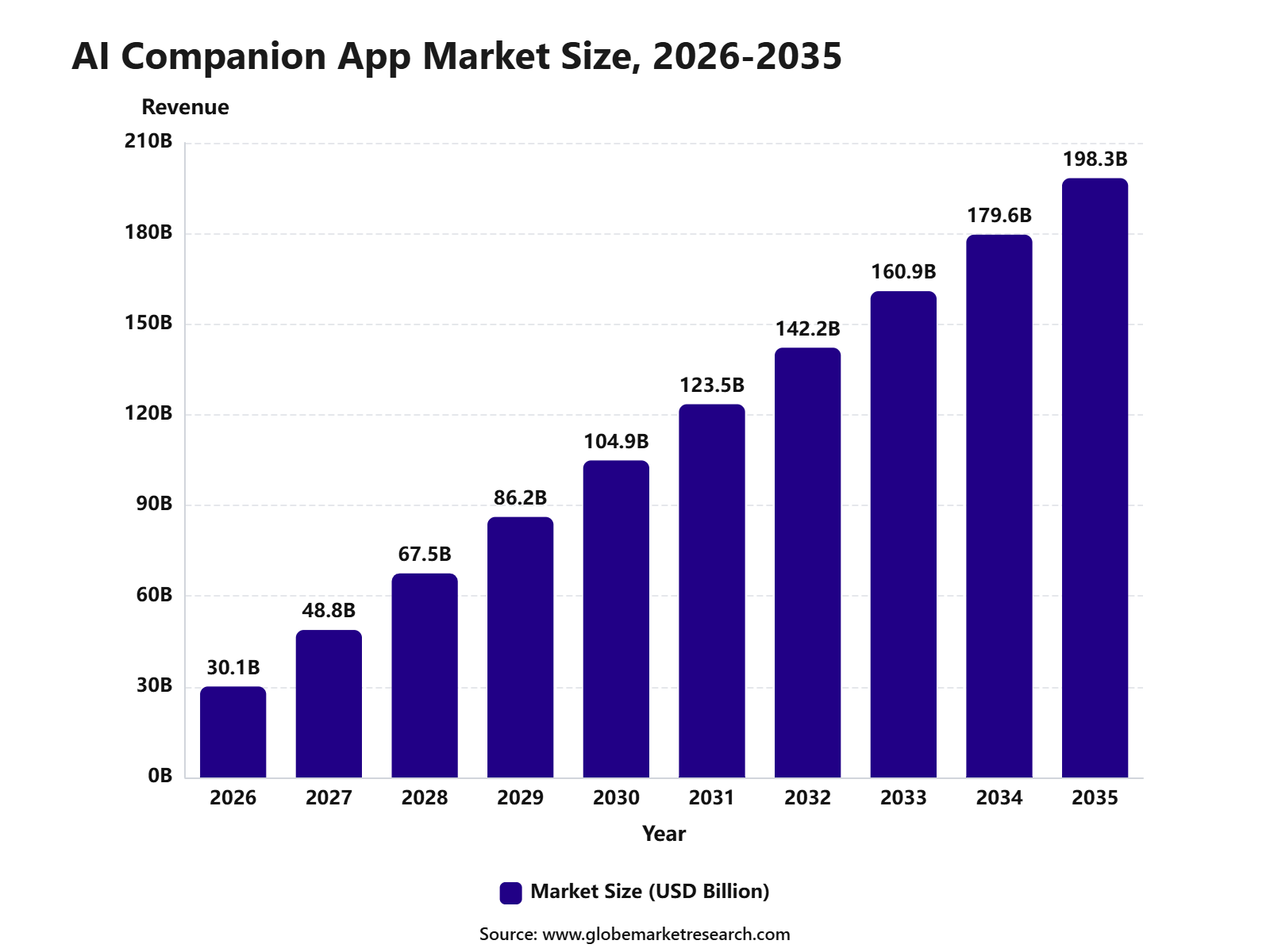 iThe graph shows projected market growth until 2035 based on CAGR analysis. Actual outcomes may vary depending on changing demand, competition, and economic factors.To gain greater insights - request a sample report PDF
Key Takeaways
Companionship led the user-purpose segment with a 59.2% share , reflecting strong demand for conversational support, emotional interaction, social engagement, and personalized digital relationships.
Text-based AI companions accounted for 46.8% of the market , supported by their accessibility, lower data requirements, simple interfaces, and ability to provide continuous personalized conversations.
Android dominated the technology platform segment with a 63.2% share , driven by its broad global smartphone user base, device affordability, and extensive app distribution network.
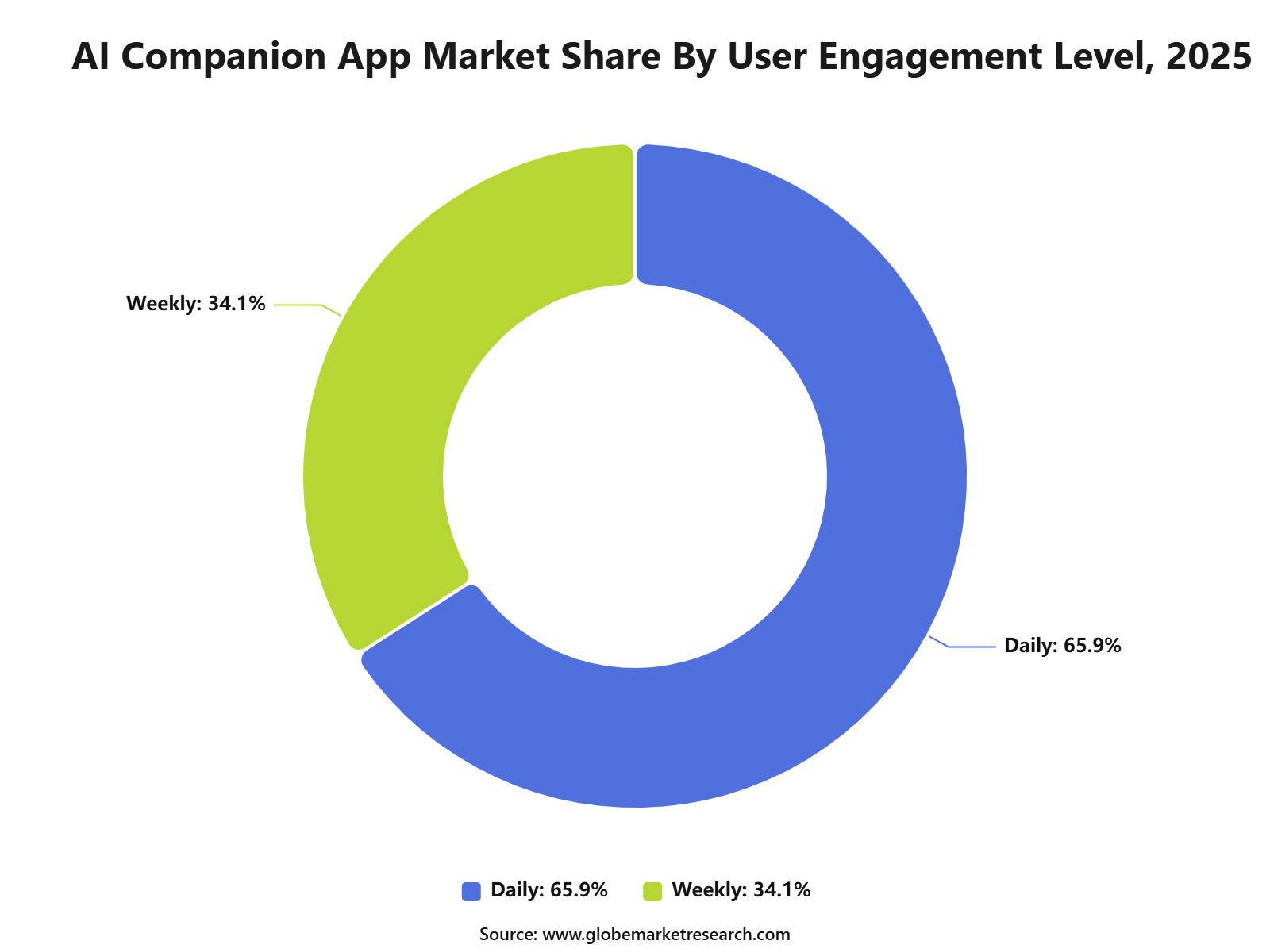
Daily engagement represented 65.9% of user activity , indicating that many users interact with AI companion applications regularly for conversation, entertainment, emotional support, and routine assistance.
Custom avatar character design held a 47.2% share of the functionality segment, supported by growing user preference for personalized appearances, identities, voices, and interaction styles.
Young adults accounted for the largest demographic share at 44.2% , reflecting higher digital adoption, familiarity with conversational AI, and interest in personalized social and entertainment experiences.
North America led the regional market with a 42.6% share , supported by high smartphone penetration, advanced AI adoption, strong consumer spending, and the presence of major application developers.
Adoption Rate and Usage Statistics
According to Common Sense Media, AI companion app adoption is becoming highly visible among U.S. teens, with 72% of teens aged 13 to 17 reporting that they have used AI companions at least once. Regular engagement is also notable, as 52% use these apps at least a few times a month, 21% use them a few times per week, and 13% use them daily. At the same time, 28% of teens have never used an AI companion, showing that adoption is growing quickly but is not yet universal across the teen population.
 iThe graph shows projected market growth until 2035 based on CAGR analysis. Actual outcomes may vary depending on changing demand, competition, and economic factors.To gain greater insights - request a sample report PDF
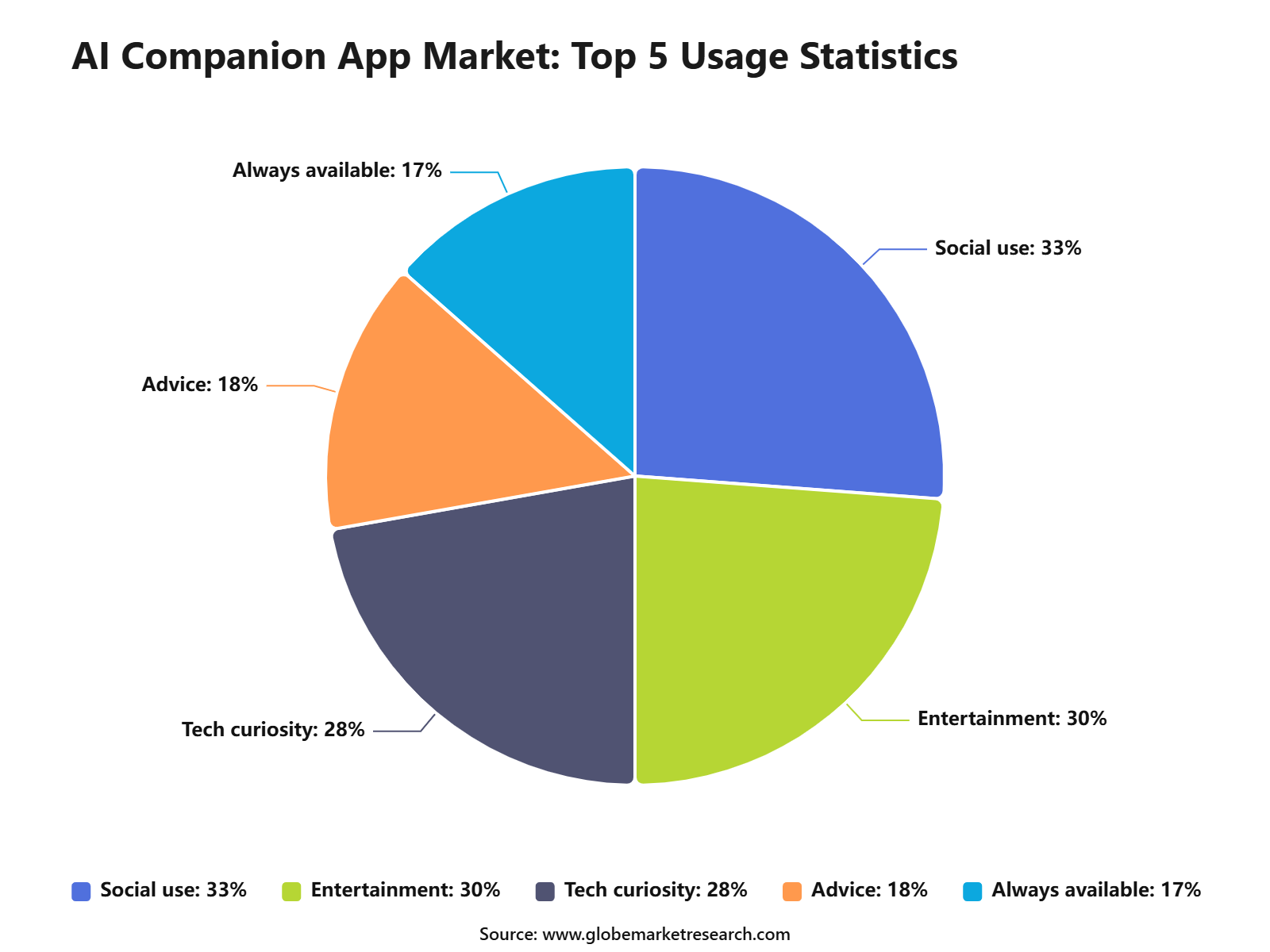
AI companion apps are mainly being used for social interaction, entertainment, curiosity, advice, and always-available support. Social use accounted for 33% , covering conversation practice, emotional support, role-playing, friendship, and romantic interaction. Entertainment followed at 30% , while 28% used these apps out of curiosity about the technology. Advice-related use stood at 18% , and 17% valued AI companions because they are available whenever needed.
 iThe graph shows projected market growth until 2035 based on CAGR analysis. Actual outcomes may vary depending on changing demand, competition, and economic factors.To gain greater insights - request a sample report PDF
By User Purpose
The companionship segment accounted for 59.2% of the AI Companion App Market. Its leading position can be attributed to demand for continuous conversation, emotional reassurance, role-playing and nonjudgmental interaction. These applications allow users to discuss personal interests, daily experiences and feelings without being limited by time, location or social availability.
Supporting evidence shows that companionship is developing into a regular digital activity. A nationally representative 2025 survey found that 33% of U.S. teens used AI companions for social interaction and relationships, including friendship, emotional support, romantic interaction and conversation practice. Constant availability was also identified as an important reason for using these platforms.
The segment is expected to remain important as conversational systems become better at remembering preferences, maintaining context and adapting their tone. However, sustainable growth will depend on clear disclosure that users are interacting with artificial systems. Strong age controls, emotional safety measures and responsible engagement settings will also be required, particularly for vulnerable and younger users.
By Type
Text-based AI companions represented 46.8% of the market by type. Text remains the most accessible interaction format because it is private, familiar and suitable for both short messages and longer personal conversations. It also requires less bandwidth and processing capacity than continuous voice, video or animated interaction.
The strength of this segment is supported by the wider use of conversational mobile applications. An analysis of 676,066 Google Play reviews across 173 generative AI applications found that AI performance, content quality and content controls were among the most frequently discussed user concerns. This indicates that conversation quality remains central to user satisfaction in text-led applications.
Text-based platforms also allow conversations to be stored, reviewed and continued over multiple sessions. This improves continuity and helps users form stronger connections with digital characters. Future competition will be influenced by response accuracy, memory quality, moderation standards, multilingual support and the ability to maintain a consistent character personality.
By Technology Platform
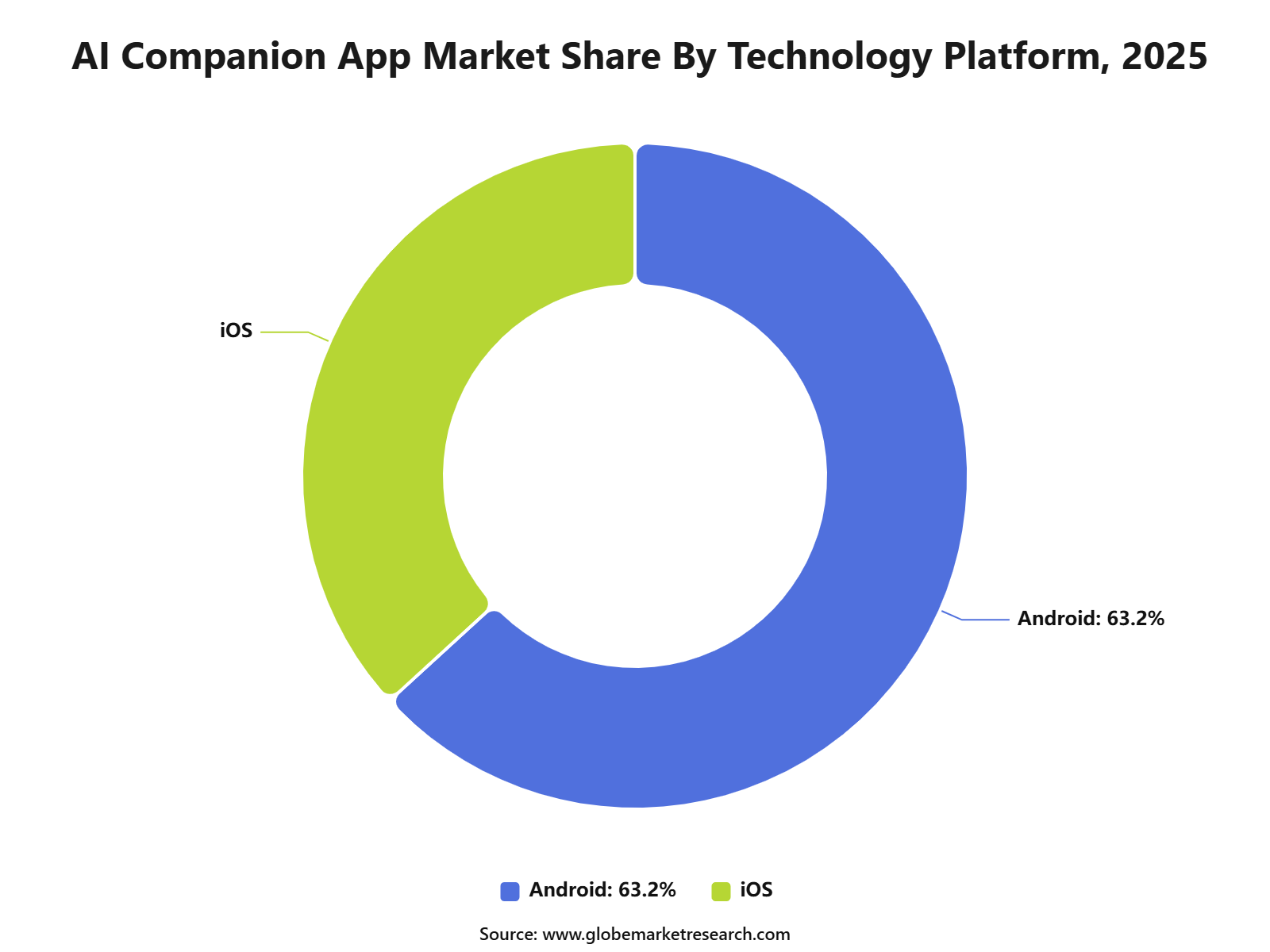
Android held a 63.2% share of the AI Companion App Market by technology platform. The platform benefits from its broad device coverage, including entry-level and mid-range smartphones that make AI companion services accessible to a wider population. Flexible app distribution and support for different hardware configurations also strengthen its position.
Mobile adoption is becoming an important route for companion app discovery. AI companion applications across Google Play and the Apple App Store had recorded approximately 220 million global downloads by July 2025. Downloads during the first half of the year increased by 88% , reaching around 60 million , demonstrating strong consumer interest in app-based interaction.
Android developers are increasingly required to balance broad accessibility with device-level performance. Lightweight models, efficient battery use, reduced loading times and reliable notifications can directly affect engagement. Privacy permissions will also remain important because many companion applications process personal conversations, voice inputs, behavioural patterns and saved character preferences.
 iThe graph shows projected market growth until 2035 based on CAGR analysis. Actual outcomes may vary depending on changing demand, competition, and economic factors.To gain greater insights - request a sample report PDF
By User Engagement Level
Daily engagement accounted for 65.9% of the market by user engagement level. Frequent use is supported by the conversational and relationship-focused nature of companion applications. Users often return to continue an earlier discussion, receive emotional reassurance, explore fictional scenarios or maintain an established digital relationship.
Regular interaction has already become visible among younger users. Common Sense Media reported that 52% of surveyed U.S. teens used AI companions at least a few times each month, while 21% interacted with them several times a week. Another 13% used these services daily, including users who engaged several times within one day.
Daily engagement creates opportunities for subscriptions, premium characters, memory features and personalised content. At the same time, excessive interaction can raise concerns relating to dependency, sleep disruption and reduced offline communication. Engagement strategies should therefore be supported by usage reminders, session controls and clear options for users to manage stored personal information.
 iThe graph shows projected market growth until 2035 based on CAGR analysis. Actual outcomes may vary depending on changing demand, competition, and economic factors.To gain greater insights - request a sample report PDF
By Functionality Feature
Custom audiovisual character design captured 47.2% of the market by functionality feature. The segment is supported by users seeking control over a companion’s appearance, voice, behaviour, interests and personality. Character creation increases the feeling of ownership and allows the experience to be adapted for entertainment, friendship, role-playing or emotional interaction.
Customisation is already recognised as a defining element of AI companion services. A 2025 U.S. teen study described these platforms as systems that allow users to create or modify digital companions with selected traits, interests and personalities. AI companion applications are also differentiated from general assistants by their use of premade or user-generated characters designed to represent distinct personalities.
Further development is expected in expressive avatars, natural voice responses, facial animation and real-time emotional reactions. However, users must be given transparent controls over generated images, synthetic voices and stored behavioural data. Strong consent systems will be especially important where characters resemble real people or use realistic human voices.
By User Demographics
Young adults held a 44.2% share of the AI Companion App Market by user demographics. This group is highly familiar with mobile applications, online communities, gaming environments and digital character interaction. Young adults are also more willing to test new conversational formats and use AI for entertainment, self-expression, relationship advice and social practice.
Broader consumer data confirms strong AI adoption among younger users. A 2025 survey of 5,031 U.S. adults found that Generation Z, covering people aged 18 to 28, recorded the highest overall AI adoption. The same study found that 61% of American adults had used AI within the previous six months, showing that younger users are participating within a rapidly expanding consumer base.
Young adults are likely to remain a core audience because they are comfortable moving between text, voice and avatar-led experiences. Their expectations are also becoming more demanding. Providers must deliver authentic conversation, strong customisation, transparent data policies and clear safety tools rather than relying only on novelty or emotionally persuasive interaction.
By Region
North America accounted for 42.6% of the AI Companion App Market. The region’s leadership is supported by high smartphone use, established app payment systems, early consumer AI adoption and strong familiarity with subscription-based digital services. The United States also provides a large user base for conversational entertainment, wellness support and personalised mobile applications.
Consumer AI use across the region has reached a significant level. In 2025, more than 1 in 5 U.S. adults were estimated to rely on AI every day, while nearly two-thirds had used an AI tool during the preceding six months. The United States was also identified as having comparatively high AI engagement relative to its population.
Regional growth will increasingly be shaped by privacy requirements, child-safety rules and scrutiny of emotionally persuasive design. North American users are likely to demand clearer information on how conversations are stored, how recommendations are generated and whether data is used for model training. Providers that combine personalisation with transparent safeguards will be better placed to maintain trust.
Key Market Segments
By User Purpose
Mental Health Support
Companionship
By Type
Text-based AI Companion
Voice-based AI Companion
Multi-modal AI Companion
By Technology Platform
iOS
Android
By User Engagement Level
Weekly Engagement
Daily Engagement
By Functionality Feature
Behavioral Learning
Custom AV Character Design
By User Demographics
Seniors
Adults
Teenagers
Young Adults
By Region
North America
Europe
Asia Pacific
Latin America
Middle East and Africa
Drivers Impact Analysis
The AI Companion App Market is driven by rising demand for personalized digital interaction, emotional support tools, conversational AI, virtual friends, wellness chatbots, and AI-based productivity companions. Users are adopting companion apps for daily conversation, motivation, entertainment, learning, journaling, and task support.
North America leads the market due to strong AI adoption, high smartphone usage, paid app subscriptions, advanced language models, and strong consumer acceptance of digital wellness and productivity tools. The U.S. remains the main regional contributor because of its large AI startup ecosystem and strong app monetization base.
Impact Factor | Estimated CAGR Impact | Regional Relevance | Market Impact |
|---|---|---|---|
Rising demand for personalized AI interaction | +6.5% | North America, Europe, Asia Pacific | Drives strong user adoption. |
Growth in conversational AI models | +5.8% | U.S., Canada, UK, China, Japan | Improves app quality and engagement. |
Increasing digital wellness usage | +4.7% | North America and Europe | Supports recurring subscriptions. |
Smartphone and app-based engagement | +3.8% | Global consumer markets | Expands user access. |
Demand for virtual productivity assistants | +3.2% | Professional and student users | Adds daily-use value. |
Restraints Impact Analysis
The market faces restraints from privacy concerns, data security risks, content moderation issues, user trust barriers, and unclear regulation around emotional AI. AI companion apps often process sensitive conversations, which makes responsible data handling very important. Another restraint is subscription fatigue. Many consumers already pay for several digital services, so AI companion apps must prove clear value through personalization, safety, reliability, and consistent user experience.
Impact Factor | Estimated CAGR Impact | Regional Relevance | Market Impact |
|---|---|---|---|
Privacy and personal data concerns | -3.8% | North America, Europe, Asia Pacific | Affects user trust. |
Content safety and moderation risks | -3.2% | Global app platforms | Increases compliance burden. |
Subscription fatigue among users | -2.7% | Paid app markets | Limits monetization speed. |
Regulatory uncertainty around AI | -2.2% | U.S., EU, Canada | Slows product scaling. |
Risk of low-quality AI responses | -1.8% | Consumer-facing apps | Reduces retention. |
Opportunities Impact Analysis
Opportunities are strong in AI friends, emotional wellness apps, study companions, relationship coaching tools, virtual productivity assistants, roleplay companions, elder companionship, and multilingual AI apps. These use cases benefit from personalization and continuous user interaction.
Higher-value opportunities are emerging in voice-based companions, avatar-based companions, AI journaling, mental wellness support, enterprise wellbeing tools, and integrated companion apps across wearables and smart devices. Companies that combine safety, empathy, and practical utility can capture stronger long-term demand.
Impact Factor | Estimated CAGR Impact | Regional Relevance | Market Impact |
|---|---|---|---|
Voice and avatar-based companions | +6.2% | North America, Asia Pacific, Europe | Builds richer user experience. |
AI wellness and journaling apps | +5.0% | U.S., Canada, UK, Japan | Supports recurring engagement. |
Multilingual companion apps | +4.1% | Asia Pacific, Europe, Latin America | Expands global user reach. |
Elder and social companionship tools | +3.4% | Aging economies | Adds care-related use cases. |
Wearable and smart device integration | +2.8% | Advanced consumer tech markets | Improves daily interaction. |
Challenges Impact Analysis
The main challenge is creating AI companions that are helpful, safe, emotionally balanced, and transparent. Developers must prevent harmful responses, overdependence, misinformation, inappropriate content, and misleading emotional claims. Another challenge is maintaining long-term engagement. Users may try AI companion apps out of curiosity, but retention depends on memory quality, personalization, response accuracy, emotional tone, and useful features.
Impact Factor | Estimated CAGR Impact | Regional Relevance | Market Impact |
|---|---|---|---|
Maintaining emotional safety | -3.5% | Global consumer markets | Affects brand trust. |
Preventing harmful or misleading responses | -3.0% | Regulated app markets | Raises safety requirements. |
Long-term user retention challenge | -2.6% | Subscription app markets | Impacts revenue stability. |
High AI model operating cost | -2.1% | AI app developers | Pressures margins. |
Building reliable memory and personalization | -1.7% | Advanced companion apps | Affects user satisfaction. |
Go-to-Market and Sales Economics
According to Globe Market Research, the go-to-market approach for the AI Companion App Market should focus on personalized conversations, long-term memory, voice interaction, emotional engagement and user-controlled digital characters. Developers should initially target entertainment, social interaction, role-playing, wellness support and communication practice. AI companion applications generated approximately USD 150 million in mobile revenue during the first quarter of 2026, indicating growing consumer willingness to pay for personalized digital relationships.
Customer acquisition strategies should prioritize simple onboarding, free trial access, character customization and continuous interaction across mobile and web platforms. Teen and young-adult audiences represent an important user group, although stronger age controls are required. A 2025 U.S. survey found that 72% of teenagers had used an AI companion at least once, demonstrating that these services have already moved beyond a limited early-adopter audience.
The strongest sales model will combine free basic conversations with premium subscriptions, virtual goods, advanced memory, voice calls, image generation and access to specialized characters. The United States provides a favorable monetization environment because consumers already spend heavily on AI applications. Between the second quarter of 2025 and the first quarter of 2026, the country generated nearly USD 2.2 billion in generative AI mobile purchases, accounting for approximately 38% of global revenue.
Revenue Landscape Across
Revenue opportunities are distributed across monthly subscriptions, annual memberships, message credits, virtual character purchases, voice features, digital gifts, advertising and branded experiences. Appfigures identified 337 active AI companion applications in 2025, which generated approximately USD 82 million during the first half of the year. This creates opportunities for developers offering clearly differentiated characters, stronger memory systems and safer interaction models.
User-generated character platforms can generate recurring income by allowing users to build, publish and share their own digital personalities. Revenue can be supported through creator subscriptions, premium character access, licensing and community-based discovery. A 2025 academic analysis reported that Character.AI had more than 20 million monthly active users, demonstrating the audience potential of combining AI companionship with user-generated content.
Social communication and personal development features provide additional revenue opportunities. AI companions can be designed for conversation practice, emotional expression, language learning, storytelling and confidence-building exercises. Common Sense Media found that 33% of U.S. teenagers used AI companions for social interaction and relationships, supporting demand for products that offer structured and personalized communication experiences.
Financial Impact
The financial performance of AI companion applications will depend on subscription conversion, user retention, inference expenses, content moderation and customer acquisition costs. Revenue is also concentrated among a limited group of applications. In 2025, the leading 10% of AI companion apps generated 89% of category revenue, while only 33 applications had exceeded USD 1 million in lifetime consumer spending.
Privacy and user protection will create direct operating costs for developers. Companion apps may process sensitive conversations, emotional disclosures, preferences and relationship information, requiring encryption, controlled data retention and clear consent procedures. The 2025 teen companion study found that 24% of users had shared personal or private information with an AI companion, increasing the importance of privacy-by-design systems.
Regulatory compliance will become a major financial consideration. New York requires companion apps to remind users every three hours that they are communicating with AI and to activate safety protocols when self-harm language is detected. California’s companion chatbot law also permits damages of USD 1,000 per violation, making age verification, crisis detection, transparency notices and documented safety testing essential for sustainable operations.
Recent Developments
Market News
In January 2026, Replika highlighted its rebuilt AI companion platform, positioning the app around emotional connection, memory, voice, video chat, and real-life nudges, with more than 42 million users shown on its website.
In January 2026, Meta paused teen access to AI characters across Instagram, WhatsApp, and its wider app family while it worked on an updated teen-safe experience.
In April 2026, Character.AI released its April update with a new model, memory improvements, and Lorebook features, while also noting broader age restrictions, usage limits, and added ad placements for free users.
In April 2026, Nomi published a 2026 update on fantasy AI, roleplay, and worldbuilding, showing how AI companion apps are being used for persistent storytelling and immersive character interaction.
Funding
In February 2026, Companion Labs raised USD 2.5 million in seed funding led by Peak XV’s Surge to build interactive AI entertainment experiences, including Mello, an AI-powered app with multilingual AI bots.
In April 2026, Shapes emerged from stealth with USD 8 million in seed funding for a group-chat AI companion model where users can talk with AI characters alongside human friends.
Market Impact
In 2026, AI companion apps are moving from novelty chatbots toward emotional engagement platforms. The strongest product features include long-term memory, custom personalities, voice chat, video chat, avatars, AI selfies, roleplay, group chats, and personalized reminders.
In 2026, youth safety is becoming the largest market barrier. Character.AI ’s teen restrictions, Meta’s pause on teen access to AI characters, California’s companion chatbot law, and UNICEF’s policy brief show that app providers must now manage age assurance, emotional dependency, crisis escalation, harmful content, and transparency more carefully.
In 2026, regulation is beginning to define the market. California’s SB 243 took effect on January 1, 2026 and requires companion chatbot operators to implement safeguards focused on minors, disclosures, safety protocols, and accountability. This makes compliance a major cost and trust factor for app developers.
In 2026 , privacy is also becoming a key buying and retention factor. AI companion users often share personal, emotional, and relationship-related information, which increases pressure on companies to explain data collection, memory use, model training, advertising limits, and deletion rights clearly.
Competitive Landscape
The market is characterized by intense competition among established players and emerging companies. Strategic partnerships, mergers and acquisitions, and product innovation are key strategies employed by market participants.
Key Market Players
Character.AI
Replika by Luka, Inc.
Nomi AI
Kindroid AI
Candy AI
Chai Research Corp.
Inflection AI
OpenAI
Google DeepMind
Meta Platforms, Inc.
Soul Machines
Microsoft Corporation
Amazon Alexa AI
IBM Watsonx Assistant
Other Key Players
Research Methodology
This market study is prepared using a combination of primary and secondary research. Primary research includes discussions with manufacturers, suppliers, distributors, consultants, industry experts, and end users. Secondary research covers company reports, government databases, trade associations, technical publications, regulatory sources, and trusted industry documents. The collected information is used to assess market demand, pricing trends, technology adoption, competitive activity, and regional performance.
AI language models are not used as primary data sources, and publicly available AI-generated content is not treated as market evidence. Computational tools may be used to support data processing, translation, data classification, and pattern identification. However, every published assessment is supported by verified sources, human review, and primary market discussions.
Market estimates are developed through top-down and bottom-up approaches and validated using data triangulation. Revenue, production, shipment, pricing, and application-level data are compared across multiple sources. Forecasts consider economic conditions, regulatory changes, investment activity, innovation, supply chain developments, and industry risks. All findings are reviewed through source verification and internal quality checks before publication.
Part I
Source Management & Input Data Standards
Who provides data, how sources are qualified, and what types of evidence are admissible.
Part II
Research Scope & Market Coverage
How we define the markets we assess and the parameters that govern each product.
Part III
Data Collection, Verification & Submission
The mechanics of gathering, cross-checking, and hierarchically ranking evidence.
Part IV
Assessment Determination & Quality Controls
How raw data becomes a published assessment — normalisation, expert judgement, and outlier exclusion.
Part V
Publication, Corrections & Revision
Our publication schedule, corrections policy, and methodology review cycle.
Part VI
Independence, Ethics & Complaints
Conflict-of-interest policies, editorial independence, and how clients raise concerns.
Google · Preferred Sources
Don't miss the latest market research insights and industry updates on Google.
Add Globe Market Research as a preferred source in the Google app to see our reports, analysis, and market stories in your news suggestions.
Meet the Team
This report was prepared by our expert analysts with deep industry knowledge and research experience.
Prashant S. is a Research Analyst at Globe Market Research with more than four years of experience in market research and industry analysis. He specializes in the Aerospace and Defence, Automotive and Transportation, Semiconductor and Electronics, Information and Technology sectors, with expertise in market sizing, trend analysis, competitive assessment, and industry forecasting. He applies primary and secondary research, data validation, company analysis, and market estimation methods to deliver reliable insights for strategic planning and business decision-making.
Sayali brings more than 7 years of experience to Globe Market Research, supporting the accuracy, clarity, and relevance of research content across multiple industries. She reviews market data, segment analysis, competitive insights, and industry trends to ensure each report meets strong quality standards and provides practical value to business decision-makers. Her expertise spans healthcare, information technology, consumer goods, and diverse cross-industry domains. With a strong focus on data reliability, structured analysis, and clear presentation, Sayali helps ensure that each research output delivers well-reviewed insights for clients, investors, consultants, and industry stakeholders.
Frequently Asked Questions
Related Reports
More in Information and Technology
South Korea Physical AI Market Size to Reach USD 3.6 billion by 2035
South Korea Physical AI Market Size, Share, Trends and Growth Analysis Report By Deployment (On-Device AI, Cloud-Based AI), By Component (Hardware, Software, Services), By Technology (Computer Vision, Speech and Natural Language Processing, Gesture and Movement Recognition, Reinforcement Learning and Control Systems, Other Technologies), By Robot Type (Service Robots, Humanoid and Social Robots, Collaborative Robots, Exoskeletons and Prosthetics, Mobile Robots and Drones, Industrial Robots), By Application (Healthcare, Manufacturing and Automotive, Logistics and Warehousing, Retail and Hospitality, Other Applications), By Technology Trends, Competitive Landscape, Strategic Opportunities and Growth Forecast, 2026-2035
Physical AI Market Size to hit USD 2,129.0 billion by 2035
Physical AI Market Size, Share, Trends and Growth Analysis Report By Component (Hardware, Software, Services), By Technology (Computer Vision, Machine Learning and Deep Learning, Natural Language Processing, Edge AI, Other Technologies), By Product (Robots, Exoskeletons, Autonomous Systems, Smart Appliances), By Application (Automation and Manufacturing, Logistics and Supply Chain, Healthcare, Automotive, Defense and Security, Retail, Education, Other End Uses), By Regional Insights, Technology Trends, Competitive Landscape, Strategic Opportunities and Growth Forecast, 2026-2035
Edtech SaaS Tools Market Size to hit USD 217.6 billion by 2035
EdTech SaaS Tools Market Size, Share, Trends and Growth Analysis Report By Software (Classroom Management Systems, Document Management Systems, Learning and Gamification Platforms, Learning Management Systems, Student Collaboration Systems, Assessment and Analytics Tools, Content Authoring Tools, Other Software), By Sector (Preschool, K-12, Higher Education, Other Education Sectors), By Deployment (Cloud-Based, Hybrid), By End Use (Businesses, Educational Institutions, Individual Learners and Consumers), By Regional Insights, Technology Trends, Competitive Landscape, Strategic Opportunities and Growth Forecast, 2026–2035
Marketing Technology Market Size to Reach USD 3,810.8 billion by 2035
Marketing Technology Market Size, Share, Trends and Growth Analysis Report By Marketing Type (Digital Marketing, Offline Marketing), By Product (Social Media Tools, Content Marketing Tools, Rich Media Tools, Marketing Automation Tools, Data and Analytics Tools, Sales Enablement Tools), By Deployment (Cloud-Based, On-Premises, Other Deployment Models), By Enterprise Type (Large Enterprises, Small and Medium-Sized Enterprises), By Application (IT and Telecommunication, Retail and E-commerce, Healthcare, Media and Entertainment, Sports and Events, BFSI, Real Estate, Other Applications), By Regional Insights, Technology Trends, Competitive Landscape, Strategic Opportunities and Growth Forecast, 2026-2035