

Revenue, 2025
$ 975.3 Bn
Forecast, 2035
$ 2,066.1 Bn
CAGR, 2025-2035
7.8%
Report Coverage
Global
Market Size and Forecast
The Bakery and Confectionery Market reached USD 975.3 billion in 2025 and is expected to grow to USD 2,066.1 billion by 2035, registering a CAGR of 7.8% . Europe held the largest regional share of 39.3% in 2025, supported by strong bakery traditions, high packaged food consumption, well-established retail networks, and a large base of bread, biscuit, chocolate, cake, pastry, and sugar confectionery manufacturers.
The Bakery and Confectionery Market refers to the global industry involved in the production, processing, distribution, and sale of baked and sweet food products. It includes bread, cakes, pastries, biscuits, cookies, chocolates, candies, sugar confectionery, and other ready-to-eat bakery items. The market serves households, foodservice operators, supermarkets, hypermarkets, specialty stores, convenience stores, and online retail channels.
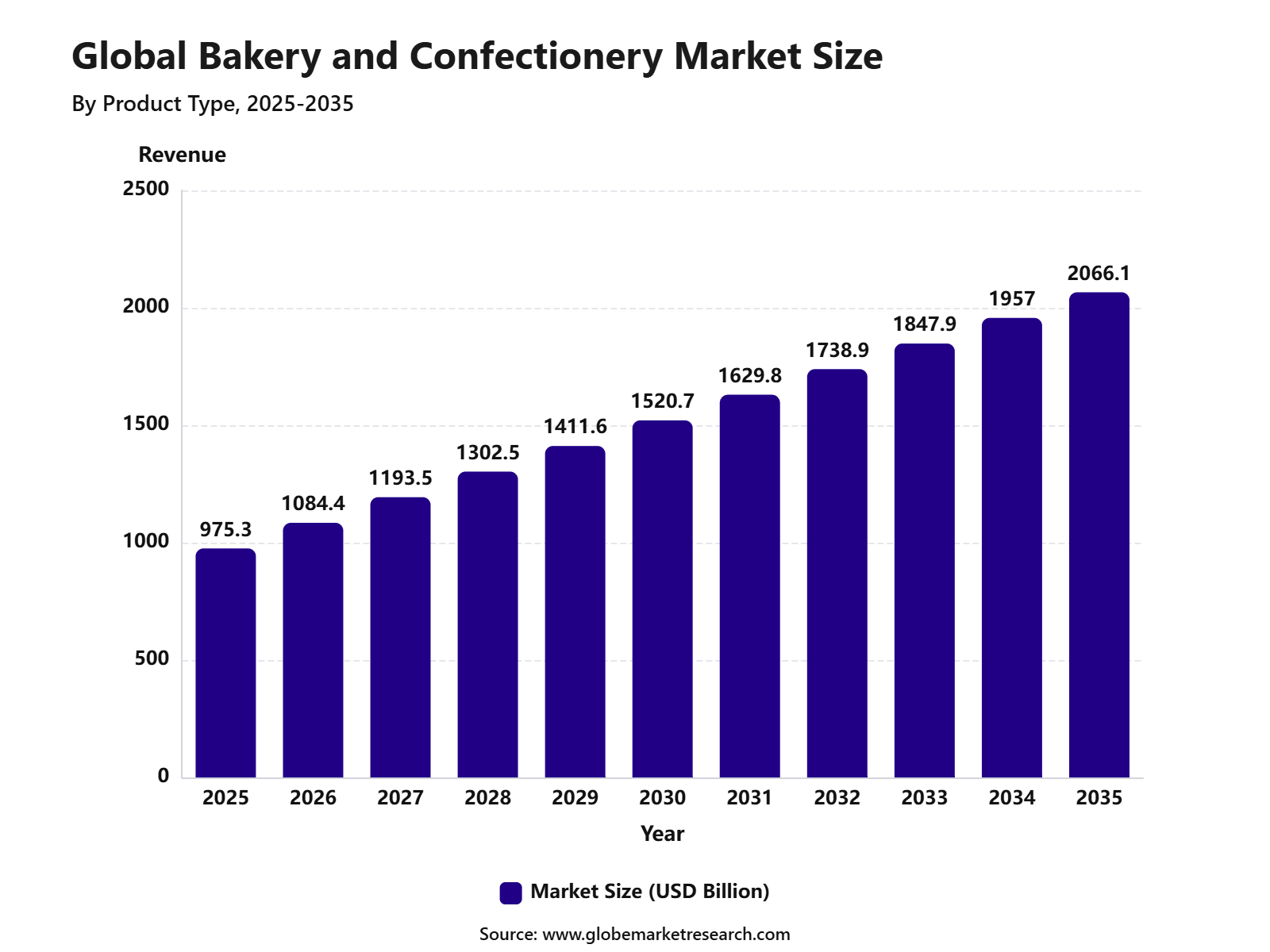 iThe graph shows projected market growth until 2035 based on CAGR analysis. Actual outcomes may vary depending on changing demand, competition, and economic factors.To gain greater insights - request a sample report PDF
The market outlook remains positive as demand continues to be supported by changing food habits, urban lifestyles, packaged snack consumption, premium chocolate demand, and the growth of convenient bakery formats. Europe remains a key market due to its strong bakery culture, established confectionery manufacturing base, and high consumption of packaged food products. Growth is expected to be further supported by product innovation, clean-label ingredients, portion-controlled packs, premium gifting formats, and wider retail availability, although cocoa price volatility, sugar reduction policies, and input cost pressure remain key challenges for manufacturers.
Key Market Insights
Bread led the product type segment with 33.8% share , supported by daily household consumption, wide retail availability, and strong demand across breakfast, snacks, and foodservice applications.
Bakery products accounted for 65.5% share by category, driven by high consumption of bread, cakes, pastries, biscuits, and other ready-to-eat baked goods.
Supermarkets and hypermarkets held 45.5% share by distribution channel, supported by broad product variety, organized shelf placement, promotional pricing, and strong consumer footfall.
Europe led the bakery and confectionery market with 39.3% share, supported by mature bakery consumption, strong confectionery traditions, premium product demand, and well-established retail networks.
Go-To-Market Strategy
The Bakery and Confectionery Market is driven by daily food consumption, gifting demand, impulse buying, festive purchases, and retail convenience. A strong go-to-market strategy should combine supermarkets, convenience stores, specialty bakery outlets, foodservice partnerships, quick-commerce platforms, and direct-to-consumer online channels. In the U.S., retail trade sales increased 7.5% year over year in May 2026, while nonstore retailers grew 12.2% , showing that physical retail and online buying both remain important sales channels for packaged food brands.
Sales economics depend on product freshness, shelf life, raw material pricing, cold-chain needs, packaging cost, retailer margin, and brand-led repeat purchases. Bakery products usually rely on frequent replenishment and local distribution, while confectionery benefits from longer shelf life, seasonal displays, gifting packs, and premium positioning. The FAO estimated global cereal production at 3,043 million tonnes in 2025, up 6.1% from 2024, which supports flour availability for bakery manufacturers, although wheat price movements can still affect margins.
Product Type Analysis
Bread led the Bakery and Confectionery Market with 33.8% share , supported by its daily consumption across households, foodservice outlets, schools, offices, hotels, and quick-service restaurants. It remains one of the most widely consumed bakery products because it is affordable, versatile, easy to pair with meals, and available in many formats such as loaves, rolls, buns, flatbreads, and specialty breads.
The growth of this segment can be attributed to strong demand for staple bakery products and changing consumer preference toward convenient meal options. Bread is used across breakfast, snacks, sandwiches, packaged meals, and foodservice menus, which helps maintain consistent demand across both developed and emerging markets.
Bread demand is also being shaped by product innovation in whole grain, multigrain, high-fiber, gluten-free, fortified, and premium artisanal variants. Manufacturers are focusing on better texture, longer shelf life, clean-label ingredients, and healthier positioning to address changing consumer expectations.
Category Analysis
Bakery products accounted for 65.5% share , making them the leading category in the Bakery and Confectionery Market. This category includes bread, cakes, pastries, biscuits, cookies, rolls, buns, muffins, croissants, and other baked goods that are consumed across daily meals, snacking occasions, and celebration-based purchases.
The dominance of bakery products can be linked to their frequent consumption and broad availability across supermarkets, bakeries, convenience stores, cafés, foodservice outlets, and online grocery platforms. Bakery items are purchased more regularly than many confectionery products, which supports strong repeat demand.
The segment is expected to remain strong as consumers continue to seek convenient, ready-to-eat, and portion-controlled food options. Demand is likely to be supported by frozen bakery products, packaged bakery snacks, premium pastries, healthier bakery formats, and products with added protein, fiber, or reduced sugar.
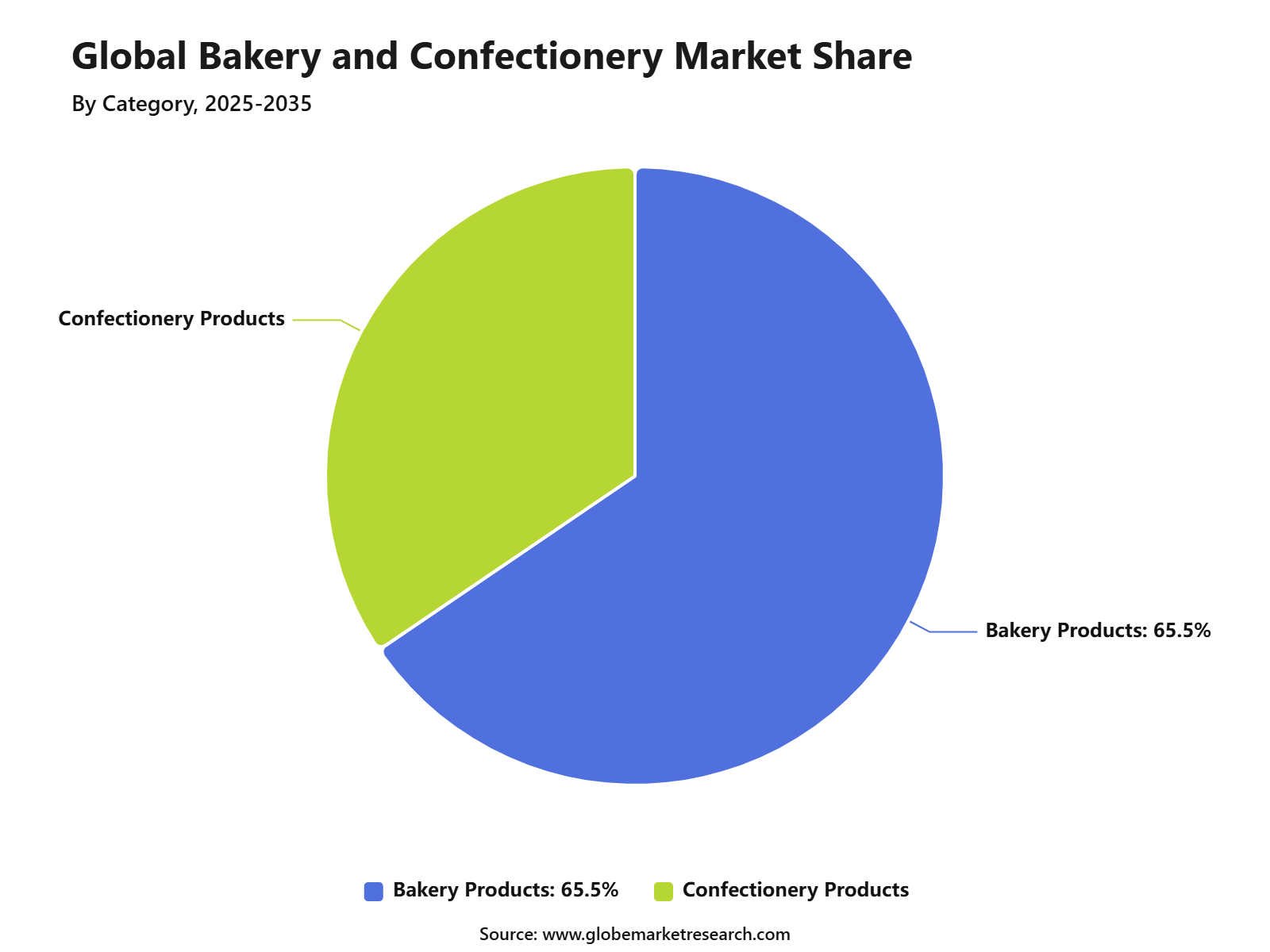 iThe graph shows projected market growth until 2035 based on CAGR analysis. Actual outcomes may vary depending on changing demand, competition, and economic factors.To gain greater insights - request a sample report PDF
Distribution Channel Analysis
Supermarkets and hypermarkets held 45.5% share of the Bakery and Confectionery Market, supported by strong consumer preference for organized retail, wide product variety, visible pricing, and convenient access. These outlets provide packaged bread, cakes, biscuits, pastries, chocolates, candies, snacks, and fresh bakery items under one roof.
The growth of this channel can be attributed to high footfall, attractive promotions, private-label products, in-store bakeries, and chilled or frozen bakery sections. Consumers prefer supermarkets and hypermarkets because they allow easy product comparison, bulk buying, and access to both premium and mass-market bakery and confectionery products.
This channel is expected to remain important as retailers expand fresh bakery counters, ready-to-eat sections, and seasonal confectionery displays. Demand will also be supported by modern retail expansion, loyalty programs, larger pack sizes, and stronger merchandising during festivals, holidays, and celebration periods.
Regional Analysis
Europe led the Bakery and Confectionery Market with 39.3% share , supported by strong bakery consumption, mature retail infrastructure, high demand for bread and pastries, and deep food culture across countries such as Germany, France, Italy, Spain, the U.K., and the Netherlands. The region has a well-developed bakery ecosystem that includes industrial bakeries, artisanal bakeries, supermarket bakeries, and specialty confectionery brands.
The growth of Europe can be attributed to consistent demand for bread, biscuits, cakes, pastries, chocolates, and premium bakery products. Consumers in the region show strong preference for quality, freshness, taste, convenience, and product variety, which supports both packaged and fresh bakery formats.
Europe is expected to remain a leading region due to its large food and drink manufacturing base, high retail penetration, and continued innovation in bakery and confectionery products. Opportunities are likely to remain strong in healthier bakery products, premium confectionery, frozen bakery, clean-label ingredients, sustainable packaging, and private-label retail products.
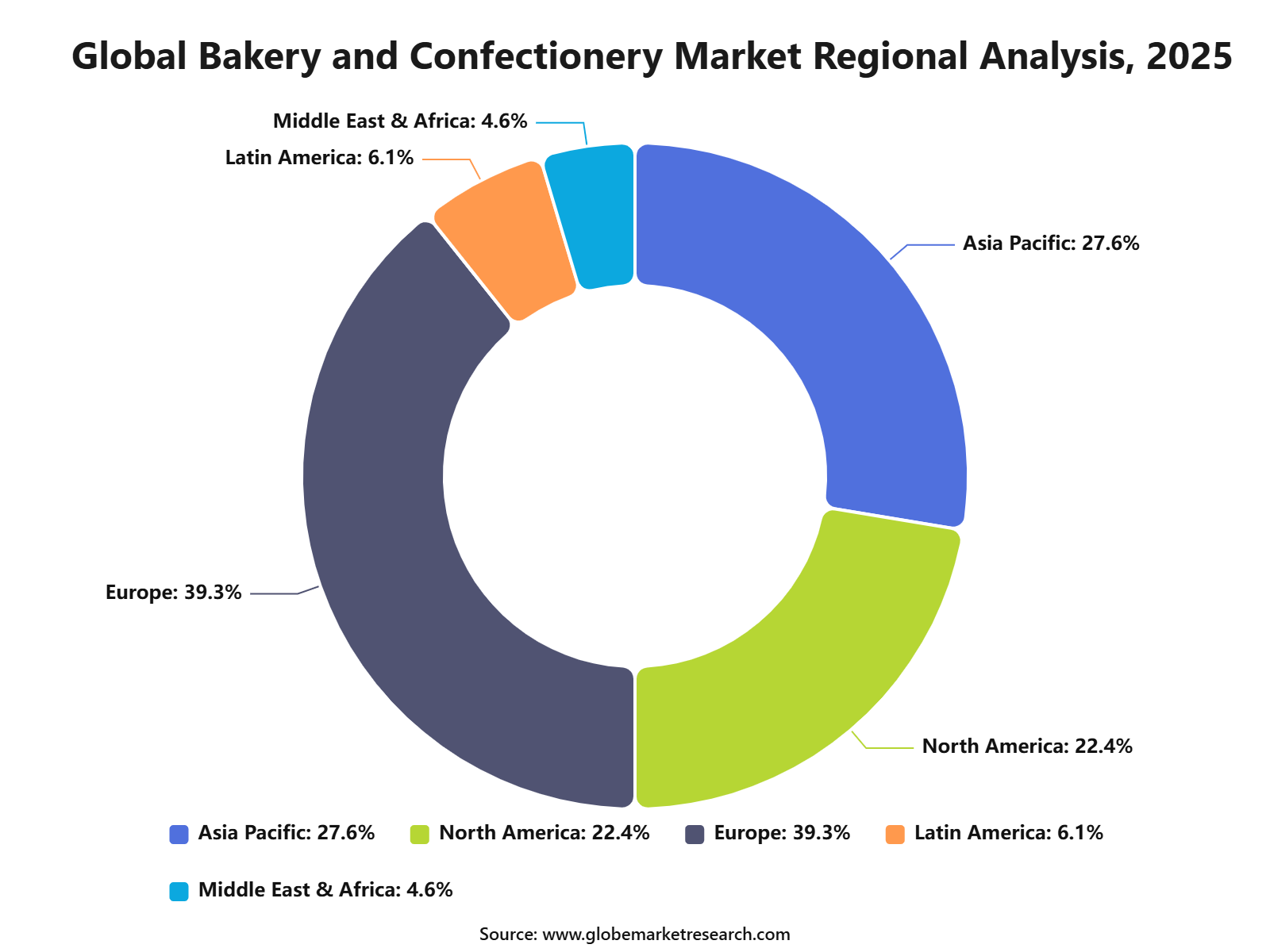 iThe graph shows projected market growth until 2035 based on CAGR analysis. Actual outcomes may vary depending on changing demand, competition, and economic factors.To gain greater insights - request a sample report PDF
Regional Impact Analysis
Impact Factor | Estimated CAGR Impact | Regional Relevance | Market Impact |
|---|---|---|---|
Europe market leadership | +2.3% | Europe, 39.3% share in 2025 | Leads premium consumption. |
Asia Pacific volume growth | +1.8% | China, India, Japan, Southeast Asia | Drives future demand. |
North America packaged bakery demand | +1.3% | U.S. and Canada | Supports branded products. |
Latin America confectionery expansion | +0.9% | Brazil, Mexico, Chile, Colombia | Builds steady adoption. |
Middle East and Africa urban food retail growth | +0.7% | GCC, South Africa, Egypt | Supports packaged sales. |
Risk Factors & Market Barriers
Regulatory & Compliance Risks
Regulatory risk is high because bakery and confectionery products must meet food safety, labeling, allergen, hygiene, and nutrition disclosure requirements. In the U.S., the FDA’s preventive controls rule requires food facilities to maintain a food safety plan with hazard analysis and risk-based preventive controls. This increases compliance costs for manufacturers, especially those handling flour, dairy, nuts, sesame, eggs, cocoa, and other allergen-sensitive ingredients.
Allergen compliance is a major operational risk. The EU requires clear declaration of 14 allergens, including cereals containing gluten, eggs, milk, peanuts, soybeans, sesame, and nuts, which are commonly used in bakery and confectionery production. In the U.S., FDA allergen rules identify major allergens such as milk, eggs, fish, shellfish, tree nuts, peanuts, wheat, soybeans, and sesame, making label accuracy and cross-contact control essential for market access.
Market Adoption Barriers
Health-focused consumption is one of the main adoption barriers for high-sugar and high-fat bakery and confectionery products. The World Health Organization recommends that adults and children reduce free sugar intake to less than 10% of total energy intake, with further benefits below 5% . This creates stronger pressure for smaller packs, low-sugar recipes, portion-controlled products, whole-grain bakery, high-fiber formats, and clean-label alternatives.
Marketing restrictions are also becoming more important in several regions. In England, restrictions on high fat, sugar, and salt products by store location started on October 2022, while volume price restrictions are set to come into force on October 2025. This can limit promotional visibility for cakes, sweet biscuits, chocolate, and sugar confectionery, making brand equity, reformulation, packaging innovation, and compliant retail placement more important for future growth.
Market Trend Analysis
Impact Factor | Estimated CAGR Impact | Regional Relevance | Market Impact |
|---|---|---|---|
Bread remains core bakery category | +1.9% | Europe, Asia Pacific, North America | Leads volume demand. |
Growth of bakery products category | +1.7% | Global | Drives staple consumption. |
Premium chocolate and confectionery growth | +1.4% | Europe, North America, Asia Pacific | Supports higher margins. |
Clean-label and functional bakery products | +1.2% | Europe, U.S., developed Asia | Builds health positioning. |
Supermarket and hypermarket channel strength | +1.1% | Global | Drives retail volume. |
Investor Type Impact Matrix
Investor Type | Estimated CAGR Impact | Regional Relevance | Market Impact |
|---|---|---|---|
Bakery and Confectionery Manufacturers | +1.8% | Global | Expands product capacity. |
Food and Beverage Companies | +1.5% | Europe, Asia Pacific, North America | Builds value-added products. |
Retail and E-commerce Investors | +1.2% | Global | Strengthens sales channels. |
Private Equity Firms | +1.0% | Europe, North America, Asia Pacific | Supports brand scaling. |
Packaging and Cold-Chain Investors | +0.9% | Global | Improves product distribution. |
Segment Covered in the Report
By Product Type
Bread
Cakes and Pastries
Biscuits and Cookies
Chocolates
Sugar Confectionery
Others
By Category
Bakery Products
Confectionery Products
By Distribution Channel
Supermarkets and Hypermarkets
Convenience Stores
Specialty Stores
Online
Others
By Region
Asia Pacific
North America
Europe
Middle East & Africa
Latin America
Drivers Impact Analysis
Impact Factor | Estimated CAGR Impact | Regional Relevance | Market Impact |
|---|---|---|---|
Rising demand for convenient bakery foods | +2.0% | Europe, North America, Asia Pacific | Drives daily consumption. |
Growth in packaged confectionery products | +1.7% | Global | Supports retail sales. |
Increasing urbanization and modern retail access | +1.5% | Asia Pacific, Latin America, Middle East | Improves product availability. |
Rising demand for premium baked goods | +1.3% | Europe, North America, Japan | Supports higher-value sales. |
Growth in cafés, quick-service outlets, and foodservice | +1.1% | Global urban markets | Expands bulk demand. |
Restraints Impact Analysis
Impact Factor | Estimated CAGR Impact | Regional Relevance | Market Impact |
|---|---|---|---|
Health concerns over sugar and refined carbs | -1.1% | Europe, North America, urban Asia | Limits frequent consumption. |
Volatility in wheat, cocoa, and sugar prices | -0.9% | Global producers | Pressures margins. |
Short shelf life of fresh bakery items | -0.8% | Global | Raises distribution risk. |
Strong competition from local bakeries | -0.7% | Global | Pressures branded sales. |
Regulatory pressure on ingredients and labeling | -0.6% | Europe, U.S., Asia Pacific | Increases compliance cost. |
Opportunities Impact Analysis
Impact Factor | Estimated CAGR Impact | Regional Relevance | Market Impact |
|---|---|---|---|
Growth in premium and artisanal bakery | +1.8% | Europe, North America, Asia Pacific | Builds high-value demand. |
Expansion of healthy and low-sugar products | +1.5% | Europe, U.S., Japan, urban Asia | Supports better-for-you demand. |
Rising demand for frozen bakery products | +1.3% | North America, Europe, Asia Pacific | Improves shelf life. |
Growth in online bakery and confectionery sales | +1.1% | Global | Expands direct reach. |
Product innovation in flavors and formats | +1.0% | Global | Improves consumer interest. |
Challenges Impact Analysis
Impact Factor | Estimated CAGR Impact | Regional Relevance | Market Impact |
|---|---|---|---|
Maintaining product freshness | -0.9% | Global | Requires strong logistics. |
Managing ingredient cost inflation | -0.8% | Global | Affects profitability. |
Reformulating products without taste loss | -0.7% | Europe, North America, developed Asia | Creates innovation pressure. |
Supply chain disruption risk | -0.6% | Global | Impacts production stability. |
Sustainability pressure on packaging | -0.5% | Europe, North America | Raises packaging cost. |
Recent Developments
February 2026, Barry Callebaut announced a multi-year investment plan of EUR 250 million for its Wieze factory in Belgium, described as the world’s largest chocolate factory. The company also planned another EUR 125 million investment for its Halle factory. The investments are focused on future-proofing production, improving operations, and strengthening chocolate and cocoa solution capacity in Europe
May 2026, Grupo Bimbo announced plans to invest around USD 1.0 billion in the United States between 2026 and 2028. The investment is expected to support maintenance, product innovation, accessibility, affordability, nutrition improvements, and regenerative agriculture partnerships. This strengthens Bimbo Bakeries USA’s position in packaged bread, buns, sweet baked goods, and bakery distribution.
Report Scope
Report Highlights | Details |
|---|---|
Market Revenue (2025) | USD 975.3 Billion |
Forecast Revenue (2035) | USD 2,066.1 Billion |
CAGR (2025-2035) | 7.8% |
Base Year for Estimation | 2025 |
Historic Data | 2020-2024 |
Forecast Period | 2025-2035 |
Report Coverage | AI market impact analysis, market surveys, trade analysis, Industry & competitive intelligence, Revenue projections, company positioning, competitive analysis, growth drivers, and emerging market trends, Strategic Consultation & Advisory Services |
Segments Covered | By Product Type (Bread, Cakes and Pastries, Biscuits and Cookies, Chocolates, Sugar Confectionery, Others), By Category (Bakery Products, Confectionery Products), By Distribution Channel (Supermarkets and Hypermarkets, Convenience Stores, Specialty Stores, Online, Others) |
Regional Analysis | North America - US, Canada; Europe - Germany, France, The UK, Spain, Italy, Russia, Netherlands, Rest of Europe; Asia Pacific - China, Japan, South Korea, India, New Zealand, Singapore, Thailand, Vietnam, Rest of Latin America; Latin America - Brazil, Mexico, Rest of Latin America; Middle East & Africa - South Africa, Saudi Arabia, UAE, Rest of MEA |
Key companies profiled | Grupo Bimbo, Mondelez International, Nestlé S.A., The Hershey Company, Mars Incorporated, Ferrero Group, General Mills, Kellogg Company, Britannia Industries, Yamazaki Baking, Parle Products, and Pladis Global |
Customization Scope | Tailored insights for specific regions, countries, and market segments can be provided. Additional report customization is available upon request. |
Competitive Landscape
The market is characterized by intense competition among established players and emerging companies. Strategic partnerships, mergers and acquisitions, and product innovation are key strategies employed by market participants.
Key Market Players
Grupo Bimbo
Mondelez International
Nestlé S.A.
The Hershey Company
Mars Incorporated
Ferrero Group
General Mills
Kellogg Company
Britannia Industries
Yamazaki Baking
Parle Products
Pladis Global
Meet the Team
This report was prepared by our expert analysts with deep industry knowledge and research experience.
Pratiksha is market research analyst with strong experience in industry research, market forecasting, and competitive analysis. She specializes in identifying market trends, evaluating growth opportunities, and preparing data-driven insights across global industries. Her work supports businesses in understanding market dynamics, customer demand, regional opportunities, and strategic investment areas.
Sayali brings more than 5 years of experience to Globe Market Research, supporting the accuracy, clarity, and relevance of research content across multiple industries. She reviews market data, segment analysis, competitive insights, and industry trends to ensure each report meets strong quality standards and provides practical value to business decision-makers. Her expertise spans healthcare, information technology, consumer goods, and diverse cross-industry domains. With a strong focus on data reliability, structured analysis, and clear presentation, Sayali helps ensure that each research output delivers well-reviewed insights for clients, investors, consultants, and industry stakeholders.
Frequently Asked Questions
Related Reports
More in Food and Beverages
Snack Food Market Size to hit USD 1,157.5 Bn by 2035
Global Snack Food Market Size, Share Analysis By Product Type (Chips and Crisps, Nuts and Seeds, Biscuits and Cookies, Popcorn, Meat Snacks, Others), By Category (Conventional Snacks, Healthy Snacks), By Distribution Channel (Supermarkets and Hypermarkets, Convenience Stores, Online, Specialty Stores, Others), By Regional Insights, Business plan and Project Report, Investment Opportunities, Profitability, Industry Trends, Leading Companies and Growth Forecasts by 2025-2035
Canned Food Market Size to Exceed USD 233.8 Billion by 2035
Global Canned Food Market Size, Share Analysis By Product Type (Canned Seafood, Canned Meat, Canned Fruits and Vegetables, Canned Ready Meals, Others), By Type (Conventional, Organic), By Distribution Channel (Supermarkets and Hypermarkets, Convenience Stores, Online, Others), By Regional Insights, Business plan and Project Report, Investment Opportunities, Profitability, Industry Trends, Leading Companies and Growth Forecasts by 2025-2035
Frozen Food Market Size to Exceed USD 596.6 Billion by 2035
Global Frozen Food Market Size, Share Analysis By Product (Frozen Desserts, Frozen Meals, Meat/Poultry/Seafood, Fruits and Vegetables, Snacks, Baked Goods), By Freezing Technology (Blast Freezing, Belt Freezing, Individual Quick Freezing, Others), By Distribution Channel (Foodservice, Retail), By Regional Insights, Business plan and Project Report, Investment Opportunities, Profitability, Industry Trends, Leading Companies and Growth Forecasts by 2025-2035
Ready-to-Eat Food Market to Exceed USD 846.5 Billion by 2035
Global Ready-to-Eat Food Market Size, Share Analysis By Product Type (Meat/Poultry, Vegetarian, Cereal-Based, Others), By Packaging (Frozen/Chilled, Canned, Retort, Others), By Distribution Channel (Hypermarkets, Convenience Stores, Online, Others), By End User (Residential, Foodservice, Institutional), By Regional Insights, Business plan and Project Report, Investment Opportunities, Profitability, Industry Trends, Leading Companies and Growth Forecasts by 2025-2035