

Revenue, 2025
$ 426.3 Bn
Forecast, 2035
$ 846.5 Bn
CAGR, 2025-2035
7.1%
Report Coverage
Global
Market Size and Forecast
The Global Ready-to-Eat Food Market reached USD 426.3 billion in 2025 and is expected to grow to USD 846.5 billion by 2035, registering a CAGR of 7.1% from 2025 to 2035. Europe held the largest regional share of 35.4% in 2025, supported by strong demand for chilled meals, frozen ready meals, canned food, and convenient packaged food products across Germany, France, the U.K., Italy, and Spain.
The market growth can be attributed to busy lifestyles, rising working population, higher demand for quick meal solutions, and increasing preference for hygienic, packaged, and longer shelf-life food products. Ready-to-eat foods are gaining strong adoption among households, students, office workers, travelers, and foodservice operators due to their convenience, reduced cooking time, and wide product availability across supermarkets, convenience stores, and online platforms.
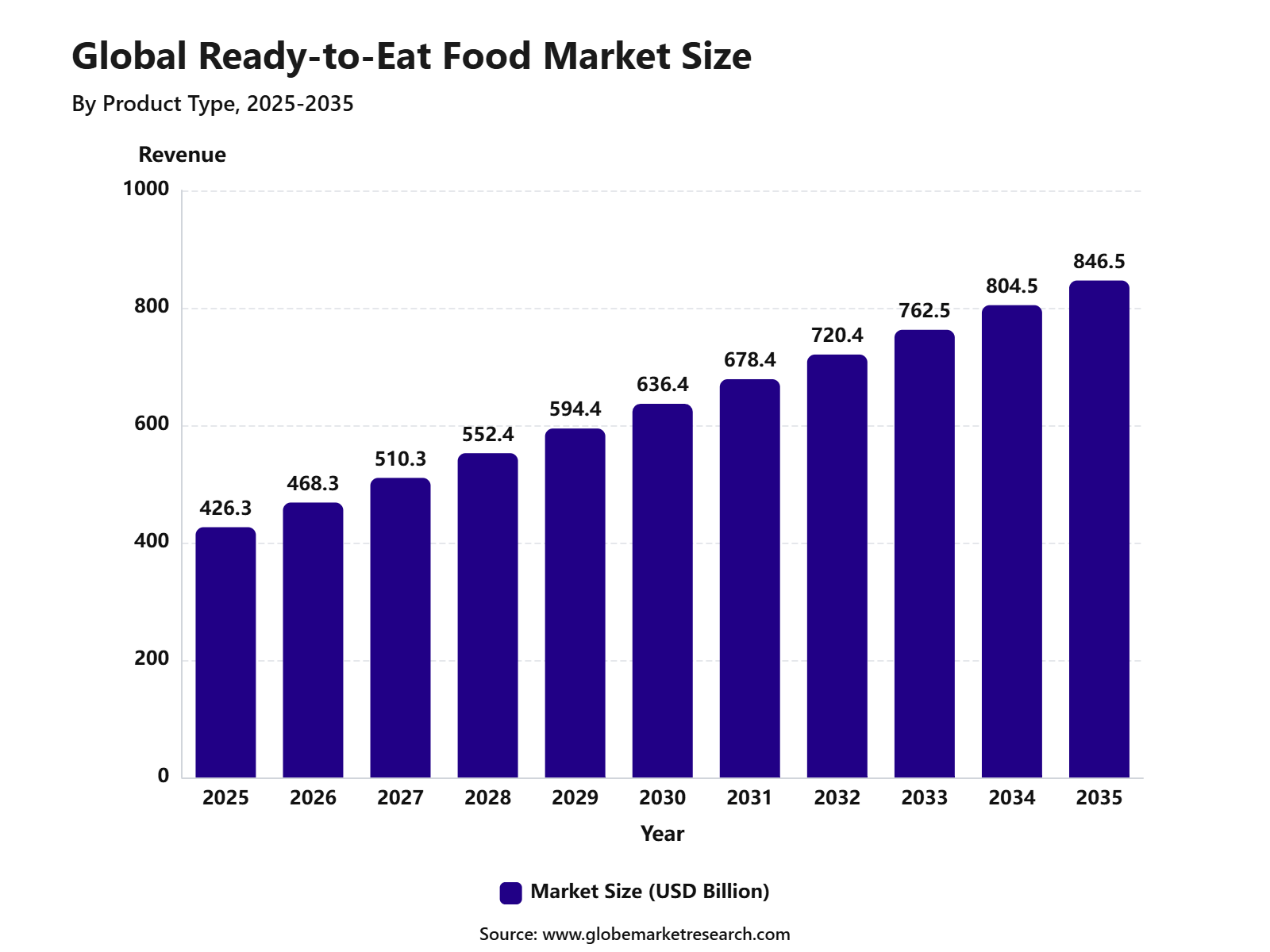 iThe graph shows projected market growth until 2035 based on CAGR analysis. Actual outcomes may vary depending on changing demand, competition, and economic factors.To gain greater insights - request a sample report PDF
Key Market Insights
Meat and poultry led the product type segment with 45.0% share, supported by strong demand for convenient protein-based meals, quick lunch options, and ready-to-serve food products.
Frozen and chilled packaging accounted for 37.1% share, driven by longer shelf life, better freshness retention, and wider use across packaged meals and refrigerated food products.
Hypermarkets held 40.2% share by distribution channel, supported by broad product availability, organized cold-chain storage, promotional offers, and strong consumer footfall.
Residential consumers represented 75.5% share by end user, driven by busy lifestyles, growing home consumption of convenient meals, and rising demand for easy-to-prepare food options.
Europe led the ready-to-eat food market with 35.4% share, supported by high packaged food consumption, mature retail networks, strong frozen food demand, and rising preference for convenient meal solutions.
Go-To-Market-Strategy
The Ready-to-Eat Food Market should be positioned through a convenience-first and value-based go-to-market strategy in 2026, as consumers are replacing some restaurant visits with grocery-prepared meals, frozen meals, chilled foods, snacks, and heat-and-eat products. Food-away-from-home prices rose 3.5% year over year in May 2026, while food-at-home prices rose 2.7%, making ready-to-eat retail meals an attractive middle option between cooking at home and eating out.
Product strategy should focus on frozen meals, chilled meals, ready-to-eat meat and poultry items, plant-based bowls, protein-rich meals, snacks, sandwiches, salads, pasta, rice bowls, and bakery-based convenience foods. Frozen food has become a strong meal-planning category, with 40% of consumers using frozen foods every few days or daily, compared with 35% in 2019. In addition, 77% of consumers now buy frozen food with a specific meal or day in mind, which shows that ready-to-eat products are being planned into regular household eating rather than purchased only for emergency use.
Product Type Analysis
Meat and poultry led the Ready-to-Eat Food Market with 45.0% share, supported by strong demand for protein-rich, convenient, and easy-to-consume meal options. Products such as ready-to-eat chicken, cooked meat slices, prepared meat meals, sausages, meat snacks, and poultry-based meals are widely used by households, working professionals, students, and foodservice buyers.
The growth of this segment can be attributed to rising consumer preference for high-protein diets and quick meal solutions. Meat and poultry products are often selected because they reduce cooking time while providing familiar taste, meal variety, and strong satiety value.
The segment is expected to remain important as manufacturers expand ready-to-eat meat meals, chilled poultry packs, frozen meat dishes, and microwave-ready products. Demand will also be supported by improved packaging, better cold-chain systems, and increasing interest in convenient protein-based food formats.
Packaging Analysis
Frozen and chilled packaging accounted for 37.1% share, supported by its ability to maintain product freshness, safety, texture, and shelf life. This packaging format is widely used for ready meals, meat products, poultry meals, pasta dishes, sandwiches, bakery items, desserts, and prepared snacks.
The growth of this segment is being driven by busy lifestyles, higher demand for convenient meals, and wider availability of cold-chain infrastructure. Frozen and chilled packaging helps reduce spoilage risk and allows retailers to offer a wider range of ready-to-eat products across supermarkets, hypermarkets, and online grocery platforms.
Frozen and chilled packaging is expected to remain a leading format as consumers continue to seek fresh-tasting and longer-lasting meal options. Manufacturers are likely to focus on leak-proof packs, microwave-safe trays, resealable formats, and sustainable chilled packaging materials.
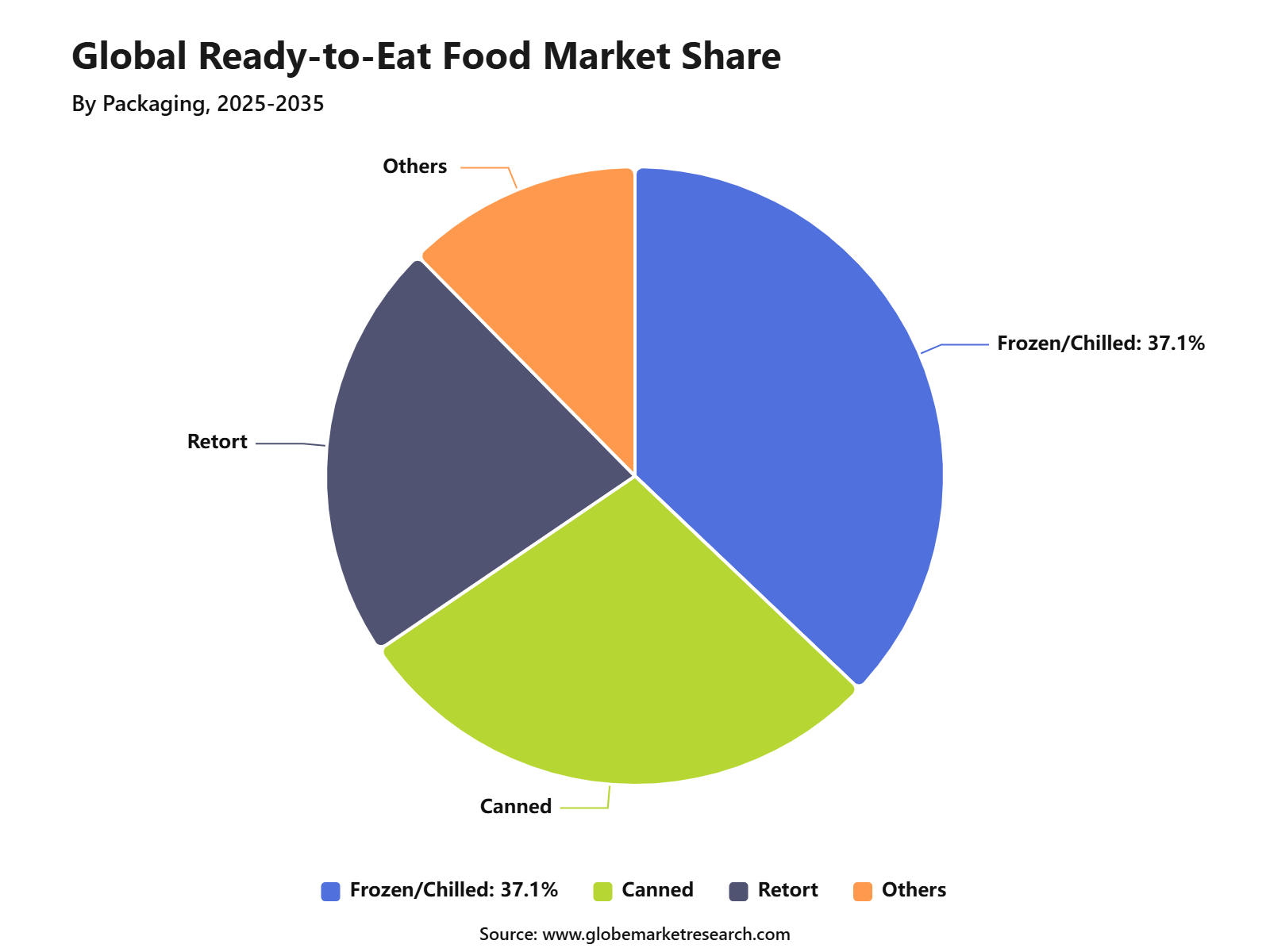 iThe graph shows projected market growth until 2035 based on CAGR analysis. Actual outcomes may vary depending on changing demand, competition, and economic factors.To gain greater insights - request a sample report PDF
Distribution Channel Analysis
Hypermarkets held 40.2% share of the Ready-to-Eat Food Market, supported by wide product availability, strong consumer footfall, and convenient access to multiple food categories under one roof. These stores offer frozen meals, chilled meals, ready-to-eat meat products, snacks, bakery items, desserts, and packaged convenience foods across several price levels.
The growth of this channel can be linked to the ability of hypermarkets to manage cold storage, display large product ranges, and run promotional offers. Consumers often prefer hypermarkets because they can compare brands, check product freshness, and buy ready-to-eat foods along with regular groceries.
Hypermarkets are expected to remain a key sales channel due to their strong role in urban food retail. Demand will also be supported by private-label ready meals, family-size packs, chilled food counters, frozen sections, and in-store merchandising for convenience food products.
End User Analysis
Residential end users led the market with 75.5% share, supported by rising household demand for convenient, time-saving, and easy-to-prepare meal options. Ready-to-eat foods are widely used by families, working adults, students, elderly consumers, and single-person households.
The growth of this segment can be attributed to changing lifestyles, longer working hours, urbanization, and increasing preference for quick meals at home. Consumers are using ready-to-eat products for breakfast, lunch, dinner, snacks, emergency meals, and weekend convenience.
Residential demand is expected to remain strong as consumers continue to balance convenience with taste, nutrition, and affordability. Products with clear labels, better ingredients, portion control, and healthier positioning are likely to gain higher acceptance among household buyers.
Regional Analysis
Europe led the Ready-to-Eat Food Market with 35.4% share, supported by a mature food processing industry, strong cold-chain systems, organized retail networks, and high consumer demand for convenience foods. The region has strong consumption of chilled meals, frozen meals, prepared meat products, bakery-based ready foods, salads, and packaged snacks.
The growth of Europe is being supported by busy lifestyles, higher urban food demand, and strong retail availability across supermarkets, hypermarkets, convenience stores, and online grocery channels. Consumers in the region often prefer ready-to-eat foods that offer quality, freshness, portion control, and reliable food safety.
Europe is expected to remain a leading regional market due to continued innovation in chilled meals, frozen foods, protein-based ready meals, and healthier convenience products. Opportunities are likely to remain strong in clean-label meals, premium ready-to-eat foods, sustainable packaging, plant-based options, and private-label retail products.
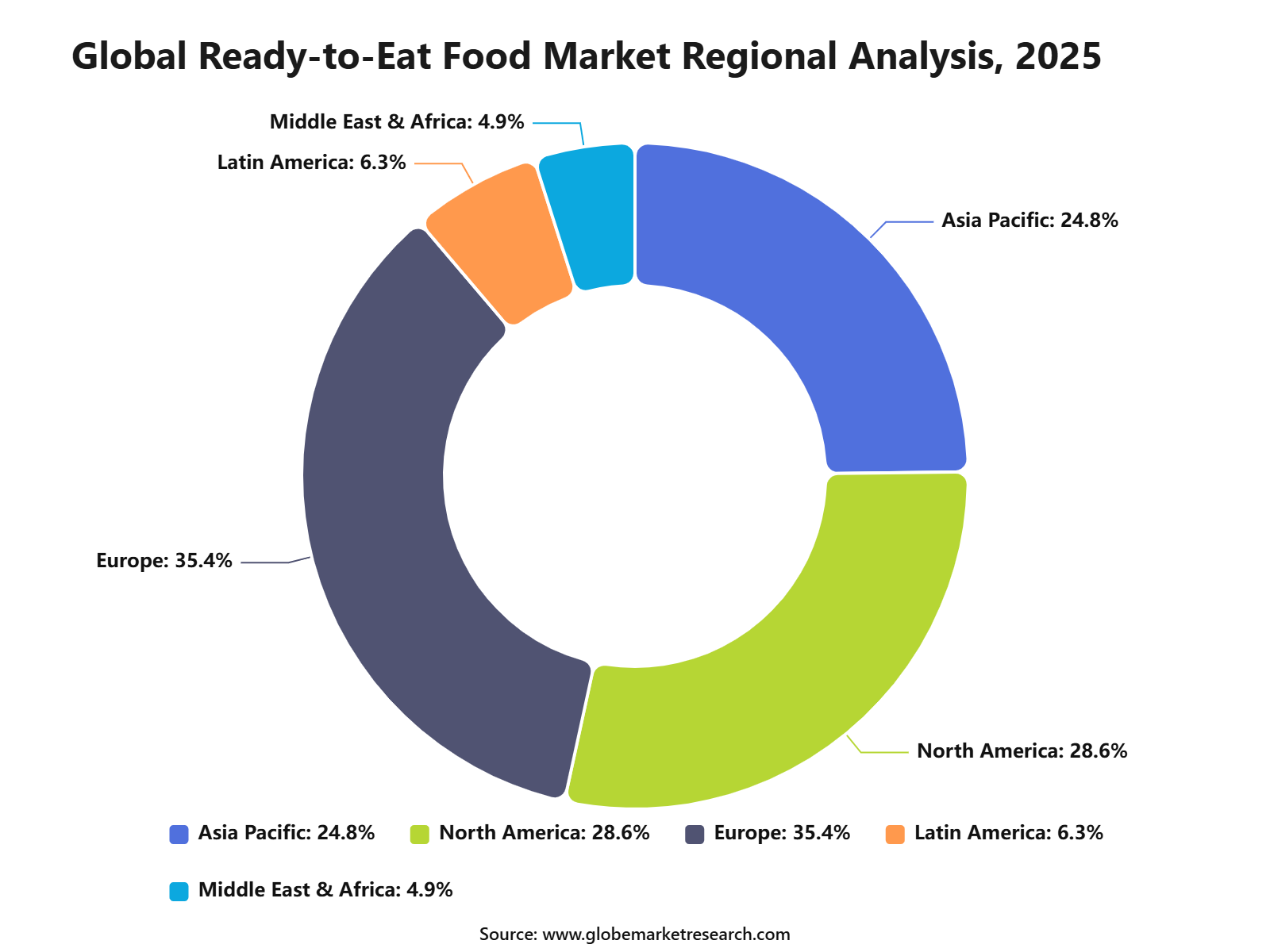 iThe graph shows projected market growth until 2035 based on CAGR analysis. Actual outcomes may vary depending on changing demand, competition, and economic factors.To gain greater insights - request a sample report PDF
Regional Impact Analysis
Impact Factor | Estimated CAGR Impact | Regional Relevance | Market Impact |
|---|---|---|---|
Europe market leadership | +2.1% | Europe, 35.4% share in 2025 | Leads packaged meal demand. |
Asia Pacific urban meal growth | +1.6% | China, India, Japan, Southeast Asia | Drives future volume. |
North America convenience food demand | +1.3% | U.S. and Canada | Supports premium meals. |
Latin America retail expansion | +0.8% | Brazil, Mexico, Chile, Colombia | Builds steady adoption. |
Middle East and Africa foodservice growth | +0.7% | GCC, South Africa, Egypt | Supports gradual demand. |
Risk Factors & Market Barriers
Food safety, allergen control, and labeling accuracy are major barriers for ready-to-eat food companies because these products are consumed directly or after minimal heating. In June 2026, USDA FSIS announced a recall of around 5,795 pounds of frozen meatloaf products due to misbranding and undeclared soy allergen, showing the serious compliance risk linked with prepared meals. Recalls can damage brand trust, increase logistics costs, reduce retailer confidence, and create legal exposure for manufacturers.
Input-cost inflation, cold-chain expenses, and energy costs also create financial pressure across the Ready-to-Eat Food Market. FAO reported that the global Food Price Index averaged 130.8 points in May 2026, while cereal and sugar prices increased during the month, affecting meals that use wheat, rice, sauces, sweet ingredients, and bakery components. Temperature-controlled storage, packaging, labor, fuel, and last-mile delivery also raise operating costs, especially for chilled and frozen ready meals that need strict quality control from production to shelf.
Revenue Potential Analysis
Revenue Landscape Across
Revenue opportunities across the Ready-to-Eat Food Market are expected to remain broad because the category serves breakfast, lunch, dinner, snacking, office meals, travel meals, and quick household consumption. Frozen meals provide longer shelf life and better inventory flexibility, while chilled meals support freshness-led positioning in supermarkets and convenience stores. High-protein frozen foods generate around USD 12.0 billion annually and are growing at double-digit volume rates, showing strong consumer demand for nutrition-led convenience.
Across channels, supermarkets and hypermarkets remain important due to strong footfall, prepared food counters, and freezer aisle visibility, while online grocery and quick-commerce platforms support faster repeat orders. Convenience stores are also becoming more food-focused, with larger ready-meal, beverage, and snack sections being used to increase basket value. Regional growth is supported by busy working populations, urban households, smaller family sizes, and higher demand for affordable meal solutions that require less preparation time.
Financial Impact
The financial impact of the Ready-to-Eat Food Market in 2026 is shaped by margin balance between raw material costs, processing costs, packaging, refrigeration, and retail pricing. The category can offer better unit economics than bulk staple foods because consumers pay for convenience, portion control, taste, safety, and time savings. However, profitability can weaken when meat, grains, vegetables, dairy, sauces, packaging, and cold-chain costs rise faster than shelf prices.
Companies can improve financial performance through automation, better demand forecasting, efficient freezing technology, private-label partnerships, and multi-serve value packs. Waste reduction is also financially important because frozen and shelf-stable ready-to-eat products can reduce spoilage compared with short-life fresh foods. The strongest returns are expected for brands that combine food safety, consistent taste, affordable pricing, strong retail placement, and clean product labeling.
Market Trend Analysis
Impact Factor | Estimated CAGR Impact | Regional Relevance | Market Impact |
|---|---|---|---|
Meat and poultry ready meals growth | +1.8% | Europe, North America, Asia Pacific | Leads product demand. |
Frozen and chilled format adoption | +1.5% | Europe, U.S., Japan | Supports retail expansion. |
Hypermarket channel strength | +1.3% | Global | Drives packaged meal sales. |
Health-focused ready meals | +1.1% | Europe, North America | Builds better-for-you demand. |
Premium and ethnic meal varieties | +0.9% | Urban global markets | Improves consumer choice. |
Investor Type Impact Matrix
Investor Type | Estimated CAGR Impact | Regional Relevance | Market Impact |
|---|---|---|---|
Food Processing Companies | +1.6% | Global | Expands meal production. |
Retail and Grocery Chains | +1.3% | Europe, North America, Asia Pacific | Drives shelf availability. |
Cold-Chain Logistics Investors | +1.1% | Global | Supports frozen delivery. |
Private Equity Firms | +0.9% | Europe, North America, Asia Pacific | Enables brand scaling. |
Packaging Technology Investors | +0.8% | Global | Improves shelf life. |
Segment Covered in the Report
By Product Type
Meat/Poultry
Vegetarian
Cereal-Based
Others
By Packaging
Frozen/Chilled
Canned
Retort
Others
By Distribution Channel
Hypermarkets
Convenience Stores
Online
Others
By End User
Residential
Foodservice
Institutional
By Region
Asia Pacific
North America
Europe
Middle East & Africa
Latin America
Drivers Impact Analysis
Impact Factor | Estimated CAGR Impact | Regional Relevance | Market Impact |
|---|---|---|---|
Rising demand for convenient meals | +1.9% | Europe, North America, Asia Pacific | Drives daily consumption. |
Growth in urban working population | +1.6% | Global urban markets | Supports quick meal demand. |
Expansion of supermarkets and hypermarkets | +1.3% | Europe, Asia Pacific, North America | Improves product availability. |
Increasing demand for frozen and chilled foods | +1.2% | Europe, North America, Japan | Supports longer shelf life. |
Growth in single-person households | +1.0% | Europe, North America, urban Asia | Increases portioned meals. |
Restraints Impact Analysis
Impact Factor | Estimated CAGR Impact | Regional Relevance | Market Impact |
|---|---|---|---|
Health concerns over preservatives | -1.0% | Europe, North America, urban Asia | Limits frequent use. |
High cold-chain storage cost | -0.8% | Emerging markets | Raises distribution cost. |
Price sensitivity among mass consumers | -0.7% | Asia Pacific, Latin America, MEA | Affects premium sales. |
Competition from fresh food options | -0.6% | Global | Restricts repeat purchases. |
Food safety and labeling requirements | -0.5% | Europe, U.S., Asia Pacific | Increases compliance burden. |
Opportunities Impact Analysis
Impact Factor | Estimated CAGR Impact | Regional Relevance | Market Impact |
|---|---|---|---|
Growth in healthier ready meals | +1.7% | Europe, North America, Asia Pacific | Supports premium demand. |
Expansion of frozen ready-to-eat products | +1.4% | Europe, U.S., Japan, South Korea | Improves shelf stability. |
Rising demand for meat and poultry meals | +1.3% | Europe, North America, Asia Pacific | Drives core category growth. |
Growth in online grocery delivery | +1.1% | Global urban markets | Expands consumer access. |
Product innovation in regional cuisines | +1.0% | Asia Pacific, Europe, North America | Builds wider appeal. |
Challenges Impact Analysis
Impact Factor | Estimated CAGR Impact | Regional Relevance | Market Impact |
|---|---|---|---|
Maintaining taste and freshness | -0.8% | Global | Affects repeat buying. |
Managing cold-chain reliability | -0.7% | Emerging and rural markets | Impacts product quality. |
Ingredient cost volatility | -0.6% | Global producers | Pressures margins. |
Short shelf life for chilled meals | -0.5% | Retail-heavy markets | Raises wastage risk. |
Sustainability pressure on packaging | -0.5% | Europe, North America | Increases packaging cost. |
Recent Developments
June 2026: Nestlé S.A. announced the full acquisition of yfood Labs GmbH, a Europe-based smart food brand offering nutritionally complete ready-to-drink meals. yfood products are sold in 30 countries and more than 50,000 points of sale, strengthening Nestlé’s position in convenient meal replacement and ready-to-consume nutrition formats.
April 2026: The Kraft Heinz Company launched Kraft Mac & Cheese Restaurant Edition, positioned around restaurant-inspired at-home meals. The launch supports the company’s broader focus on affordable, easy-preparation food formats, while Kraft Heinz reported approximately USD 25 billion in net sales in 2025.
Report Scope
Report Highlights | Details |
|---|---|
Market Revenue (2025) | USD 426.3 Billion |
Forecast Revenue (2035) | USD 846.5 Billion |
CAGR (2025-2035) | 7.1% |
Base Year for Estimation | 2025 |
Historic Data | 2020-2024 |
Forecast Period | 2025-2035 |
Report Coverage | AI market impact analysis, market surveys, trade analysis, Industry & competitive intelligence, Revenue projections, company positioning, competitive analysis, growth drivers, and emerging market trends, Strategic Consultation & Advisory Services |
Segments Covered | By Product Type (Meat/Poultry, Vegetarian, Cereal-Based, Others), By Packaging (Frozen/Chilled, Canned, Retort, Others), By Distribution Channel (Hypermarkets, Convenience Stores, Online, Others), By End User (Residential, Foodservice, Institutional) |
Regional Analysis | North America - US, Canada; Europe - Germany, France, The UK, Spain, Italy, Russia, Netherlands, Rest of Europe; Asia Pacific - China, Japan, South Korea, India, New Zealand, Singapore, Thailand, Vietnam, Rest of Latin America; Latin America - Brazil, Mexico, Rest of Latin America; Middle East & Africa - South Africa, Saudi Arabia, UAE, Rest of MEA |
Key companies profiled | Nestlé S.A., Conagra Brands, Inc., The Kraft Heinz Company, General Mills, Inc., McCain Foods Limited, Nomad Foods Limited, Tyson Foods, Inc., Unilever PLC, Bakkavor Group plc, Fleury Michon SA |
Customization Scope | Tailored insights for specific regions, countries, and market segments can be provided. Additional report customization is available upon request. |
Competitive Landscape
The market is characterized by intense competition among established players and emerging companies. Strategic partnerships, mergers and acquisitions, and product innovation are key strategies employed by market participants.
Key Market Players
Nestlé S.A.
Conagra Brands, Inc.
The Kraft Heinz Company
General Mills, Inc.
McCain Foods Limited
Nomad Foods Limited
Tyson Foods, Inc.
Unilever PLC
Bakkavor Group plc
Fleury Michon SA
Meet the Team
This report was prepared by our expert analysts with deep industry knowledge and research experience.
Pratiksha is market research analyst with strong experience in industry research, market forecasting, and competitive analysis. She specializes in identifying market trends, evaluating growth opportunities, and preparing data-driven insights across global industries. Her work supports businesses in understanding market dynamics, customer demand, regional opportunities, and strategic investment areas.
Sayali brings more than 5 years of experience to Globe Market Research, supporting the accuracy, clarity, and relevance of research content across multiple industries. She reviews market data, segment analysis, competitive insights, and industry trends to ensure each report meets strong quality standards and provides practical value to business decision-makers. Her expertise spans healthcare, information technology, consumer goods, and diverse cross-industry domains. With a strong focus on data reliability, structured analysis, and clear presentation, Sayali helps ensure that each research output delivers well-reviewed insights for clients, investors, consultants, and industry stakeholders.
Frequently Asked Questions
Related Reports
More in Food and Beverages
Snack Food Market Size to hit USD 1,157.5 Bn by 2035
Global Snack Food Market Size, Share Analysis By Product Type (Chips and Crisps, Nuts and Seeds, Biscuits and Cookies, Popcorn, Meat Snacks, Others), By Category (Conventional Snacks, Healthy Snacks), By Distribution Channel (Supermarkets and Hypermarkets, Convenience Stores, Online, Specialty Stores, Others), By Regional Insights, Business plan and Project Report, Investment Opportunities, Profitability, Industry Trends, Leading Companies and Growth Forecasts by 2025-2035
Canned Food Market Size to Exceed USD 233.8 Billion by 2035
Global Canned Food Market Size, Share Analysis By Product Type (Canned Seafood, Canned Meat, Canned Fruits and Vegetables, Canned Ready Meals, Others), By Type (Conventional, Organic), By Distribution Channel (Supermarkets and Hypermarkets, Convenience Stores, Online, Others), By Regional Insights, Business plan and Project Report, Investment Opportunities, Profitability, Industry Trends, Leading Companies and Growth Forecasts by 2025-2035
Frozen Food Market Size to Exceed USD 596.6 Billion by 2035
Global Frozen Food Market Size, Share Analysis By Product (Frozen Desserts, Frozen Meals, Meat/Poultry/Seafood, Fruits and Vegetables, Snacks, Baked Goods), By Freezing Technology (Blast Freezing, Belt Freezing, Individual Quick Freezing, Others), By Distribution Channel (Foodservice, Retail), By Regional Insights, Business plan and Project Report, Investment Opportunities, Profitability, Industry Trends, Leading Companies and Growth Forecasts by 2025-2035
Cereals and Grains Market to Exceed USD 1,928.1 Billion by 2035
Global Cereals and Grains Market Size, Share Analysis By Product Type (Wheat, Rice, Maize, Barley, Oats, Sorghum, Others), By Application (Food and Beverage, Animal Feed, Biofuel, Industrial Use, Others), By Form (Whole Grain, Flour, Processed Grain, Others), By Distribution Channel (Direct Sales, Wholesalers and Distributors, Retail, Online), By Regional Insights, Business plan and Project Report, Investment Opportunities, Profitability, Industry Trends, Leading Companies and Growth Forecasts by 2025-2035