
Revenue, 2026
USD 6.3 Bn
Forecast, 2035
USD 11.6 Bn
CAGR, 2026-2035
7.1%
Report Coverage
Global
Market Size and Forecast
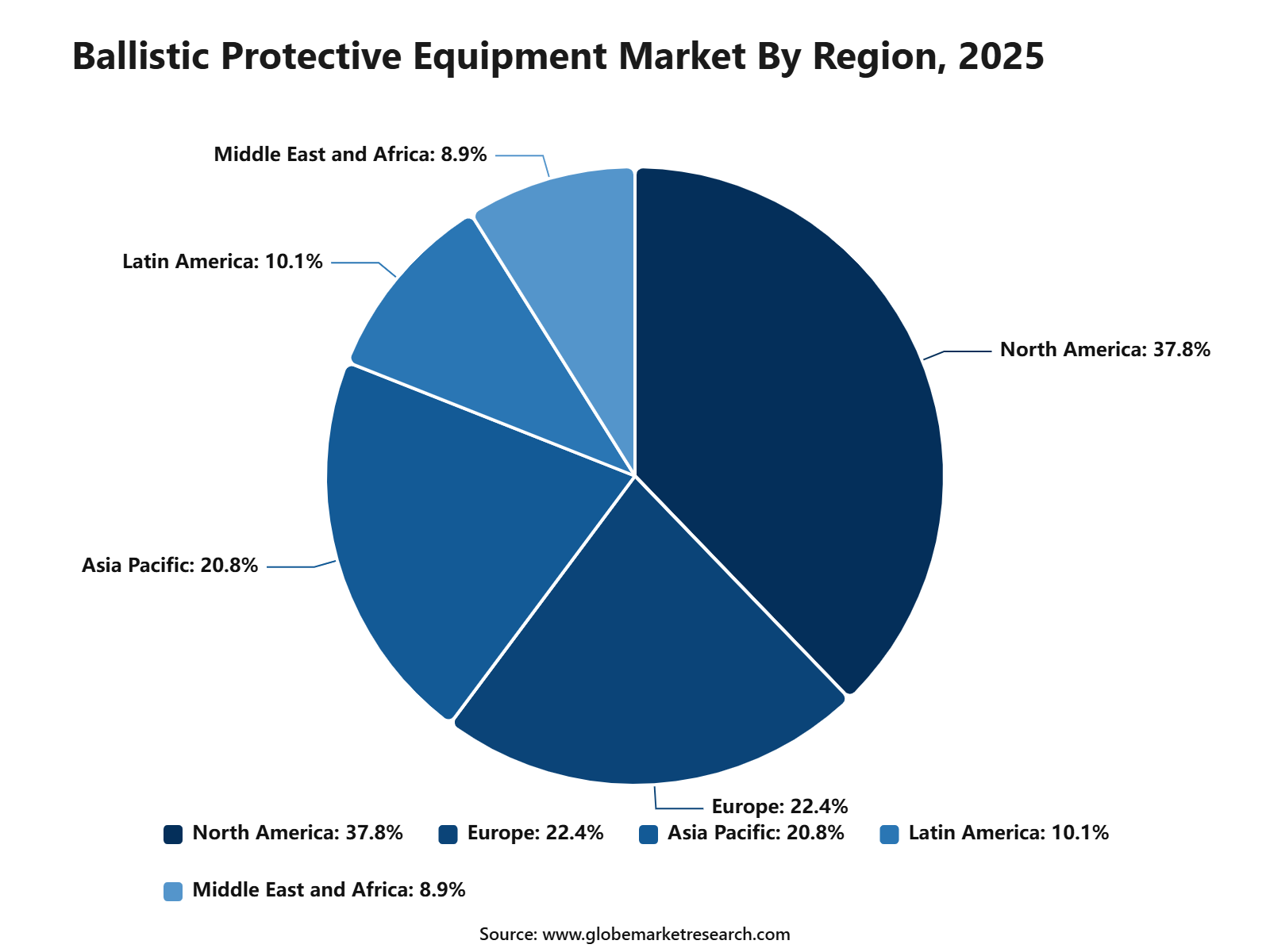
As per the latest analysis by Globe Market Research, The global Ballistic Protective Equipment Market was valued at USD 6.3 billion in 2026 and is projected to reach approximately USD 11.6 billion by 2035, growing at a CAGR of 7.1% from 2026 to 2035. North America accounted for around 37.8% of the market, equivalent to approximately USD 2.4 billion at the stated 2026 value. Regional leadership is supported by substantial defence and law-enforcement procurement, established armour manufacturers, advanced material research and regular replacement of protective equipment.
Key Parameter | Report Details |
|---|---|
Market Revenue, 2026 | USD 6.3 Billion |
Projected Revenue, 2035 | USD 11.6 Billion |
CAGR, 2026-2035 | 7.1% |
Largest Region | North America, 37.8% Share |
Market Concentration | Medium |
Forecast Period | 2026-2035 |
Key Market Insights
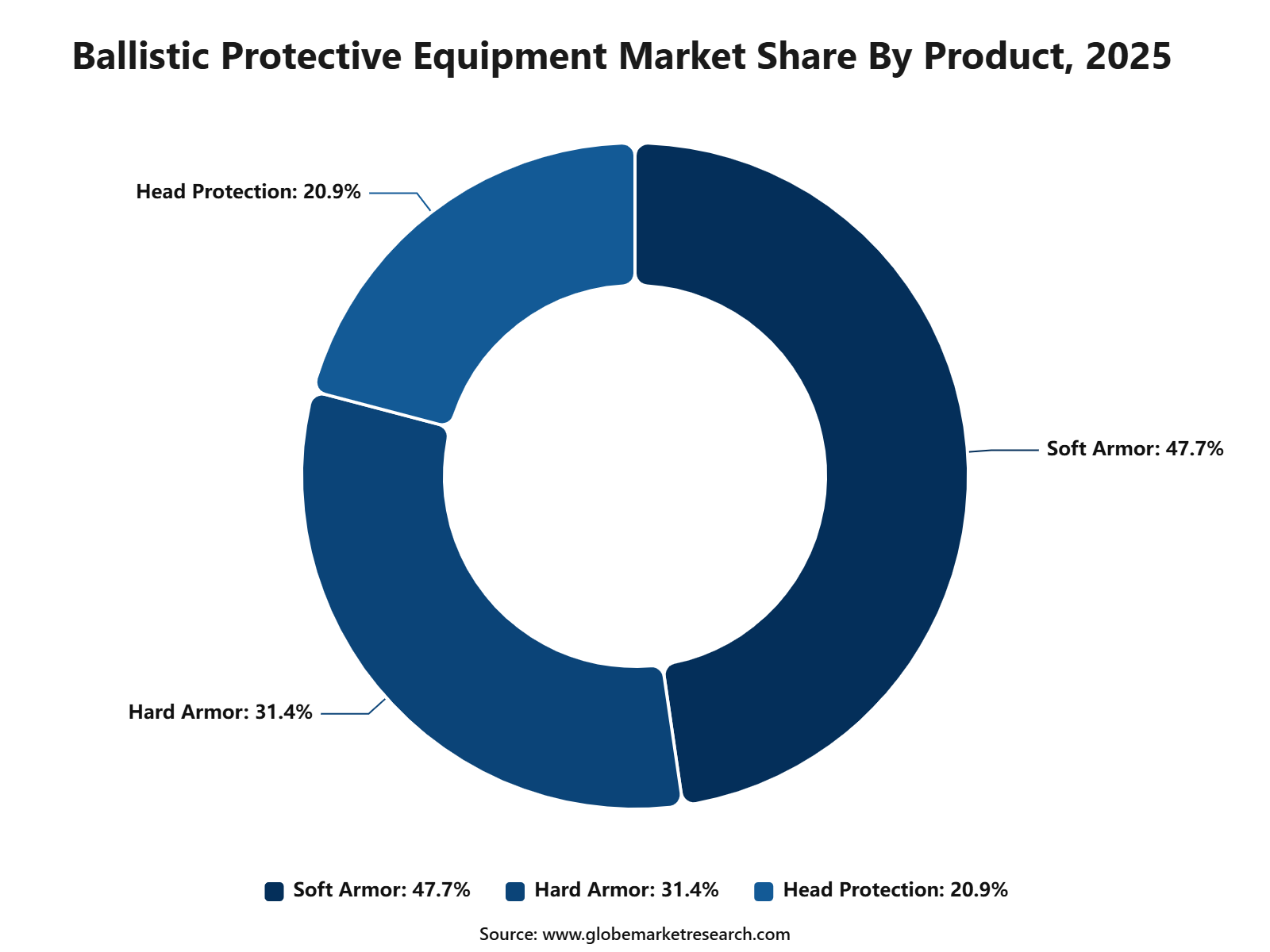
Soft armor led the product segment with 47.7% share, supported by its lightweight design, flexibility, comfort, and strong use in body armor, tactical vests, and personal protection systems.
Ultra-high-molecular-weight polyethylene accounted for 35.1% share by material type, driven by its high strength-to-weight ratio, impact resistance, durability, and suitability for advanced ballistic protection.
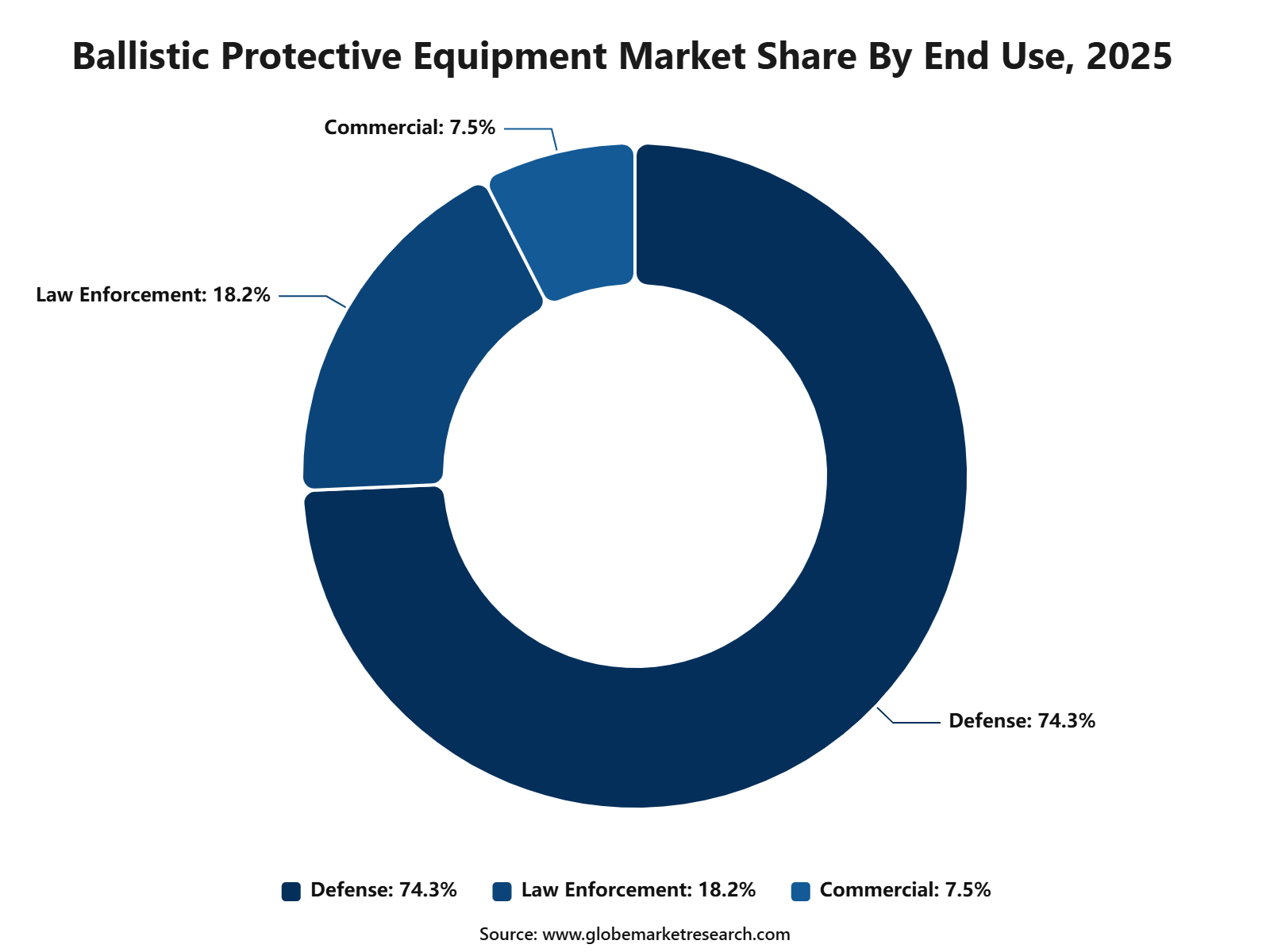
Defense end use held 74.3% share, supported by strong demand from military forces, border security, combat operations, tactical units, and modernization of soldier protection equipment.
North America led the ballistic protective equipment market with 37.8% share, supported by high defense spending, advanced military procurement, strong law enforcement demand, and established protective equipment manufacturing.
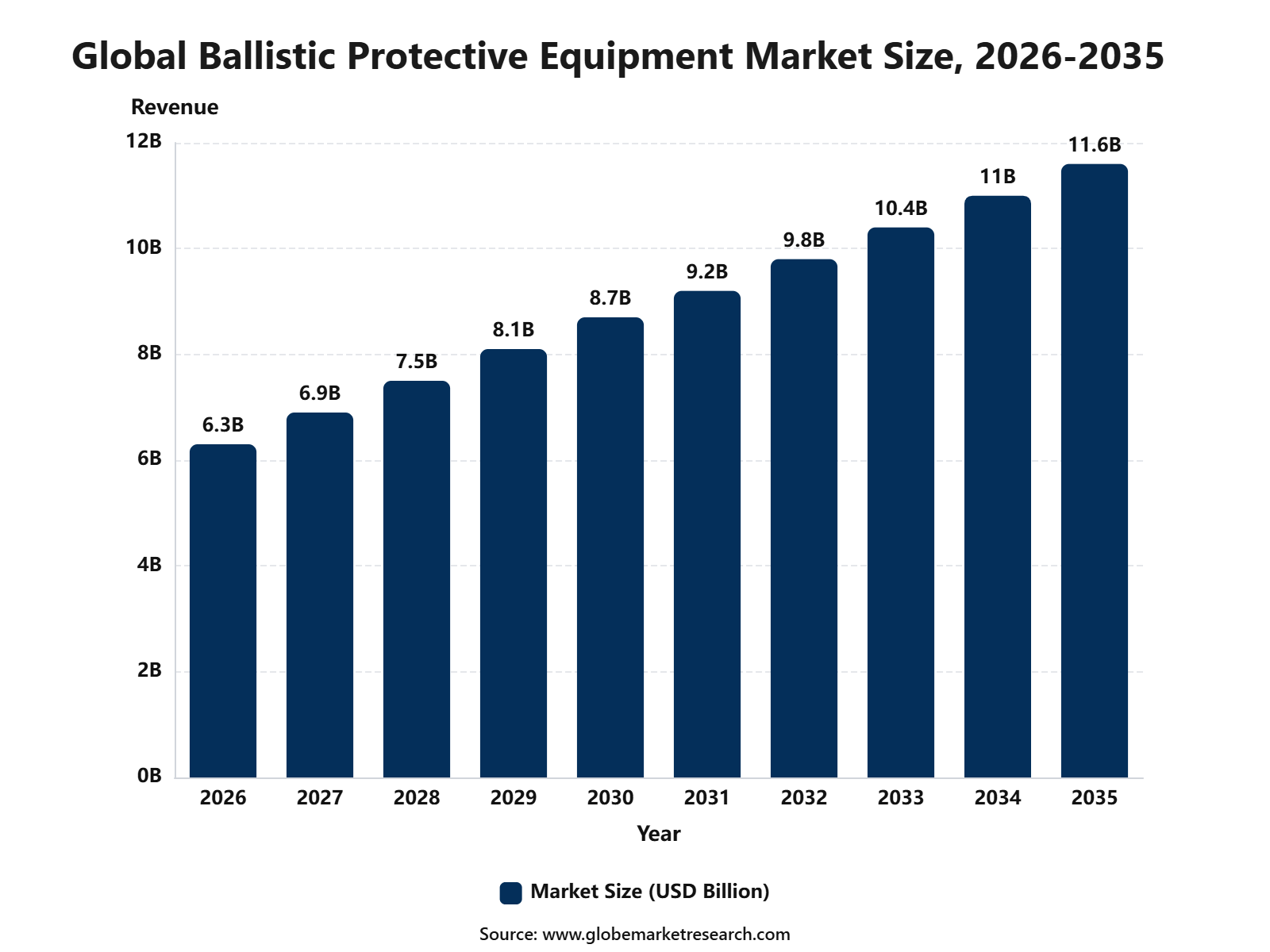 iThe graph shows projected market growth until 2035 based on CAGR analysis. Actual outcomes may vary depending on changing demand, competition, and economic factors.To gain greater insights - request a sample report PDF
What is Ballistic protective equipment?
Ballistic protective equipment includes body armour, helmets, shields, protective plates, tactical vests and armour systems for military vehicles and infrastructure. These products use materials such as aramid fibres, ultra-high-molecular-weight polyethylene, ceramics, steel and advanced composites to reduce injury from bullets, fragments and explosive threats.
Development is increasingly focused on reducing weight, improving flexibility, expanding rifle protection and designing equipment for different body shapes and operational conditions. Public-sector procurement and updated testing requirements continue to support demand. In May 2026, the U.S. Office of Justice Programs reported that its Bulletproof Vest Partnership had supported more than 13,000 jurisdictions with USD 624 million in federal funding for over 1.6 million body-armour vests.
The latest NIJ framework introduced updated handgun and rifle classifications, including a new intermediate RF2 rifle-protection level, while improving testing for hard armour plates and equipment designed for female officers. NATO also reported in July 2026 that European Allies and Canada had added USD 258 billion in defence and security investment across 2025 and 2026, while USD 50 billion in new procurement agreements was signed at its defence industry forum.
Product Insights
Soft armor accounted for 47.7% of the Ballistic Protective Equipment Market by product. Soft armor is widely used in protective vests because it provides flexibility, lower weight and improved mobility compared with rigid protection systems. Demand is supported by military personnel, law-enforcement officers and security professionals who require protection during extended operations.
In December 2025, the U.S. National Institute of Justice updated its ballistic testing procedures to include an additional shot near the upper edge of soft armor panels. The revision strengthens testing for areas where panel shape, stitching and coverage can influence protection performance.
Manufacturers are focusing on lighter protective layers, improved body coverage and designs suitable for different body shapes. Future demand will favor soft armor that combines ballistic performance with comfort, moisture management and reduced movement restriction. Compliance testing and clear product certification will remain important purchasing requirements.
 iThe graph shows projected market growth until 2035 based on CAGR analysis. Actual outcomes may vary depending on changing demand, competition, and economic factors.To gain greater insights - request a sample report PDF
Material Type Insights
Ultra-high-molecular-weight polyethylene accounted for 35.1% of the market by material type. UHMWPE offers high tensile strength at a relatively low weight, making it suitable for protective vests, helmets and ballistic panels. The material can reduce the physical burden placed on personnel carrying protective equipment for long periods.
In January 2025, Avient introduced new Dyneema-based hard ballistic materials designed to reduce armor-system weight by as much as 45%. The company also presented new UHMWPE solutions for body armor, helmets and protective panels during European defense and law-enforcement events in 2025.
Material Type | Market Share |
|---|---|
Ultra-High-Molecular-Weight Polyethylene | 35.1% |
Aramid | 22.6% |
Composites | 18.4% |
Steel | 13.7% |
Other Materials | 10.2% |
Material development is concentrating on improved protection-to-weight performance, reduced thickness and compatibility with composite armor structures. UHMWPE suppliers must also maintain consistent fiber quality and dependable performance under heat, moisture and repeated use. These requirements support demand for certified materials with documented ballistic results.
End-Use Insights
Defense represented 74.3% of the Ballistic Protective Equipment Market by end use. Military organizations require body armor, ballistic helmets, protective plates and related equipment for infantry, aircrew and specialized personnel. Demand is linked to equipment modernization, replacement cycles and efforts to reduce the weight carried by deployed soldiers.
In September 2025, the U.S. Army awarded delivery orders valued at USD 65.5 million for the production of 72,179 Lightweight Small Arms Protective Inserts. The procurement marked the start of production for a new component of the Army’s Soldier Protection System.
Defense buyers prioritize protection performance, durability and compatibility with existing tactical equipment. New systems must support different mission requirements without restricting movement or increasing fatigue. Procurement decisions will increasingly consider modular sizing, lighter materials and the ability to replace damaged components without purchasing a complete armor system.
 iThe graph shows projected market growth until 2035 based on CAGR analysis. Actual outcomes may vary depending on changing demand, competition, and economic factors.To gain greater insights - request a sample report PDF
Regional Insights
North America accounted for 37.8% of the Ballistic Protective Equipment Market. Regional demand is supported by military modernization, law-enforcement replacement programs and established ballistic testing requirements. The United States represents the main contributor through federal defense procurement and protective-equipment programs for state and local agencies.
The U.S. Department of Justice’s Bulletproof Vest Partnership Program can reimburse eligible jurisdictions for up to 50% of the cost of body armor purchased for law-enforcement officers. The program supports continued replacement and procurement of compliant protective vests across state, local and tribal agencies.
 iThe graph shows projected market growth until 2035 based on CAGR analysis. Actual outcomes may vary depending on changing demand, competition, and economic factors.To gain greater insights - request a sample report PDF
North American suppliers must satisfy detailed performance, workmanship and labeling requirements before products can be accepted by major buyers. In 2025, the National Institute of Justice continued implementing its updated compliance framework for ballistic-resistant armor. This strengthens demand for independently tested products with traceable manufacturing and certification records.
Market | Market Insight | Details |
|---|---|---|
U.S. Ballistic Protective Equipment Market | Military modernization supports demand for lightweight plates, helmets and body armor. | The U.S. Army awarded USD 65.5 million for 72,179 lightweight protective plates in September 2025 |
Europe Ballistic Protective Equipment Market | Joint defense investment is strengthening soldier-protection procurement across Europe. | The EU SAFE instrument provides up to EUR 150 billion for joint defense purchases and industrial capacity. |
U.K. Ballistic Protective Equipment Market | Higher equipment spending supports armor replacement and troop-protection programs. | U.K. specialist military equipment expenditure increased by GBP 906 million, or 9.3%, in the latest 2025 release. |
Germany Ballistic Protective Equipment Market | Bundeswehr modernization is supporting demand for certified personal-protection equipment. | Germany allocated around EUR 62.4 billion to defense in 2025, equal to approximately 2.4% of GDP. |
Asia-Pacific Ballistic Protective Equipment Market | Regional security concerns are increasing investment in military equipment and personnel protection. | Asian defense expenditure is expected to increase by 3.4% in real terms during 2026. |
Japan Ballistic Protective Equipment Market | Force modernization supports demand for lighter helmets, plates and protective clothing. | Japan approved a fiscal 2026 defense budget exceeding JPY 9 trillion. |
China Ballistic Protective Equipment Market | Military modernization and domestic material production support protective-equipment procurement. | China allocated approximately CNY 1.9 trillion to national defense in its 2026 draft budget. |
Market Segmentation
By Product
Head Protection
Soft Armor
Hard Armor
By Material Type
Aramid
Composites
Ultra-High-Molecular-Weight Polyethylene
Steel
Others
By End Use
Defense
Law Enforcement and Security
Commercial
By Region
North America
Europe
Asia Pacific
Latin America
Middle East and Africa
Key Market Drivers
Rising military procurement of lightweight armor: In September 2025, the U.S. Army awarded USD 65.5 million in delivery orders for 72,179 Lightweight Small Arms Protective Inserts. The plates are designed for integration with the Modular Scalable Vest Gen II and other Soldier Protection System equipment.
Large long-term defence procurement programs: The UK Ministry of Defence proposed a Personal Hard Armour Framework with a potential eight-year value of £250 million, including VAT. The framework covers reduced-threat plates, buoyant plates, covert armor, complex-curvature plates, and replacement systems for existing personal armor.
Demand for lower equipment weight: Body armor and helmets must provide protection while allowing personnel to move, communicate, operate weapons, and carry additional equipment. In June 2026, the U.S. Army highlighted ongoing work on weight reduction for combat helmets and body armor while maintaining protection against small-arms fire and fragmentation.
Changing handgun and rifle threats: Protection requirements are being updated to represent modern ammunition and operating risks. NIJ Standard 0123.00 introduced the HG1 and HG2 handgun levels and the RF1, RF2, and RF3 rifle levels, including a new intermediate RF2 category.
Stronger product testing and certification requirements: Government and law-enforcement buyers increasingly require independent laboratory testing, production inspections, traceable labeling, and follow-up performance checks. Under the NIJ compliance program, approved armor manufacturers are subject to six follow-up inspections and tests over five years.
Emerging Ballistic Protective Equipment Trends
Lightweight ceramic and composite plates: Manufacturers are combining advanced ceramics, high-performance polyethylene, aramid fibers, and composite backings to reduce plate weight while maintaining resistance to rifle threats. The U.S. Army’s 2025 order for lightweight small-arms plates confirms the growing procurement focus on reduced soldier load.
Complex-curvature armor: Body armor plates are being shaped more closely around the chest and torso to improve comfort, weight distribution, and movement. Complex-curvature plates were identified as a future requirement within the UK Ministry of Defence Personal Hard Armour Framework.
Buoyant ballistic protection: Maritime and amphibious personnel require armor that provides ballistic protection without creating excessive sinking risk. Buoyant plates are therefore being evaluated for naval, coastal, special operations, and water-based security applications.
Reduced-threat and mission-tailored plates: Not every operation requires the highest available protection level. Reduced-threat plates can lower weight for missions where mobility and endurance are more important, while heavier plates can be used where rifle or armor-piercing threats are expected.
Covert body armor: Discreet protection is receiving greater attention for intelligence personnel, close-protection teams, police officers, and security professionals. Covert plates and low-profile carriers are designed to fit beneath clothing while reducing visible bulk.
Next-generation combat helmets: Helmet development is focusing on ballistic performance, fragmentation protection, blunt-impact reduction, hearing integration, communications compatibility, and reduced weight. U.S. Army research demonstrated custom and 3D-printed helmet liners intended to improve fit, comfort, and protection from mild traumatic brain injury.
5 Best Ballistic Protective Technologies
Lightweight Ceramic-Composite Armor Plates: These plates combine hard ceramic strike faces with composite or polyethylene backing materials. They are used to resist rifle rounds while reducing the weight carried by soldiers and tactical personnel.
Modular Scalable Body Armor Systems: Modular equipment allows users to adjust protection through removable front, rear, and side plates, soft armor, collars, shoulder protection, and ballistic combat clothing. The configuration can be adapted according to the threat, mission duration, climate, and mobility requirement.
Advanced Ballistic Helmet Systems: Modern combat helmets combine composite shells, impact-absorbing liners, face protection, hearing systems, communications mounts, and night-vision interfaces. Custom and 3D-printed liner development is also being explored to improve fit and reduce head-injury risk.
Sensor-Integrated Protective Equipment: Embedded sensors can record blast exposure, blunt impact, temperature, movement, and physiological conditions. The resulting information can support medical assessment, equipment improvement, training analysis, and operational safety.
Ballistic Testing and Digital Compliance Platforms: Testing systems evaluate penetration resistance, back-face deformation, impact performance, environmental conditioning, durability, and production consistency. Accredited laboratories and traceable digital records are becoming increasingly important in government purchasing.
Market Dynamics
Drivers Impact Analysis
The Ballistic Protective Equipment Market is driven by rising defense modernization, border security needs, law enforcement upgrades, tactical operations, and increasing demand for advanced body armor, helmets, shields, and vehicle protection systems. Governments are prioritizing soldier survivability and officer safety, which supports stable procurement of ballistic protection products.
North America leads the market due to strong defense budgets, advanced military procurement, active law enforcement modernization, and high adoption of lightweight protective materials. The U.S. remains the main contributor because of large-scale demand from defense forces, homeland security, police departments, and tactical response units.
Impact Factor | Estimated CAGR Impact | Regional Relevance | Market Impact |
|---|---|---|---|
Defense modernization programs | +2.3% | North America, Europe, Asia Pacific | Drives large-scale protective equipment procurement. |
Rising law enforcement safety needs | +1.8% | U.S., Canada, Europe | Supports demand for vests, helmets, and shields. |
Growth in border and homeland security | +1.5% | North America and Asia Pacific | Increases tactical protection demand. |
Demand for lightweight armor | +1.2% | Military and police users | Improves mobility and adoption. |
Rising geopolitical and security risks | +1.0% | Global defense markets | Supports recurring procurement cycles. |
Restraints Impact Analysis
The market faces restraints from high product cost, strict testing standards, long procurement cycles, and the need for continuous material certification. Ballistic protective equipment must meet demanding performance, durability, and safety requirements, which increases development and compliance costs.
Another restraint is weight and comfort limitation. Heavy armor can reduce mobility, endurance, and operational performance, especially for soldiers, tactical police, and security personnel operating in high-risk field conditions.
Impact Factor | Estimated CAGR Impact | Regional Relevance | Market Impact |
|---|---|---|---|
High cost of advanced armor | -1.0% | Defense and law enforcement buyers | Limits rapid replacement cycles. |
Long government procurement timelines | -0.8% | North America, Europe, Asia Pacific | Slows order conversion. |
Weight and comfort issues | -0.7% | Military and tactical users | Affects user acceptance. |
Strict testing and certification | -0.6% | Regulated defense markets | Raises compliance burden. |
Raw material price fluctuation | -0.5% | Aramid, UHMWPE, ceramics, composites | Pressures manufacturing margins. |
Opportunities Impact Analysis
Opportunities are strong in lightweight body armor, advanced helmets, hard armor plates, soft armor vests, modular protection systems, ballistic shields, and vehicle protection solutions. Demand is rising for products that improve safety while reducing weight and improving flexibility.
Higher-value opportunities are emerging in ultra-high-molecular-weight polyethylene, ceramic composites, aramid upgrades, female-fit armor, integrated communication helmets, and multi-threat protection systems. Suppliers that combine comfort, protection, durability, and standards compliance can capture stronger long-term demand.
Impact Factor | Estimated CAGR Impact | Regional Relevance | Market Impact |
|---|---|---|---|
Lightweight armor material innovation | +2.1% | North America, Europe, Asia Pacific | Improves mobility and user adoption. |
Advanced ballistic helmets | +1.7% | Military and law enforcement | Supports head protection upgrades. |
Modular armor systems | +1.4% | Tactical and defense users | Adds mission-specific flexibility. |
Female-fit protective equipment | +1.1% | Defense and police forces | Expands user-specific procurement. |
Multi-threat protection products | +0.9% | High-risk security operations | Supports premium product demand. |
Challenges Impact Analysis
The main challenge is balancing ballistic protection with comfort, mobility, and cost. End users want lighter equipment, but high protection levels often require advanced materials and complex designs, which can increase pricing.
Another challenge is meeting different protection standards across countries and agencies. Manufacturers must manage varied testing protocols, procurement specifications, and performance requirements across defense, law enforcement, and commercial security buyers.
Impact Factor | Estimated CAGR Impact | Regional Relevance | Market Impact |
|---|---|---|---|
Protection versus weight tradeoff | -0.9% | Military and tactical users | Limits product performance balance. |
Complex testing requirements | -0.7% | Government procurement markets | Extends development timelines. |
Material durability under field use | -0.6% | Defense and police operations | Affects replacement planning. |
Counterfeit and low-quality products | -0.5% | Price-sensitive markets | Creates safety and trust risks. |
Budget pressure in smaller agencies | -0.4% | Local police and security buyers | Limits upgrade frequency. |
Ballistic Protective Equipment Case Study
U.S. Army Modernizes Lightweight Ballistic Protection
The U.S. Army provides a practical example of how ballistic protective equipment is being modernized through lighter armour plates, modular body armour, improved ergonomics, and integrated survivability systems. The programme is focused on reducing the physical load carried by personnel while maintaining the ballistic protection required during combat operations.
In September 2025, the Army awarded USD 65.5 million in delivery orders to Hardwire LLC and Leading Technology Composites for the production of 72,179 Lightweight Small Arms Protective Inserts, known as LSAPI plates. The orders marked the start of production for the newest armour component within the Army’s Soldier Protection System.
The plates are scheduled to be delivered within 18 months, with completion expected by March 15, 2027. The LSAPI plates are approximately 30% lighter than the Enhanced Small Arms Protective Insert Generation III plates while maintaining the required ballistic performance. A shooter-cut design has also been adopted to improve upper-body mobility and range of movement.
The lightweight plates are designed to operate with the Modular Scalable Vest Generation II and other components within the Soldier Protection System. This system-level approach allows protective plates, soft armour, carriers, helmets, and load-bearing equipment to be developed as compatible components rather than as separate products.
Recent Developments
Market News
In 2026, manufacturers and law-enforcement buyers continued transitioning toward NIJ Standard 0101.07. The standard specifies performance and testing requirements for soft and hard torso armor, while the compliant-products database now includes armor certified under both NIJ 0101.07 and the earlier 0101.06 standard.
In April 2026, Revision Military launched assembly operations in Kętrzyn, Poland. The facility supports selected ballistic eye-protection products for NATO and allied customers, with regional production intended to reduce delivery times and improve supply-chain resilience.
In June 2026, ArmorSource secured a USD 17.6 million contract to manufacture and deliver 25,000 Advanced Combat Helmet Gen II systems. The company operates a 120,000-square-foot facility capable of producing approximately 12,000 polyethylene helmet shells per month.
In July 2026, NFM Group’s German subsidiary, Hexonia, received an order to supply a customized combat helmet to the German Armed Forces. The manufacturer described it as one of the largest recent combat helmet procurements in Europe and plans to use production capabilities across Germany, Poland, and Norway.
In July 2026, Adept Armor introduced the Nova Titanium helmet. The L/XL configuration weighs approximately 920 grams and is rated to stop 9mm full-metal-jacket ammunition at 400 metres per second, with low backface deformation and continuous protection around the shell edge.
Acquisitions
Cadre Holdings completed the acquisition of TYR Tactical: In February 2026, Cadre completed its purchase of TYR Tactical, a manufacturer of body armor, tactical vests, plate carriers, ballistic plates, shields, and other equipment supplied to military and law-enforcement customers.
The TYR transaction included cash and equity: Cadre paid USD 120 million in cash, USD 24 million in common stock, and USD 1 million in restricted stock units. The seller may also receive up to USD 25 million based on revenue targets for 2026, 2027, and 2028.
Cadre also acquired TYR-related real estate: Immediately after completing the main transaction, Cadre purchased property owned by a TYR affiliate for USD 30 million. The acquisition was financed through available cash and borrowings under Cadre’s senior credit facility.
NP Aerospace agreed to acquire Iten Defense: In June 2026, NP Aerospace signed a definitive agreement to acquire the U.S.-based protection technology company from Edgewater Capital Partners and minority shareholders. Iten adds technical expertise, manufacturing capacity, and complementary survivability technologies.
The Iten transaction remained subject to approval: NP Aerospace and Iten will continue operating independently until regulatory and government closing conditions are satisfied. Financial terms were not disclosed. The transaction indicates increasing buyer interest in manufacturing capacity and access to the U.S. defense market.
Funding
Ballistic Armor Co. secured a strategic investment: In January 2026, the company received private capital and strategic support to expand U.S. manufacturing, strengthen its supply chain, introduce new protective products, and increase domestic tooling, assembly, and finishing capabilities. The financial amount was not disclosed.
Cadre financed the TYR Tactical acquisition: The completed transaction used USD 120 million in cash, USD 24 million in Cadre shares, and restricted stock awards. Cash held on Cadre’s balance sheet and borrowings under its senior credit facility supported the purchase.
Texas continued its rifle-resistant armor programme: The Texas Public Safety Office opened its fiscal 2026 grant programme to help eligible law-enforcement agencies equip peace officers with rifle-resistant body armor. The programme supports public procurement of protective vests and ballistic plates.
The federal vest reimbursement mechanism remained important: The Patrick Leahy Bulletproof Vest Partnership reimburses eligible state, local, and tribal governments for up to 50% of body armor vest costs. Since its launch, the programme has provided USD 573 million toward more than 1.5 million vests across over 13,000 jurisdictions.
Military contracts continued to finance manufacturing expansion: ArmorSource’s USD 17.6 million U.S. Army order for 25,000 helmets provides production visibility and supports higher output of advanced polyethylene protective systems. Large government orders remain an important financing mechanism for ballistic-equipment manufacturers.
Competitive Landscape
The market is characterized by intense competition among established players and emerging companies. Strategic partnerships, mergers and acquisitions, and product innovation are key strategies employed by market participants.
Key Market Players
Galvion
Galvion
EnGarde Body Armor
Point Blank Enterprises, Inc.
NP Aerospace
ArmorSource LLC
Craig International Ballistics
Protection Group Danmark
Safe Life Defense
Tactical Assault Gear
Other Key Players
Research Methodology
This market study is prepared using a combination of primary and secondary research. Primary research includes discussions with manufacturers, suppliers, distributors, consultants, industry experts, and end users. Secondary research covers company reports, government databases, trade associations, technical publications, regulatory sources, and trusted industry documents. The collected information is used to assess market demand, pricing trends, technology adoption, competitive activity, and regional performance.
AI language models are not used as primary data sources, and publicly available AI-generated content is not treated as market evidence. Computational tools may be used to support data processing, translation, data classification, and pattern identification. However, every published assessment is supported by verified sources, human review, and primary market discussions.
Market estimates are developed through top-down and bottom-up approaches and validated using data triangulation. Revenue, production, shipment, pricing, and application-level data are compared across multiple sources. Forecasts consider economic conditions, regulatory changes, investment activity, innovation, supply chain developments, and industry risks. All findings are reviewed through source verification and internal quality checks before publication.
Part I
Source Management & Input Data Standards
Who provides data, how sources are qualified, and what types of evidence are admissible.
Part II
Research Scope & Market Coverage
How we define the markets we assess and the parameters that govern each product.
Part III
Data Collection, Verification & Submission
The mechanics of gathering, cross-checking, and hierarchically ranking evidence.
Part IV
Assessment Determination & Quality Controls
How raw data becomes a published assessment — normalisation, expert judgement, and outlier exclusion.
Part V
Publication, Corrections & Revision
Our publication schedule, corrections policy, and methodology review cycle.
Part VI
Independence, Ethics & Complaints
Conflict-of-interest policies, editorial independence, and how clients raise concerns.
Google · Preferred Sources
Don't miss the latest market research insights and industry updates on Google.
Add Globe Market Research as a preferred source in the Google app to see our reports, analysis, and market stories in your news suggestions.
Meet the Team
This report was prepared by our expert analysts with deep industry knowledge and research experience.
Kimaya brings more than five years of experience in market research, content review, and industry analysis to Globe Market Research. She plays an important role in maintaining the accuracy, clarity, consistency, and relevance of research content across a wide range of industries. Her responsibilities include reviewing market data, segment analysis, competitive landscapes, industry trends, company developments, and strategic insights. Each report is carefully assessed to ensure that the findings are supported by reliable data, presented in a structured format, and aligned with the information needs of business decision-makers. Kimaya has research experience across healthcare, information technology, consumer goods, and several cross-industry domains.
Prashant S. is a Research Analyst at Globe Market Research with more than four years of experience in market research and industry analysis. He specializes in the Aerospace and Defence, Automotive and Transportation, Semiconductor and Electronics, Information and Technology sectors, with expertise in market sizing, trend analysis, competitive assessment, and industry forecasting. He applies primary and secondary research, data validation, company analysis, and market estimation methods to deliver reliable insights for strategic planning and business decision-making.
Frequently Asked Questions
Related Reports
More in Aerospace and Defence
US Drone Market Size to hit USD 73.2 Bn by 2035
U.S. Drone Market Size, Share, Trends and Growth Analysis Report By Component (Hardware, Software, Services), By Product (Fixed-Wing, Multi-Rotor, Single-Rotor, Hybrid), By Technology (Remotely Operated, Semi-Autonomous, Fully Autonomous), By Payload Capacity (Up to 2 kg, 2 kg to 19 kg, 20 kg to 200 kg, Over 200 kg), By Power Source (Battery-Powered, Gasoline-Powered, Hydrogen Fuel Cell, Solar), By End Use (Consumer, Commercial, Military, Government and Law Enforcement), By Technology Trends, Competitive Landscape, Strategic Opportunities and Growth Forecast, 2026-2035
Space Tourism Market Size to Reach USD 30.1 Billion By 2035
Space Tourism Market Size, Share and Growth Analysis Report By Type (Orbital, Sub-Orbital), By End Use (Government, Commercial), By Regional Insights, Technology Trends, Competitive Landscape, Strategic Opportunities and Growth Forecast, 2026-2035
Drone Market Size to hit USD 103.9 billion by 2035 | CAGR of 10.9%
Drone Market Size, Share, Trends and Growth Analysis Report By Type (Fixed-Wing, Rotary-Wing, Hybrid), By Component (Hardware, Software, Accessories), By Payload Capacity (Below 25 Kilograms, 25-170 Kilograms, Above 170 Kilograms), By Point of Sale (Original Equipment Manufacturers, Aftermarket), By End-Use Industry (Construction, Agriculture, Military and Defense, Law Enforcement, Logistics, Media and Entertainment, Other Industries), By Regional Insights, Technology Advancements, Competitive Landscape, Strategic Opportunities and Growth Forecast, 2026-2035
Defense Cybersecurity Market Size to Reach USD 114.7 Billion By 2035
Defense Cybersecurity Market Size, Share, Trends and Growth Analysis Report By Offering (Hardware, Services, Software), By Security Type (Application Security, Cloud Security, Critical Infrastructure Security and Resilience, Endpoint Security, Network Security), By Application (Communication Networks, Military Operations, Public Utilities, Other Applications), By Solution (Content Security, Cyber Threat Protection, Data Loss Prevention Management, Enterprise Risk and Compliance, Identity and Access Management, Managed Security Services, Network Fortification, Security and Vulnerability Management, Threat Evaluation, Training Services, Unified Threat Management, Other Solutions), By Deployment (Cloud, On-Premises), By End User (Air Force, Army, Navy), By Enterprise Size (Large Enterprises, Small and Medium-Sized Enterprises), By Regional Insights, Technology Trends, Competitive Landscape, Strategic Opportunities and Growth Forecast, 2026-2035