

Revenue, 2026
USD 36.9 Bn
Forecast, 2035
USD 103.9 Bn
CAGR, 2026-2035
10.9%
Report Coverage
Global
Market Size and Forecast
The global Drone Market was valued at USD 36.9 billion in 2026 and is projected to reach approximately USD 103.9 billion by 2035, representing an implied CAGR of around 12.2% from 2026 to 2035. North America accounted for approximately 49.4% of the market, equivalent to nearly USD 18.2 billion at the stated 2026 value. Regional leadership is supported by extensive commercial drone deployment, advanced aviation regulation, strong defence procurement and expanding use across logistics, agriculture, infrastructure inspection, emergency response and aerial imaging.
Key Parameter | Report Details |
|---|---|
Market Revenue, 2026 | USD 36.9 Billion |
Projected Revenue, 2035 | USD 103.9 Billion |
CAGR, 2026-2035 | 10.9% |
Largest Region | North America, 49.4% Share |
Market Concentration | Medium |
Forecast Period | 2026-2035 |
Key Market Insights
Fixed-wing drones led the type segment with 55.2% share, supported by longer flight endurance, wider area coverage, higher speed, and strong use in surveillance, mapping, defense, and commercial operations.
Hardware accounted for 66.3% share by component, driven by strong demand for airframes, sensors, cameras, batteries, navigation systems, controllers, and propulsion units.
Payloads below 25 kilograms held 54.2% share, supported by wider use in lightweight surveillance, inspection, delivery testing, mapping, photography, and tactical defense applications.
Original equipment manufacturers captured 70.4% share by point of sale, driven by direct procurement, customized drone configurations, warranty support, and demand for certified drone systems.
Military and defense led the end-use industry segment with 32.6% share, supported by rising use of drones for intelligence, surveillance, reconnaissance, border monitoring, target tracking, and tactical missions.
North America led the drone market with 49.4% share, supported by strong defense spending, advanced drone technology adoption, mature aerospace infrastructure, and rising commercial drone deployment.
Market Overview
Drones are remotely controlled or autonomous aircraft equipped with cameras, sensors, communication systems and specialised payloads. They are used for aerial imaging, surveying, mapping, surveillance, crop monitoring, package delivery, emergency response and military operations. Product development is increasingly focused on artificial intelligence, autonomous navigation, beyond-visual-line-of-sight operations, swarm coordination, longer battery life and integration with cloud-based fleet management platforms.
The U.S. Federal Aviation Administration listed 837,513 registered drones and 481,760 certificated remote pilots, demonstrating the scale of North American drone operations. The U.S. fiscal 2026 defence programme allocated USD 13.4 billion to autonomy and autonomous systems, including USD 9.4 billion for unmanned and remotely operated aerial vehicles. Zipline surpassed 2 million commercial drone deliveries, while the number of businesses using its delivery platform increased thirteenfold during the first half of 2026, indicating stronger adoption of autonomous aerial logistics.
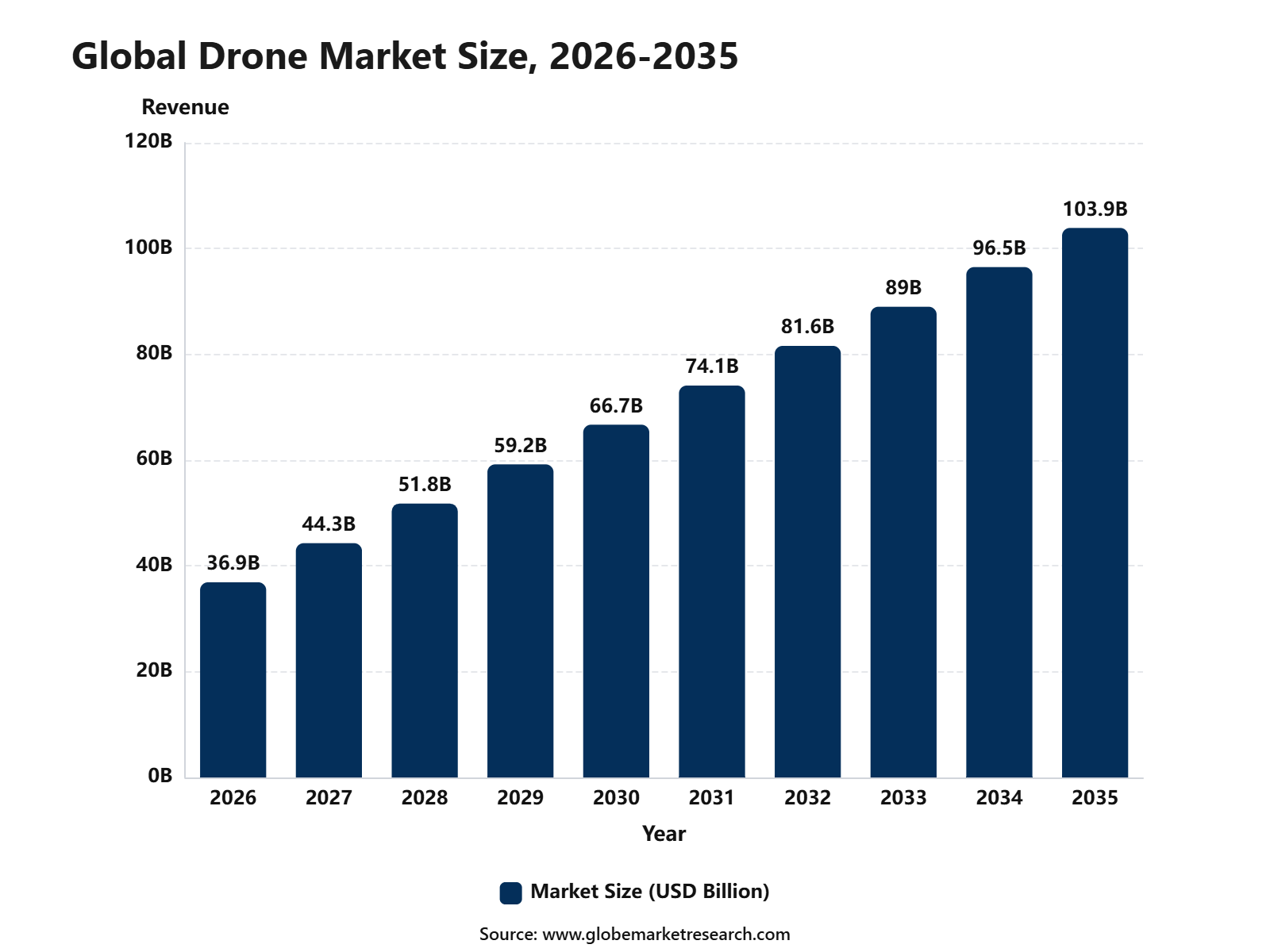 iThe graph shows projected market growth until 2035 based on CAGR analysis. Actual outcomes may vary depending on changing demand, competition, and economic factors.To gain greater insights - request a sample report PDF
According to the Federal Aviation Administration, registered recreational aircraft per operator increased by nearly 30% during 2025. The number of certificated remote pilots rose by approximately 16.6%, while the active commercial small-drone fleet increased by about 6.1%. Large-drone registrations grew by 70%, supported by a 204% increase in newly registered non-agricultural large drones. These figures indicate expanding adoption across inspection, mapping, logistics, public safety and industrial applications.
Type Insights
Fixed-wing drones accounted for 55.2% of the Drone Market by type. Their aerodynamic design supports longer flight endurance, broader geographic coverage and higher operating speeds than many rotary-wing systems. These characteristics make fixed-wing drones suitable for mapping, border monitoring, agriculture, infrastructure inspection and military surveillance.
In September 2025, the Oregon Army National Guard introduced the Edge 130 vertical-takeoff-and-landing drone, which transitions into fixed-wing flight. The aircraft provides up to 90 minutes of fixed-wing endurance, compared with 60 minutes in vertical-flight mode, demonstrating the operational advantages of wing-supported flight.
Demand will remain strongest for platforms that combine fixed-wing range with vertical takeoff and landing. This configuration reduces dependence on runways while maintaining longer mission duration. Buyers will also prioritize automated route planning, reliable communications and interchangeable payloads for different inspection, mapping and surveillance requirements.
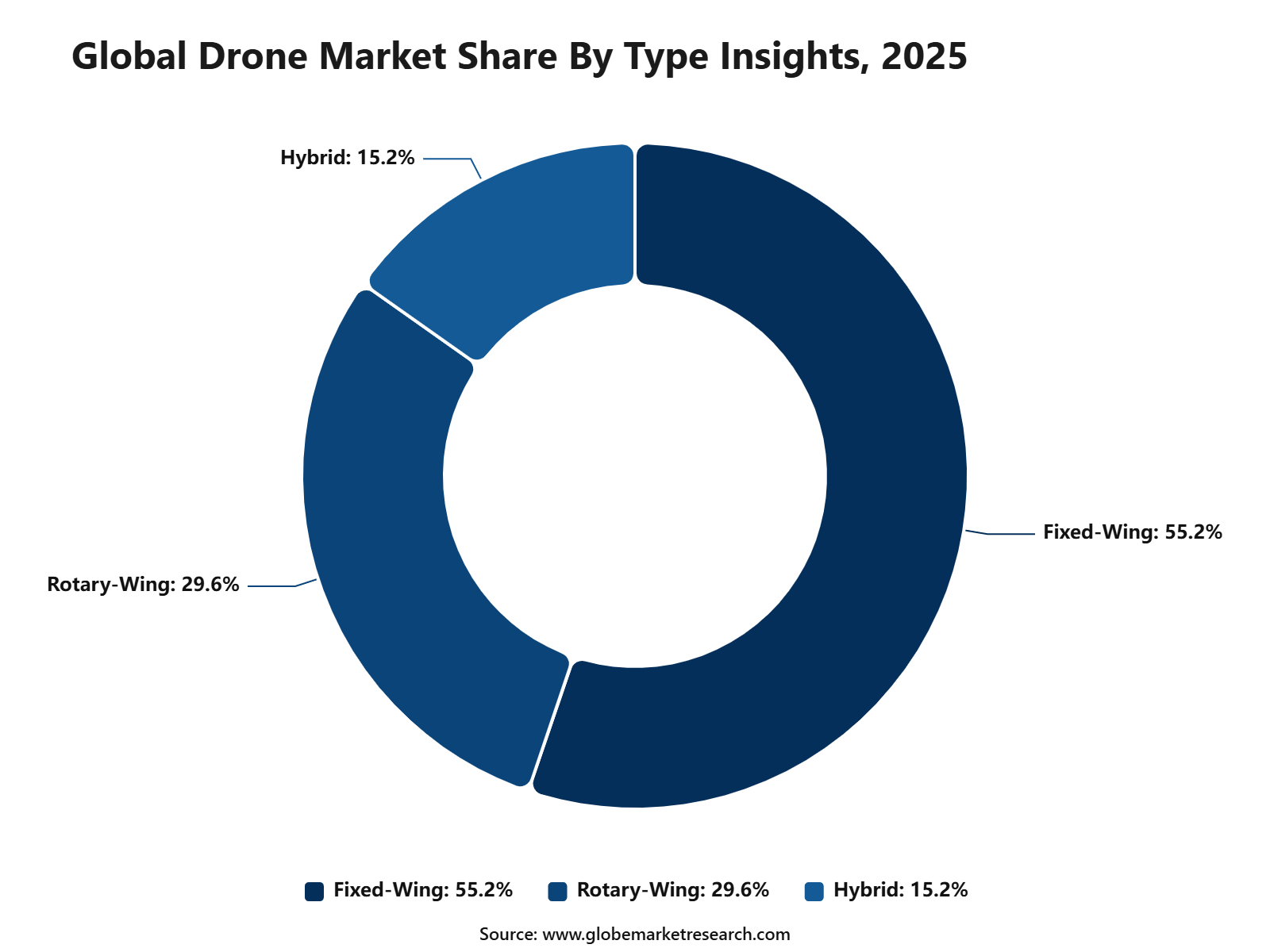 iThe graph shows projected market growth until 2035 based on CAGR analysis. Actual outcomes may vary depending on changing demand, competition, and economic factors.To gain greater insights - request a sample report PDF
Component Insights
Hardware represented 66.3% of the market by component. A drone requires an airframe, propulsion system, battery, flight controller, navigation equipment, sensors and communication modules before software can perform useful operations. Hardware quality directly affects flight stability, payload capacity, endurance and resistance to changing weather conditions.
As of November 19, 2025, the U.S. Defense Innovation Unit’s Blue UAS program had vetted more than 165 drone components and over 39 complete systems. The program evaluates equipment for security and performance, illustrating the expanding requirement for trusted processors, cameras, radios, batteries and control hardware.
Hardware development is focusing on lighter materials, improved battery performance and compact sensors. Modular design is also becoming important because operators want to change cameras, mapping equipment and communication devices without replacing the complete aircraft. Reliable domestic component supply will remain a major purchasing consideration in regulated and defense applications.
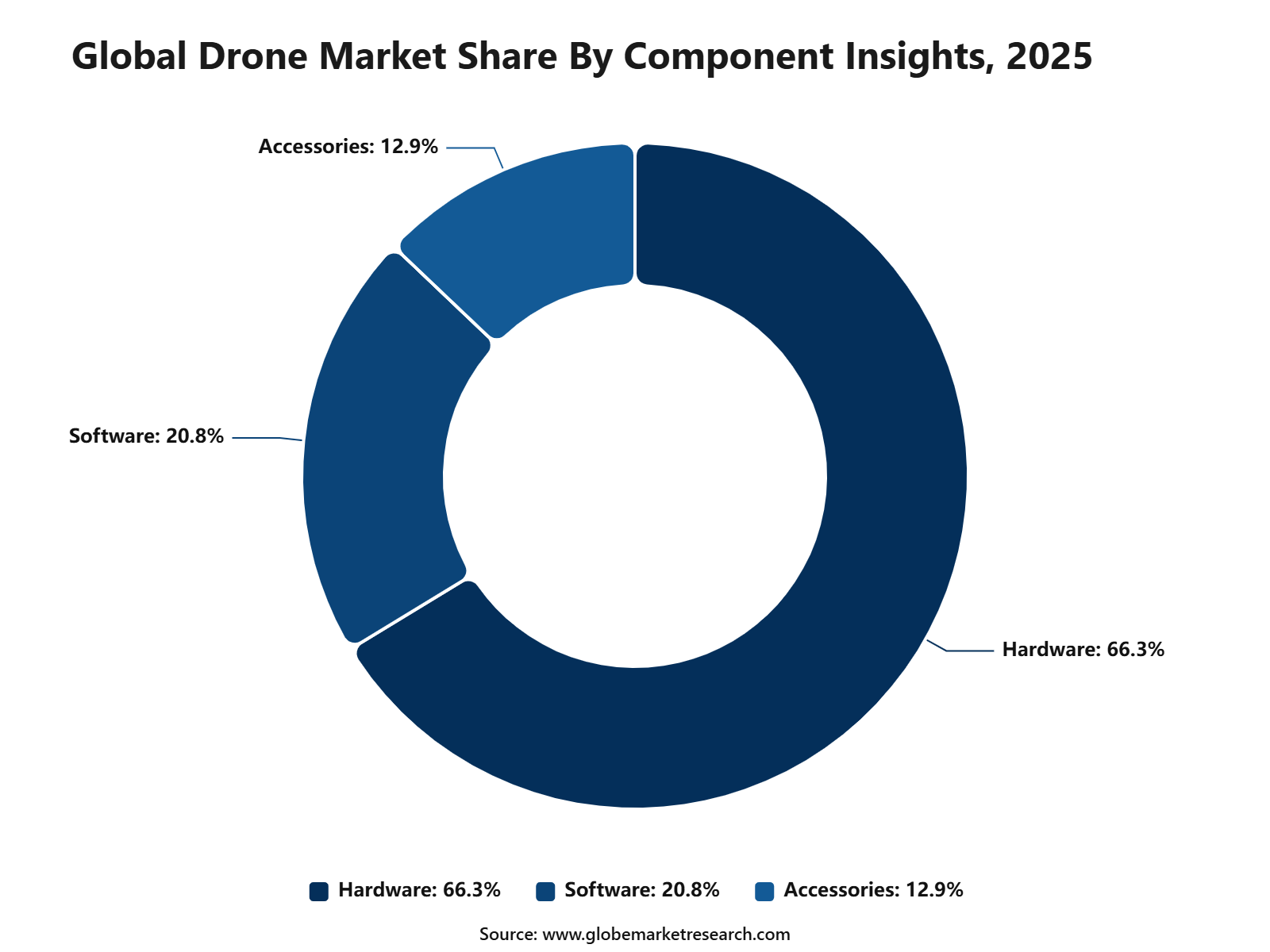 iThe graph shows projected market growth until 2035 based on CAGR analysis. Actual outcomes may vary depending on changing demand, competition, and economic factors.To gain greater insights - request a sample report PDF
Payload Insights
Drones weighing below 25 kilograms accounted for 54.2% of the market by payload category. Smaller aircraft are easier to transport, launch and operate, making them suitable for photography, inspection, surveying, agriculture and public-safety applications. Their lower acquisition and maintenance requirements also support adoption among small businesses and individual operators.
Transport Canada classifies small drones as aircraft weighing between 250 grams and 25 kilograms. The country had 111,362 registered drones as of May, 2025, alongside 119,693 basic pilot certificates, demonstrating the large operating ecosystem supported by lightweight and accessible drone platforms.
Payload Capacity | Market Share |
|---|---|
Below 25 Kilograms | 54.2% |
25–170 Kilograms | 28.7% |
Above 170 Kilograms | 17.1% |
Below-25-kilogram drones also benefit from established pilot-certification and operating frameworks. Manufacturers are improving payload efficiency so lighter platforms can carry better cameras and sensors without reducing flight time. Demand will favor aircraft that balance low weight with stable operation, useful payload capacity and straightforward regulatory compliance.
Point-of-Sale Insights
Original equipment manufacturers accounted for 70.4% of the Drone Market by point of sale. Direct purchasing allows buyers to obtain aircraft configurations, warranties, software updates, maintenance support and operator training from the manufacturer. This approach is especially important for commercial and government customers requiring documented system performance.
By December 2025, the Blue UAS program had processed 81 unique companies into its trusted drone ecosystem. The program was also being converted from a certification list into a procurement marketplace where authorized users could acquire approved systems directly from participating suppliers.
OEM sales channels allow manufacturers to maintain closer relationships with operators and collect information about field performance. Buyers also benefit from clearer responsibility for repairs and upgrades. Distributors will remain important for standard consumer products, but direct OEM engagement is likely to dominate specialized industrial, public-safety and defense purchases.
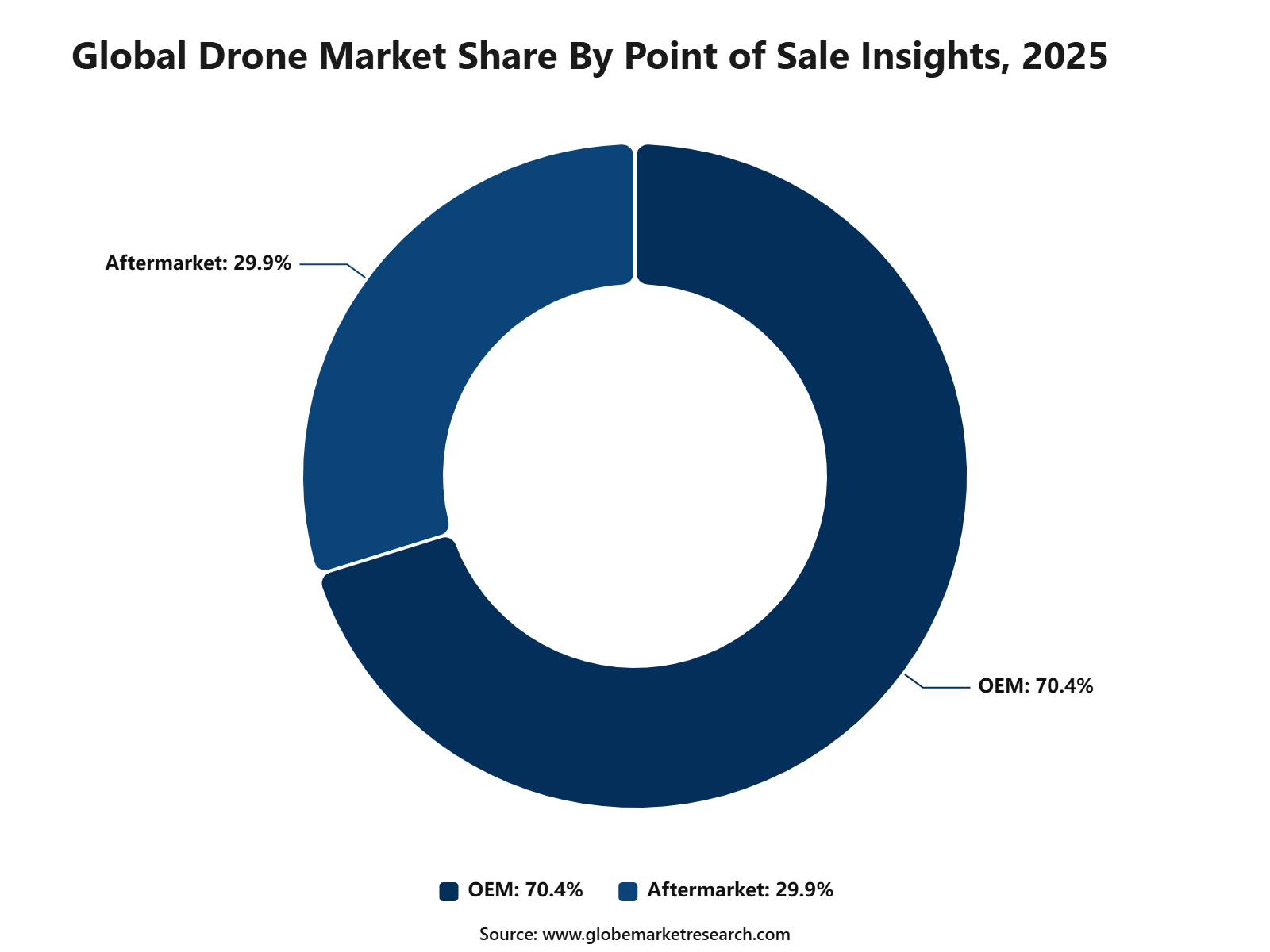 iThe graph shows projected market growth until 2035 based on CAGR analysis. Actual outcomes may vary depending on changing demand, competition, and economic factors.To gain greater insights - request a sample report PDF
End-Use Industry Insights
Military and defense applications represented 32.6% of the Drone Market by end-use industry. Defense forces use drones for surveillance, reconnaissance, communications, logistics, targeting and operational training. Uncrewed platforms can collect information across dangerous areas while reducing direct exposure for military personnel.
In March 2025, the U.S. Air Force formally designated two Collaborative Combat Aircraft prototypes, the YFQ-42A and YFQ-44A. The aircraft are being developed for autonomous operations and crewed-uncrewed coordination, showing how military drone programs are expanding beyond small surveillance platforms.
Defense demand is moving toward lower-cost systems that can be purchased and replaced in larger quantities. Procurement will favor secure communications, autonomous navigation and compatibility with existing command networks. Manufacturers must also demonstrate that components are sourced from approved suppliers and remain reliable during disrupted communications.
End-Use Industry | Market Share |
|---|---|
Military and Defense | 32.6% |
Construction | 13.6% |
Other Industries | 12.8% |
Agriculture | 12.4% |
Logistics | 11.1% |
Law Enforcement | 9.2% |
Media and Entertainment | 8.3% |
Regional Insights
North America accounted for 49.4% of the Drone Market. Regional leadership is supported by established manufacturers, defense demand, commercial operators and aviation regulations covering drone registration, pilot certification and advanced operations. The United States remains the primary contributor, while Canada is expanding its operating framework.
In April 2025, Drone Express became the seventh U.S. drone operator authorized to conduct package-delivery services under a Federal Aviation Administration Part 135 air-carrier certificate. The authorization reflects the continuing development of regulated commercial drone operations beyond photography and recreational use.
Regional growth will be supported by package delivery, infrastructure inspection, public safety and military procurement. Expansion will depend on safer beyond-visual-line-of-sight operations and better airspace coordination. Manufacturers that provide compliant aircraft, Remote ID capability and dependable technical support will be better positioned to serve North American buyers.
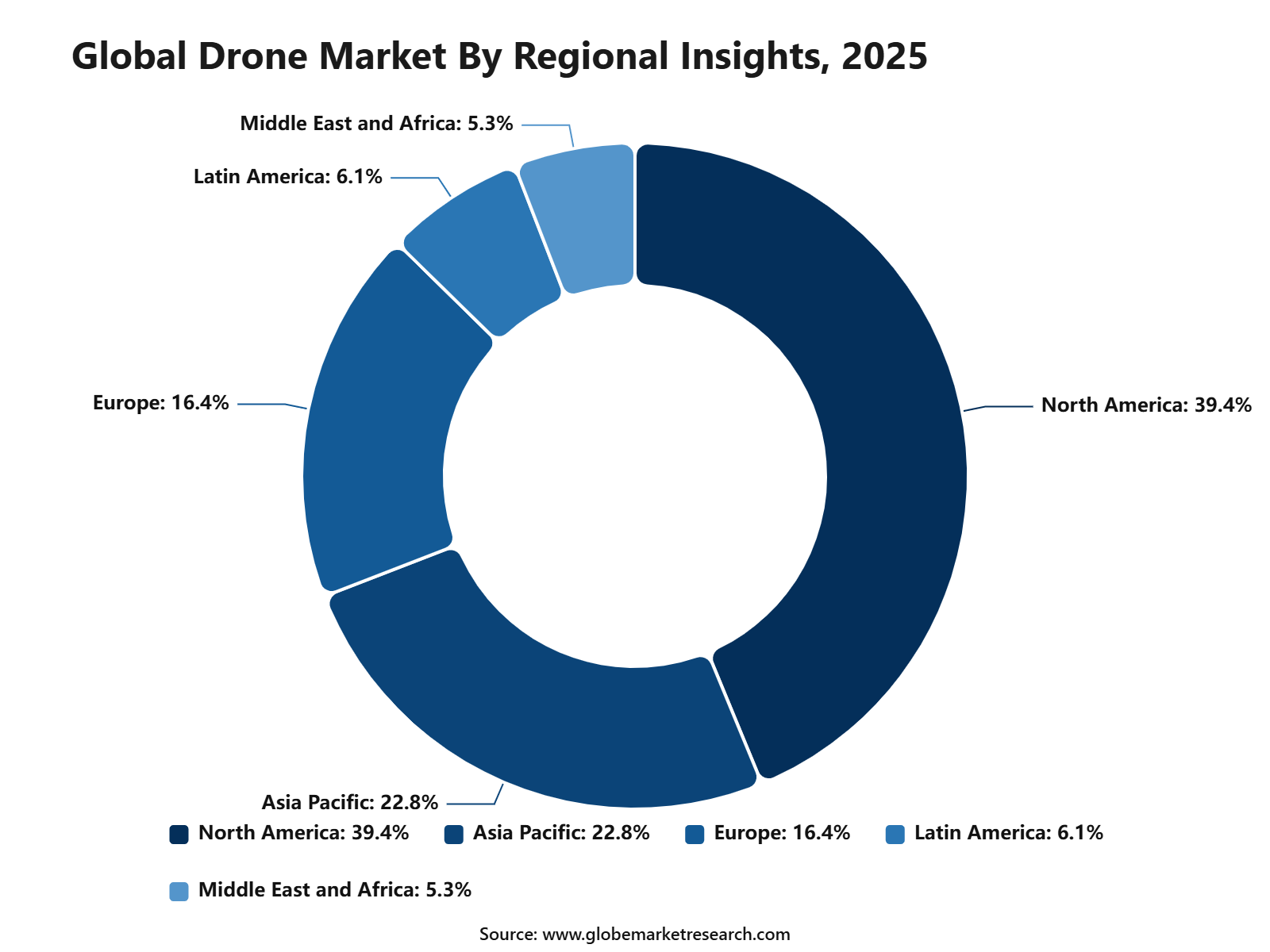 iThe graph shows projected market growth until 2035 based on CAGR analysis. Actual outcomes may vary depending on changing demand, competition, and economic factors.To gain greater insights - request a sample report PDF
Regional Comparison
Regional Market | Market Insight | Insights |
|---|---|---|
U.S. Drone Market Insight | Commercial drone use is expanding across inspection, agriculture, public safety and logistics. | More than 126,000 commercial operators registered during 2025. |
Europe Drone Market Insight | Common aviation rules support cross-border drone operations and professional services. | Europe had over 2 million registered drone operators in 2025. |
U.K. Drone Market Insight | Infrastructure inspection, emergency services and offshore applications support adoption. | Only 56% of users understood registration rules for some lightweight camera drones in 2025. |
Germany Drone Market Insight | Security, industrial inspection and counter-drone applications are increasing demand. | Germany announced €100 million for a federal police counter-drone unit in 2026. |
Asia-Pacific Drone Market Insight | Agriculture, logistics, disaster management and domestic manufacturing support regional adoption. | India’s program plans to provide 15,000 agricultural drones during 2025 and 2026. |
Japan Drone Market Insight | Infrastructure inspection, disaster response and rural delivery are important applications. | Aircraft weighing 100 grams or more must be registered in Japan. |
China Drone Market Insight | Large-scale manufacturing and low-altitude aviation programs support market expansion. | China had 3.287 million registered drones at the end of 2025. |
Key Market Drivers
Progress toward routine BVLOS operations: Beyond visual line of sight enables drones to cover larger areas without requiring the pilot to maintain direct visual contact. The FAA’s proposed BVLOS framework covers package delivery, agriculture, aerial surveying, public safety, filmmaking, energy production, and medical-supply transportation.
Increasing use in infrastructure inspection: Drones are being deployed to inspect power lines, pipelines, bridges, railways, telecom towers, solar farms, wind turbines, and industrial facilities. Automated aerial inspection reduces worker exposure to hazardous locations and provides repeatable visual and thermal data.
Growth of precision agriculture: Multispectral cameras, thermal sensors, spraying systems, and crop-analysis software are being used to assess plant health, identify irrigation problems, detect pests, survey fields, and apply agricultural inputs. Agriculture is specifically identified by the FAA as a major application expected to benefit from scalable BVLOS operations.
Expansion of drone delivery: Regulatory development is improving opportunities for transporting medicines, laboratory samples, food, retail products, and industrial components. The FAA’s 2025 integration roadmap identifies package delivery among the principal uses of routine commercial drone operations.
Growing defence procurement: The UK committed £350 million in 2025 to increase its planned drone supply to Ukraine from 10,000 units in 2024 to 100,000 units in 2025. Wider defence investment is being directed toward surveillance, reconnaissance, precision operations, logistics, electronic warfare, and autonomous systems.
Stronger investment in drone and counter-drone systems: UK Defence Innovation announced more than £142 million of first-year investment in drone and anti-drone technologies in December 2025, including approximately £30 million for counter-drone capabilities.
Emerging Drone Market Trends
Autonomous and AI-enabled flight: Computer vision and onboard AI are increasingly being used for obstacle avoidance, target recognition, route planning, landing, navigation, and automated mission execution. These capabilities reduce dependence on continuous manual control.
Drone-in-a-box operations: Automated docking stations allow drones to launch, complete missions, return, recharge, upload data, and prepare for another flight with limited operator involvement. These systems are gaining relevance in security, industrial inspection, mining, utilities, and construction.
Beyond-visual-line-of-sight deployment: BVLOS is becoming central to the commercial scaling of drone delivery, agricultural monitoring, pipeline inspection, railway surveillance, emergency response, and large-area mapping. The FAA’s proposed framework is intended to replace many case-by-case approvals with a more predictable operating pathway.
Uncrewed traffic-management systems: UTM and U-space platforms are being developed to manage flight authorization, identification, route coordination, airspace restrictions, traffic information, and separation between drones and crewed aircraft.
Increasing use of Remote ID: Remote ID allows a drone to broadcast identification and location information. The requirement supports airspace accountability, operational safety, and enforcement as the number of commercial and recreational flights increases.
Multisensor payload integration: Modern commercial drones increasingly combine high-resolution cameras, thermal imaging, lidar, radar, multispectral sensors, gas detectors, and positioning technologies. This supports detailed inspection, mapping, environmental monitoring, and public safety applications.
Edge AI processing: Data is increasingly being processed directly on the drone rather than being transferred entirely to the cloud. Onboard processing improves response time and enables operations in locations with limited or disrupted connectivity.
5 Best Drone Technologies
AI-Powered Autonomous Flight Systems: These systems combine computer vision, navigation, sensor fusion, and onboard decision-making. They enable obstacle avoidance, automatic route adjustment, object recognition, precision landing, and operation with reduced pilot intervention.
BVLOS and Detect-and-Avoid Technology: Detect-and-avoid systems use radar, cameras, transponders, acoustic sensors, and traffic information to identify nearby aircraft and reduce collision risks. The technology is critical for long-distance commercial operations.
Drone Traffic Management Platforms: UTM and U-space platforms manage drone identification, flight authorization, geo-awareness, traffic data, and airspace coordination. EASA’s first U-space certification in 2025 established a formal pathway for scaling these services in Europe.
Drone-in-a-Box and Automated Fleet Platforms: These solutions combine autonomous drones, docking stations, charging equipment, mission software, remote monitoring, and automated data transfer. They support repeatable operations across industrial sites and distributed assets.
Counter-Unmanned Aircraft Systems: Counter-drone platforms combine radio-frequency detection, radar, cameras, acoustic sensors, electronic countermeasures, and authorized interception systems. The U.S. Department of Homeland Security continues to test these technologies in laboratory and real-world operating environments.
Key Market Segments
By Type
Fixed-Wing
Rotary-Wing
Hybrid
By Component
Hardware
Software
Accessories
By Payload Capacity
Below 25 Kilograms
25–170 Kilograms
Above 170 Kilograms
By Point of Sale
Original Equipment Manufacturers
Aftermarket
By End-Use Industry
Construction
Agriculture
Military and Defense
Law Enforcement
Logistics
Media and Entertainment
Others
By Region
North America
Europe
Asia Pacific
Latin America
Middle East and Africa
Market Dynamics
Drivers Impact Analysis
The Drone Market is driven by rising demand for aerial imaging, defense surveillance, precision agriculture, logistics testing, infrastructure inspection, disaster response, mapping, and public safety applications. Drones reduce human risk, lower operating cost, and provide faster data collection across commercial, civil, and defense sectors.
North America leads the market due to strong defense spending, advanced drone manufacturing, commercial drone adoption, regulatory progress, and high use in agriculture, construction, energy, logistics, and emergency services. The U.S. remains the main regional contributor because of large enterprise adoption and military unmanned system demand.
Impact Factor | Estimated CAGR Impact | Regional Relevance | Market Impact |
|---|---|---|---|
Rising defense and surveillance demand | +3.8% | North America, Europe, Asia Pacific | Drives high-value drone procurement. |
Growth in commercial inspection use | +3.2% | Energy, telecom, construction | Reduces manual inspection cost. |
Precision agriculture adoption | +2.8% | U.S., Canada, Europe, Asia Pacific | Supports farm monitoring and spraying. |
Public safety and emergency use | +2.4% | Police, fire, disaster response | Improves response speed and visibility. |
Logistics and delivery trials | +2.0% | U.S., Canada, Europe | Supports future delivery models. |
Restraints Impact Analysis
The market faces restraints from strict airspace regulations, privacy concerns, safety risk, limited battery life, payload constraints, and restrictions on beyond-visual-line-of-sight operations. These issues can slow commercial scaling, especially in delivery and urban drone applications. Another restraint is high system and compliance cost for advanced drones. Enterprise and defense-grade drones require sensors, software, secure communication, trained pilots, maintenance, and insurance, which can limit adoption by small users.
Impact Factor | Estimated CAGR Impact | Regional Relevance | Market Impact |
|---|---|---|---|
Strict drone regulations | -2.1% | North America, Europe, urban Asia | Slows wide commercial deployment. |
Limited battery endurance | -1.8% | Delivery, inspection, agriculture | Restricts flight range and payload. |
Privacy and public safety concerns | -1.5% | Urban and consumer markets | Raises approval barriers. |
High enterprise drone cost | -1.3% | Industrial and defense users | Limits smaller buyer adoption. |
Pilot training and compliance burden | -1.0% | Commercial operators | Raises operating complexity. |
Opportunities Impact Analysis
Opportunities are strong in defense drones, autonomous inspection, drone-as-a-service, agricultural spraying, warehouse monitoring, construction mapping, mining surveys, and energy infrastructure inspection. These applications deliver measurable cost savings and operational efficiency.
Higher-value opportunities are emerging in AI-enabled drones, swarm drones, hybrid drones, long-endurance platforms, drone delivery, border surveillance, and counter-drone systems. Companies that combine hardware, software, analytics, and secure operations can capture stronger long-term value.
Impact Factor | Estimated CAGR Impact | Regional Relevance | Market Impact |
|---|---|---|---|
AI-enabled autonomous drones | +3.6% | North America, Europe, Asia Pacific | Improves mission automation. |
Drone-as-a-service business models | +3.0% | Commercial and industrial users | Lowers adoption barriers. |
Defense and border surveillance | +2.7% | U.S., NATO, Asia Pacific | Builds high-value procurement demand. |
Infrastructure and energy inspection | +2.3% | Utilities, oil and gas, telecom | Expands industrial use cases. |
Drone delivery and logistics | +2.0% | Developed urban markets | Opens future growth channels. |
Challenges Impact Analysis
The main challenge is scaling drone operations safely in shared airspace. Commercial drone operators need reliable traffic management, collision avoidance, remote identification, secure communication, and regulatory clearance for larger fleets. Another challenge is building customer trust around reliability, data security, and operational safety. Enterprise buyers need drones that can perform consistently in changing weather, complex locations, and sensitive environments.
Impact Factor | Estimated CAGR Impact | Regional Relevance | Market Impact |
|---|---|---|---|
Airspace integration complexity | -2.0% | Urban and commercial drone markets | Limits large-scale deployment. |
Weather and environmental limitations | -1.6% | Agriculture, inspection, logistics | Affects flight reliability. |
Cybersecurity and data protection risk | -1.4% | Defense and enterprise users | Requires secure platforms. |
Payload and endurance tradeoffs | -1.2% | Delivery and industrial use | Limits operational scope. |
Counter-drone and misuse concerns | -1.0% | Airports, defense, public safety | Increases monitoring requirements. |
Drone Market Case Study
Walmart’s collaboration with Wing provides a practical example of how commercial drones are moving from controlled pilot programmes into large-scale retail logistics. The service uses autonomous drones to transport groceries, medicines, electronics, and household products from participating stores directly to eligible customer locations.
Customers place orders through Walmart’s digital platform or the Wing application. After an order is prepared, the drone travels autonomously to the delivery location and lowers the package using a tether. Wing drones can travel at speeds of up to 60 miles per hour, while packages can be delivered within approximately 30 minutes.
Commercial Deployment and Operational Results
In May 2026, Walmart reported that its drone delivery operations had completed one million deliveries. The average delivery time was approximately 23 minutes, while the fastest recorded delivery was completed in 4 minutes and 44 seconds. More than 200,000 deliveries had been completed in Texas alone.
The pace of adoption also accelerated. Walmart stated that 40% of its first one million deliveries were completed during the first quarter of its 2027 financial year. This indicates that customer usage increased substantially as operating areas, product availability, and public awareness expanded.
Wing reported that delivery volumes during the second half of 2025 were approximately three times higher than during the first half. The most active 25% of customers used the service around three times each week, showing that drone delivery had become a repeat service for some households rather than a one-time experiment.
Expansion Strategy
In June 2025, Walmart announced the introduction of drone delivery across 100 additional stores in Atlanta, Charlotte, Houston, Orlando, and Tampa. These operations were designed to support beyond-visual-line-of-sight flights within an aircraft range of up to six miles from participating stores.
The programme was expanded further in January 2026, when Walmart and Wing announced plans to introduce services at another 150 stores. The companies aim to establish more than 270 drone delivery locations by 2027, potentially providing access to over 40 million people across the United States.
Recent Developments
Market News
January 2026, Wing and Walmart announced plans to add drone delivery services across 150 additional stores. The expansion is expected to create a network of more than 270 delivery locations by 2027 and make the service accessible to over 40 million people in the United States.
February 2026, India reported more than 38,500 registered drones and 39,890 certified remote pilots. The country’s regulated ecosystem also includes approved training organisations, certified drone models, manufacturing incentives, and digital registration infrastructure supporting agriculture, mapping, surveillance, and logistics applications.
July 2026, AIRO’s RQ-35 Heidrun surveillance drone received Blue UAS status from the U.S. Defense Contract Management Agency. The approval allows government customers to procure the system through an established security and compliance framework for trusted unmanned aircraft.
July 2026, Boeing, Anduril, General Atomics, and Airbus presented progress in autonomous combat aircraft at the Farnborough International Airshow. Boeing’s Ghost Bat had completed more than 100 flight tests, while the U.S. Air Force continued planning to procure more than 150 Collaborative Combat Aircraft by the end of the decade.
Mergers
March 2026, Powerus Corporation and Aureus Greenway Holdings announced a merger to create a publicly traded American drone and defence company. Powerus operates businesses focused on heavy-lift unmanned aircraft, tactical systems, maritime surveillance, and aircraft capable of carrying payloads exceeding 500 pounds.
May 2026, Matternet completed a reverse merger with Los Altos Ventures Corporation, which was renamed Matternet, Inc. The transaction created a publicly reporting pure-play drone delivery company and was completed alongside an approximately USD 33 million private placement.
June 2026, Elroy Air entered a business combination agreement with an Inflection Point-sponsored special-purpose acquisition company. The transaction assigned Elroy Air an estimated pre-money equity value of USD 800 million and an enterprise value of approximately USD 1 billion.
June 2026, Italy conditionally approved the 50-50 joint venture between Leonardo and Turkish drone manufacturer Baykar. The venture is intended to develop and manufacture unmanned aircraft for European customers, subject to restrictions covering technology classification, international expansion, and sales to countries aligned with Europe and NATO.
Acquisitions
March 2026, AeroVironment acquired Empirical Systems Aerospace in a transaction valued at approximately USD 200 million. ESAero adds unmanned aircraft engineering, advanced air mobility platforms, electric propulsion expertise, manufacturing capacity, and aircraft integration capabilities to AeroVironment’s portfolio.
June 2026, Motorola Solutions agreed to acquire D-Fend Solutions for USD 1.5 billion. D-Fend develops radio-frequency cyber takeover systems that detect, identify, track, and safely control unauthorised drones without depending on conventional jamming or kinetic interception.
June 2026, Mobix Labs signed a binding letter of intent to acquire Vision Aerial. The target company produces U.S.-built multirotor drones used by defence agencies, emergency responders, research organisations, energy operators, and infrastructure-inspection customers. Financial terms were not disclosed.
June 2026, Performance Drone Works entered a definitive agreement to acquire Vanteon Corporation. The transaction adds radio-frequency engineering, software-defined radio, communications, embedded software, and tactical connectivity capabilities to PDW’s small unmanned aircraft portfolio.
June 2026, Shield AI completed its acquisition of Aechelon Technology. Aechelon provides high-fidelity simulation, synthetic environments, and physics-based sensor modelling that can be used to train and evaluate autonomous aircraft before deployment in live operating conditions.
Funding
January 2026, Dassault Aviation led a USD 200 million Series B investment in Harmattan AI, valuing the French defence technology company at approximately USD 1.4 billion. Harmattan develops autonomous AI systems for surveillance drones, strike platforms, electronic warfare, and future air-combat programmes.
January 2026, Zipline raised USD 600 million at a valuation of USD 7.6 billion. The capital is being used to expand autonomous delivery operations, manufacturing capacity, logistics infrastructure, and partnerships across healthcare, retail, food delivery, and last-mile commerce.
March 2026, Swarm Aero raised USD 35 million in Series A funding led by Two Sigma Ventures and Silent Ventures. The company plans to accelerate the development and production of large unmanned aircraft and software for coordinated swarm operations.
March 2026, Performance Drone Works closed Series B financing that increased its total funded amount to more than USD 110 million. The proceeds are being directed toward engineering, product development, production expansion, and higher-volume manufacturing of modular military drones.
July 2026, Quantum Systems secured USD 1.2 billion in new funding at an estimated valuation of USD 8 billion. The company plans to expand production, enter additional allied markets, and develop autonomous aircraft connected through its Mosaic UXS software ecosystem.
Competitive Landscape
The market is characterized by intense competition among established players and emerging companies. Strategic partnerships, mergers and acquisitions, and product innovation are key strategies employed by market participants.
Key Market Players
DJI
The Boeing Company
Parrot Drones SAS
Skydio, Inc.
Delair
Northrop Grumman Corporation
AeroVironment, Inc.
General Atomics Aeronautical Systems, Inc.
Research Methodology
This market study is prepared using a combination of primary and secondary research. Primary research includes discussions with manufacturers, suppliers, distributors, consultants, industry experts, and end users. Secondary research covers company reports, government databases, trade associations, technical publications, regulatory sources, and trusted industry documents. The collected information is used to assess market demand, pricing trends, technology adoption, competitive activity, and regional performance.
AI language models are not used as primary data sources, and publicly available AI-generated content is not treated as market evidence. Computational tools may be used to support data processing, translation, data classification, and pattern identification. However, every published assessment is supported by verified sources, human review, and primary market discussions.
Market estimates are developed through top-down and bottom-up approaches and validated using data triangulation. Revenue, production, shipment, pricing, and application-level data are compared across multiple sources. Forecasts consider economic conditions, regulatory changes, investment activity, innovation, supply chain developments, and industry risks. All findings are reviewed through source verification and internal quality checks before publication.
Part I
Source Management & Input Data Standards
Who provides data, how sources are qualified, and what types of evidence are admissible.
Part II
Research Scope & Market Coverage
How we define the markets we assess and the parameters that govern each product.
Part III
Data Collection, Verification & Submission
The mechanics of gathering, cross-checking, and hierarchically ranking evidence.
Part IV
Assessment Determination & Quality Controls
How raw data becomes a published assessment — normalisation, expert judgement, and outlier exclusion.
Part V
Publication, Corrections & Revision
Our publication schedule, corrections policy, and methodology review cycle.
Part VI
Independence, Ethics & Complaints
Conflict-of-interest policies, editorial independence, and how clients raise concerns.
Google · Preferred Sources
Don't miss the latest market research insights and industry updates on Google.
Add Globe Market Research as a preferred source in the Google app to see our reports, analysis, and market stories in your news suggestions.
Meet the Team
This report was prepared by our expert analysts with deep industry knowledge and research experience.
Kimaya brings more than five years of experience in market research, content review, and industry analysis to Globe Market Research. She plays an important role in maintaining the accuracy, clarity, consistency, and relevance of research content across a wide range of industries. Her responsibilities include reviewing market data, segment analysis, competitive landscapes, industry trends, company developments, and strategic insights. Each report is carefully assessed to ensure that the findings are supported by reliable data, presented in a structured format, and aligned with the information needs of business decision-makers. Kimaya has research experience across healthcare, information technology, consumer goods, and several cross-industry domains.
Prashant S. is a Research Analyst at Globe Market Research with more than four years of experience in market research and industry analysis. He specializes in the Aerospace and Defence, Automotive and Transportation, Semiconductor and Electronics, Information and Technology sectors, with expertise in market sizing, trend analysis, competitive assessment, and industry forecasting. He applies primary and secondary research, data validation, company analysis, and market estimation methods to deliver reliable insights for strategic planning and business decision-making.
Frequently Asked Questions
Related Reports
More in Aerospace and Defence
US Drone Market Size to hit USD 73.2 Bn by 2035
U.S. Drone Market Size, Share, Trends and Growth Analysis Report By Component (Hardware, Software, Services), By Product (Fixed-Wing, Multi-Rotor, Single-Rotor, Hybrid), By Technology (Remotely Operated, Semi-Autonomous, Fully Autonomous), By Payload Capacity (Up to 2 kg, 2 kg to 19 kg, 20 kg to 200 kg, Over 200 kg), By Power Source (Battery-Powered, Gasoline-Powered, Hydrogen Fuel Cell, Solar), By End Use (Consumer, Commercial, Military, Government and Law Enforcement), By Technology Trends, Competitive Landscape, Strategic Opportunities and Growth Forecast, 2026-2035
Space Tourism Market Size to Reach USD 30.1 Billion By 2035
Space Tourism Market Size, Share and Growth Analysis Report By Type (Orbital, Sub-Orbital), By End Use (Government, Commercial), By Regional Insights, Technology Trends, Competitive Landscape, Strategic Opportunities and Growth Forecast, 2026-2035
Ballistic Protective Equipment Market Size to hit USD 11.6 billion by 2035
Ballistic Protective Equipment Market Size, Share, Trends and Growth Analysis Report By Product (Head Protection, Soft Armor, Hard Armor), By Material Type (Aramid, Composites, Ultra-High-Molecular-Weight Polyethylene, Steel, Other Materials), By End Use (Defense, Law Enforcement and Security, Commercial), By Regional Insights, Technology Trends, Competitive Landscape, Strategic Opportunities and Growth Forecast, 2026-2035
Defense Cybersecurity Market Size to Reach USD 114.7 Billion By 2035
Defense Cybersecurity Market Size, Share, Trends and Growth Analysis Report By Offering (Hardware, Services, Software), By Security Type (Application Security, Cloud Security, Critical Infrastructure Security and Resilience, Endpoint Security, Network Security), By Application (Communication Networks, Military Operations, Public Utilities, Other Applications), By Solution (Content Security, Cyber Threat Protection, Data Loss Prevention Management, Enterprise Risk and Compliance, Identity and Access Management, Managed Security Services, Network Fortification, Security and Vulnerability Management, Threat Evaluation, Training Services, Unified Threat Management, Other Solutions), By Deployment (Cloud, On-Premises), By End User (Air Force, Army, Navy), By Enterprise Size (Large Enterprises, Small and Medium-Sized Enterprises), By Regional Insights, Technology Trends, Competitive Landscape, Strategic Opportunities and Growth Forecast, 2026-2035