

Revenue, 2025
$ 96.8 Bn
Forecast, 2035
$ 218.9 Bn
CAGR, 2025-2035
8.5%
Report Coverage
Global
Market Size and Forecast
The Global Biochemical and Enzyme Market was worth USD 96.8 billion in 2025 and is expected to reach USD 218.9 billion by 2035, growing at a CAGR of 8.5% from 2025 to 2035. Based on this growth rate, the market is estimated to reach around USD 105.0 billion in 2026. North America held the largest regional share of 36.8% in 2025, supported by strong biotechnology research, advanced pharmaceutical production, food processing demand, and wider use of enzymes in industrial applications.
The Biochemical and Enzyme Market includes biological chemicals and enzyme-based solutions used to improve reaction efficiency, product quality, processing speed, and sustainability across industries. These products are widely used in pharmaceuticals, food and beverages, biofuels, animal feed, detergents, textiles, diagnostics, agriculture, and wastewater treatment. The market is closely linked with fermentation technology, bioprocessing, industrial biotechnology, and green chemistry.
Key Parameter | Report Details |
|---|---|
Market Revenue, 2025 | USD 96.8 Billion |
Projected Revenue, 2035 | USD 218.9 Billion |
CAGR (2025-2035) | 8.5% |
Largest Region | North America |
Fastest Growing Region | Asia Pacific |
Market Concentration | Medium |
Base Year | 2025 |
Forecast Period | 2025-2035 |
The market outlook remains strong as industries continue to shift toward cleaner, faster, and more efficient biological processes. Growth can be attributed to rising demand for enzyme-based food processing, biopharmaceutical manufacturing, sustainable detergents, and bio-based chemicals. The expansion of precision fermentation, advanced enzyme engineering, and industrial biotechnology applications is expected to support long-term market demand.
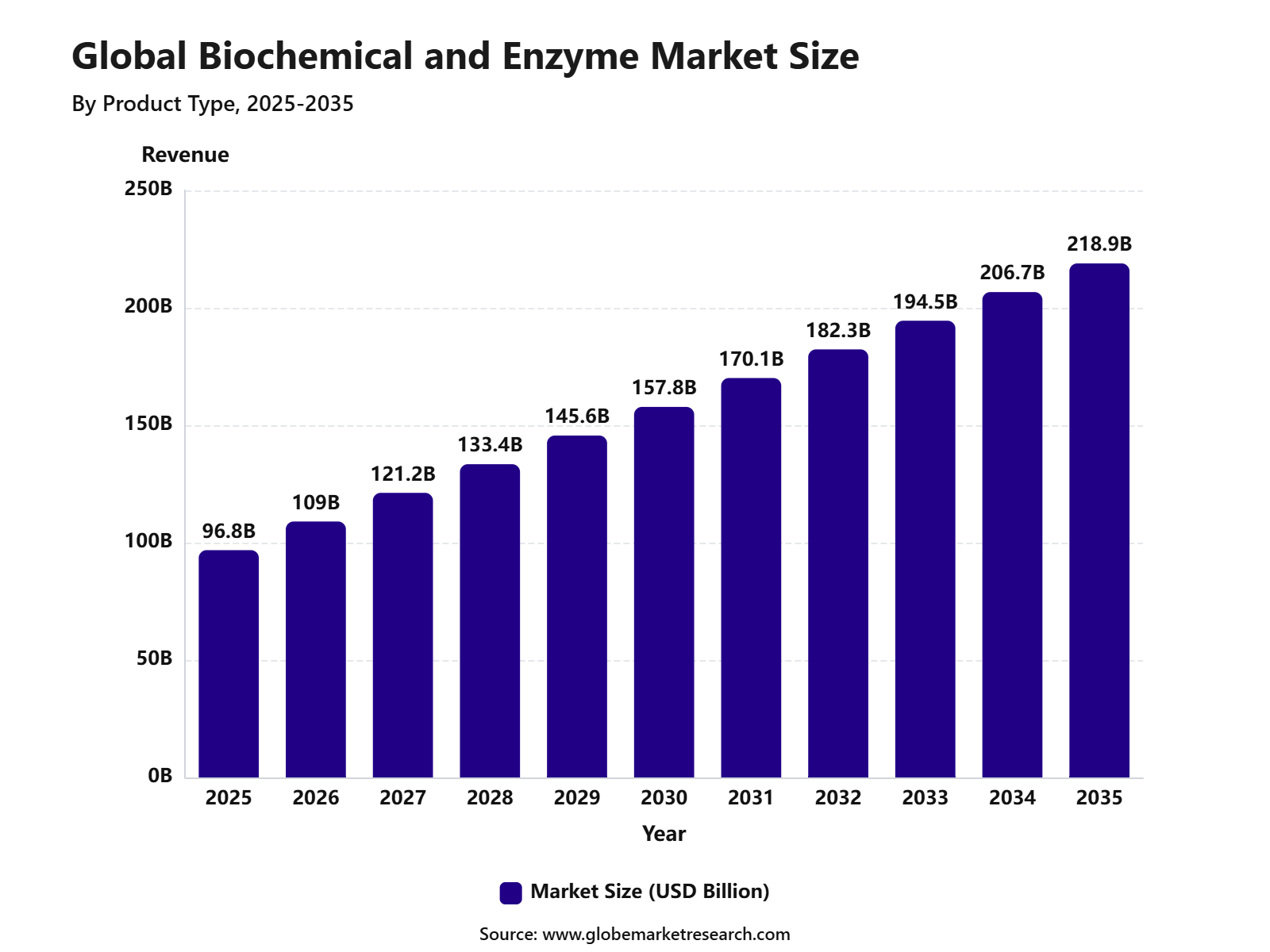 iThe graph shows projected market growth until 2035 based on CAGR analysis. Actual outcomes may vary depending on changing demand, competition, and economic factors.To gain greater insights - request a sample report PDF
Key Market Insights
Enzymes led the product type segment with 25.5% share, supported by their wide use in pharmaceuticals, biotechnology, food processing, diagnostics, detergents, and industrial bioprocessing.
Microbial-based sources accounted for 43.5% share, driven by scalable production, high enzyme yield, cost efficiency, and strong suitability for fermentation-based manufacturing.
Fermentation technology held 45.5% share, supported by its established use in producing enzymes, organic acids, amino acids, bio-based chemicals, and pharmaceutical intermediates.
Pharmaceuticals and biotechnology captured 33.8% share by application, driven by rising use of enzymes and biochemicals in drug development, diagnostics, biomanufacturing, and therapeutic production.
North America led the biochemical and enzyme market with 36.8% share, supported by strong biotechnology infrastructure, advanced pharmaceutical manufacturing, high R&D activity, and growing demand for bio-based industrial solutions.
Top Funding and Investment Highlights
Roquette completed the acquisition of IFF Pharma Solutions in May 2025, after IFF announced the sale at an enterprise value of up to USD 2.85 billion. The business included pharmaceutical excipients and specialty solutions, with 10 R&D or production sites, around 1,100 employees, and nearly USD 1.0 billion revenue in 2023. This deal strengthened plant-based biochemical ingredients and drug-delivery material capabilities.
Novonesis agreed to acquire dsm-firmenich’s share of the Feed Enzyme Alliance for EUR 1.5 billion in all-cash consideration. The transaction was fully debt financed and aimed to strengthen Novonesis across animal biosolutions, including enzymes such as phytases and carbohydrases used in feed efficiency and animal nutrition.
Agilent announced an investment of about USD 725.0 million to double manufacturing capacity for therapeutic nucleic acids in Frederick, Colorado. The expansion supports biochemical API production for siRNA, antisense, and CRISPR guide RNA molecules, with customer shipments expected to begin in 2026.
Solugen raised over USD 350.0 million in Series C funding led by GIC and Baillie Gifford. The capital was directed toward expanding its Bioforge platform, which uses synthetic biology, enzyme engineering, metal catalysts, and modular plant design to produce lower-carbon and carbon-negative chemicals from bio-based feedstocks.
BioMarin entered into an all-cash agreement to acquire Inozyme Pharma for about USD 270.0 million, or USD 4.00 per share. The acquisition strengthened BioMarin’s enzyme therapy pipeline through INZ-701, an enzyme replacement therapy candidate for ENPP1 deficiency.
By Product Type
Enzymes accounted for 25.5% share of the Biochemical and Enzyme Market. This leading position can be attributed to their wide use as biological catalysts in pharmaceuticals, biotechnology, food processing, detergents, textiles, animal feed, and industrial manufacturing. The segment is preferred because enzymes support faster reactions, lower processing temperatures, improved product yield, and reduced chemical use.
Their high specificity also makes them valuable in applications where quality, purity, and process efficiency are important. Demand for enzymes is expected to remain strong as industries move toward cleaner and more efficient production methods. Their use in drug development, diagnostics, bio-based manufacturing, and specialty processing continues to support their strong market position.
By Source
Microbial-based sources held 43.5% share of the Biochemical and Enzyme Market. This dominance is supported by the ability of bacteria, fungi, and yeast to produce enzymes and biochemical compounds at commercial scale with reliable output. Microbial sources are widely used because they offer faster growth, easier genetic modification, controlled fermentation, and cost-efficient production.
These advantages make them suitable for producing industrial enzymes, antibiotics, organic acids, amino acids, vitamins, and other bioactive ingredients. The segment is expected to maintain strong demand as manufacturers focus on scalable and sustainable production systems. Microbial-based biochemical production also supports improved consistency, lower resource use, and wider application across healthcare, food, agriculture, and industrial biotechnology.
By Production Technology
Fermentation accounted for 45.5% share of the Biochemical and Enzyme Market. Its strong position is driven by its broad use in producing enzymes, organic acids, antibiotics, amino acids, probiotics, vitamins, and other high-value biochemical products. The technology is preferred because it enables controlled biological production using microorganisms under optimized conditions.
Fermentation supports high product yield, consistent quality, and flexible manufacturing across pharmaceutical, food, biotechnology, and industrial applications. Demand for fermentation-based production is expected to grow as companies invest in bio-based alternatives to traditional chemical processes. The technology also supports cleaner manufacturing, lower energy use, and improved scalability for commercial biochemical and enzyme production.
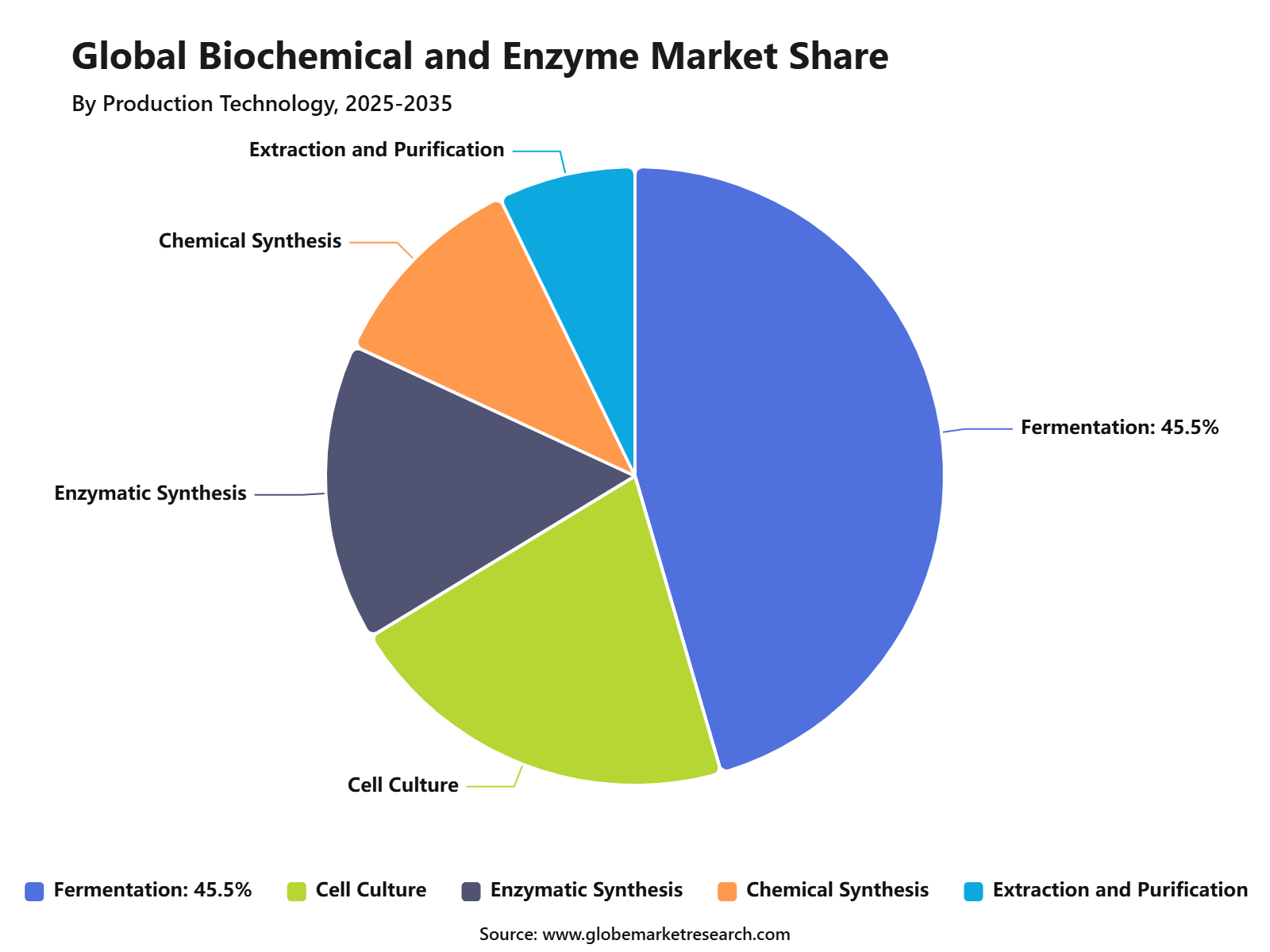 iThe graph shows projected market growth until 2035 based on CAGR analysis. Actual outcomes may vary depending on changing demand, competition, and economic factors.To gain greater insights - request a sample report PDF
By Application
Pharmaceuticals and biotechnology captured 33.8% share of the Biochemical and Enzyme Market. This leading share is supported by strong use of enzymes and biochemicals in drug development, diagnostics, biologics production, vaccine manufacturing, and research applications. Enzymes are used in active pharmaceutical ingredient production, molecular testing, protein engineering, cell culture, gene therapy, and bioprocessing.
Biochemicals also play an important role in laboratory reagents, therapeutic development, and quality control processes. The segment is expected to remain a major demand center as biologics, precision medicine, and biotechnology research continue to expand. Rising demand for efficient bioprocessing tools and high-purity biochemical inputs will further support adoption in this application area.
By Region
North America accounted for 36.8% share of the Biochemical and Enzyme Market, making it the leading regional market. The region benefits from strong pharmaceutical manufacturing, advanced biotechnology research, established enzyme producers, and high adoption of bio-based industrial solutions. The United States and Canada are key contributors due to their strong healthcare systems, research infrastructure, food processing industry, and industrial biotechnology capabilities.
Demand is also supported by innovation in biologics, diagnostics, specialty enzymes, and sustainable manufacturing processes. North America is expected to maintain a strong position as investment in biotechnology, biomanufacturing, and advanced healthcare production continues to increase. The region’s focus on high-value biochemical products and process efficiency will continue to support market growth.
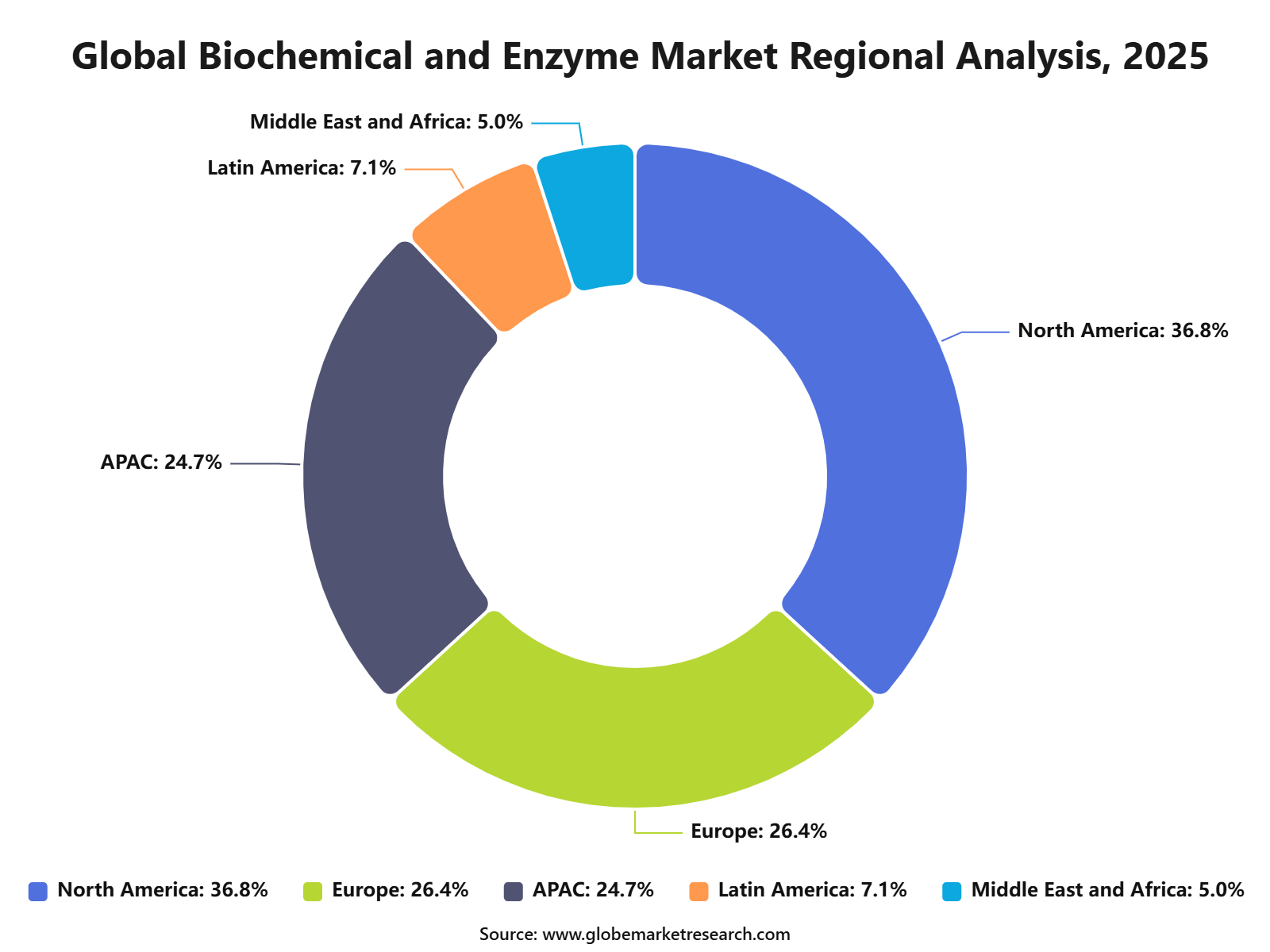 iThe graph shows projected market growth until 2035 based on CAGR analysis. Actual outcomes may vary depending on changing demand, competition, and economic factors.To gain greater insights - request a sample report PDF
Go-To-Market and Sales Economics
The Biochemical and Enzyme Market should be positioned through food processors, detergent brands, textile mills, feed producers, pharmaceutical manufacturers, biofuel plants, paper mills, cosmetic formulators, and specialty chemical buyers in 2026. Selling should focus on process efficiency, lower reaction temperature, reduced chemical use, cleaner production, and better product consistency.
Sales economics should be built around application performance, not only ingredient price. Enzymes such as amylases, proteases, lipases, cellulases, pectinases, and lactases are used in targeted processes where small dosage levels can improve yield, texture, cleaning, digestion, or conversion. Suppliers should provide trials, dosage guidance, stability testing, and formulation support.
Channel strategy should combine direct enterprise contracts with technical distributors serving food, feed, detergents, textiles, and bio-industrial users. India’s bioeconomy reached USD 195.3 billion in 2025 and contributed around 4.8% to GDP, supported by more than 11,800 biotech startups. This shows rising demand for bio-based industrial solutions.
Risk Factors & Market Barriers
The main barriers are production complexity, strain approval, fermentation yield, contamination risk, and strict safety documentation. Enzyme producers must manage microbial strain selection, fermentation control, downstream purification, allergen handling, and batch consistency. Any variation in activity, pH stability, moisture, or temperature tolerance can affect customer processes and delay qualification.
Regulatory barriers differ by use area. Food enzymes may require GRAS support or food additive approval, while technical enzymes used in detergents, textiles, pulp, paper, and biofuels are regulated under TSCA in the United States. This creates compliance work around production organisms, formulation ingredients, intended use, and safety data.
Cost volatility is another barrier because biochemical production uses sugars, oils, fermentation media, nutrients, utilities, water, purification chemicals, and cold-chain or dry-storage systems. FRED reported other biological product manufacturing at an index level of 266.330 in May 2026, showing that biological production costs remain material for suppliers and buyers.
Revenue Potential Analysis
Revenue Landscape Across
Revenue opportunities are strongest across food processing, bakery, dairy, brewing, starch conversion, detergents, feed enzymes, textile bio-polishing, pulp and paper, biofuels, pharmaceuticals, diagnostics, bioplastics, and specialty biochemicals. White biotechnology uses organisms, enzymes, and metabolic pathways to produce materials, chemicals, and energy in more sustainable industrial processes.
Bioenergy and renewable fuel applications can support enzyme demand through starch conversion, biomass breakdown, fermentation, and waste valorization. IEA stated that renewable fuels are set to account for 5.5% of energy consumption from industry, buildings, and transport by 2030, with bioenergy representing 95% of renewable fuel growth.
Regional revenue is expected to be strongest where biomanufacturing capacity, food processing, agriculture, detergents, and industrial biotechnology are well developed. India, the United States, Europe, China, and Brazil can support demand through bio-based chemicals, enzymes, biofuels, food ingredients, and agricultural biologicals. India’s 2026 RDI Fund outlay of ₹1 lakh crore supports scale-up potential.
Financial Impact
The financial impact in 2026 will depend on fermentation productivity, enzyme activity yield, media cost, purification efficiency, drying technology, quality testing, and customer qualification. FRED reported biological products including diagnostics at an index level of 354.147 in May 2026, compared with 351.958 in January, indicating stable but high-value biological product pricing.
Biochemical producers also face upstream chemical-cost exposure. FRED reported all other basic organic chemical manufacturing primary products at 416.051 in May 2026, compared with 392.437 in January. This matters for solvents, buffers, preservatives, stabilizers, carriers, bioprocess chemicals, and downstream formulation inputs used in enzyme and biochemical manufacturing.
Profitability can improve where suppliers sell validated enzyme systems, customized blends, and process guarantees instead of bulk ingredients. Higher returns are expected in food processing, detergents, animal feed, pharma, diagnostics, and specialty biochemicals. Stronger margins will be supported by high activity per gram, stable shelf life, regulatory readiness, and repeat customer contracts.
Drivers Impact Analysis
The Biochemical and Enzyme Market is driven by rising demand from pharmaceuticals, biotechnology, food and beverages, diagnostics, agriculture, industrial processing, research labs, and bio-based manufacturing. Enzymes and biochemicals are valued for their high specificity, cleaner processing, and ability to improve product quality.
North America leads the market due to strong biotechnology research, pharmaceutical manufacturing, diagnostics demand, enzyme innovation, and advanced healthcare infrastructure. The U.S. remains the main regional contributor because of its strong life sciences ecosystem, industrial biotech investment, and large research base.
Impact Factor | Estimated CAGR Impact | Regional Relevance | Market Impact |
|---|---|---|---|
Growth in pharmaceutical and biotechnology use | +2.2% | North America, Europe, Asia Pacific | Drives premium demand. |
Rising enzyme use in food processing | +1.8% | Global food manufacturing hubs | Improves process efficiency. |
Expansion of diagnostic applications | +1.6% | U.S., Europe, Japan, China | Supports high-value usage. |
Demand for bio-based industrial processing | +1.4% | North America, Europe, Asia Pacific | Supports cleaner production. |
Growth in agricultural biotechnology | +1.1% | U.S., Brazil, China, India | Adds applied demand. |
Restraints Impact Analysis
The market faces restraints from high production cost, strict quality requirements, and complex bioprocessing conditions. Enzymes and biochemical products often require controlled fermentation, purification, stabilization, and cold-chain handling, which increases manufacturing and distribution cost. Regulatory compliance is also a major restraint, especially in pharmaceutical, diagnostic, food, and clinical applications. Producers must meet safety, purity, traceability, and performance standards, which can slow product approvals and increase testing costs.
Impact Factor | Estimated CAGR Impact | Regional Relevance | Market Impact |
|---|---|---|---|
High production and purification cost | -1.1% | Global producers | Pressures margins. |
Strict regulatory requirements | -1.0% | North America, Europe, Japan | Raises compliance burden. |
Enzyme stability and storage limits | -0.8% | Food, pharma, industrial users | Affects shelf life. |
Complex scale-up processes | -0.7% | Biotech and enzyme producers | Slows capacity expansion. |
Competition from chemical alternatives | -0.6% | Price-sensitive industrial markets | Limits wider adoption. |
Opportunities Impact Analysis
Opportunities are strong in industrial enzymes, diagnostic reagents, pharmaceutical biochemicals, fermentation-based products, food enzymes, and research-grade biochemical reagents. These areas benefit from demand for cleaner manufacturing, faster testing, and high-performance biological processes.
Microbial-based production and fermentation technology offer strong future value because they support scalable, controlled, and cost-efficient biochemical manufacturing. Companies that improve yield, purity, and formulation stability can capture stronger long-term demand.
Impact Factor | Estimated CAGR Impact | Regional Relevance | Market Impact |
|---|---|---|---|
Fermentation-based production expansion | +2.0% | North America, Europe, Asia Pacific | Builds scalable supply. |
Industrial enzyme applications | +1.8% | Food, textile, detergent, biofuel sectors | Expands usage volume. |
Diagnostic reagent demand | +1.5% | U.S., Europe, China, Japan | Adds premium value. |
Microbial-based biochemical production | +1.3% | Global biotech hubs | Supports cost efficiency. |
Research and academic reagent demand | +1.0% | North America, Europe, developed Asia | Supports recurring use. |
Challenges Impact Analysis
The main challenge is maintaining biological activity, purity, and consistency across production batches. Enzymes and biochemical products can be sensitive to temperature, pH, moisture, contamination, and process variation, so quality control is critical. Another challenge is moving from laboratory success to commercial-scale production. Many biochemical products require optimized strains, efficient fermentation, downstream purification, and stable formulation before they can be used reliably in large-volume applications.
Impact Factor | Estimated CAGR Impact | Regional Relevance | Market Impact |
|---|---|---|---|
Maintaining enzyme activity | -1.0% | Global enzyme producers | Affects product reliability. |
Scaling fermentation processes | -0.9% | Biotech and industrial producers | Raises technical burden. |
Preventing contamination risk | -0.8% | Pharma, diagnostics, food sectors | Requires strict controls. |
Meeting purity specifications | -0.7% | Healthcare and research markets | Increases testing needs. |
Reducing batch-to-batch variation | -0.6% | Global biochemical suppliers | Protects buyer confidence. |
Segment Covered in the Report
By Product Type
Enzymes
Amino Acids
Vitamins and Coenzymes
Organic Acids
Carbohydrates and Sugars
Lipids and Fatty Acids
Nucleotides and Nucleic Acids
Proteins and Peptides
Biochemical Reagents
By Source
Plant-Based
Animal-Based
Microbial-Based
Synthetic and Semi-Synthetic
By Production Technology
Fermentation
Cell Culture
Enzymatic Synthesis
Chemical Synthesis
Extraction and Purification
By Application
Pharmaceuticals and Biotechnology
Food and Beverages
Diagnostics
Industrial Processing
Research and Academic Institutions
Others
By Region
North America
Europe
Asia Pacific
Latin America
Middle East and Africa
Market Trend Analysis
The market trend is moving toward enzymes, microbial-based production, fermentation technology, diagnostic biochemicals, and pharmaceutical-grade reagents. Enzymes remain a major product area because they support efficient processing in food, healthcare, detergents, agriculture, and industrial manufacturing.
Fermentation is becoming more important because it supports controlled production of enzymes, organic acids, amino acids, proteins, and other biochemical products. Pharmaceutical and biotechnology applications remain the strongest value area due to demand for high-purity and specialized ingredients.
Impact Factor | Estimated CAGR Impact | Regional Relevance | Market Impact |
|---|---|---|---|
Enzymes remain key product type | +2.0% | Global application markets | Leads product demand. |
Microbial-based sources gain preference | +1.7% | North America, Europe, Asia Pacific | Supports scalable output. |
Fermentation technology expands | +1.6% | Global biotech manufacturing | Drives production growth. |
Pharmaceutical and biotech use increases | +1.4% | U.S., Europe, China, Japan | Adds high-value demand. |
Industrial bioprocessing adoption rises | +1.1% | Food, detergent, textile, biofuel sectors | Supports cleaner processing. |
Investor Type Impact Matrix
Investors should focus on biochemical and enzyme companies with strong fermentation capability, enzyme engineering expertise, quality systems, and exposure to pharmaceuticals, diagnostics, food processing, and industrial biotechnology. These areas provide both premium demand and recurring application use.
Strategic investors can also target microbial-based production, precision fermentation, diagnostic reagents, and high-purity biochemical ingredients. Companies that combine production scale with scientific capability and regulatory readiness are better positioned for long-term growth.
Investor Type | Estimated CAGR Impact | Regional Relevance | Market Impact |
|---|---|---|---|
Enzyme Manufacturers | +1.8% | Global | Expands product supply. |
Biochemical Producers | +1.6% | North America, Europe, Asia Pacific | Supports broad applications. |
Pharmaceutical and Diagnostic Suppliers | +1.4% | U.S., Europe, Japan, China | Builds premium demand. |
Fermentation Technology Companies | +1.2% | Global biotech hubs | Improves production efficiency. |
Strategic and Life Science Investors | +1.0% | North America, Europe, Asia Pacific | Funds innovation growth. |
Recent Developments
In 2026, AB Enzymes opened a new office and baking lab in Curitiba, Brazil, to strengthen its South American presence and improve local customer support. The facility is designed to support hands-on trials, faster formulation development, and closer collaboration with food and baking customers across Brazil and neighboring countries.
In 2026, Novonesis completed a EUR 1.7 billion bond issuance to refinance the bridge facility linked to its earlier purchase of dsm-firmenich’s share in the Feed Enzyme Alliance. The issuance included senior unsecured notes under a EUR 4 billion EMTN program, with maturities ranging from 4 to 11 years and fixed interest rates from 3.25% to 4.00%.
Competitive Landscape
The market is characterized by intense competition among established players and emerging companies. Strategic partnerships, mergers and acquisitions, and product innovation are key strategies employed by market participants.
Key Market Players
Enzymes
Amino Acids
Vitamins and Coenzymes
Organic Acids
Carbohydrates and Sugars
Lipids and Fatty Acids
Nucleotides and Nucleic Acids
Proteins and Peptides
Biochemical Reagents
Other Key Players
Research Methodology
This market study is prepared using a combination of primary and secondary research. Primary research includes discussions with manufacturers, suppliers, distributors, consultants, industry experts, and end users. Secondary research covers company reports, government databases, trade associations, technical publications, regulatory sources, and trusted industry documents. The collected information is used to assess market demand, pricing trends, technology adoption, competitive activity, and regional performance.
AI language models are not used as primary data sources, and publicly available AI-generated content is not treated as market evidence. Computational tools may be used to support data processing, translation, data classification, and pattern identification. However, every published assessment is supported by verified sources, human review, and primary market discussions.
Market estimates are developed through top-down and bottom-up approaches and validated using data triangulation. Revenue, production, shipment, pricing, and application-level data are compared across multiple sources. Forecasts consider economic conditions, regulatory changes, investment activity, innovation, supply chain developments, and industry risks. All findings are reviewed through source verification and internal quality checks before publication.
Part I
Source Management & Input Data Standards
Who provides data, how sources are qualified, and what types of evidence are admissible.
Part II
Research Scope & Market Coverage
How we define the markets we assess and the parameters that govern each product.
Part III
Data Collection, Verification & Submission
The mechanics of gathering, cross-checking, and hierarchically ranking evidence.
Part IV
Assessment Determination & Quality Controls
How raw data becomes a published assessment — normalisation, expert judgement, and outlier exclusion.
Part V
Publication, Corrections & Revision
Our publication schedule, corrections policy, and methodology review cycle.
Part VI
Independence, Ethics & Complaints
Conflict-of-interest policies, editorial independence, and how clients raise concerns.
Google · Preferred Sources
Don't miss the latest market research insights and industry updates on Google.
Add Globe Market Research as a preferred source in the Google app to see our reports, analysis, and market stories in your news suggestions.
Meet the Team
This report was prepared by our expert analysts with deep industry knowledge and research experience.
Pratiksha K. is a Senior Research Analyst with more than five years of experience in market research, industry analysis, competitive intelligence, and business strategy. She has contributed to detailed market reports, customized research studies, company profiling, market sizing, trend analysis, and strategic consulting projects for clients across different regions. Her industry expertise covers Chemical and Material, Consumer Goods, Food & Beverages and Energy & Power. She closely evaluates changing customer requirements, technology developments, regulatory conditions, supply chain structures, investment activity, and competitive strategies to provide clear and practical market insights.
Sayali brings more than 7 years of experience to Globe Market Research, supporting the accuracy, clarity, and relevance of research content across multiple industries. She reviews market data, segment analysis, competitive insights, and industry trends to ensure each report meets strong quality standards and provides practical value to business decision-makers. Her expertise spans healthcare, information technology, consumer goods, and diverse cross-industry domains. With a strong focus on data reliability, structured analysis, and clear presentation, Sayali helps ensure that each research output delivers well-reviewed insights for clients, investors, consultants, and industry stakeholders.
Frequently Asked Questions
Related Reports
More in Chemical and Material
Sulfuric Acid Market to Hit USD 61.5 Billion by 2035
Sulfuric Acid Market Size, Share, Analysis By Raw Material (Elemental Sulfur, Base Metal Smelters, Pyrite Ore, Others), By Application (Fertilizers, Chemical Manufacturing, Metal Processing, Petroleum Refining, Textile, Automotive, Pulp and Paper, Others), By Distribution Channel (Direct Sales, Distributors), By Regional Insights, Business plan and Project Report, Investment Opportunities, Profitability, Industry Trends, Leading Companies and Growth Forecasts by 2026-2035
Powder Metallurgy Market to Hit USD 17.0 Billion by 2035
Powder Metallurgy Market Size, Share, Analysis By Material (Ferrous Metals, Non-Ferrous Metals, Others), By Process (Additive Manufacturing, Powder Metal Hot Isostatic Pressing, Conventional Powder Metallurgy), By Application (Automotive, Aerospace and Defense, Healthcare, Electrical and Electronics, Industrial Machinery, Others) , By Regional Insights, Business plan and Project Report, Investment Opportunities, Profitability, Industry Trends, Leading Companies and Growth Forecasts by 2026-2035
Bromine Market to Hit USD 1.5 Billion by 2035
Bromine Market Size, Share, Analysis By Derivative (Organobromine, Clear Brine Fluids, Hydrogen Bromide, Others), By Application (Flame Retardants, Oil and Gas Drilling, Biocides, PTA Synthesis, Plasma Etching, Pharmaceuticals, Energy Storage, Others), By End-Use Industry (Chemicals, Oil and Gas, Pharmaceuticals, Electrical and Electronics, Automotive, Agriculture, Others), By Regional Insights, Business plan and Project Report, Investment Opportunities, Profitability, Industry Trends, Leading Companies and Growth Forecasts by 2026-2035
Hydrogen Cyanide Market to Hit USD 5.95 Billion by 2035
Hydrogen Cyanide Market Size, Share, Analysis By Product Form (Hydrogen Cyanide Liquid, Hydrogen Cyanide Gas), By Application (Adiponitrile, Acetone Cyanohydrin, Sodium Cyanide and Potassium Cyanide, Methionine, Cyanuric Chloride, Others), By End-Use Industry (Chemicals, Mining and Metallurgy, Pharmaceuticals, Agriculture, Textiles, Others), By Regional Insights, Business plan and Project Report, Investment Opportunities, Profitability, Industry Trends, Leading Companies and Growth Forecasts by 2026-2035