

Revenue, 2025
$93.7 Bn
Forecast, 2035
$215.8Bn
CAGR, 2025-2035
8.7%
Report Coverage
Global
Market Size and Forecast
The Global Sports Sponsorship Market was valued at USD 93.7 billion in 2025 and is projected to reach USD 215.8 billion by 2035, growing at a CAGR of 8.7% from 2025 to 2035. Europe held the largest regional share of 38.1% in 2025, supported by strong football sponsorship activity, major international sports events, established club and league ecosystems, and high brand investment across media, stadium, team, athlete, and digital sponsorship assets.
Sports sponsorship refers to brand partnerships with teams, leagues, athletes, tournaments, venues, and sports media platforms. The growth of the market can be attributed to rising sports viewership, increasing demand for brand visibility, growth in digital fan engagement, and wider use of sponsorships for customer acquisition and loyalty building. Companies across apparel, automotive, banking, telecom, technology, beverages, and consumer goods are using sports sponsorships to strengthen brand recall and connect with large fan communities.
The market outlook remains positive as sponsorship models continue to expand beyond traditional logo placement. Demand is expected to rise for digital content rights, athlete-led campaigns, social media activations, esports partnerships, live event branding, and data-driven fan engagement programs. Europe is expected to maintain a strong position due to its mature sports economy, global football influence, high-value media rights, and deep sponsorship participation across professional sports.
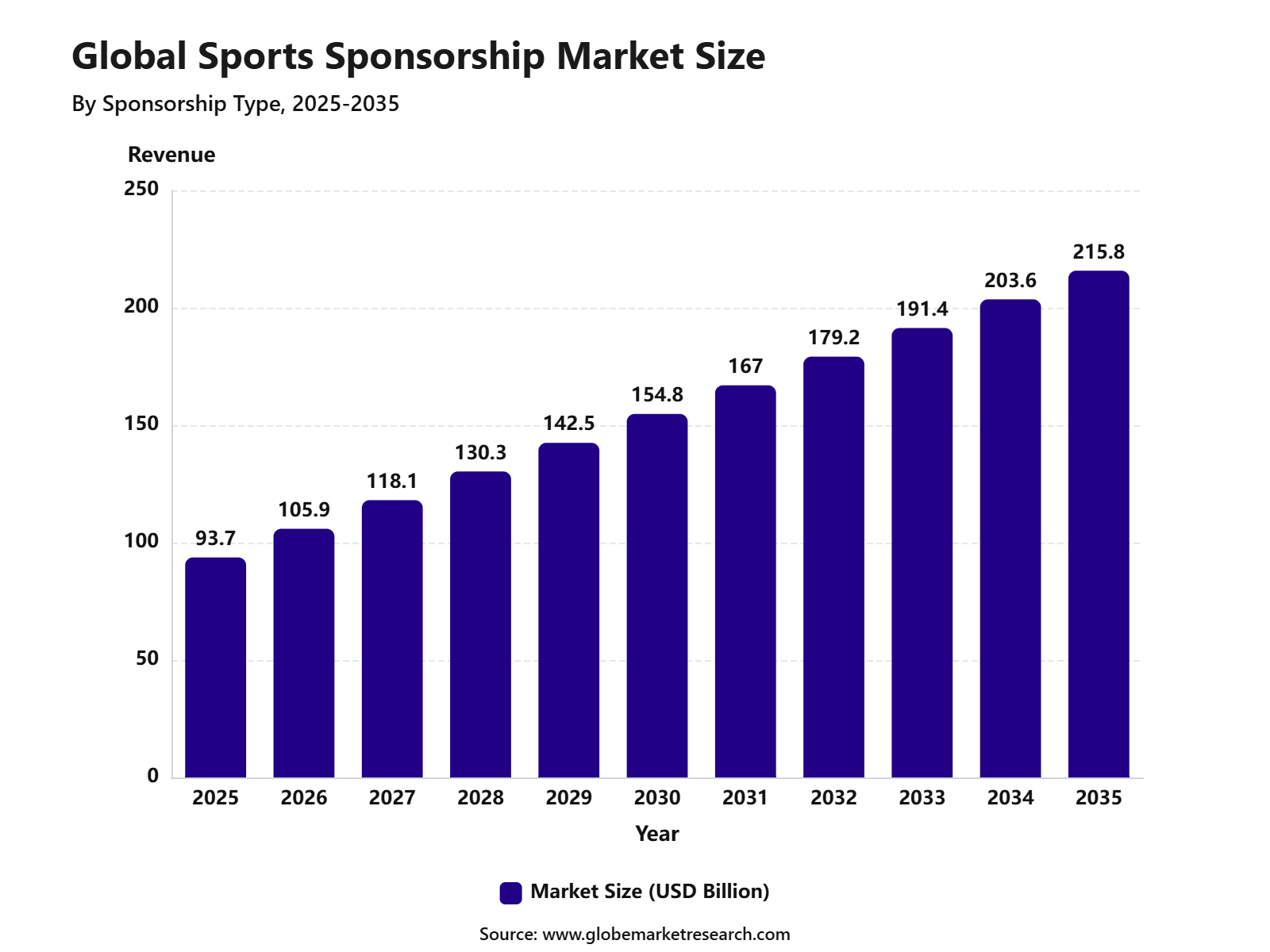 iThe graph shows projected market growth until 2035 based on CAGR analysis. Actual outcomes may vary depending on changing demand, competition, and economic factors.To gain greater insights - request a sample report PDF
Key Market Insights
Team and club sponsorship led the sponsorship type segment with 43.4% share, supported by strong brand visibility, loyal fan bases, jersey branding, stadium exposure, and long-term partnership value.
Football accounted for 42.5% share by sports category, driven by its global audience reach, high media coverage, strong club ecosystems, and large-scale tournament sponsorship opportunities.
International events held 47.7% share by event type, supported by cross-border brand exposure, large broadcast audiences, and strong commercial interest from global sponsors.
Competition sponsorship dominated the application segment with 72.3% share, driven by brand demand for event naming rights, tournament visibility, digital engagement, and live audience exposure.
Europe led the sports sponsorship market with 38.1% share, supported by a mature sports ecosystem, strong football culture, high media rights value, and active corporate sponsorship spending.
Go-to-Market and Sales Strategy
The Sports Sponsorship Market needs a fan-engagement-led go-to-market strategy because sponsors are not only buying logo placement. They are buying audience trust, live-event reach, digital content, athlete influence, community access, hospitality, loyalty, and retail activation. FIFA’s 2023-2026 cycle budget shows the strength of this model, with marketing rights budgeted at USD 2.693 billion, while total FIFA revenue for the cycle was budgeted at USD 11 billion. This confirms that official sponsorship and marketing rights remain a major income stream for global sports bodies.
Sales economics are strongest when sponsorship is packaged with measurable outcomes such as purchase intent, app downloads, store traffic, lead generation, social engagement, hospitality use, and content reach. A 2025 Sports Business Journal report stated that 66% of consumers were more likely to purchase from companies that sponsor sports they like, up from 59% in 2022. This shows that sports sponsorship works best when brand fit, fan loyalty, and activation planning are aligned.
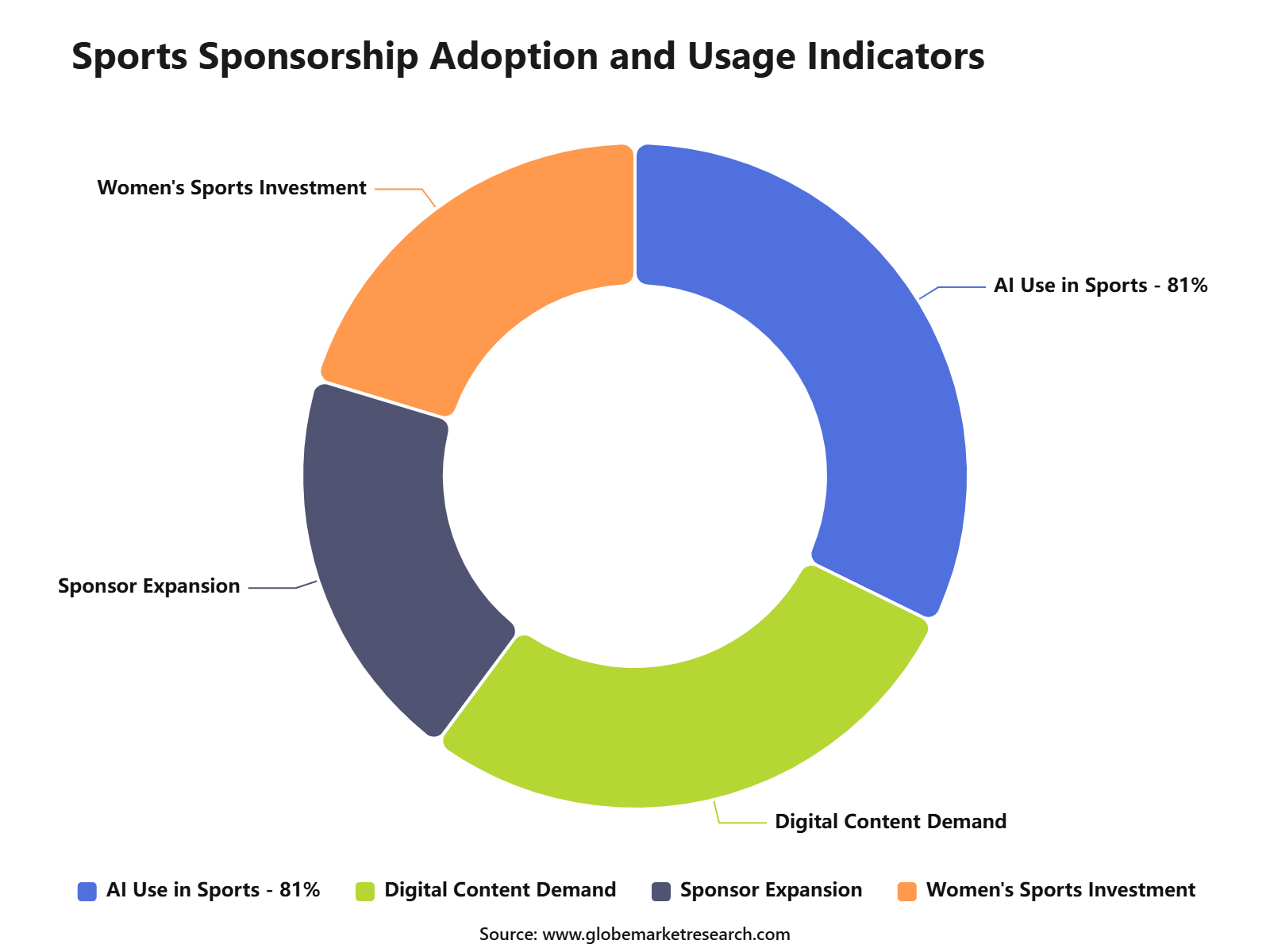 iThe graph shows projected market growth until 2035 based on CAGR analysis. Actual outcomes may vary depending on changing demand, competition, and economic factors.To gain greater insights - request a sample report PDF
Revenue Potential Analysis
Revenue Landscape Across
The revenue landscape is spread across league sponsorship, team sponsorship, athlete endorsement, event title rights, stadium naming rights, shirt sponsorship, sleeve sponsorship, broadcast integration, digital content, esports, grassroots programs, hospitality, licensing, and fan experiences. Football remains a major global sponsorship platform because it combines mass audiences with club loyalty, international tournaments, and high-value commercial rights. UEFA’s 2024/25 financial report showed total revenue of around EUR 5 billion, supported by strong commercial rights and club competition income.
Premium sports properties continue to attract large sponsors because they offer global visibility and repeat fan engagement. The NBA’s Emirates partnership made Emirates the global airline partner of the NBA, title partner of the Emirates NBA Cup, and the league’s first referee jersey patch partner. FIFA also lists multiple sponsorship tiers, including FIFA Partners, World Cup Sponsors, Women’s World Cup Sponsors, tournament supporters, and FIFAe sponsors, showing how rights holders are expanding sponsorship inventory across global and regional packages.
Financial Impact
The financial impact can be strong for rights holders that package sponsorship with media, content, hospitality, community programs, retail activation, and digital fan engagement. Sponsorship can provide recurring commercial revenue that supports player investment, event operations, youth development, stadium upgrades, and fan engagement. Reuters reported that commercial deals now exceed broadcast revenues for some top football clubs, with Manchester City earning EUR 408 million from commercial deals in 2025.
Financial risk remains high when sponsorship depends heavily on one category, one sponsor, or one short-term event. Crypto, betting, alcohol, fossil fuel, and high-risk financial sponsors may offer large fees, but they also increase regulatory and reputational exposure. The strongest financial resilience is expected from sports properties that diversify sponsors across safer categories, protect fan trust, measure return clearly, and convert sponsorship into long-term commercial relationships rather than one-season logo deals.
Sponsorship Type Analysis
Team and club sponsorship led the Sports Sponsorship Market with 43.4% share, supported by strong brand visibility across jerseys, stadiums, digital content, broadcast coverage, fan events, and social media channels. Sponsors prefer team and club partnerships because they provide season-long exposure and a direct connection with loyal fan communities. The growth of this segment can be attributed to the commercial strength of professional sports clubs and the rising value of fan engagement.
Brands use team and club sponsorships to improve awareness, build trust, support local and global campaigns, and connect with audiences through emotionally driven sports content. Team and club sponsorship is expected to remain a leading segment as sports organizations expand their digital reach and commercial assets. Demand is likely to remain strong for jersey sponsorships, training kit branding, stadium naming rights, digital activations, content partnerships, and fan experience programs.
Sports Category Analysis
Football led the sports category segment with 42.5% share, supported by its global fanbase, strong media coverage, high match frequency, and deep commercial appeal. The sport attracts sponsors across automotive, financial services, consumer goods, technology, telecom, betting, apparel, and beverage categories. The dominance of football can be linked to its international reach and strong club-based loyalty.
Sponsors benefit from exposure across domestic leagues, continental tournaments, international competitions, broadcast platforms, and digital fan communities. Football is expected to remain the most attractive sponsorship category due to its scale, emotional engagement, and global commercial structure. Strong opportunities are likely to continue in club sponsorship, tournament sponsorship, player partnerships, stadium advertising, streaming campaigns, and social media-led activations.
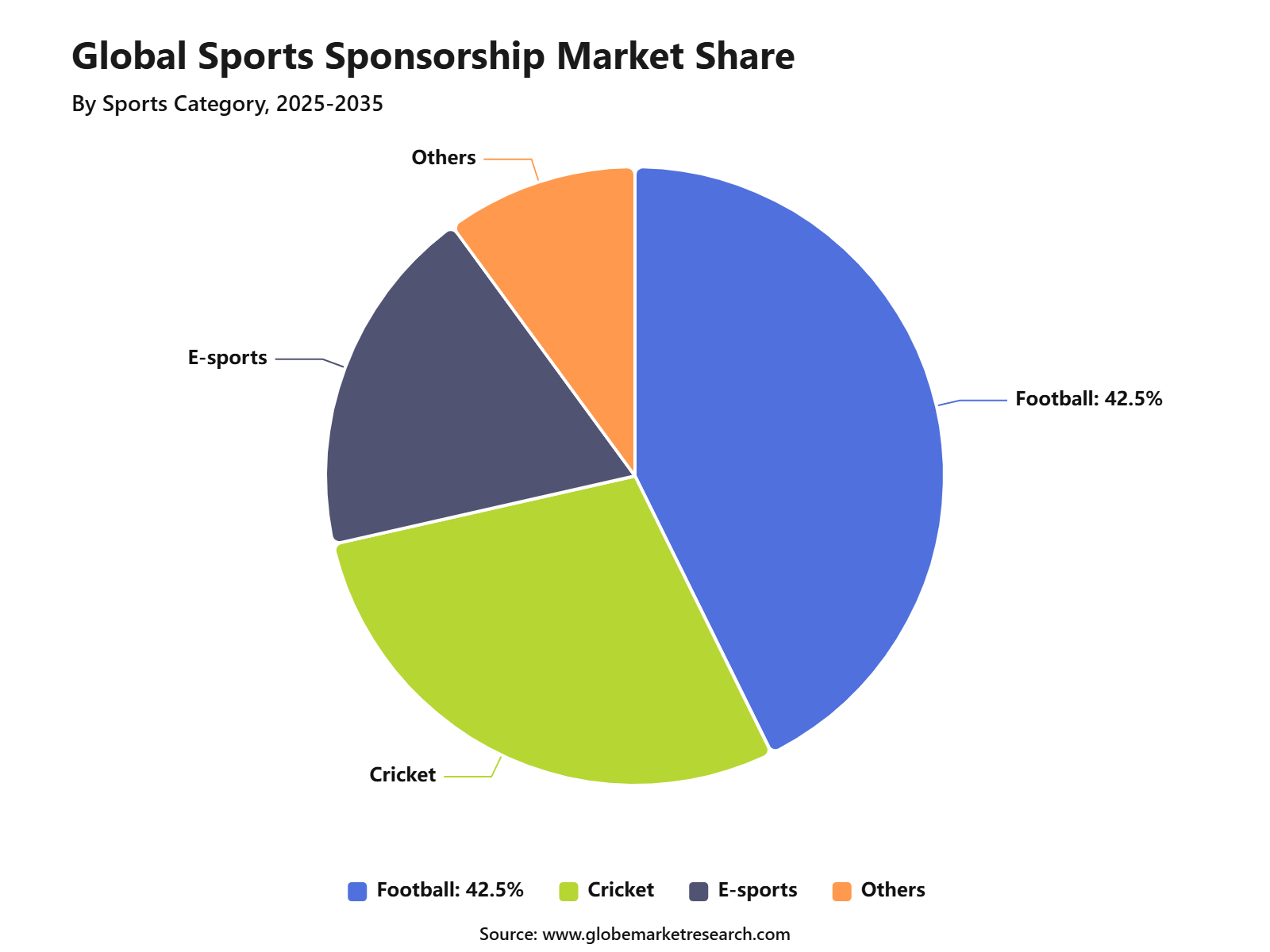 iThe graph shows projected market growth until 2035 based on CAGR analysis. Actual outcomes may vary depending on changing demand, competition, and economic factors.To gain greater insights - request a sample report PDF
Event Type Analysis
International events accounted for 47.7% share, driven by high global visibility, large broadcast audiences, multinational brand participation, and strong fan attention during major tournaments. These events give sponsors access to audiences across multiple countries and regions within a short, high-impact period. The segment is supported by football tournaments, Olympic events, cricket competitions, motorsport events, tennis tournaments, basketball events, and multi-sport championships.
International events are attractive because they allow brands to launch large campaigns, build global awareness, and connect with diverse fan groups. International sponsorship is expected to remain strong as major sports events continue to expand media rights, digital streaming, and global fan engagement. Sponsors are likely to invest in event naming rights, official partnership packages, hospitality programs, fan zones, digital content, and cross-border brand campaigns.
Application Analysis
Competition sponsorship led the application segment with 72.3% share, supported by strong brand demand for visibility during leagues, tournaments, matches, and championship events. This sponsorship format allows brands to connect directly with active sports audiences during high-attention moments. The growth of this segment can be attributed to the commercial value of live sports and the ability of competitions to attract large, engaged audiences.
Brands use competition sponsorships for signage, broadcast branding, digital campaigns, ticketing promotions, hospitality, and fan engagement activities. Competition sponsorship is expected to remain the largest application segment because sports events continue to deliver strong visibility and emotional engagement. Future demand is likely to be supported by digital-first sponsorship packages, data-led fan targeting, streaming integration, and interactive sponsor activations.
Regional Analysis
Europe led the Sports Sponsorship Market with 38.1% share, supported by strong football culture, mature club structures, high stadium attendance, advanced broadcasting systems, and a well-developed sponsorship ecosystem. The region has a strong base of professional leagues, international tournaments, and globally recognized clubs that attract major commercial partners. The growth of Europe is driven by strong demand from sponsors seeking association with football clubs, international competitions, and premium sports properties.
Sponsorship activity is supported by high fan loyalty, strong media coverage, and growing use of digital content to engage younger audiences. Europe is expected to remain a leading region due to the commercial strength of football and continued investment in sports marketing. Future opportunities are likely to be seen in club sponsorships, competition sponsorships, women’s sports, digital fan engagement, stadium partnerships, sustainability-led partnerships, and global brand activations.
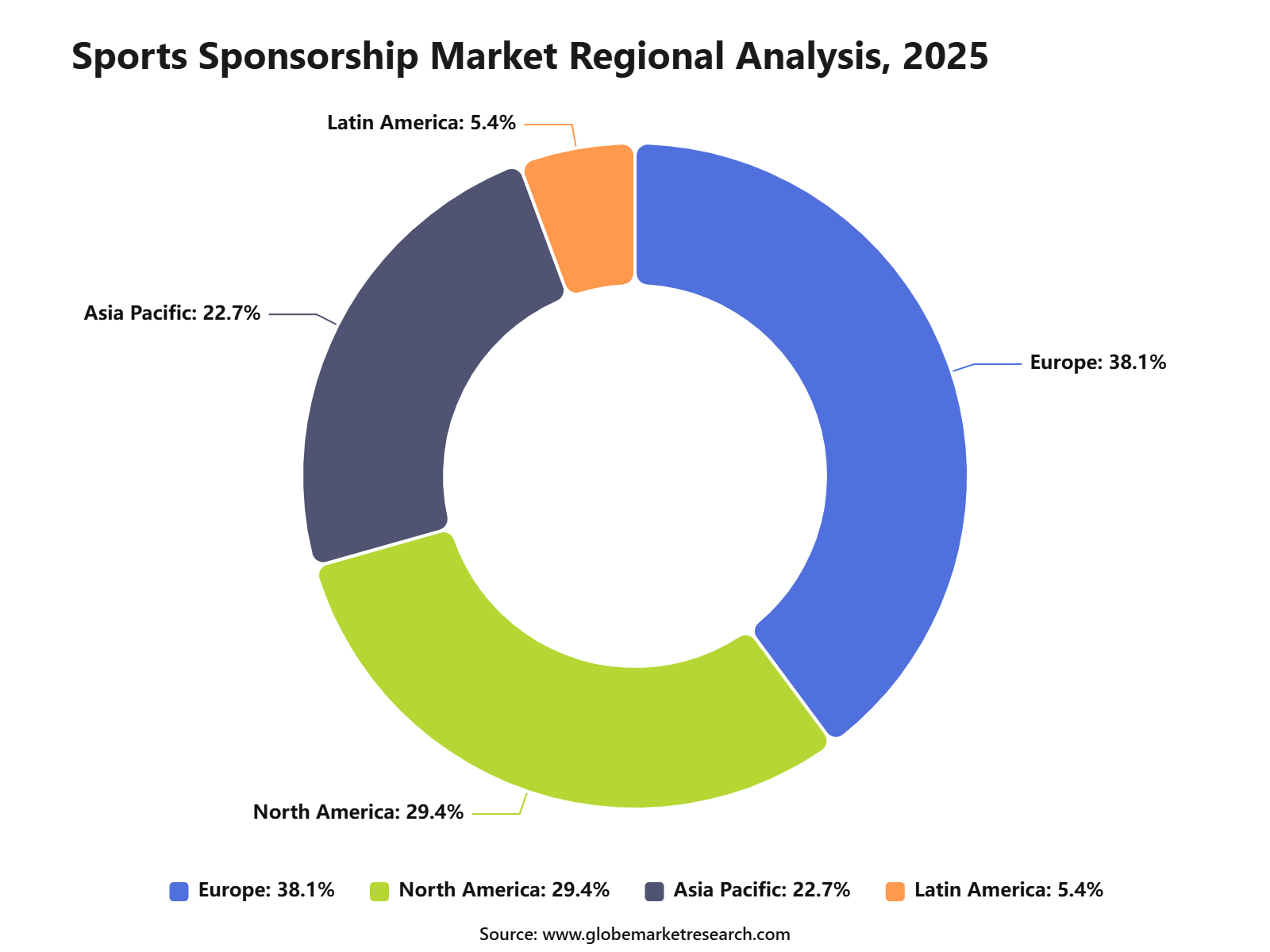 iThe graph shows projected market growth until 2035 based on CAGR analysis. Actual outcomes may vary depending on changing demand, competition, and economic factors.To gain greater insights - request a sample report PDF
Risk Factors & Market Barriers
The main risk factor is uncertain return on investment. Sports sponsorship can build strong awareness, but poor activation may reduce the value of the deal. A sponsor that only places a logo on a jersey, board, or event backdrop may not gain enough measurable return unless the deal includes digital content, fan data, hospitality, athlete access, retail promotions, and post-event performance tracking. This makes sponsorship planning more complex than traditional advertising.
Brand safety is another major barrier. Sponsors can face reputational risk from athlete misconduct, team controversy, poor event management, political pressure, or public criticism of sponsor categories. In June 2026, FIFA faced pressure from activists over Aramco’s sponsorship of the 2026 World Cup, with protests linked to fossil fuel sponsorship and climate concerns. This shows that sponsor selection is now judged not only by commercial value, but also by public trust, environmental risk, and social perception.
Regulatory & Compliance Risks
Regulatory risk is rising around gambling, crypto, alcohol, financial promotions, data privacy, and youth marketing. In June 2026, the UK Financial Conduct Authority warned Premier League clubs about sponsorship deals with unauthorised crypto firms and trading platforms, citing legal liability, money laundering risk, and reputational damage. This creates a clear requirement for sponsor due diligence, source-of-funds checks, product authorization review, and fan-protection controls.
Gambling sponsorship is also under tighter review. The UK government announced in February 2026 that it planned to consult on preventing unlicensed gambling operators from sponsoring sports clubs. In France, concerns around World Cup betting ads led to proposed controls such as a whistle-to-whistle ad ban during matches, restrictions on young bettors, and tighter limits on celebrity or influencer promotions. These rules can reduce sponsorship inventory for betting brands and increase compliance work for teams, leagues, and broadcasters.
Market Adoption Barriers
Market adoption barriers are mainly linked to high sponsorship fees, limited premium inventory, unclear measurement, and category conflict. Top-tier sports properties often already have partners in banking, airlines, telecom, beverages, technology, betting, automotive, apparel, and payments, which can limit access for new brands. Smaller teams and leagues may offer lower costs, but they need stronger proof of audience quality, engagement, and conversion potential.
Another barrier is media fragmentation. Fans now follow sports through live broadcasts, streaming, highlights, social media, fantasy sports, athlete channels, podcasts, and short-form video. This gives sponsors more touchpoints, but it also makes performance measurement harder. Sponsors need clear reporting on exposure, engagement, sentiment, conversion, and sales influence, otherwise sponsorship may be treated as a brand expense rather than a business-growth channel.
Segment Covered in the Report
By Sponsorship Type
Team/Club
Athlete
Events
Venue
Others
By Sports Category
Football
Cricket
E-sports
Others
By Event Type
International
League
Domestic
By Application
Competition Sponsorship
Training Sponsorship
Others
By Region
North America
Europe
Asia Pacific
Latin America
Middle East and Africa
Drivers Impact Analysis
Impact Factor | Estimated CAGR Impact | Regional Relevance | Market Impact |
|---|---|---|---|
Rising global sports viewership | +2.4% | North America, Europe, Asia Pacific | Drives sponsor visibility. |
Growth in digital sports streaming | +2.0% | U.S., Europe, India, China | Expands audience reach. |
Increasing brand spending on sports marketing | +1.8% | Global | Supports sponsorship deals. |
Strong fan engagement across major leagues | +1.5% | Europe, North America, Asia Pacific | Improves brand recall. |
Expansion of international sports events | +1.3% | Global | Boosts sponsorship value. |
Restraints Impact Analysis
Impact Factor | Estimated CAGR Impact | Regional Relevance | Market Impact |
|---|---|---|---|
High sponsorship acquisition cost | -1.2% | Global premium leagues | Limits smaller brands. |
Uncertain return on investment | -1.0% | Global | Slows deal decisions. |
Dependence on team and athlete performance | -0.8% | Global | Affects brand exposure. |
Regulatory limits on certain sponsor categories | -0.7% | Europe, North America, Asia Pacific | Restricts sponsorship options. |
Economic pressure on marketing budgets | -0.6% | Global | Delays contract renewals. |
Opportunities Impact Analysis
Impact Factor | Estimated CAGR Impact | Regional Relevance | Market Impact |
|---|---|---|---|
Growth in football sponsorship | +2.2% | Europe, Latin America, Middle East, Asia | Drives major deal value. |
Expansion of women’s sports sponsorship | +1.8% | North America, Europe, Australia | Opens new brand reach. |
Rising esports and digital sports partnerships | +1.5% | Asia Pacific, North America, Europe | Expands younger audience access. |
Data-driven sponsorship measurement | +1.3% | Developed markets | Improves ROI tracking. |
Growth in athlete influencer partnerships | +1.1% | Global | Builds direct fan engagement. |
Challenges Impact Analysis
Impact Factor | Estimated CAGR Impact | Regional Relevance | Market Impact |
|---|---|---|---|
Brand safety and reputation risk | -1.0% | Global | Affects sponsor confidence. |
Fragmented media rights landscape | -0.9% | North America, Europe, Asia Pacific | Complicates audience reach. |
Measuring sponsorship effectiveness | -0.8% | Global | Creates ROI uncertainty. |
Rising competition for premium assets | -0.7% | Major leagues and tournaments | Increases deal cost. |
Short-term fan sentiment changes | -0.6% | Global | Impacts campaign stability. |
Recent Developments
January 2026, KKR agreed to acquire sports-focused private equity firm Arctos Partners in a deal valuing Arctos at about USD 1.0 billion, with the valuation potentially rising to around USD 1.5 billion through performance incentives. Arctos holds stakes in major U.S. professional sports teams across the NBA, MLB, NHL, and MLS. This transaction shows that institutional investors are moving deeper into sports ownership and sponsorship-linked asset value.
February 2026, The International Olympic Committee indicated that future Olympic sponsorship could include more visible partner opportunities around athlete preparation areas, scoreboards, and venue naming rights. This is a major shift because Olympic sponsorship has traditionally been more restricted than league or stadium sponsorship. The change is expected to help the IOC create more commercial value before the LA28 Olympic Games.
Report Scope
Report Highlights | Details |
|---|---|
Market Revenue (2025) | USD 93.7 Billion |
Forecast Revenue (2035) | USD 215.8 Billion |
CAGR (2025-2035) | 8.7% |
Base Year for Estimation | 2025 |
Historic Data | 2020-2024 |
Forecast Period | 2025-2035 |
Report Coverage | AI market impact analysis, market surveys, trade analysis, Industry & competitive intelligence, Revenue projections, company positioning, competitive analysis, growth drivers, and emerging market trends, Strategic Consultation & Advisory Services |
Segments Covered | By Sponsorship Type (Team/Club, Athlete, Events, Venue, Others), By Sports Category (Football, Cricket, E-sports, Others), By Event Type (International, League, Domestic), By Application (Competition Sponsorship, Training Sponsorship, Others), By Regional Insights |
Regional Analysis | North America - US, Canada; Europe - Germany, France, The UK, Spain, Italy, Russia, Netherlands, Rest of Europe; Asia Pacific - China, Japan, South Korea, India, New Zealand, Singapore, Thailand, Vietnam, Rest of Latin America; Latin America - Brazil, Mexico, Rest of Latin America; Middle East & Africa - South Africa, Saudi Arabia, UAE, Rest of MEA |
Key companies profiled | L'Oréal SA, Estée Lauder Companies, Unilever, Procter & Gamble, Adidas AG, Nike Inc., Puma SE, Coca-Cola, PepsiCo, VISA Inc. and Other Key Players |
Customization Scope | Tailored insights for specific regions, countries, and market segments can be provided. Additional report customization is available upon request. |
Competitive Landscape
The market is characterized by intense competition among established players and emerging companies. Strategic partnerships, mergers and acquisitions, and product innovation are key strategies employed by market participants.
Key Market Players
L'Oréal SA
Estée Lauder Companies
Unilever
Procter & Gamble
Adidas AG
Nike Inc.
Puma SE
Coca-Cola
PepsiCo
VISA Inc.
Other Key Players
Meet the Team
This report was prepared by our expert analysts with deep industry knowledge and research experience.
Pratiksha is market research analyst with strong experience in industry research, market forecasting, and competitive analysis. She specializes in identifying market trends, evaluating growth opportunities, and preparing data-driven insights across global industries. Her work supports businesses in understanding market dynamics, customer demand, regional opportunities, and strategic investment areas.
Sayali brings more than 5 years of experience to Globe Market Research, supporting the accuracy, clarity, and relevance of research content across multiple industries. She reviews market data, segment analysis, competitive insights, and industry trends to ensure each report meets strong quality standards and provides practical value to business decision-makers. Her expertise spans healthcare, information technology, consumer goods, and diverse cross-industry domains. With a strong focus on data reliability, structured analysis, and clear presentation, Sayali helps ensure that each research output delivers well-reviewed insights for clients, investors, consultants, and industry stakeholders.
Frequently Asked Questions
Related Reports
More in Consumer Goods
Subscription Box Market to hit USD 225.2 billion by 2035
Global Subscription Box Market Size, Go-to-Market Strategy Analysis By Type (Replenishment Subscription, Curation Subscription, Access Subscription), By Price Range (Budget-friendly, Mid-range, Premium/Luxury), By Application (Beauty and Personal Care, Food and Beverages, Fashion and Apparel, Pet Products, Health and Fitness, Kids and Baby Products, Books and Entertainment, Home Goods, Tech and Gadgets, Arts and Crafts, Others), By Regional Insights, Business plan and Project Report, Investment Opportunities, Profitability, Industry Trends, Leading Companies and Growth Forecasts By 2025-2035
Pet Toys Market to hit USD 35.6 billion by 2035
Global Pet Toys Market Size, Share Analysis By Product Type (Plush, Rope, Balls, Others), By Pet Type (Dogs, Cats, Others), By Distribution Channel (Offline, Online), By Regional Insights, Business plan and Project Report, Investment Opportunities, Profitability, Industry Trends, Leading Companies and Growth Forecasts By 2025-2035
Black Hair Care Market to hit 17.1 Bn by 2035
Global Black Hair Care Market By Product Type (Shampoo, Conditioner, Hair Dye, Hair Oils, Hair Serums, Others.), By Application (Household, Commercial Use, Salons, Beauty Parlors, Professional Hair Care Services), By Distribution Channel (Offline Stores, Online Platforms, Supermarkets and Hypermarkets, Specialty Beauty Stores, Retail Stores, Pharmacies, Direct-to-Consumer Channels), By End User (Women, Men, Kids, Professional Stylists, Salons), By Hair Concern (Dryness and Moisture Retention, Scalp Health, Breakage Repair, Curl Definition, Frizz Control, Protective Styling, Hair Growth Support, Chemical-Free Hair Care), By Regional Insights, Business plan and Project Report, Investment Opportunities, Profitability, Industry Trends, Leading Companies and Growth Forecasts by 2025-2035
Halloween Costumes Market to hit 12.2 Bn by 2035
Global Halloween Costumes Market By Product Type (Adult Costumes, Kids Costumes, Pet Costumes, Accessories), By Theme (Superheroes, Movies and TV Characters, Horror, Fantasy, Historical, Others), By Distribution Channel (Online Stores, Specialty Stores, Supermarkets and Hypermarkets, Others), By Regional Insights, Business plan and Project Report, Investment Opportunities, Profitability, Industry Trends, Leading Companies and Growth Forecasts by 2025-2035