Market Size and Growth
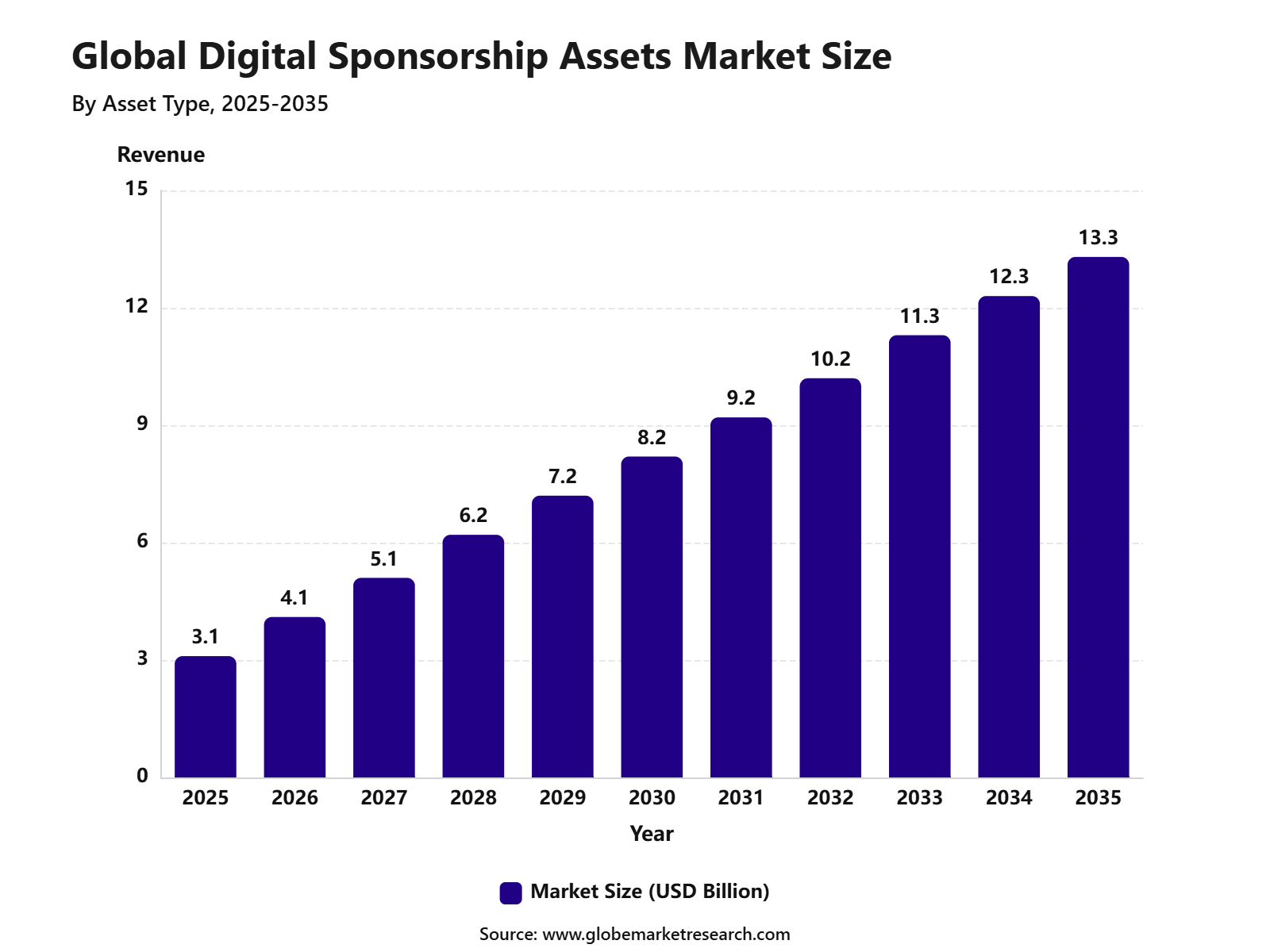
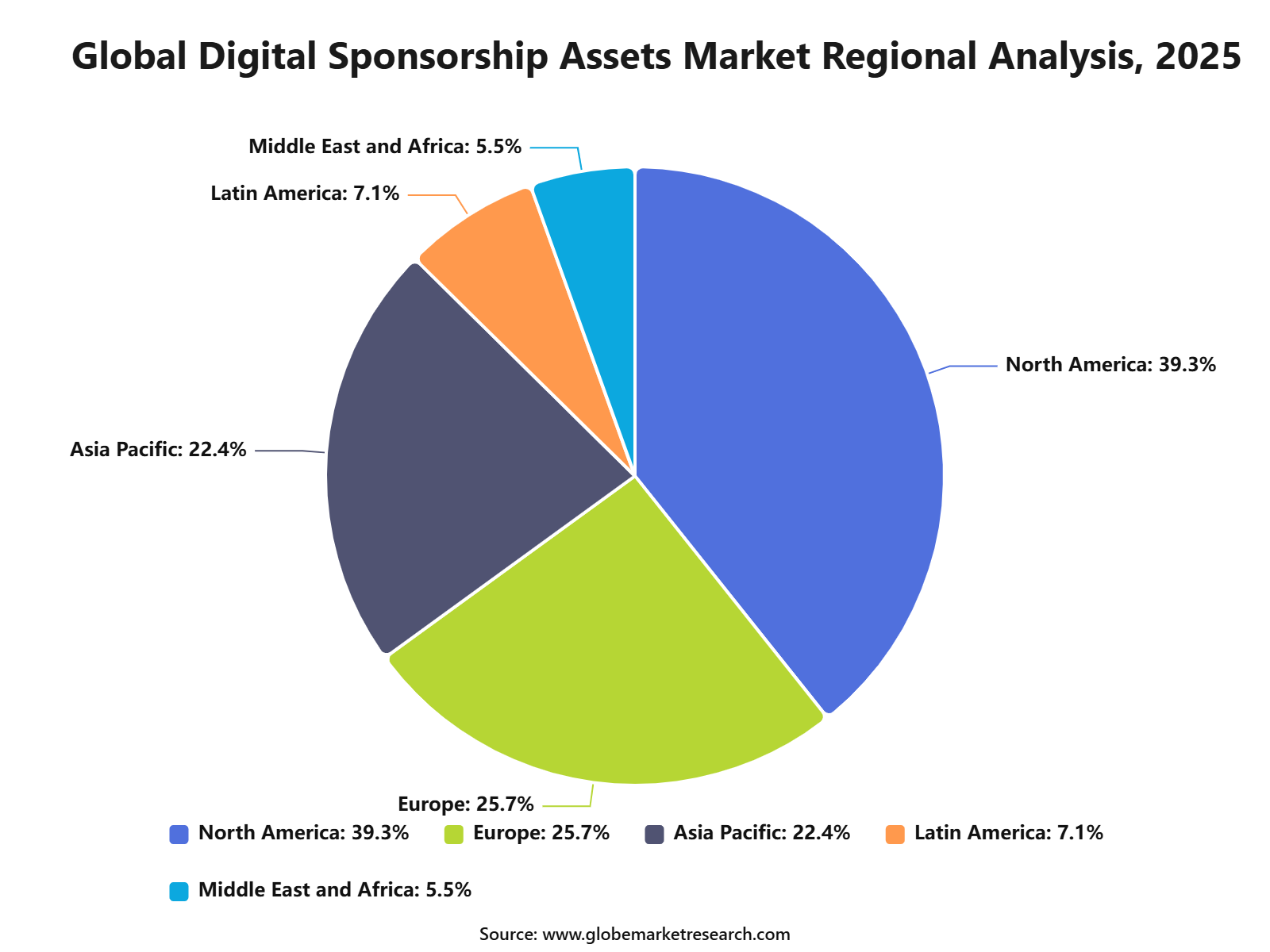
According to Globe Market Research, the global Digital Sponsorship Assets Market was worth USD 3.1 billion in 2025 and is expected to reach USD 13.3 billion by 2035, growing at a 15.7% CAGR from 2025 to 2035. North America held the largest regional share of 39.3% in 2025, supported by strong digital advertising spending, sports and entertainment sponsorship activity, fan engagement platforms, and wider use of branded digital content across streaming, social media, esports, and live event channels.
Digital sponsorship assets are online and virtual sponsorship formats used by brands to increase visibility and engagement across digital platforms. These assets include branded video content, social media placements, livestream overlays, virtual signage, digital banners, sponsored posts, in-app branding, esports sponsorship assets, creator integrations, and fan engagement activations.
The market is expanding because brands are moving from static sponsorship visibility to measurable digital assets. IAB reported that U.S. digital advertising revenue reached nearly USD 300 billion in 2025, while programmatic advertising rose 20.5% year over year to USD 162.4 billion, showing stronger demand for measurable, automated, and performance-led digital inventory.
Why the Digital Sponsorship Assets Market Is Growing
The market is growing because sponsors now expect clear proof of audience reach, engagement, clicks, conversions, sign-ups, ticket sales, app installs, and brand impact. The report states that growth is supported by rising live streaming consumption, stronger social media engagement, expanding esports audiences, connected TV advertising, digital fan experiences, and AI-supported audience targeting.
Digital video is a major growth route. IAB projected that U.S. digital video ad spending would surpass USD 80 billion in 2026, growing 11% year over year, and digital video was expected to exceed 60% of total TV and video ad spending. This supports sponsor-branded video assets, OTT placements, livestream integrations, social clips, and creator-led branded content.
Creator-led sponsorship is also becoming more important. IAB projected U.S. creator ad spending to reach USD 37 billion in 2025 and USD 44 billion in 2026, while three in four brands were using or planning to use AI for creator marketing-related tasks.
Digital Sponsorship Assets Market Adoption Indicators
According to the Interactive Advertising Bureau, 48% of advertising buyers classified creator content as a must-buy media channel. Nearly three-quarters were using or planning to use AI for creator advertising. Brand awareness was the leading campaign objective at 43%, followed by audience expansion at 41%, while 40% identified return on investment as their main performance indicator. These findings support wider adoption of sponsored videos, branded social posts, livestream integrations, creator content, and digital advertising assets.
Metric | Adoption Indicator |
|---|---|
Must-Buy Status | 48% of advertisers |
AI Use Plans | Nearly 75% |
Awareness Campaigns | 43% |
Audience Expansion | 41% |
ROI Measurement | 40% |
Digital Sponsorship Assets Market Usage Statistics
According to the Interactive Advertising Bureau and Nielsen, U.S. creator advertising expenditure reached USD 37 billion in 2025 and is projected to reach USD 44 billion in 2026. Social media advertising revenue reached USD 117.7 billion. Nielsen reported that the ten most valuable sports-team sponsorship assets generated nearly USD 515 million in media value, while the 2025 MLB postseason recorded 58.2 billion viewing minutes, increasing exposure opportunities for digital signage, branded content, streaming placements, and sponsor-led social media assets.
Metric | Market Usage |
|---|---|
Creator Ad Spend | USD 37 billion |
2026 Creator Spend | USD 44 billion projected |
Social Ad Revenue | USD 117.7 billion |
Sponsorship Media Value | Nearly USD 515 million |
Sports Viewing Time | 58.2 billion minutes |
Key Market Drivers
Expansion of digital video: Digital video advertising is projected to grow by 11% in 2026. This growth is increasing the value of sponsored streaming content, short-form videos, connected television placements and branded live broadcasts.
Growth of sports streaming: Live sports audiences are moving toward digital platforms, making sports inventory more measurable and addressable. Digital live-sports viewership increased by 8.3% in 2025, while streaming platforms’ share of global sports-rights spending reached 20%.
Demand for measurable returns: Sponsors increasingly require data covering views, watch time, clicks, engagement, app downloads, registrations and sales. This is supporting investment in sponsorship management and performance-measurement software.
Expansion of creator partnerships: Brands are using athletes, influencers and independent creators to reach established online communities. Creator-led connected television and digital video inventory is also becoming available through programmatic marketplaces.
AI-based campaign management: Artificial intelligence is being used for audience segmentation, content selection, sponsor matching, asset tracking and reporting. AI adoption is helping rights holders manage larger sponsorship portfolios with less manual work.
Market Segmentation
Asset Type Insights: Digital activations led the market with a 36.5% share. Interactive contests, virtual experiences, branded challenges, shoppable content and creator-led campaigns provide measurable engagement beyond static logo exposure.
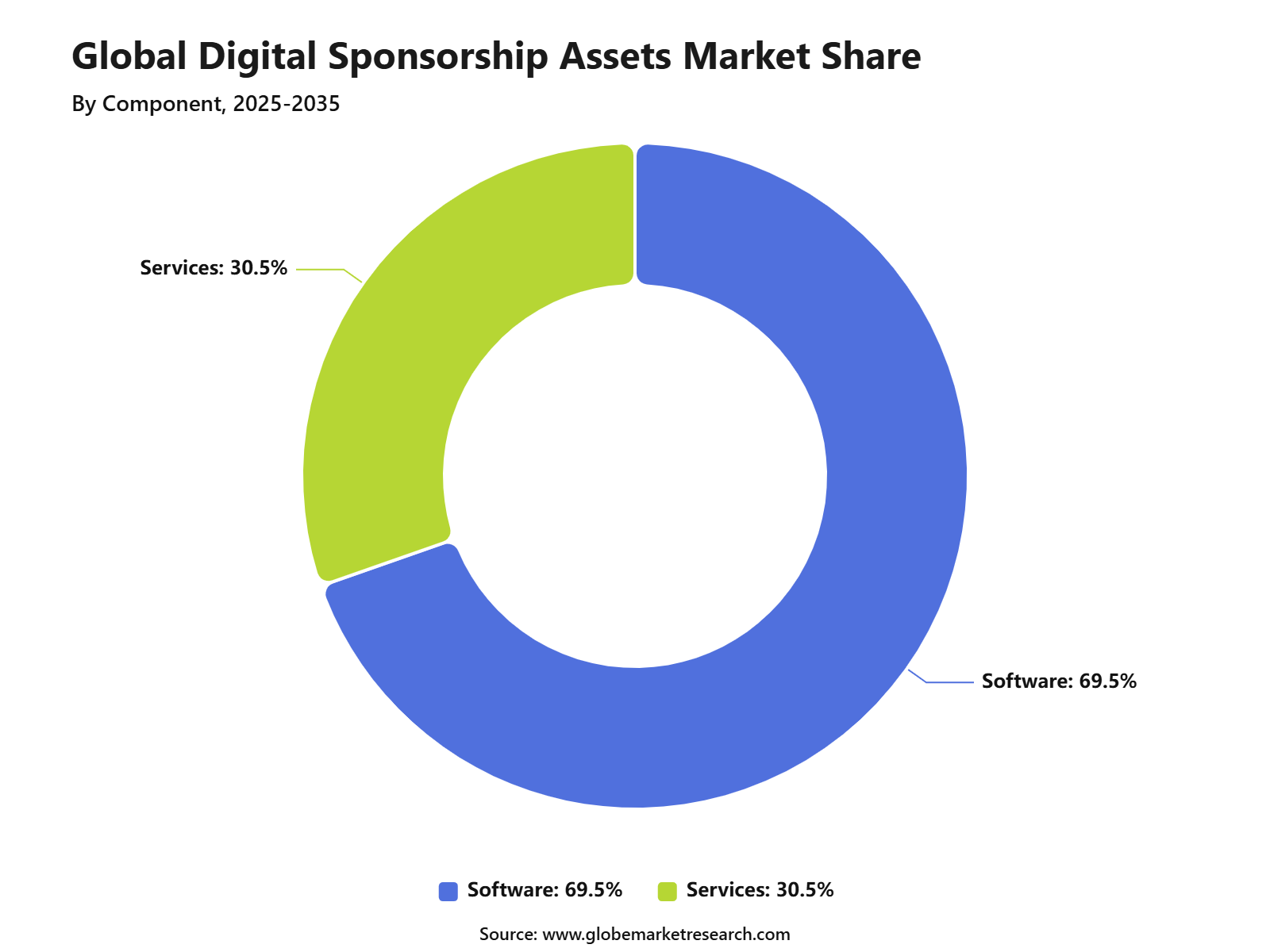
Component Insights: Software accounted for 69.5% of market revenue. Platforms are being used to manage sponsorship inventory, contractual commitments, campaign schedules, asset delivery and performance reporting.
Deployment Mode Insights: Cloud-based deployment held a 72.9% share. Cloud platforms allow brands, agencies and rights holders to manage digital campaigns remotely across social media, streaming, mobile applications and websites.
Application Insights: Sports represented 47.8% of demand. Sports sponsorship benefits from loyal audiences, frequent digital content, live-event visibility and year-round engagement across team, league and athlete channels.
End-User Insights: Brands accounted for 40.9% of the market as companies increased spending on digital assets that provide measurable reach, engagement and conversion opportunities.
Technology and Adoption Trends
AI-powered sponsor matching: AI can compare audience demographics, content categories and brand requirements to identify suitable sponsorship partners and digital properties.
Automated asset management: Purpose-built platforms can connect agreements directly to deliverables, automatically assign tasks and monitor whether sponsored assets have been completed.
Computer vision measurement: Image-recognition systems can identify logos and signage within broadcasts and online videos, measuring placement, duration, clarity and audience exposure.
Real-time sports advertising: Live game information can be used to activate branded content during important sporting moments rather than relying only on fixed advertising schedules.
Agentic advertising: AI agents are beginning to support media planning, inventory selection, buying and campaign optimization. Two-thirds of digital video buyers were using, testing or planning agentic AI campaigns in 2026.
Top Use Cases
Social media sponsorship: Brands sponsor athlete posts, creator videos, competitions, short-form content and behind-the-scenes coverage across social platforms.
Livestream and OTT sponsorship: Digital overlays, sponsored statistics, branded segments and interactive calls to action can be added to live sports and entertainment streams.
Inventory management: Rights holders can monitor which social, mobile, streaming, website and event assets are available, reserved or sold.
Proof-of-performance reporting: Platforms can store photographs, videos, campaign results and activation records to demonstrate that sponsorship commitments were completed.
Branded highlight production: AI can identify important sporting moments and rapidly produce sponsor-supported video clips for social media and digital distribution.
Regional Breakdown and Supply Chain
North America: The region held a 39.3% share in 2025. Strong sports media activity, established digital advertising infrastructure and the presence of major technology providers support market leadership.
Europe: Football, motorsports, tennis and entertainment events are generating digital sponsorship inventory across streaming, applications and social platforms. Privacy compliance and cross-border measurement remain important considerations.
Asia Pacific: Mobile gaming, esports, live commerce and creator content are expanding sponsorship opportunities. Local platforms, languages and audience behavior must be considered when developing regional campaigns.
Latin America, Middle East and Africa: Football, music, gaming and entertainment events provide emerging activation opportunities. Market growth remains influenced by digital infrastructure and measurement capabilities.
Supply chain: The market connects brands, agencies, rights holders, creators, athletes, event organizers, streaming platforms, software providers and measurement companies. Efficient data exchange between these participants is required for campaign execution and reporting.
Key Opportunities
Creator-led sponsorship: Programmatic creator marketplaces can connect independent media companies with brands seeking loyal and specialized audiences.
Programmatic live sports: Brands can purchase targeted inventory across selected games, leagues and high-attention moments rather than buying broad packages.
Virtual signage: Digital replacement systems can display different sponsor content across regions using the same physical or broadcast surface.
Immersive fan experiences: Augmented reality, virtual environments and interactive content can generate measurable actions such as registrations, scans, purchases and reward redemptions.
AI-generated sports content: Automated highlight detection and editing can help leagues and publishers create more sponsor-supported content from existing media rights.
Challenges and Restraints
Fragmented measurement: Social media, streaming, applications and websites frequently use different metrics, making direct sponsorship comparisons difficult.
Brand safety: Sponsored content can appear beside unsuitable material or within unverified inventory, creating reputational risks.
Advertising fraud: False engagement, non-human traffic and inaccurate exposure data can reduce confidence in reported campaign performance.
Privacy restrictions: Audience targeting and commercial measurement must comply with regional privacy and customer-data requirements.
Technology integration: Contracts, customer data, financial information, content schedules and performance reports are often stored in separate systems, increasing administrative complexity.
Segment Covered in the Report
By Asset Type
Digital Activations
Social Media Assets
Streaming and OTT Assets
Website and App Sponsorship Assets
Virtual Event Assets
NFT and Blockchain Sponsorship Assets
Others
By Component
Software
Services
By Deployment Mode
Cloud-Based
On-Premises
By Application
Sports
Entertainment
Corporate
Non-Profit
Others
By End User
Brands
Agencies
Rights Holders
Event Organizers
Others
By Region
North America
Europe
Asia Pacific
Latin America
Middle East and Africa
Prominent Global Market Leaders
KORE Software
SponServe
Hookit
Relo Metrics
StellarAlgo
Catapult
Octagon
Sportsdigita
Sponsoo
SponsorCX
EngageRM
Opendorse
Other Key Players
Financial Impact
The financial impact of digital sponsorship assets comes from higher monetization per fan, stronger sponsor reporting, better asset pricing, and repeatable revenue before, during, and after events. Digital assets can be sold as standalone inventory or added to larger sponsorship packages.
For brands, financial value comes from clearer attribution. Sponsored digital assets can be linked to website visits, app downloads, product purchases, ticket sales, merchandise sales, newsletter sign-ups, coupon use, and retargeting.
For rights holders, digital assets reduce dependence on fixed physical inventory. Teams, leagues, creators, and events can create more monetizable assets through short-form clips, branded content, app experiences, livestream overlays, newsletters, and fan communities.
Risk Factors and Market Barriers
Measurement gaps are a key market restraint. Sponsorship assets appear across social posts, livestreams, app banners, digital signage, creator content, streaming overlays, and websites, but each channel may use different reporting standards.
Fragmented digital inventory can make renewal decisions harder. Sponsors may struggle to compare views, watch time, engagement, click-through rate, conversion, brand lift, and audience overlap across multiple platforms.
Brand safety and fraud risk are also important. Sponsors need proof that assets are viewable, brand-safe, accurately measured, and connected with real fan engagement instead of low-quality impressions or non-human traffic.
Latest Case Study: PubMatic Live Sports Marketplace
Business Challenge
Live sports advertising has historically depended on direct media purchasing and fragmented broadcasting agreements. This made it difficult for brands to target specific events, manage sudden viewership increases and access inventory across multiple streaming providers.
Digital Solution
PubMatic launched an AI-powered Live Sports Marketplace in July 2025. The platform uses real-time sports information and AI-based curation to provide access to inventory from more than 20 publishers and over 30 demand-side platforms. It covers content across FIFA, MLB, NBA, WNBA and NHL programming.
Measured Results
Since its launch, the marketplace achieved:
10 times growth in active live-sports deals
Nearly two times higher media value than standard connected television inventory
Approximately double the impressions filled compared with traditional private marketplaces
Full delivery against a USD 600,000 campaign budget for a restricted-category advertiser
Strategic Learning
The case demonstrates that sponsorship inventory becomes more commercially valuable when live content is connected with real-time audience data, automated buying and transparent reporting. Advertisers gain greater control over timing and targeting, while rights holders can monetize fragmented streaming inventory more effectively.
Recent Developments
June 2026: Omnicom launched Acxiom Fan Graph, a sports marketing intelligence solution designed to combine audience, commerce and media signals for improved fan targeting and sponsorship planning.
June 2026: PubMatic launched its Creator Marketplace, connecting creator-led connected television inventory with programmatic and agentic advertising demand.
May 2026: SponsorCX announced an additional investment in its Series A financing to expand AI-powered sponsorship management, fulfillment and reporting capabilities.
September 2025: Minute Media acquired VideoVerse, owner of the Magnifi AI platform, which automatically identifies sports moments and creates short-form highlight content.
May 2025: EngageRM acquired Power’d Digital, adding ticketing, memberships, merchandise, hospitality and loyalty capabilities to its sports and entertainment platform.
Conclusion
The Digital Sponsorship Assets Market is expanding as brands, sports properties, creators and entertainment organizations move sponsorship activity toward measurable digital channels. Software, cloud deployment and interactive activations currently represent major market segments, while sports remains the leading application.
Future competition will be shaped by AI-based measurement, programmatic live sports, creator content, virtual signage and integrated fan platforms. Companies that provide verified inventory, consistent delivery and transparent performance reporting will be better positioned to capture opportunities through 2035.
Top 6 FAQs on the Digital Sponsorship Assets Market
1. What is the Digital Sponsorship Assets Market?
The Digital Sponsorship Assets Market includes branded inventory sold across websites, mobile applications, livestreams, social media, esports platforms, podcasts and connected television. Assets include sponsored posts, digital signage, branded video, virtual overlays, naming rights, logo placements and interactive fan experiences.
2. What is driving market growth?
Growth is driven by expanding digital audiences, sports streaming, creator partnerships and demand for measurable brand exposure. U.S. internet advertising revenue reached USD 294.6 billion in 2025, increasing 13.9% year over year and strengthening the broader environment for digital sponsorship campaigns.
3. Which assets are included in the market?
The market includes sponsored content, social posts, livestream integrations, website banners, digital collectibles, virtual advertising boards, branded filters, in-game placements and athlete or creator content. Rights holders can combine these assets into packages covering events, broadcasts and online communities.
4. Which industries use digital sponsorship assets?
Sports, entertainment, gaming, media, technology, financial services, automotive and consumer-goods companies are major users. Sports remains particularly important because leagues, clubs and athletes can offer sponsors access to engaged audiences across broadcasts, streaming services and social platforms.
5. How is sponsorship value measured?
Value is measured using reach, impressions, viewing duration, engagement, brand visibility, audience quality and conversion performance. Nielsen tracks millions of hours of content and combines exposure data, audience metrics and media rates to calculate the media value generated by sponsorship assets.
6. What are the main market challenges?
Major challenges include fragmented measurement, unclear attribution, audience fraud, inconsistent disclosure and difficulty comparing assets across platforms. Brands must also review sponsor suitability, regulatory compliance and reputational risks before entering digital partnerships.
People Also Ask
1. What is a digital sponsorship asset?
A digital sponsorship asset is an online promotional opportunity owned by a team, event, creator, publisher or media platform. Examples include sponsored livestream segments, branded social posts, virtual logos, application placements and digital fan-content integrations.
2. How are digital sponsorships different from advertising?
Advertising usually involves purchasing defined media impressions, while sponsorship creates a broader association with a team, event, creator or community. Digital sponsorship packages may include content access, naming rights, audience engagement and exclusive branded experiences in addition to conventional advertising.
3. Why are sports organizations expanding digital sponsorships?
Digital channels help sports organizations engage global audiences outside live events and create additional inventory for sponsors. Streaming, social video and mobile platforms allow rights holders to package content before, during and after competitions.
4. What role does AI play in sponsorship measurement?
AI can identify logos, calculate screen time, analyse social content and estimate sponsorship exposure across large volumes of video. A 2025 study demonstrated automated sponsor-visibility analysis with 0.96 precision and 0.87 recall in sports-broadcast testing.
5. Are creators part of the Digital Sponsorship Assets Market?
Yes. Creators provide sponsored videos, product integrations, branded livestreams and social-media content. Creator partnerships are becoming important digital assets because they offer direct access to defined communities and more conversational brand engagement.
6. What is the future outlook for the market?
The market is expected to grow through connected television, virtual advertising, AI-based valuation, creator partnerships and interactive fan experiences. Growth will favour assets that offer transparent measurement, cross-platform activation and clear links between sponsorship exposure and commercial outcomes.
Contact Us
Global Business Development Team
Email: [email protected]