
Market Snapshot
Key Parameter | Report Details |
|---|---|
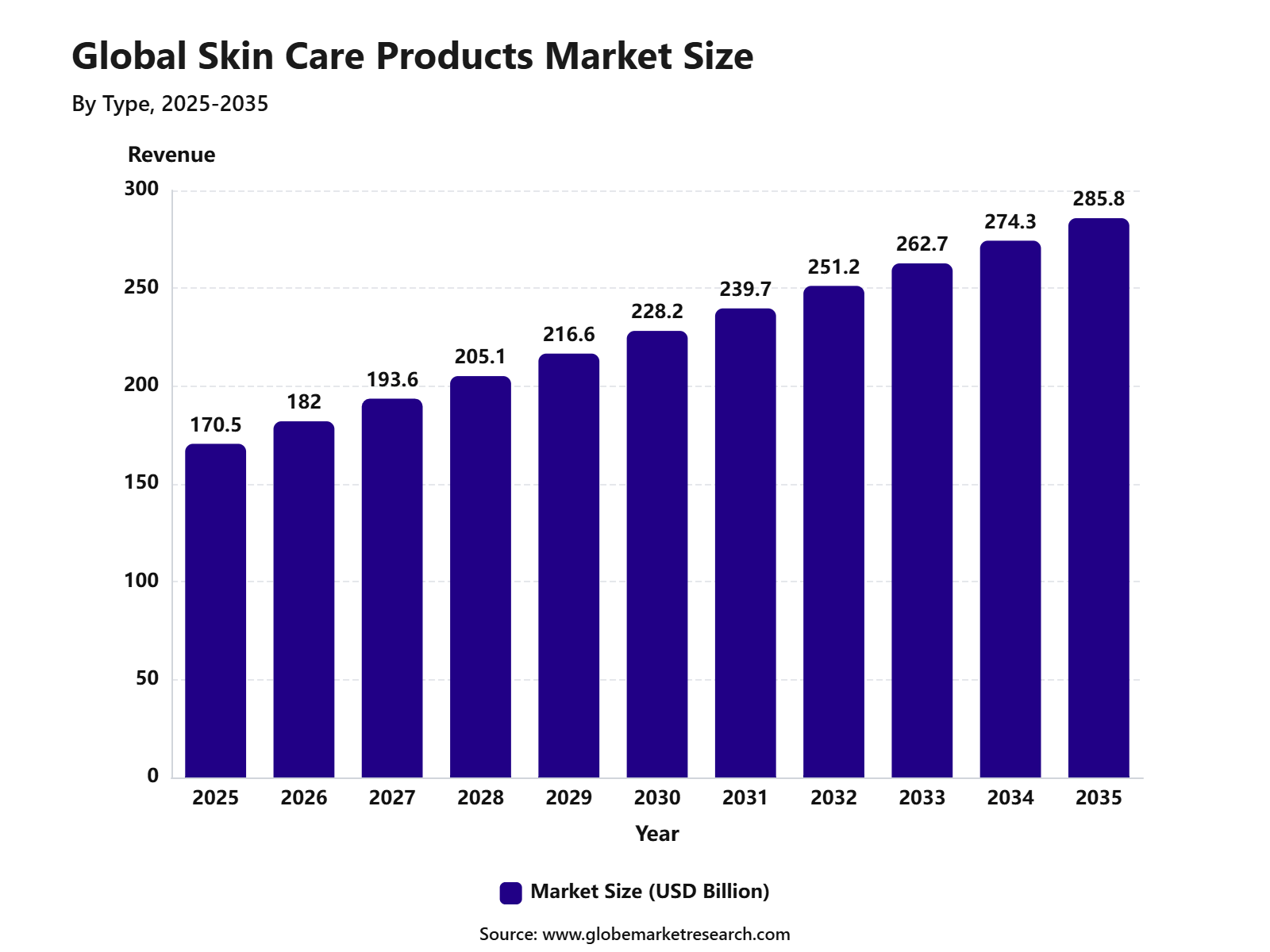
Market Revenue, 2025 | USD 170.5 Billion |
Projected Revenue, 2035 | USD 285.8 Billion |
CAGR, 2025-2035 | 5.3% |
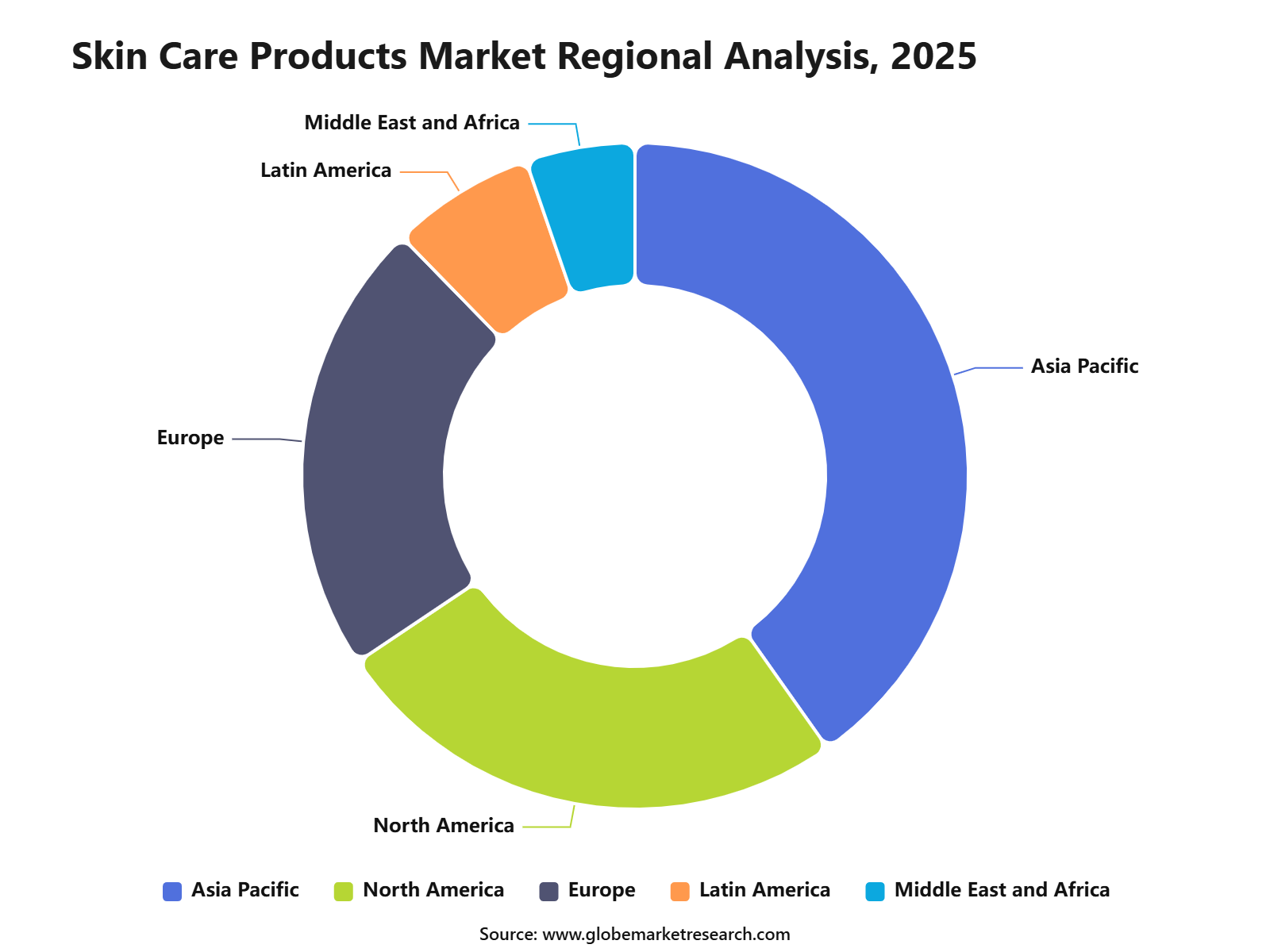
Largest Region | Asia Pacific, 40.2% Share |
Asia Pacific Revenue, 2025 | USD 68.5 Billion |
Market Concentration | Medium |
Base Year | 2025 |
Forecast Period | 2025-2035 |
Market Overview
According to Globe Market Research, The global skin care products market was valued at USD 170.5 billion in 2025 and is projected to reach USD 285.8 billion by 2035, growing at a 5.3% CAGR. Asia Pacific led the market with 40.2% share in 2025, valued at around USD 68.5 billion, supported by strong beauty routines, large consumer populations, rising income levels, and high demand across China, India, Japan, South Korea, and Southeast Asia.
Skin care products include facial care, body care, lip care, moisturizers, cleansers, sunscreens, face masks, serums, body lotions, shaving creams, and treatment-based products. Demand is being supported by rising consumer focus on daily skin health, anti-aging care, hydration, sun protection, pollution protection, acne care, pigmentation control, and dermatologist-tested formulations.
The wider beauty industry is also supporting category expansion. Global beauty sales grew 10% year over year in 2026, while e-commerce grew six times faster than in-store sales. This shows that skin care brands need both strong retail visibility and stronger digital discovery across marketplaces, social platforms, product reviews, and creator-led education.
Why Is the Skin Care Products Market Growing?
The growth of the skin care products market can be attributed to rising awareness of preventive skin care. Consumers are using moisturizers, cleansers, sunscreens, serums, and anti-aging products more regularly as daily routines become more structured. Rising consumer focus on skin health has an estimated positive impact of +1.5%, while anti-aging product demand adds +1.2%.
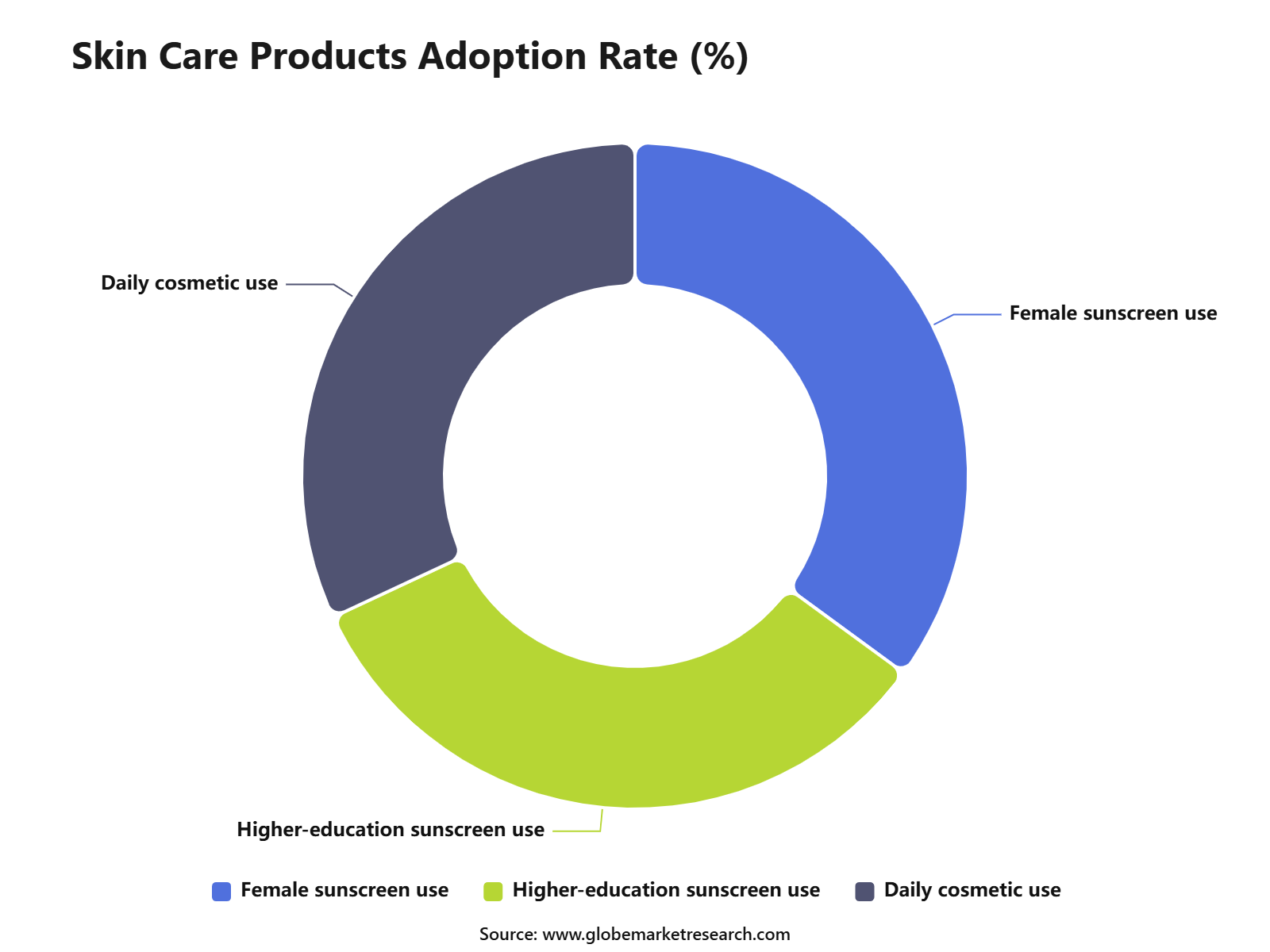
Sun protection is another strong driver. Increasing adoption of sun protection products has an estimated positive impact of +1.0%, supported by wider awareness of UV exposure and skin damage. Skin cancer remains the most common form of cancer in the United States, which strengthens long-term demand for sunscreen and preventive skin care products.
Digital beauty is also changing how consumers discover and buy products. In 2025, 41% of U.S. beauty and personal care sales were driven by e-commerce, while social commerce influenced 68% of global beauty purchases. This is making reviews, ingredient education, short videos, dermatologist content, and marketplace search visibility critical for customer acquisition.
Facial Care Leads the Type Segment
Facial care led the type segment with 84.7% share in 2025. The segment is supported by daily use of cleansers, moisturizers, toners, serums, sunscreens, face masks, and anti-aging products. Facial care remains the highest-priority category because consumers actively manage dryness, acne, dullness, pigmentation, sensitivity, and signs of aging.
The leadership of facial care is also linked with multi-step routines. Consumers are increasingly using separate products for cleansing, hydration, treatment, barrier repair, and sun protection. This creates higher repeat demand compared with many occasional-use beauty categories.
Facial care brands are gaining stronger traction when they explain product fit clearly. Skin type, ingredient suitability, visible results, fragrance sensitivity, non-comedogenic claims, and dermatologist-backed positioning are becoming important purchase factors.
Tubes Remain the Leading Packaging Format
Tubes accounted for 37.8% share by packaging in 2025. Tube packaging is widely used for face creams, moisturizers, sunscreens, gels, cleansers, and lotions because it is portable, easy to use, hygienic, and supports controlled dispensing.
The segment benefits from both mass and premium skin care demand. Tubes are lightweight, shelf-friendly, cost-effective, and suitable for travel sizes, trial packs, refill packs, and daily-use products. This makes them practical for consumers and efficient for manufacturers.
Packaging choice is becoming more strategic as sustainability pressure rises. The report identifies sustainability pressure on packaging as a challenge with an estimated impact of -0.5%, especially across Europe and North America. Brands must balance convenience, cost, shelf appeal, recyclability, and product protection.
Face Creams and Moisturizers Lead by Product
Face creams and moisturizers held the largest product share at 42.3% in 2025. Their leadership is supported by daily hydration needs, skin barrier repair, dryness prevention, anti-aging care, and broad use across dry, oily, sensitive, combination, and normal skin types.
Moisturizers are repeat-purchase products because they are used regularly in morning and evening routines. Demand is growing for lightweight hydration, ceramide-based barrier care, hyaluronic acid formulas, niacinamide products, peptide creams, and moisturizers that combine hydration with SPF or anti-aging benefits.
This product segment also gives brands strong cross-selling opportunities. A consumer who trusts one moisturizer is more likely to try matching cleansers, serums, sunscreens, eye creams, masks, and night treatments from the same product line.
Supermarkets and Hypermarkets Lead Distribution
Supermarkets and hypermarkets captured 45.3% share by distribution channel in 2025. These stores remain important because they provide wide product availability, competitive pricing, easy comparison, and strong consumer footfall.
The channel is especially strong for mass skin care products, daily-use moisturizers, cleansers, sunscreens, body lotions, and affordable treatment products. Consumers often prefer physical stores when they want to compare pack sizes, labels, ingredients, fragrance claims, and prices before purchase.
However, online channels are becoming more influential in the buying journey. Beauty e-commerce is expanding faster than physical retail, and social platforms are shaping product discovery before consumers buy online or offline. Brands must therefore manage both shelf placement and digital visibility together.
Female Consumers Represent the Leading End-User Group
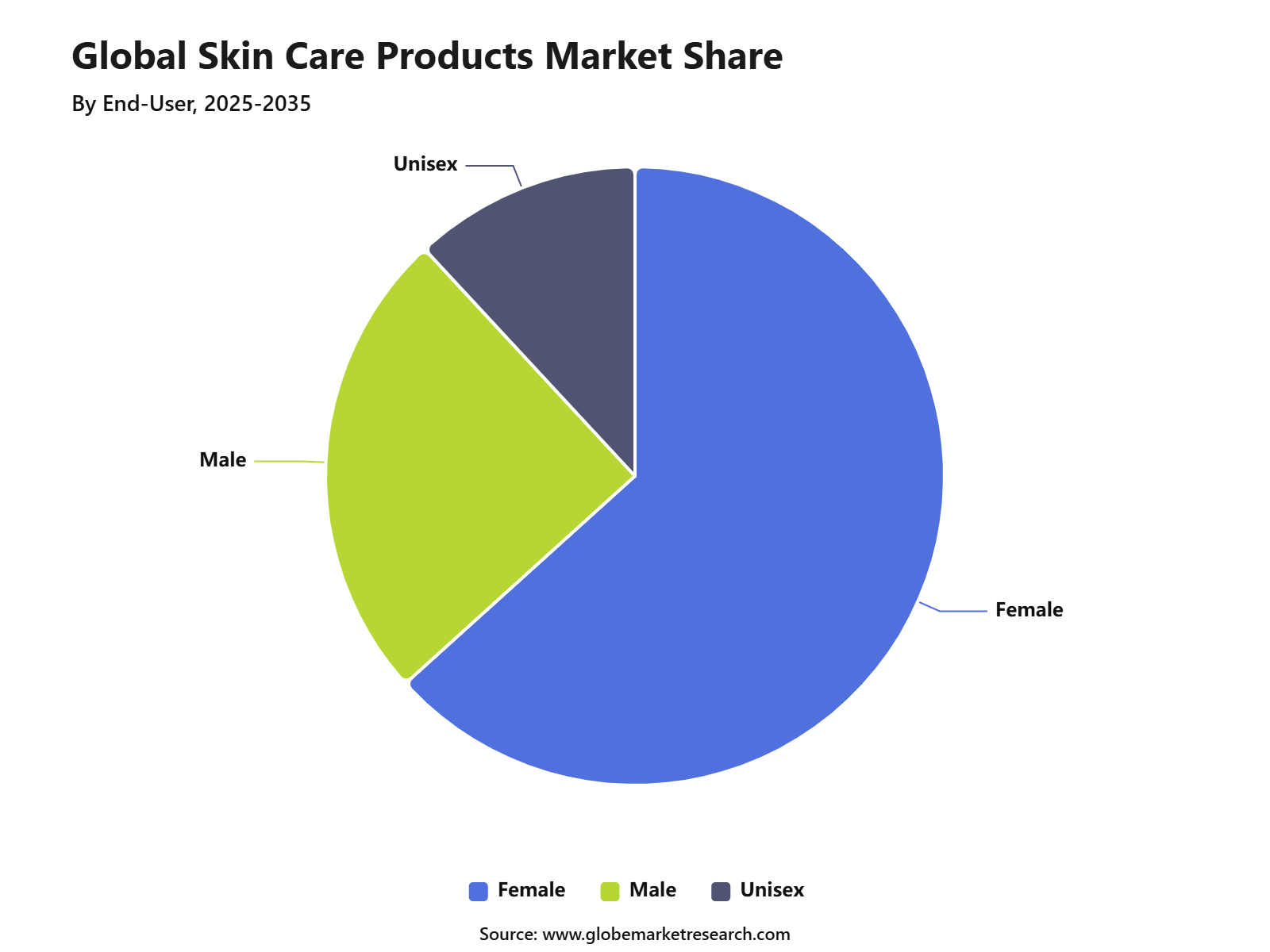
Female consumers held the leading end-user share at 63.3% in 2025. This leadership is supported by higher product usage frequency and broader adoption across cleansers, moisturizers, sunscreens, serums, exfoliators, masks, eye creams, and anti-aging products.
The segment is also supported by beauty education, social media influence, professional skin advice, and higher awareness of preventive skin care. Women are more likely to compare products based on skin type, ingredients, reviews, visible results, and brand credibility.
Men’s skin care is also emerging as a strong opportunity. Expansion of men’s skin care has an estimated positive impact of +1.1%, especially in the U.S., Europe, China, and India. This creates opportunity for moisturizers, cleansers, sunscreen, shaving care, acne care, and simple routine-based products for male consumers.
Mass Skin Care Products Dominate the Category Segment
Mass skin care products dominated the category segment with 69.6% share in 2025. The segment is supported by affordability, broad retail availability, high household usage, and strong demand from price-sensitive consumers.
Mass products are no longer limited to basic care. Many affordable brands now offer hydration, acne care, barrier repair, brightening, anti-aging, and sensitive-skin formulas with clearer ingredient communication. This is helping mass brands compete with premium products in daily-use categories.
Premium skin care still has growth potential, especially in anti-aging, dermatology-backed products, clean-label formulas, luxury beauty, and personalized routines. However, premium brands must prove visible benefits because high product prices remain a restraint with an estimated impact of -0.8%.
Chemical-Based Ingredients Hold the Largest Share
Chemical-based ingredients accounted for 62.5% share in 2025. These ingredients are widely used in moisturizers, sunscreens, acne products, exfoliants, anti-aging creams, pigmentation products, and dermatologist-tested formulas.
Key active ingredients such as niacinamide, retinol, salicylic acid, glycolic acid, hyaluronic acid, peptides, and chemical UV filters are used because they target specific concerns. Consumers increasingly want products that support hydration, oil control, wrinkle care, texture improvement, pigmentation reduction, and sun protection.
Natural and clean-label products are also gaining demand. Rising demand for natural and clean-label products has an estimated positive impact of +0.9%, while natural and clean-label opportunities add +1.1% in investment impact. This shows that performance and ingredient trust are both important in product positioning.
Asia Pacific Leads the Skin Care Products Market
Asia Pacific held the largest regional share at 40.2% in 2025, supported by strong beauty culture, high product consumption, rising incomes, and demand for facial care, sunscreen, brightening products, moisturizers, and anti-aging solutions.
The region is strongly influenced by K-beauty, J-beauty, local beauty rituals, ingredient-led product innovation, and social media-driven product discovery. Consumers in China, India, Japan, South Korea, Indonesia, Vietnam, and Thailand are increasingly learning about skin types, active ingredients, and structured routines through digital channels.
North America and Europe remain important markets for dermatology-backed products, anti-aging care, sunscreen, sensitive-skin products, and clean-label formulations. Emerging markets such as India, Brazil, Indonesia, and parts of Africa also offer volume growth, with rising demand in emerging economies adding an estimated +0.8% opportunity impact.
Analyst Perspective
What Opportunities Are Emerging?
The biggest opportunity is in routine-based facial care. Moisturizers, cleansers, sunscreens, serums, and barrier-repair products are well positioned because consumers use them frequently and expect visible results.
Personalized skin care and dermatologist-backed products are also emerging as strong opportunities. These products can reduce confusion and improve product matching for acne, sensitivity, dryness, aging, pigmentation, and sun protection.
Men’s skin care and emerging markets should also be watched. Rising grooming adoption in the U.S., Europe, China, and India creates new demand, while Asia Pacific and other emerging markets support volume-led growth.
What Risks Should Companies Be Aware Of?
The main risk is product trust failure. If products cause irritation, do not match claims, or fail to show visible results, repeat purchases can decline quickly.
Regulatory risk is also increasing. MoCRA requirements, product listing, adverse event reporting, and stronger claim review can raise compliance costs, especially for smaller brands.
Price pressure should also be managed carefully. Mass brands are improving ingredient quality, which creates stronger competition for premium products. Premium brands must prove why their products deserve a higher price.
What Decisions Should Clients Make Next?
Clients should first decide which routine they want to own: hydration, sun protection, anti-aging, acne care, barrier repair, pigmentation care, men’s grooming, or clean-label skin care. This choice should guide product development, claims, pricing, and channel strategy.
Second, brands should strengthen proof-based marketing. Dermatology testing, ingredient education, usage guidance, product order, safety claims, and real consumer reviews should be presented clearly.
Finally, clients should balance offline and online distribution. Supermarkets and hypermarkets remain important, but e-commerce and social commerce are shaping product discovery. Winning brands will connect retail availability with digital education and trusted product content.
Recent Developments
In May 2026, Olay, owned by Procter & Gamble, expanded its skin longevity positioning through its "Skinsurance" campaign. The brand promoted its Super Collection as a long-term skin care investment focused on wrinkles, dryness, dullness, elasticity, and uneven tone.
In March 2026, Estée Lauder Companies agreed to acquire full ownership of Forest Essentials, an Indian luxury Ayurvedic skincare brand. The company had first invested in the brand in 2008 and increased its stake to 49% in 2020, and the deal is expected to close in the second half of 2026.
In March 2026, Beiersdorf committed EUR 100 million to its second-generation Skin Care Innovation Fund. The fund will support investments and strategic partnerships in life sciences, sustainability, AI, and digital health linked to skin care innovation.
Competitive Landscape
The skin care products market is highly competitive, with global beauty companies, personal care firms, dermatology-backed brands, mass retail brands, premium skin care companies, and emerging clean-label players competing across products, pricing, claims, and distribution. Key companies include:
L’Oreal S.A.
Colgate-Palmolive Company
Procter & Gamble
Unilever
Coty Inc.
Shiseido Co. Ltd
Avon Products Inc.
Revlon
Beiersdorf AG
Johnson & Johnson Inc.
Other Key Players
Competition is expected to increase as brands expand active ingredients, dermatologist-backed ranges, men’s skin care, sunscreen, clean-label products, and personalized routines. Companies with stronger claim support, product safety systems, digital education, and retail availability are likely to perform better.
The strongest providers will be those that combine product performance with trust. In this market, consumers are not buying only beauty claims. They are buying skin comfort, visible results, safety, routine fit, and long-term confidence.
Conclusion
The skin care products market is entering a steady growth phase supported by facial care, moisturizers, sunscreens, clean-label products, digital beauty, mass skin care, and Asia Pacific demand. Growth is being driven by daily skin health routines, anti-aging demand, sun protection, ingredient awareness, and stronger e-commerce access.
Future growth will be led by face creams and moisturizers, cleansers, sunscreens, dermatologist-backed products, personalized skin care, men’s grooming, natural formulations, and online beauty channels. Brands that combine clear claims, affordable value, product safety, and visible performance will be better positioned in this market.
Get Category Wise Our Trending Reports Here: https://www.globemarketresearch.com/industry/consumer-goods