Market Size and Growth
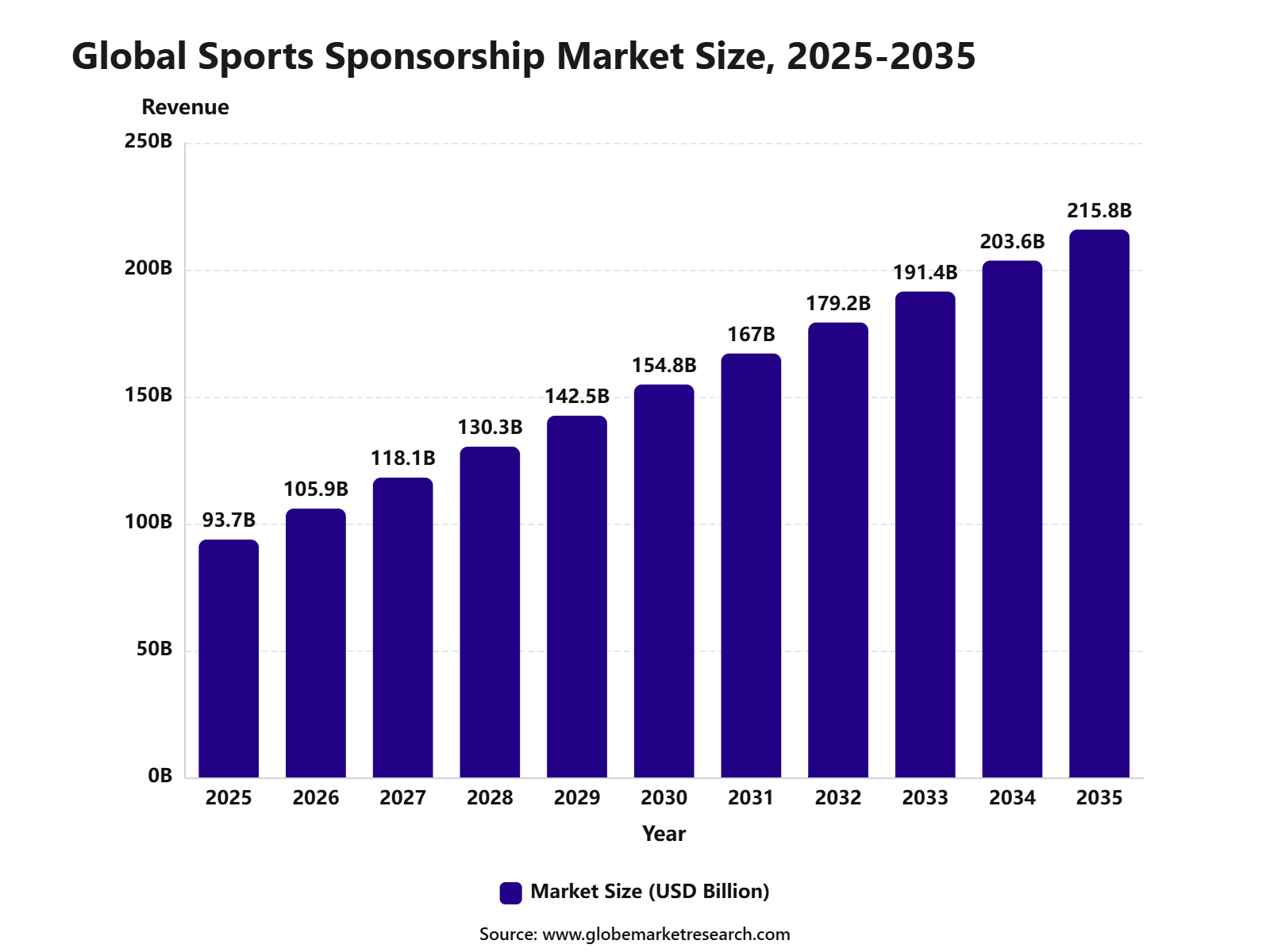
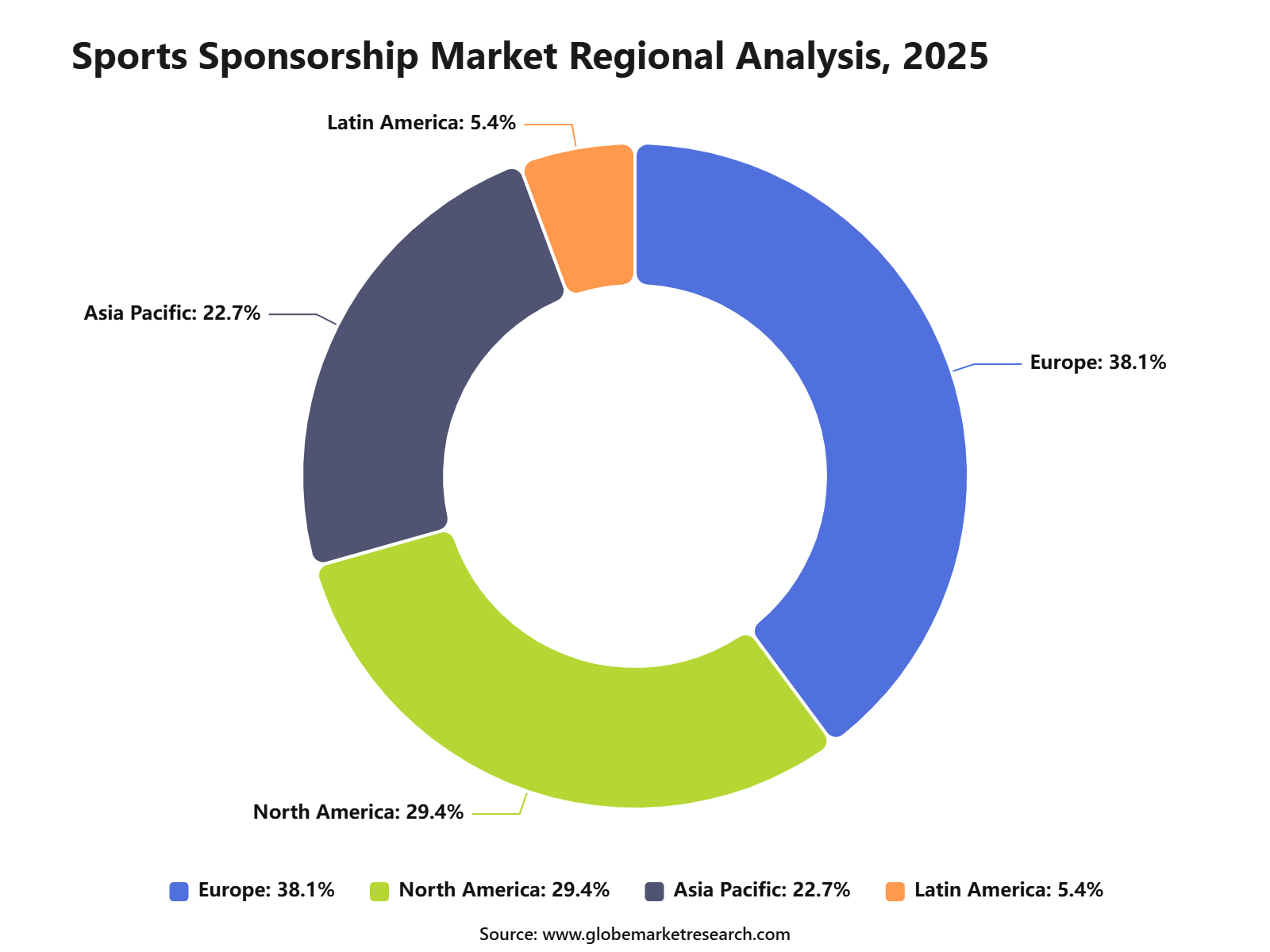
According to industry analysis from Globe Market Research, the global Sports Sponsorship Market was valued at USD 93.7 billion in 2025 and is projected to reach USD 215.8 billion by 2035, growing at a CAGR of 8.7% from 2025 to 2035. Europe held the largest regional share of 38.1% in 2025. The market includes commercial partnerships involving teams, clubs, athletes, sporting events, leagues, competitions and venues.
Key Parameter | Report Details |
|---|---|
Market Revenue, 2025 | USD 93.7 Billion |
Projected Revenue, 2035 | USD 215.8 Billion |
CAGR, 2025-2035 | 8.7% |
Largest Region | Europe, 38.1% Share |
Market Concentration | Medium |
Base Year | 2025 |
Forecast Period | 2025-2035 |
The expansion of the market is being supported by rising sports viewership, increasing brand investment in live entertainment, growing digital media consumption and the commercial development of women’s sports. Sponsorship arrangements are also moving beyond jersey logos and stadium boards toward digital content, fan data, technology services, retail campaigns and measurable customer engagement.
Key Market Drivers
Large and loyal global audiences: Around 51% of people worldwide identify as football fans. Major international tournaments provide sponsors with access to audiences across several countries, languages and demographic groups.
Growth of women’s sports: The WNBA fan base increased by more than 31% within two years. In the United States, approximately 46 billion minutes of women’s sports content were consumed during 2025, demonstrating stronger commercial potential for league, team and athlete partnerships.
Expansion of sports streaming: The number of sports fans aged 50 and above using streaming platforms increased by 21% within two years. Streaming is expanding the available audience beyond traditional television and creating more digital sponsorship inventory.
Higher sponsor preference among fans: In India, 61.1% of cricket fans preferred brands that sponsored the sport, compared with 56.7% of the general population. In the UAE, the corresponding figures were 69% among cricket fans and 60.6% across the overall population.
Rising value of international competitions: Global tournaments provide brands with extensive broadcast coverage, digital reach, hospitality opportunities and access to several national markets through a single agreement.
Demand for authentic marketing: Athlete stories, behind-the-scenes content, community initiatives and creator-led campaigns are helping brands build stronger connections than conventional advertising alone.
Market Segmentation
By sponsorship type: Team and club sponsorship accounted for the leading 43.4% share in 2025. Season-long visibility, jersey placement, stadium exposure, digital content and access to loyal fan communities support this segment. Athlete, event and venue sponsorships provide more focused alternatives based on campaign objectives.
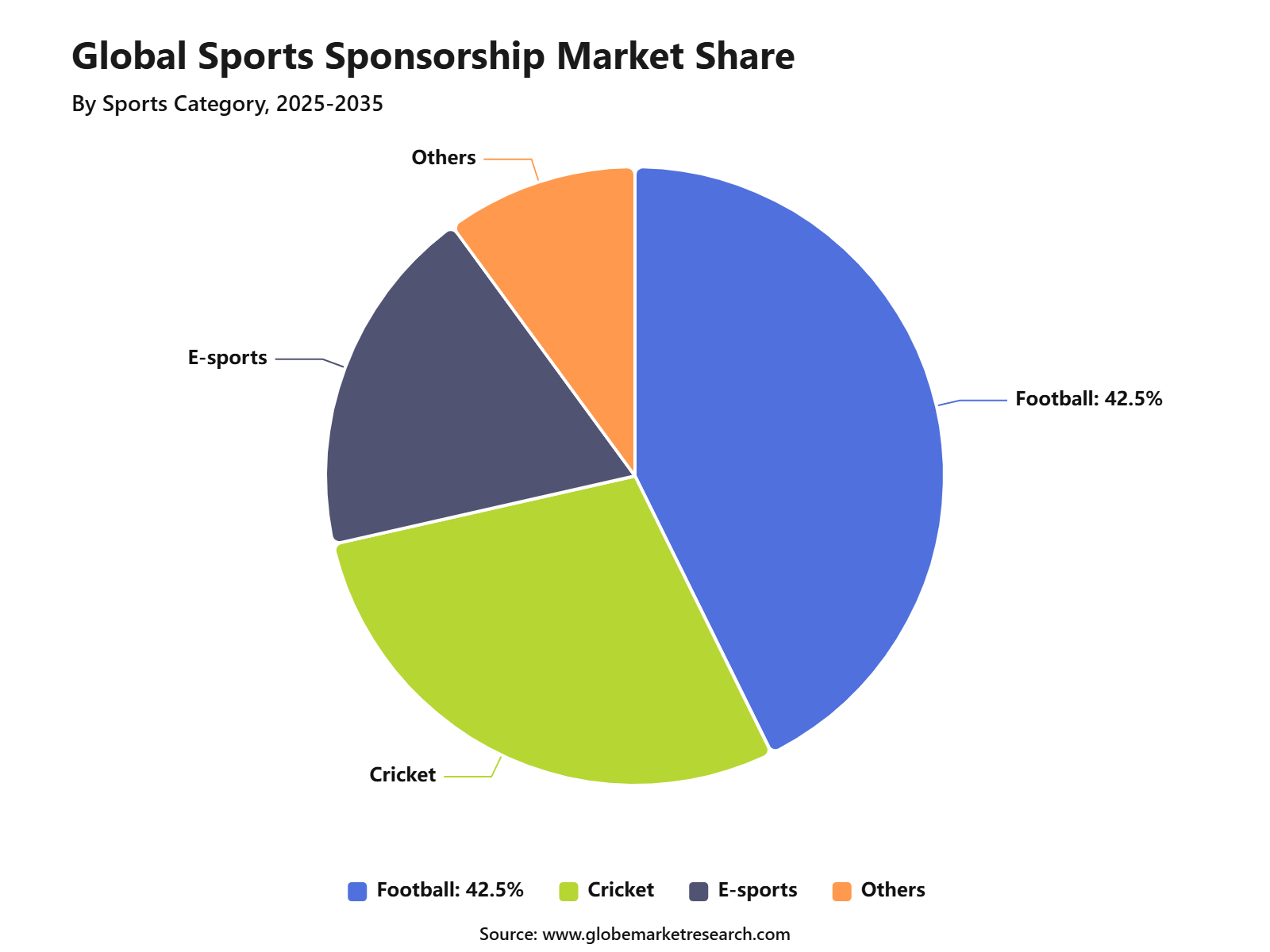
By sports category: Football represented 42.5% of the market in 2025. Its position is supported by global participation, major professional leagues, international tournaments and extensive media coverage. Cricket remains especially important across India, Australia, the UK, Pakistan, Bangladesh and the Middle East, while esports is attracting younger digital audiences.
By event type: International events held a 47.7% share in 2025. These events offer cross-border exposure and large broadcast audiences. League sponsorship provides continuous visibility throughout a season, while domestic events can deliver stronger regional relevance at a lower entry cost.
By application: Competition sponsorship accounted for 72.3% of the market in 2025. This category includes tournament partnerships, naming rights, match sponsorships, digital integrations and live-event branding. Training sponsorship includes equipment, apparel, performance technology, nutrition and athlete preparation services.
Technology and Adoption Trends
Integrated fan platforms: Teams and leagues are combining ticketing, streaming, merchandise, memberships, loyalty rewards and exclusive content within unified digital platforms. These systems reduce customer friction and provide first-party audience data to rights holders and sponsors.
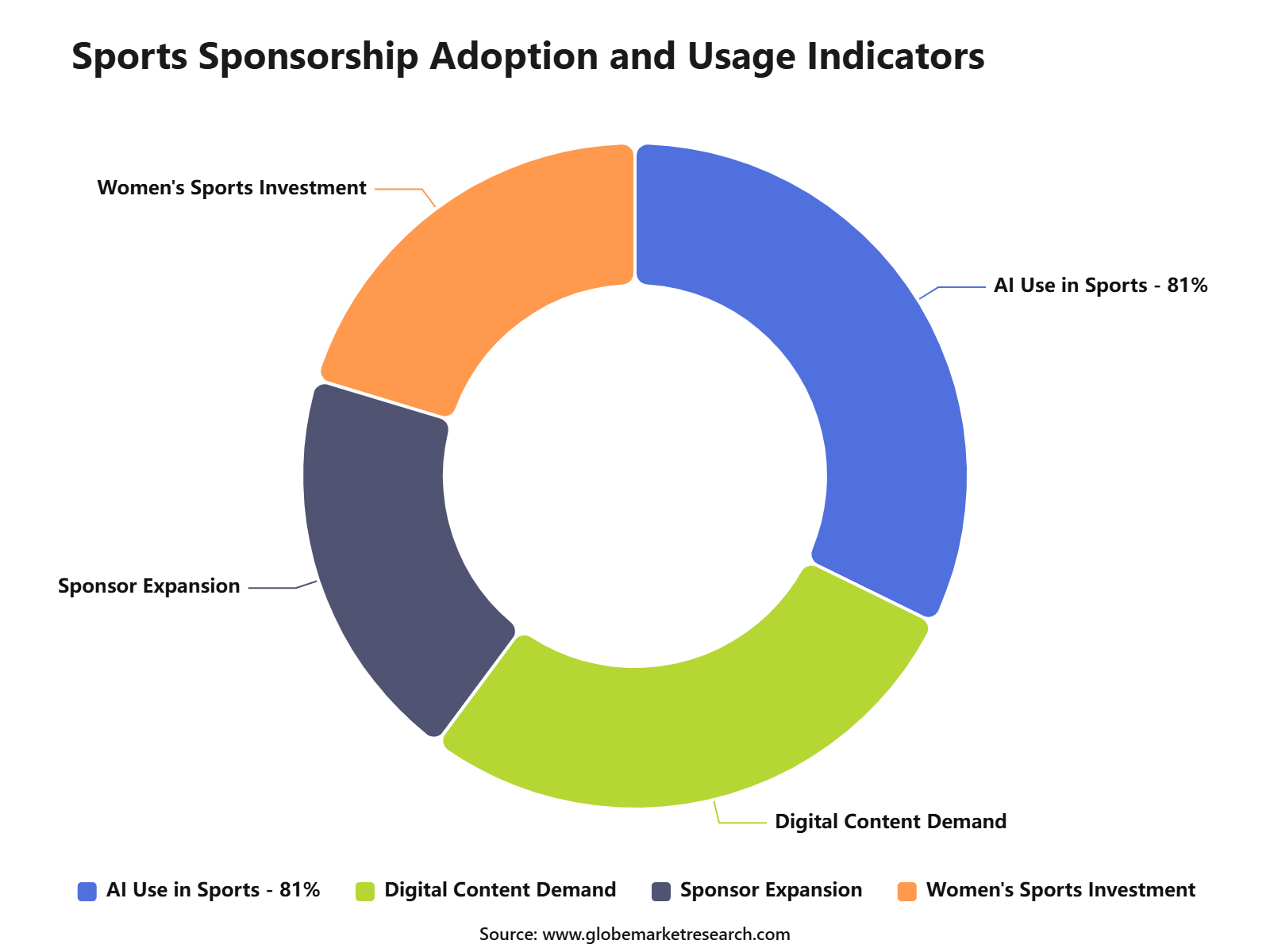
AI-based personalization: Artificial intelligence is being used to create personalized highlights, recommend content, deliver targeted offers and predict attendance or purchasing behaviour. This allows sponsors to reach relevant fan groups instead of relying only on broad exposure.
Advanced sports analytics: Sponsorships increasingly include real-time statistics, player tracking and interactive broadcast features. The WNBA and AWS partnership, for example, includes an AI-powered statistics platform that converts player-tracking information into fan-facing insights.
Connected venues: High-speed wireless networks, cashless payments, mobile ordering, digital ticketing and interactive screens are improving the stadium experience. Technology companies are increasingly acting as both sponsors and operating partners.
Social and creator-led activation: Short-form video, athlete-generated content, livestreams and influencer partnerships are extending sponsorship exposure beyond match schedules. Athletes are increasingly being treated as independent media channels.
Measurable sponsorship performance: Campaign evaluation is shifting from logo exposure toward website visits, app downloads, customer acquisition, social engagement, product sales, retail traffic and long-term brand preference.
Regional Breakdown & Supply Chain
Europe: Europe led the market with a 38.1% share in 2025. The region benefits from leading football leagues, established club structures, high-value media rights and frequent international competitions. Regulatory changes are influencing sponsor categories. Premier League clubs, for example, agreed to remove gambling brands from the front of matchday shirts from the end of the 2025/26 season.
North America: The United States and Canada have well-developed sponsorship systems across American football, basketball, baseball, ice hockey, soccer, golf and motorsports. Naming rights, hospitality, data partnerships and direct-to-consumer streaming are important revenue sources.
Asia Pacific: Growth is being supported by cricket in India, Australia and South Asia, football audiences across East and Southeast Asia, esports participation and increasing investment in domestic leagues. India offers strong potential because cricket fans demonstrate high sponsor awareness and preference.
Latin America: Football remains the primary sponsorship platform, supported by national leagues, continental competitions and strong fan loyalty. Opportunities are also expanding in motorsports, basketball, volleyball and athlete endorsement campaigns.
Middle East and Africa: Investment is increasing across football, motorsports, golf, combat sports and esports. In May 2026, PIF was named an official FIFA World Cup 2026 tournament supporter for North America and Asia, including participation from Savvy Games Group and Qiddiya City.
Sponsorship supply chain: The market connects sports federations, leagues, teams, athletes and venue owners with sponsors, agencies, broadcasters, streaming platforms, technology providers and measurement companies. Rights agencies package and sell assets, media companies distribute content, activation partners execute campaigns, and analytics providers measure commercial performance.
Future Outlook 2026–2035
From 2026 to 2035, sponsorship value is expected to become increasingly dependent on measurable fan interaction rather than passive brand visibility. Rights packages will include data access, digital content, streaming integration, technology deployment, retail campaigns, hospitality and direct purchasing opportunities. Mega-events such as the expanded 48-team FIFA World Cup 2026 are demonstrating how global and regional sponsorship packages can be structured for different sponsor budgets and geographic priorities.
Women’s sports, esports, athlete-led content and emerging regional leagues are expected to attract a greater share of brand budgets. Technology businesses will also become more active as sponsorship partners because cloud infrastructure, AI, cybersecurity, connectivity and data management are now essential to sports operations and fan engagement.
Key Opportunities
Women’s leagues and athletes: Stronger viewership and improved media distribution are creating new opportunities in basketball, football, cricket, tennis and combat sports.
Emerging sports markets: India, Southeast Asia, the Middle East, Africa and Latin America provide opportunities for brands seeking large and increasingly connected fan populations.
Digital sponsorship packages: Streaming integrations, virtual signage, branded statistics, sponsored highlights and interactive fan experiences offer lower-cost alternatives to major title sponsorships.
Athlete and creator partnerships: Brands can use athlete-owned channels to reach focused communities through training content, personal stories, product demonstrations and live interaction.
Technology partnerships: Cloud, AI, data analytics, cybersecurity, payment and connectivity companies can demonstrate their capabilities within real sporting environments.
Grassroots and community programmes: Youth participation, education, health and local sports initiatives can improve brand trust while supporting long-term fan development.
Direct commerce integration: Shoppable video, mobile offers, loyalty programmes and event-linked retail promotions can connect sponsorship activity with measurable sales.
Challenges and Restraints
High cost of premium rights: Major leagues, clubs and international events can require substantial rights fees and additional activation spending.
Difficult ROI attribution: Sales changes may be influenced by several marketing channels, making it difficult to separate the direct effect of sponsorship.
Fragmented media rights: Fans increasingly consume sports across television, streaming services, social platforms and team-owned channels, which can complicate campaign planning.
Brand safety concerns: Athlete conduct, team performance, governance disputes and controversial events may affect the reputation of associated sponsors.
Regulatory restrictions: Gambling, alcohol and certain financial service sponsors face different advertising and sponsorship rules across countries and sports.
Data privacy requirements: Personalized campaigns require responsible collection, management and use of fan information.
Economic pressure: Marketing budgets and contract renewals can be reduced during periods of weak business confidence or lower consumer spending.
Sponsorship clutter: Too many commercial partners around one property can reduce brand recognition and create category confusion.
Key Players
Competition in the Sports Sponsorship Market involves major consumer brands, sportswear companies, technology businesses, financial service providers and personal care companies. Their strategies commonly include long-term league agreements, athlete endorsements, event sponsorship, product supply, fan activations and digital content partnerships. Technology companies such as AWS, Google and Meta are also gaining importance by combining sponsorship rights with operational services and fan-facing technology.
Prominent Global Market Leaders
L’Oréal SA
The Estée Lauder Companies
Unilever
Procter & Gamble
Adidas AG
Nike Inc.
Puma SE
The Coca-Cola Company
PepsiCo
Visa Inc.
Amazon Web Services
Google
Meta Platforms
Other regional and international sponsors
The identified sponsor groups reflect the broad competitive structure of the market, which includes apparel, beverages, personal care, consumer goods, payments and technology companies.
Strategic Implications
Brands should evaluate sponsorship opportunities according to audience relevance, geographic coverage, fan behaviour and measurable commercial outcomes. Rights fees should not be assessed separately from activation costs, content production, hospitality, media support and performance measurement. A lower-cost property with strong audience alignment may generate better results than a premium global agreement with limited activation.
Rights holders should build flexible packages that combine physical assets with digital content, fan data, athlete access and year-round engagement. Smaller brands can be attracted through regional rights, category-specific packages and individual content assets. Clear reporting standards will become increasingly important as sponsors require evidence of sales impact, customer acquisition and audience quality.
Recent Developments
In June 2026, UFC and Meta introduced Meta UFC Rankings. The initiative expanded their technology partnership and followed the January 2026 naming-rights agreement that renamed UFC’s Las Vegas venue as Meta APEX.
In May 2026, the WNBA and AWS announced a multi-year partnership. AWS became the league’s official cloud and cloud AI partner and introduced an advanced statistics platform using real-time player tracking and AI-based metrics.
In May 2026, PIF became an official FIFA World Cup 2026 tournament supporter across North America and Asia. The agreement includes Savvy Games Group and Qiddiya City and covers fan engagement initiatives during the competition.
In April 2026, Procter & Gamble entered a multi-year, multi-brand partnership with the WNBA. Olay, Secret, Tampax, Downy, Gillette Venus and Tide were included in planned marketing, retail and digital activations.
Conclusion
The Sports Sponsorship Market is developing into a more measurable, technology-supported and audience-focused commercial ecosystem. Strong sports viewership, digital distribution, global tournaments and growing investment in women’s sports are increasing the number and value of sponsorship opportunities. Future growth will depend on the ability of sponsors and rights holders to create meaningful fan experiences rather than relying only on brand visibility. Partnerships that combine content, technology, data, community involvement and direct commerce are expected to generate the strongest long-term value through 2035.
Source of information - https://www.globemarketresearch.com/reports/sports-technology-market