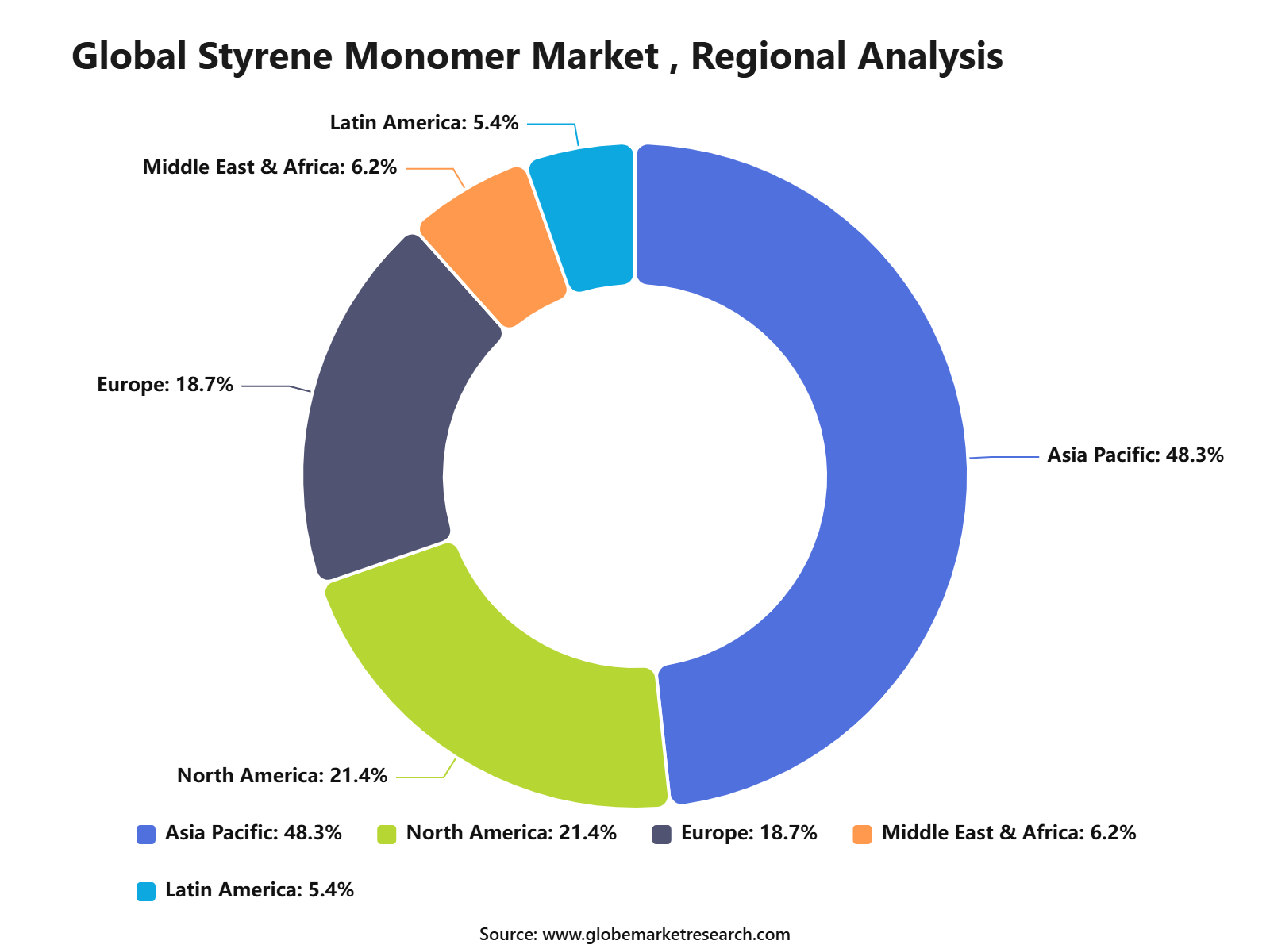
Asia Pacific accounted for 48.3% of the global market in 2025 as packaging, construction, automotive, electronics, and polymer manufacturing demand continued to expand.
July, 2026: The global styrene monomer industry is entering a period of steady demand growth, regional capacity realignment, and increased investment in circular production technologies. Demand remains closely connected to polystyrene, expandable polystyrene, ABS, synthetic rubber, latex, resins, coatings, and other styrenic materials.
Market Size and Growth
Styrene monomer is a clear, volatile liquid chemical used as a basic building block for plastics, synthetic rubber, resins, coatings, insulation materials, automotive components, and packaging products. Commercial production mainly involves combining benzene and ethylene to produce ethylbenzene, followed by the catalytic dehydrogenation of ethylbenzene into styrene.
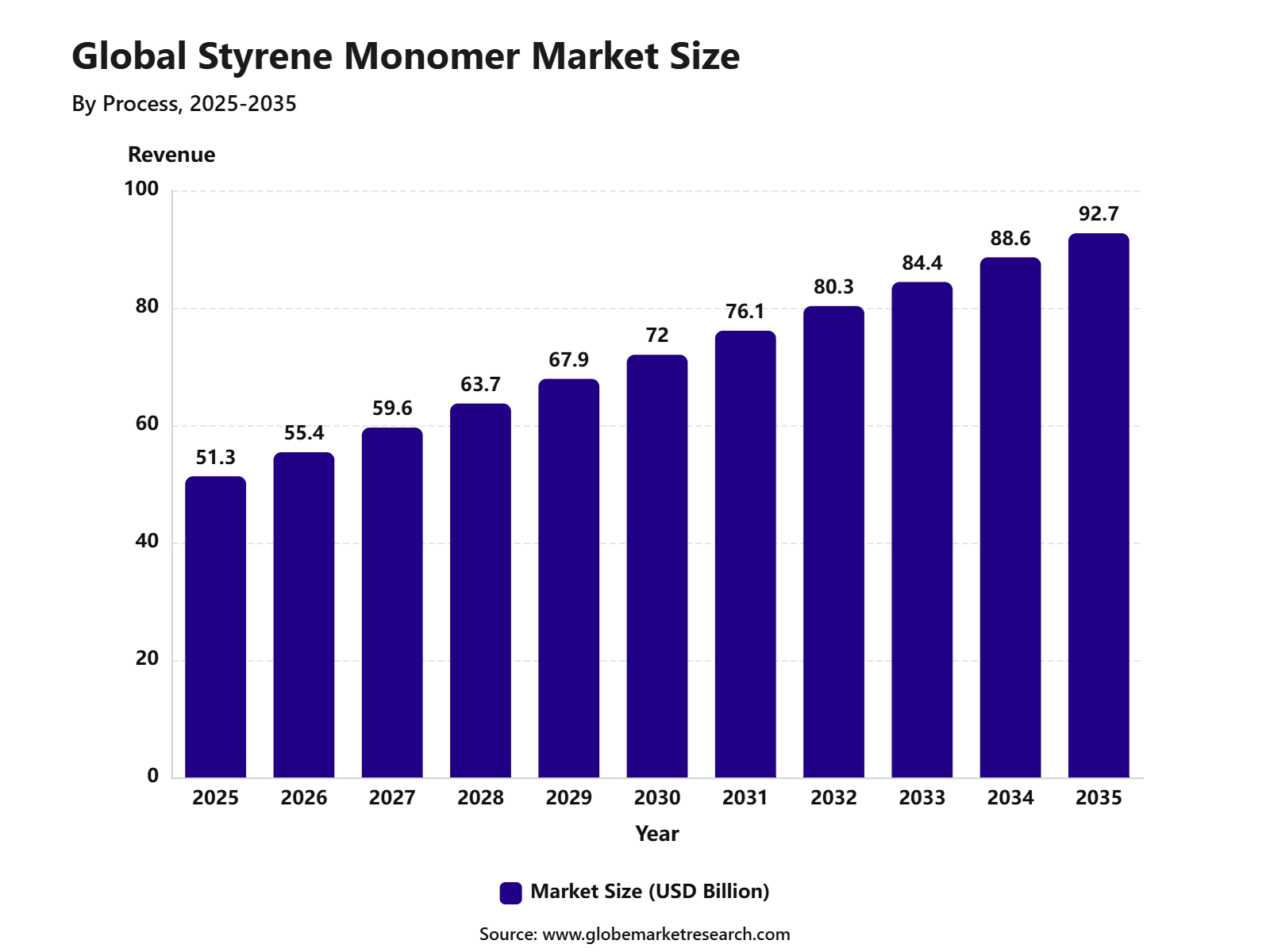
According to Globe Market Research, The Global Styrene Monomer Market was valued at USD 51.3 billion in 2025 and is projected to reach USD 92.7 billion by 2035, expanding at a CAGR of 6.1% during the forecast period. Asia Pacific accounted for 48.3% of global market revenue in 2025, reflecting the region’s concentration of chemical plants, plastics processors, packaging manufacturers, automotive suppliers, and electronics producers.
Key Parameter | Report Details |
|---|---|
Market Revenue, 2025 | USD 51.3 Billion |
Projected Revenue, 2035 | USD 92.7 Billion |
CAGR, 2025-2035 | 6.1% |
Largest Region | Asia Pacific, 48.3% Share |
Market Concentration | Medium |
Base Year | 2025 |
Forecast Period | 2025-2 |
Key Market Drivers
Strong demand for polystyrene: Styrene is the principal feedstock for general-purpose polystyrene, high-impact polystyrene, expandable polystyrene, and extruded polystyrene used in packaging, insulation, appliances, and consumer products.
Expansion of packaging production: Lightweight weight, moldability, thermal insulation, and competitive material costs support the use of styrenic materials in food containers, protective packaging, cold-chain boxes, trays, and appliance packaging.
Construction and insulation requirements: Expandable and extruded polystyrene are used in insulation boards, building envelopes, roofing systems, cold-storage facilities, and energy-efficient construction.
Automotive and tire manufacturing: ABS, styrene-butadiene rubber, and styrenic composites are used in vehicle interiors, dashboards, electrical housings, tires, seals, and other automotive components.
Growth of appliances and electronics: Styrenic polymers provide impact resistance, surface quality, rigidity, electrical insulation, and processing flexibility for appliances, electronics, office equipment, and device housings.
Market Segmentation
Process Insights
Ethylbenzene dehydrogenation led the process segment with a 90.2% share in 2025. Its dominance was supported by established commercial use, reliable large-scale production, integration with benzene and ethylene supply systems, and extensive operating experience across major chemical complexes. The process first converts benzene and ethylene into ethylbenzene. Ethylbenzene is subsequently dehydrogenated to produce styrene monomer. The established process structure allows producers to improve performance through catalyst development, heat recovery, steam optimization, and more efficient separation systems.
Application Insights
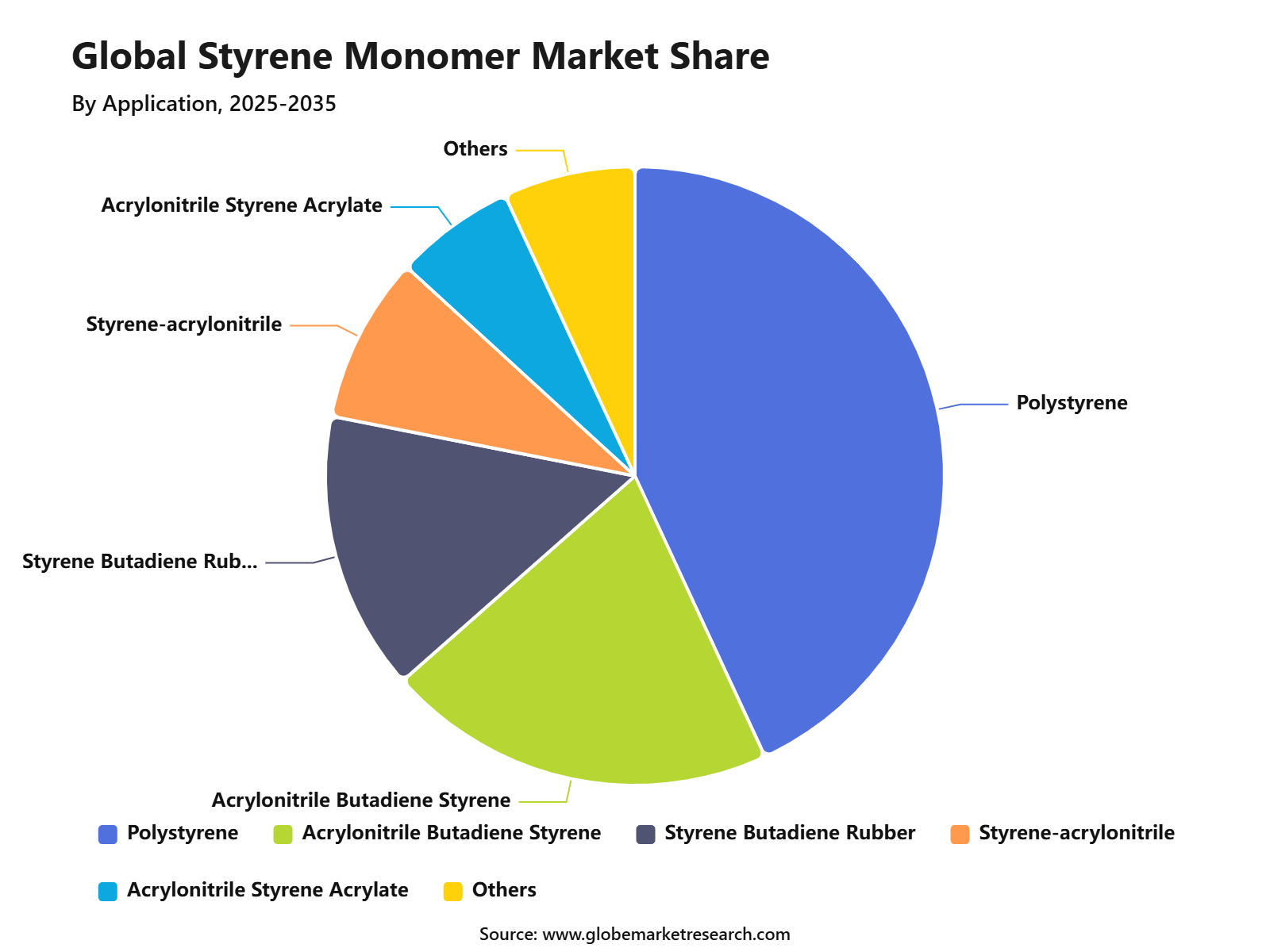
Polystyrene accounted for a 43.1% share in 2025, driven by strong demand in packaging, consumer goods, insulation materials, disposable products, household appliances, and industrial components. Styrene can be converted into general-purpose polystyrene, high-impact polystyrene, expandable polystyrene, and extruded polystyrene. This product flexibility allows the material to serve both high-volume packaging applications and more durable uses in construction and appliances.
End-Use Insights
Packaging held a 28.3% share in 2025, supported by rising demand for lightweight, durable, thermally insulating, and cost-effective materials. Key uses include food-service containers, protective packaging, trays, appliance packaging, pharmaceutical packaging, and temperature-controlled transportation. Packaging regulations are also changing product-development priorities. The European Union’s Packaging and Packaging Waste Regulation entered into force on February 11, 2025, and is scheduled to apply from August 12, 2026. It is expected to increase attention on packaging minimization, recyclability, reuse, and recycled material integration.
Regional Insights
Asia Pacific led the styrene monomer market with a 48.3% share in 2025. Regional leadership was supported by large petrochemical plants, high polymer consumption, growing packaging requirements, and extensive automotive, appliance, electronics, and consumer-goods manufacturing. Continued capacity development in Asia is also changing global trade flows. LyondellBasell and Covestro cited global overcapacity, increased imports from Asia, and high European production costs when announcing the closure of their Maasvlakte propylene oxide and styrene monomer unit in March 2025.
Regional Breakdown
North America: Demand is supported by established styrene and polystyrene production, construction insulation, packaging, automotive manufacturing, synthetic rubber, coatings, and consumer products.
Europe: High energy costs, aging assets, weak industrial demand, regulatory changes, and growing competition from imported Asian material are encouraging plant rationalization and investment in circular styrenics.
Latin America: Market demand is connected to food packaging, household products, appliances, construction materials, automotive production, coatings, and regional plastics processing.
Middle East and Africa: Refinery-petrochemical integration, access to hydrocarbon feedstocks, infrastructure development, and export-oriented chemical investments provide long-term opportunities.
North American supply benefits from integrated producers such as Americas Styrenics, Chevron Phillips Chemical, LyondellBasell, and TotalEnergies. LyondellBasell’s Channelview South facility produces propylene oxide and styrene monomer, while Americas Styrenics describes itself as a major integrated styrene monomer and polystyrene producer in the Western Hemisphere
Styrene Monomer Supply Chain
Benzene and ethylene sourcing: Benzene and ethylene are combined to produce ethylbenzene, which is the principal raw material for conventional styrene production.
Ethylbenzene conversion: Ethylbenzene is converted into styrene through catalytic dehydrogenation. Styrene is also produced as a co-product in selected propylene oxide processes.
Storage and transportation: Styrene must be stabilized and handled under controlled conditions because it is flammable and can polymerize during storage or transportation.
Downstream polymer manufacturing: Styrene is supplied to manufacturers of polystyrene, EPS, ABS, SAN, styrene-butadiene rubber, latex, unsaturated polyester resins, and thermoplastic elastomers.
Recovery and circular supply: Collection, sorting, pretreatment, mechanical recycling, dissolution, and depolymerization are being integrated to return post-consumer polystyrene to the chemical supply chain.
Technology and Adoption Trends
Commercial recycled styrene monomer: In October 2025, Trinseo confirmed that it had started receiving chemically recycled styrene monomer from Indaver’s Antwerp facility. The plant began production in August 2025 using household polystyrene packaging waste.
Polystyrene depolymerization: Chemical recycling is being adopted to break post-consumer polystyrene into recovered styrene monomer, which can be used again in polystyrene, ABS, and SAN production.
Processing of contaminated polystyrene: Sulzer launched EcoStyrene in June 2025 to process polystyrene waste containing food residues, additives, flame retardants, and other contaminants that restrict mechanical recycling.
Biomass-based styrene supply: Idemitsu Kosan is developing a supply chain based on biomass naphtha for the production of biomass styrene monomer and other lower-fossil chemical feedstocks.
Certified mass-balance materials: ISCC PLUS and similar certification systems are being used to trace recycled or renewable feedstocks through chemical production and allocate their environmental attributes to finished styrenic materials.
Future Outlook, 2026-2035
Between 2026 and 2035, demand for styrene monomer is expected to remain supported by packaging, insulation, automotive components, tires, electrical appliances, electronics, coatings, and consumer products. Asia Pacific is expected to retain its leading position as new production capacity and downstream manufacturing continue to expand. However, growth in production capacity may exceed near-term demand in selected regions, placing pressure on plant utilization and margins.
Older and less-integrated assets may face increasing closure risk, particularly where energy, feedstock, environmental compliance, and logistics costs remain high. Circular styrene is expected to gain commercial importance as recycling infrastructure becomes available. Adoption will depend on the availability of sorted polystyrene waste, consistent feedstock quality, competitive processing costs, certification, regulatory recognition, and long-term purchasing agreements.
Key Opportunities
Recycled styrene monomer: Depolymerization offers an opportunity to recover styrene from post-consumer polystyrene and return it to packaging, ABS, and SAN production.
Biomass-derived feedstocks: Biomass naphtha can support the production of styrene with attributed renewable content through certified mass-balance systems.
Integrated Asian capacity: Producers with access to refineries, crackers, benzene, ethylene, ports, and downstream polymer units can obtain stronger cost and logistics advantages.
High-performance applications: Growth opportunities are emerging in electric vehicles, electronics, medical devices, energy-efficient buildings, appliances, and durable engineering components.
Long-term circular partnerships: Agreements among waste collectors, recyclers, styrene producers, polymer manufacturers, converters, and packaging companies can secure both waste supply and recycled material demand.
Challenges and Restraints
Global production overcapacity: Capacity additions and rising Asian exports can reduce operating rates and weaken market pricing in mature regions.
Feedstock price volatility: Production costs are influenced by changes in benzene, ethylene, crude oil, natural gas, steam, and electricity prices.
Strict handling requirements: Styrene is flammable, volatile, and self-reactive. Stabilization, temperature management, monitoring, and controlled transport are required.
Packaging regulations: Restrictions on unnecessary packaging, single-use products, and difficult-to-recycle materials can affect selected polystyrene applications.
Recycling infrastructure limitations: Commercial circularity requires sufficient collection, effective sorting, pretreatment capacity, certified processing, and reliable downstream demand.
The closure of the Maasvlakte POSM unit demonstrates the pressure facing higher-cost production assets. LyondellBasell and Covestro directly identified overcapacity, rising Asian imports, and European production costs as the main reasons for the decision.
Segment covered in the Report
By Process
Ethylbenzene Dehydrogenation
Propylene Oxide Styrene Monomer
By Application
Polystyrene
Acrylonitrile Butadiene Styrene
Acrylonitrile Styrene Acrylate
Styrene-acrylonitrile
Styrene Butadiene Rubber
Others
By End Use
Packaging
Electronics
Healthcare
Household
Automotive
Construction
Others
By Region
Asia Pacific
North America
Europe
Middle East & Africa
Latin America
Prominent Global Market Leaders
INEOS Styrolution
Americas Styrenics
LyondellBasell Industries
Shell Chemicals
Chevron Phillips Chemical
TotalEnergies
Sinopec
LOTTE Chemical
LG Chem
Idemitsu Kosan
Hanwha TotalEnergies Petrochemical
Formosa Chemicals & Fibre Corporation
Taiwan Styrene Monomer Corporation
Zhejiang Petrochemical
Trinseo
Styrenix Performance Materials
INEOS Styrolution identifies styrene monomer as part of its principal portfolio, while Americas Styrenics operates as an integrated styrene monomer and polystyrene supplier. LyondellBasell, Shell, Chevron Phillips Chemical, TotalEnergies, LOTTE Chemical, and Idemitsu Kosan also maintain styrene production, product, or downstream styrenics operations.
Strategic Implications
Styrene producers will need to balance volume growth with plant profitability as Asian capacity expansion changes international trade flows. Integrated businesses with access to benzene, ethylene, utilities, ports, storage facilities, and downstream polymer operations are expected to maintain stronger production economics.
Investment should be directed toward energy efficiency, catalyst performance, heat recovery, plant reliability, feedstock security, and safe storage. Producers should also develop certified recycled and biomass-based styrene options to meet changing customer and regulatory requirements.
Long-term agreements with recyclers and packaging companies can reduce uncertainty around waste availability and recycled monomer sales. The Indaver model shows that secured waste contracts, chemical recycling infrastructure, and committed downstream buyers can be combined within one circular supply chain.
Recent Developments
Company and Technology Developments
In March 2025, LyondellBasell and Covestro announced the permanent closure of their jointly operated Maasvlakte propylene oxide and styrene monomer facility in the Netherlands. The decision was attributed to global overcapacity, increased Asian imports, and high European production costs.
In June 2025, Sulzer launched EcoStyrene, a licensed technology designed to convert heavily contaminated polystyrene waste into recovered styrene monomer suitable for demanding applications.
In July 2025, Americas Styrenics announced that its St. James, Louisiana styrene monomer plant had received recognition under the U.S. Occupational Safety and Health Administration’s safety program.
In August 2025, Indaver began operating its Antwerp depolymerization facility for the recovery of styrene monomer from household polystyrene packaging waste. Trinseo confirmed the commercial receipt of the recovered material in October 2025.
Merger
In March 2025, Styrenix Performance Materials approved the merger of Styrenix Polymers Thailand with Styrenix Performance Materials Thailand. Both businesses were wholly owned step-down subsidiaries of the company.
Acquisitions
In January 2025, Styrenix Performance Materials completed the acquisition of 100% of INEOS Styrolution Thailand for USD 22.3 million. The acquired business manufactures specialty plastic materials used in automotive, household, packaging, and other applications.
In December 2025, XRG completed its acquisition of Covestro. At the end of 2025, XRG held approximately 95.1% of Covestro’s increased share capital. The transaction affects the wider global polymers and performance-materials landscape.
Funding and Capital Investment
In December 2025, XRG completed a €1.17 billion capital increase in Covestro as part of the acquisition and strategic partnership. The funding was intended to strengthen Covestro’s financial position and support its transformation strategy.
In 2025, Indaver reported total investment of €150 million across its sorting, pretreatment, and chemical recycling infrastructure. Its P2C project also received a €7.5 million subsidy from the Flemish Government’s innovation authorities and €3 million from the regional recycling hub.
Conclusion
The Global Styrene Monomer Market is expected to increase from USD 51.3 billion in 2025 to USD 92.7 billion by 2035, supported by packaging, construction insulation, automotive components, appliances, electronics, synthetic rubber, and industrial polymer demand. Asia Pacific is expected to remain the largest regional market due to its substantial petrochemical infrastructure and downstream manufacturing capacity.
The industry will also face pressure from overcapacity, feedstock volatility, safety requirements, packaging regulation, and higher operating costs in mature markets. As a result, future competitiveness will be determined by production integration, energy efficiency, supply-chain reliability, circular material adoption, and access to growing downstream industries.
Commercial recycled styrene production represents an important development for the market. Companies that establish reliable waste collection, certified recycling, long-term purchasing agreements, and competitive production costs will be better positioned to address regulatory changes and customer demand between 2026 and 2035.
Source of information - https://www.globemarketresearch.com/reports/styrene-monomer-market