
Market Size and Growth
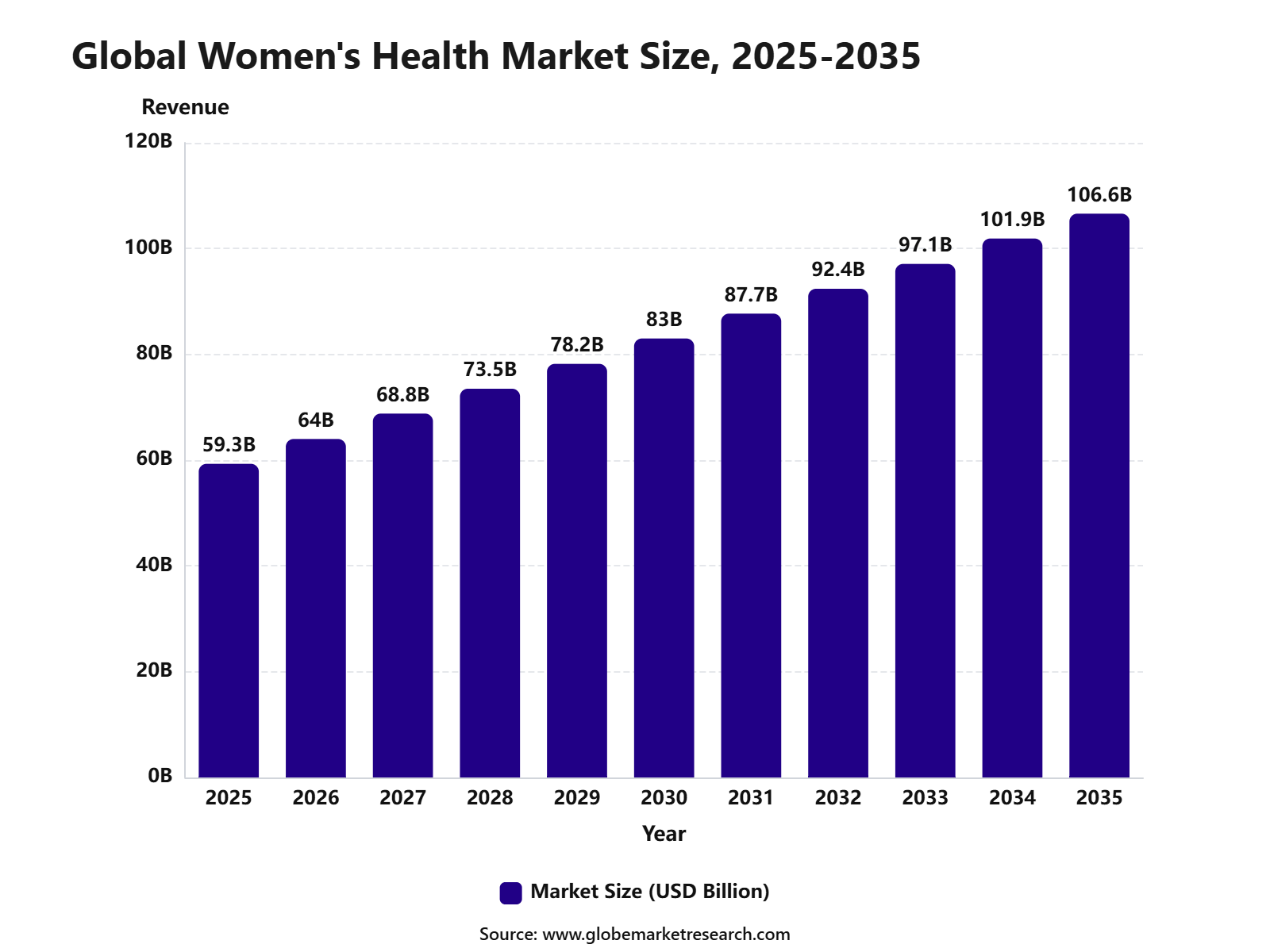
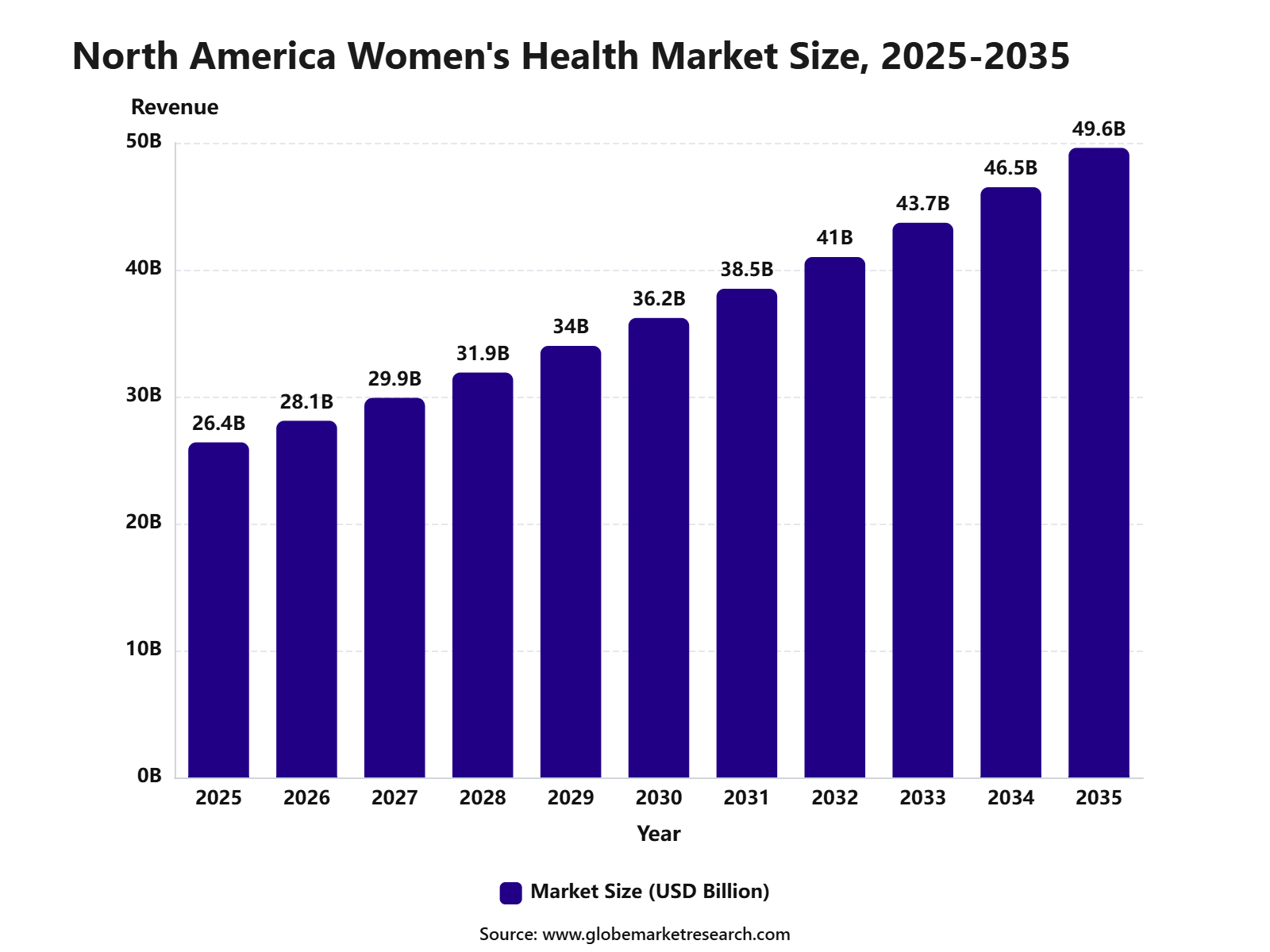
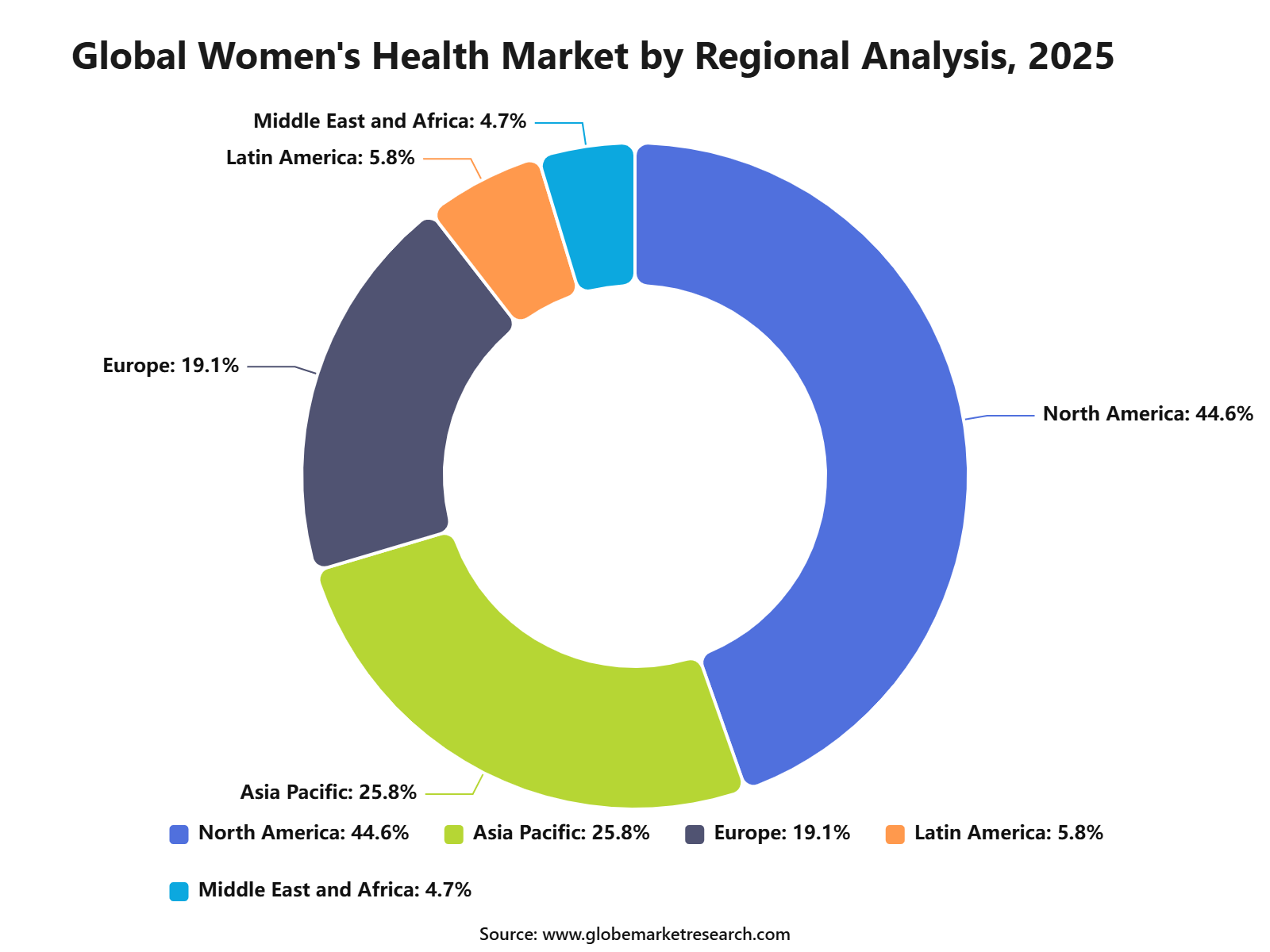
According to Globe Market Research, the global Women’s Health Market was worth USD 59.3 billion in 2025 and is expected to reach USD 106.6 billion by 2035, growing at a 6.8% CAGR from 2025 to 2035. Based on this growth rate, the market is estimated to reach around USD 64.0 billion in 2026. North America led with 44.6% share in 2025, valued at USD 26.4 billion, supported by advanced healthcare access, higher awareness of reproductive health, stronger prescription therapy use, and preventive care adoption.
The Women’s Health Market includes medicines, diagnostics, medical devices, digital platforms, fertility services, contraceptives, pregnancy care, menopause care, gynecology treatments, breast health solutions, cervical cancer screening, osteoporosis care, and preventive healthcare services designed for women across different life stages.
Demand is being supported by high unmet need in contraception, maternal health, fertility, menopause, cancer screening, and chronic disease management. CDC data show that 54.3% of U.S. females aged 15 to 49 were using contraception in 2022 to 2023, while WHO reported that more than 700 women died every day in 2023 from preventable causes linked to pregnancy and childbirth.
Why the Women’s Health Market Is Growing
The market is growing because women are seeking earlier diagnosis, better treatment access, reproductive planning, fertility support, menopause care, and preventive screening. The report identifies rising reproductive health awareness as a +1.8% growth impact, higher prescription therapy use as +1.5%, and growth in preventive women’s care as +1.3%.
The need for improved access remains high. UNFPA states that an estimated 259 million women and adolescent girls who want to avoid pregnancy are not using a modern, reliable contraceptive method. This supports continued demand for contraceptives, reproductive health services, family planning programs, and community-level women’s care.
Preventive screening is also becoming a stronger growth area. Hologic’s 2026 Global Women’s Health Index findings showed that around 1.5 billion adult women worldwide missed essential preventive tests for cancer, high blood pressure, diabetes, or sexually transmitted infections in the past year. This creates major demand for diagnostics, screening programs, digital follow-up, and early intervention platforms.
Key Market Drivers
Growing demand for reproductive healthcare: Contraception, fertility planning, maternal care and gynecological services remain central areas of women’s healthcare. UNFPA estimates that 259 million women of reproductive age have an unmet need for contraception, indicating a significant access and service gap.
Increasing contraceptive use: In the United States, 54.3% of females aged 15 to 49 were using a contraceptive method in 2022 to 2023. The most widely used methods included female sterilization, oral contraceptive pills and long-acting reversible contraceptives.
Expansion of menopause care: Greater awareness of hot flashes, sleep disruption, bone loss and other menopause-related concerns is encouraging treatment adoption. New hormonal and non-hormonal medicines are expanding the available range of care options.
Need for preventive screening: More than half of women and girls aged 15 and older worldwide missed important screenings during the previous year. This creates continued demand for breast imaging, cervical screening, laboratory testing, digital reminders and community-based diagnostic services.
Continuing burden of cervical cancer: WHO estimated approximately 604,000 new cervical cancer cases and 280,000 deaths globally in 2024. Wider HPV vaccination, regular screening and early treatment can prevent a large proportion of cases.
Market Segmentation
Application Insights: Contraceptives led the market with a 35.5% share in 2025. The segment includes oral pills, implants, injectables, intrauterine devices, emergency contraception and barrier methods.
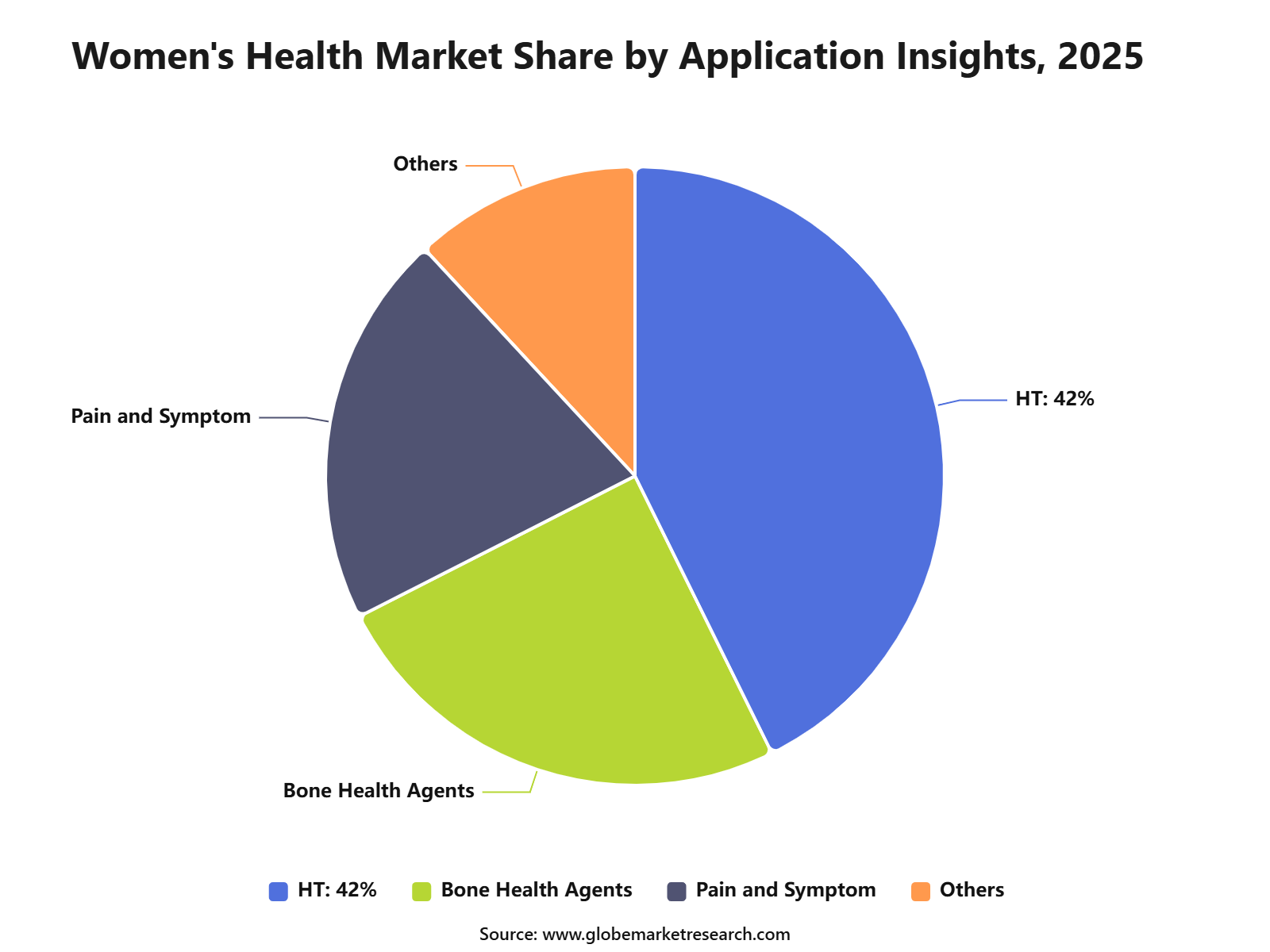
Drug Class Insights: Hormonal therapies accounted for 42.7% of market revenue. These treatments are used across contraception, menopause management, menstrual disorders and selected fertility-related conditions.
Age Group Insights: Women below 50 years represented 49.8% of the market. Demand within this group is supported by contraception, fertility services, pregnancy care, menstrual health management and preventive gynecological services.
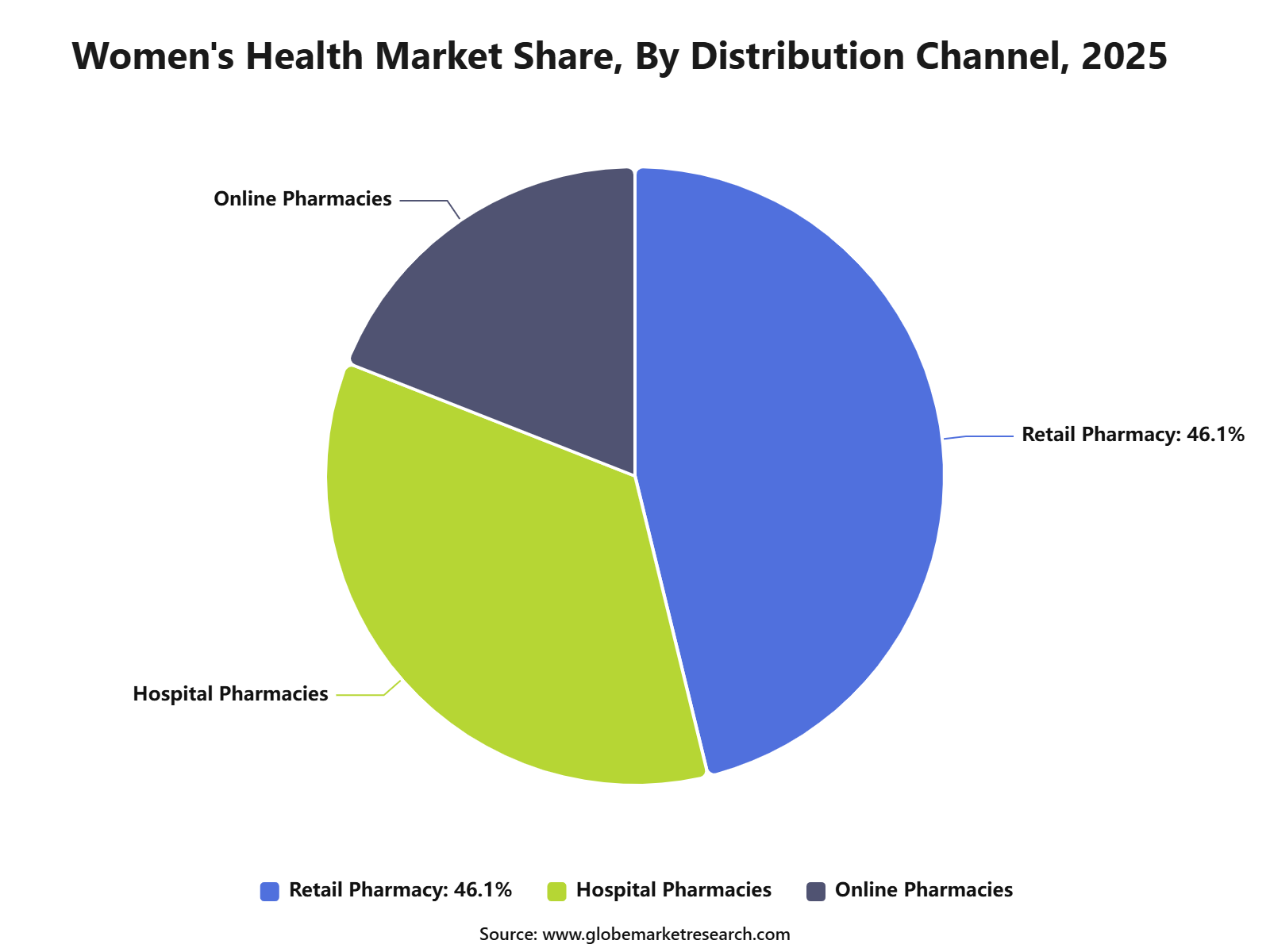
Distribution Channel Insights: Retail pharmacies held a 46.1% share. Their leading position is supported by convenient access to prescription medicines, contraceptives, prenatal products, pain-management treatments and repeat-use therapies.
Regional Insights: North America led with a 44.6% share, valued at approximately USD 26.4 billion in 2025. Strong clinical infrastructure, screening access, pharmacy networks and treatment adoption support regional demand.
Technology and Adoption Trends
Digital women’s health platforms: Virtual clinics are expanding access to fertility, pregnancy, postpartum, menopause, hormonal and preventive care. Digital models allow patients to obtain consultations, education, prescriptions and follow-up services without depending only on physical clinics.
Artificial intelligence in diagnostics: AI is being applied to medical imaging, fertility assessment, symptom tracking, clinical documentation and patient risk identification. These tools may support earlier intervention when they are clinically validated and integrated with professional care.
At-home testing and monitoring: Home-based pregnancy tests, fertility tests, hormone monitoring, sexually transmitted infection tests and connected health devices are increasing patient convenience. Adoption is being supported by demand for privacy, faster results and easier care access.
Personalized menopause treatment: Hormone therapies and non-hormonal medicines are being selected according to symptoms, medical history and treatment preferences. In October 2025, the FDA approved Lynkuet for moderate-to-severe vasomotor symptoms associated with menopause.
Updated hormone therapy information: In February 2026, the FDA approved labeling changes for six menopausal hormone therapy products. Statements related to cardiovascular disease, breast cancer and probable dementia were removed from the boxed warning for the affected products, while other product-specific warnings remained.
Regional Breakdown and Supply Chain
North America: The region accounted for 44.6% of global revenue in 2025. Demand is supported by advanced diagnostics, fertility clinics, retail pharmacy access, insurance coverage and new regulatory approvals for women’s health therapies.
Europe: Market development is being supported by established healthcare systems, ageing female populations and demand for menopause, osteoporosis and preventive care. Product approval, reimbursement and healthcare access can differ across individual European countries.
Asia Pacific: A large female population, improving healthcare access and expanding digital health adoption are creating opportunities across reproductive care, fertility treatment and diagnostics. Affordability, rural access and patient education remain important market considerations.
Latin America, the Middle East and Africa: Demand is being created by maternal healthcare needs, family planning programs, cervical cancer prevention and improving diagnostic infrastructure. WHO reported that 92% of maternal deaths in 2023 occurred in low- and lower-middle-income countries, indicating a continuing requirement for accessible services.
Supply chain structure: The market includes pharmaceutical ingredient suppliers, medicine manufacturers, diagnostic companies, medical device producers, fertility clinics, hospitals, laboratories, retail pharmacies and digital healthcare providers. Product availability is influenced by manufacturing capacity, regulatory approval, reimbursement, cold-chain requirements and trained healthcare personnel.
Segment Covered in the Report
By Application
Contraceptives
Osteoporosis
Menopause
Infertility
Others
By Drug Class
Hormonal Therapies
Bone Health Agents
Pain and Symptom Management
Others
By Age Group
Below 50 Years
50 Years and Above
By Distribution Channel
Hospital Pharmacies
Retail Pharmacies
Online Pharmacies
By Region
North America
Europe
Asia Pacific
Latin America
Middle East and Africa
Digital Women’s Health Platforms Are Expanding Access
Digital women’s health platforms have a +0.8% opportunity impact. These platforms include fertility tracking, virtual clinics, menopause care, pregnancy support, postpartum care, mental health support, digital diagnostics, and employer-sponsored women’s health benefits.
Maven Clinic expanded its direct-to-consumer virtual care platform across the U.S. in May 2026, adding care across more than 30 specialties, along with hormone and GLP-1 programs designed for women. This shows how digital platforms are moving from single-use apps toward broader clinical care ecosystems.
Digital platforms can improve convenience, privacy, and access, especially where specialist availability is limited. However, clinical quality, data privacy, patient safety, provider credentialing, and insurance coverage will remain important adoption factors.
Go-to-Market Strategy for Women’s Health Companies
A strong go-to-market strategy should focus on lifecycle-based care. Companies should build offerings around contraception, fertility, pregnancy, menopause, gynecological disorders, breast health, sexual health, bone health, and preventive screening rather than selling only one isolated product.
Sales economics are shifting toward integrated care models. Pharmaceutical companies, diagnostic firms, fertility clinics, digital platforms, and employer benefit providers are expanding across multiple women’s health needs to improve retention and patient lifetime value.
The strongest commercial route is expected to come from underdiagnosed and underserved care areas. Menopause, endometriosis, PCOS, infertility, cervical health, maternal health, and preventive screening all require better education, easier access, and stronger clinical pathways.
Analyst Perspective
What the Data Is Telling Women’s Health Companies
The data shows that women’s health is moving from a narrow reproductive-care category toward a broader lifecycle healthcare market. A market value of USD 59.3 billion in 2025 and projected value of USD 106.6 billion by 2035 indicate steady long-term demand across contraception, menopause, fertility, osteoporosis, diagnostics, and preventive care.
The strongest signals are the leadership of contraceptives, hormonal therapies, women below 50 years, retail pharmacies, and North America. Contraceptives held 35.5% share, hormonal therapies captured 42.7% share, women below 50 years held 49.8% share, retail pharmacies accounted for 46.1% share, and North America led with 44.6% share.
What Opportunities Are Emerging?
The biggest opportunity is in integrated women’s health care. Companies that connect contraception, fertility, pregnancy, menopause, screening, digital support, and pharmacy access can improve patient retention and long-term value.
Menopause care is becoming a major opportunity because awareness, treatment options, and digital care models are improving. Non-hormonal therapies, hormone therapy updates, bone health products, and virtual midlife care platforms are gaining attention.
Preventive screening is also a major growth area. Cervical cancer screening, breast imaging, STI tests, diabetes checks, hypertension checks, and digital follow-up platforms can support earlier diagnosis and better long-term outcomes.
What Risks Should Companies Be Aware Of?
The main risk is unequal access. Advanced therapies and digital care models are available in developed markets, but affordability, provider shortages, and low awareness remain barriers in underserved regions.
Stigma is another important risk. Reproductive health, menopause symptoms, infertility, sexual health, and gynecological disorders are often discussed late, which delays diagnosis and reduces treatment uptake.
Regulatory and safety risks must also be managed carefully. Women’s health companies need strong clinical evidence, clear labeling, privacy protection, compliant marketing, and safe patient education.
What Decisions Should Clients Make Next?
Clients should first decide which lifecycle stage they want to serve: reproductive health, fertility, pregnancy, menopause, osteoporosis, gynecological disease, cancer screening, or preventive wellness. This choice should guide product development, partnerships, and channel strategy.
Second, companies should combine clinical credibility with easy access. Retail pharmacies, telehealth, digital follow-up, employer benefits, and specialist networks can reduce friction in patient care journeys.
Finally, clients should invest in education and trust. Clear symptom education, patient-friendly language, provider training, privacy safeguards, and evidence-based claims can improve adoption and retention.
Market Concentration: Medium
The Women’s Health Market has medium concentration because established pharmaceutical companies, diagnostics firms, fertility providers, medical device companies, and digital health platforms all compete across different parts of the value chain. Large companies have strong distribution, clinical portfolios, and regulatory experience, while specialized firms are building focused solutions for fertility, menopause, diagnostics, and digital care.
The market remains open for focused companies because many women’s health needs are still underserved. Startups and mid-sized players can compete by offering better patient access, digital experience, targeted therapies, clinical navigation, and condition-specific care.
Recent Developments
In January 2026, Organon received U.S. FDA approval to extend NEXPLANON use from three years to up to five years. The approval was supported by data showing no pregnancies during years four and five and no new safety findings.
In February 2026, the FDA approved labeling changes for six menopausal hormone therapy products, removing certain boxed warning risk statements related to cardiovascular disease, breast cancer, and probable dementia.
In February 2026, Midi Health raised USD 100 million in Series D funding and surpassed a USD 1 billion valuation, supporting expansion of its virtual care model for women in midlife and menopause.
In May 2026, Maven Clinic expanded its direct-to-consumer virtual care platform nationwide in the U.S., adding access to more than 30 specialties, hormone care, and GLP-1 care designed for women.
The report also highlights recent funding and M&A activity across women’s health, including fertility insurance, AI-powered egg quality assessment, hormone-tracking wearables, women’s health diagnostics, and digital mental health platforms.
Competitive Landscape
The Women’s Health Market is competitive, with pharmaceutical companies, fertility service providers, diagnostics firms, medical device companies, digital health platforms, and specialty care providers competing across treatment access, clinical evidence, pricing, distribution, and patient experience.
Key companies include:
Bayer AG
AbbVie Inc.
Organon & Co.
Pfizer Inc.
Theramex
Agile Therapeutics, Inc.
Amgen Inc.
Ferring Pharmaceuticals
Blairex Laboratories, Inc.
Apothecus Pharmaceutical Corp.
Johnson & Johnson
Merck & Co., Inc.
Eli Lilly and Company
Novo Nordisk A/S
Sanofi
Other Key Players
Competition is expected to increase as companies expand across contraception, fertility, menopause, osteoporosis, breast health, gynecological treatment, digital platforms, and preventive screening. Companies with strong clinical evidence, broad access channels, patient education, and integrated care models are likely to perform better. The strongest players will be those that solve access and trust barriers. In this market, patients are not seeking only products. They are seeking timely diagnosis, safe treatment, privacy, affordability, and long-term care confidence.
Conclusion
The Women’s Health Market is entering a steady growth phase supported by contraceptives, hormonal therapies, preventive screening, fertility care, menopause innovation, retail pharmacy access, and digital health platforms. The market is projected to grow from USD 59.3 billion in 2025 to USD 106.6 billion by 2035, supported by a 6.8% CAGR. Future growth will be led by contraception, menopause care, fertility services, hormonal therapies, preventive diagnostics, digital women’s health platforms, and North American healthcare access. Companies that improve affordability, education, screening, privacy, and integrated care delivery will be better positioned in this market.