Revenue, 2026
USD 1.9 Bn
Forecast, 2035
USD 52.3 Bn
CAGR, 2026-2035
44.5%
Report Coverage
Global
Market Size and Forecast
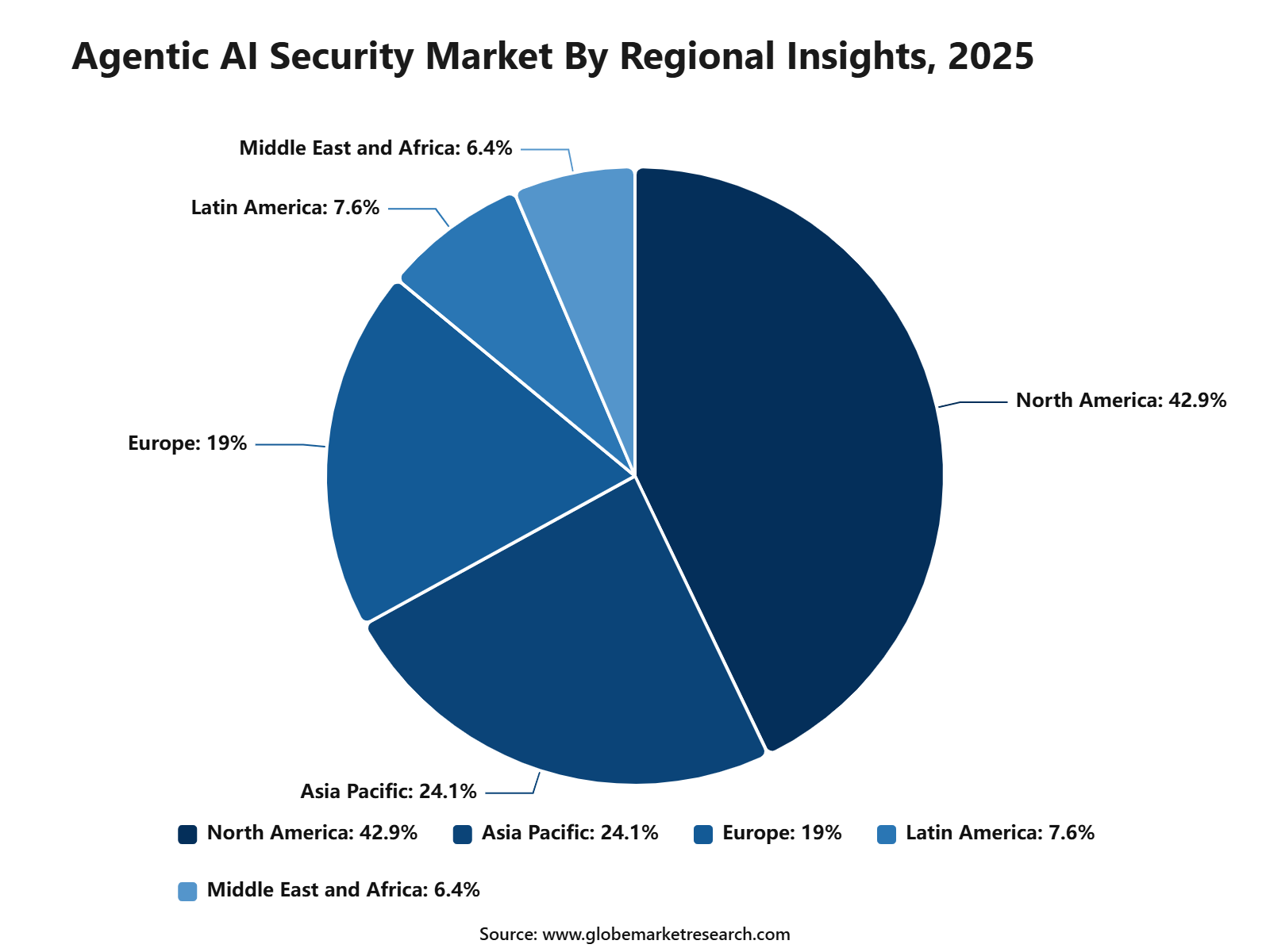
According to Globe Market Research, the global Agentic AI Security Market was valued at USD 1.9 billion in 2026 and is projected to reach USD 52.3 billion by 2035, growing at a CAGR of 44.5% from 2026 to 2035. North America accounted for around 42.9% of the market, equivalent to approximately USD 0.8 billion at the stated 2026 value. The region’s leading position is driven by rapid enterprise AI-agent deployment, advanced cybersecurity infrastructure, strong cloud adoption and growing investment in AI governance, identity security and automated threat detection.
Key Parameter | Report Details |
|---|---|
Market Revenue, 2026 | USD 1.9 Billion |
Projected Revenue, 2035 | USD 52.3 Billion |
CAGR, 2026-2035 | 44.5% |
Largest Region | North America, 42.9% Share |
Market Concentration | Medium |
Forecast Period | 2026-2035 |
Agentic AI Security Market Key Insights
Threat detection and response led the security function segment with 25.6% share, supported by rising demand for faster threat identification, automated incident handling, and real-time security monitoring.
Solutions accounted for 72.3% share by offering, driven by strong adoption of agentic security platforms, AI-driven detection tools, response automation, and enterprise protection systems.
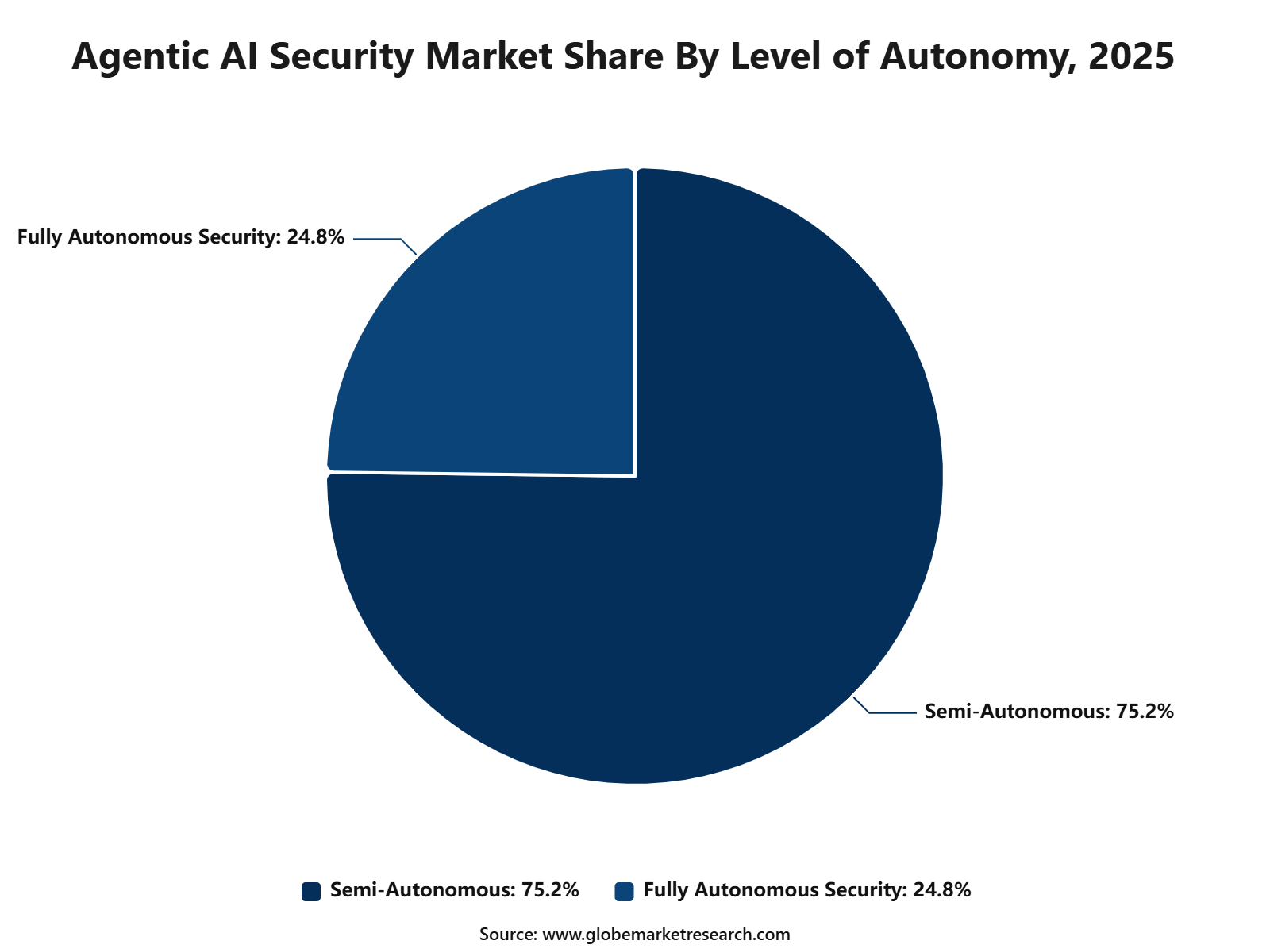
Semi-autonomous systems held 75.2% share by level of autonomy, supported by the need for human oversight, controlled decision-making, and safer AI-assisted cybersecurity operations.
Infrastructure layer deployment captured 30.6% share, driven by growing protection needs across networks, servers, cloud environments, endpoints, and critical enterprise systems.
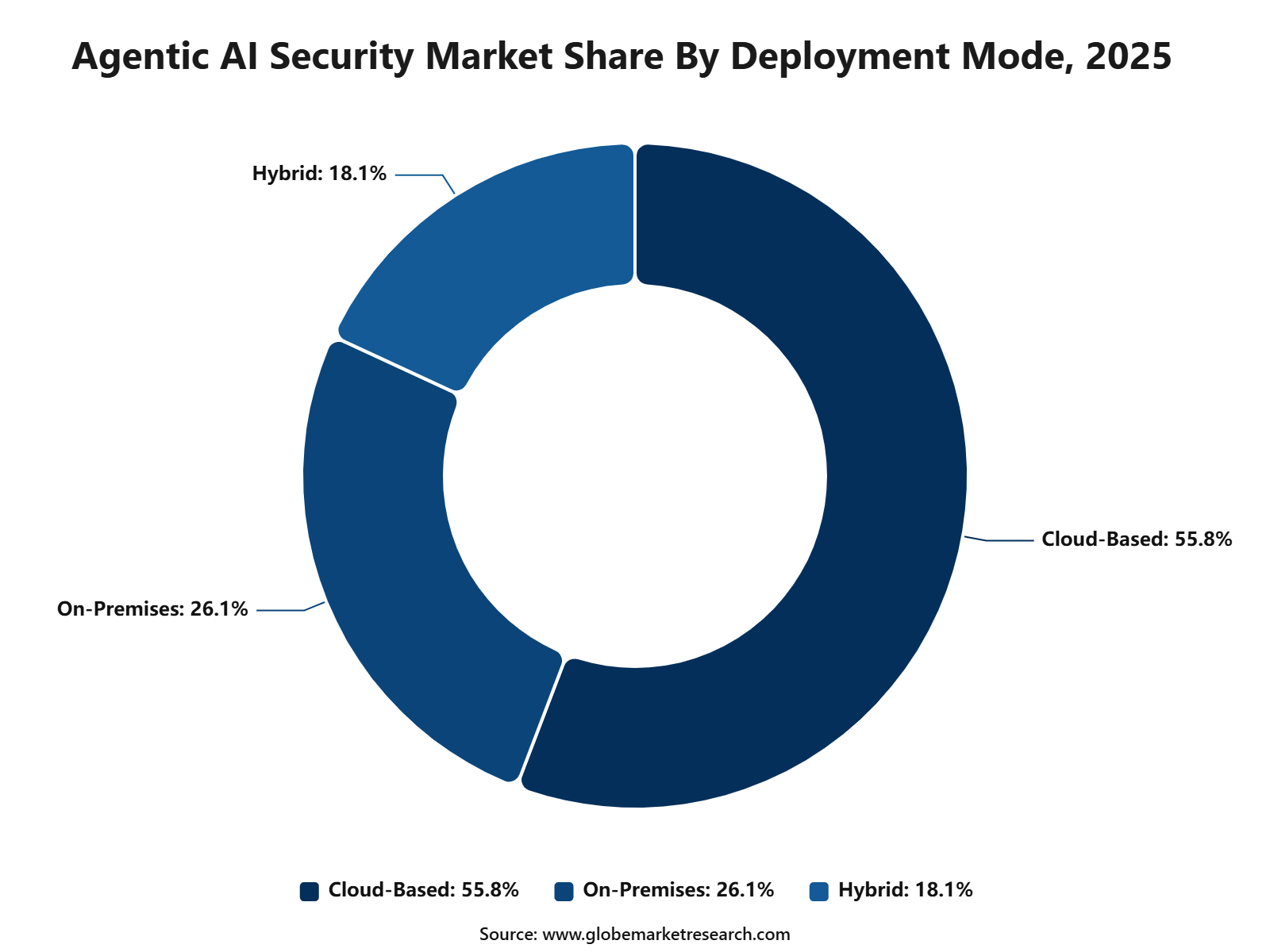
Cloud-based deployment led with 55.8% share, supported by scalable security operations, faster updates, remote monitoring, and easier integration with modern IT environments.
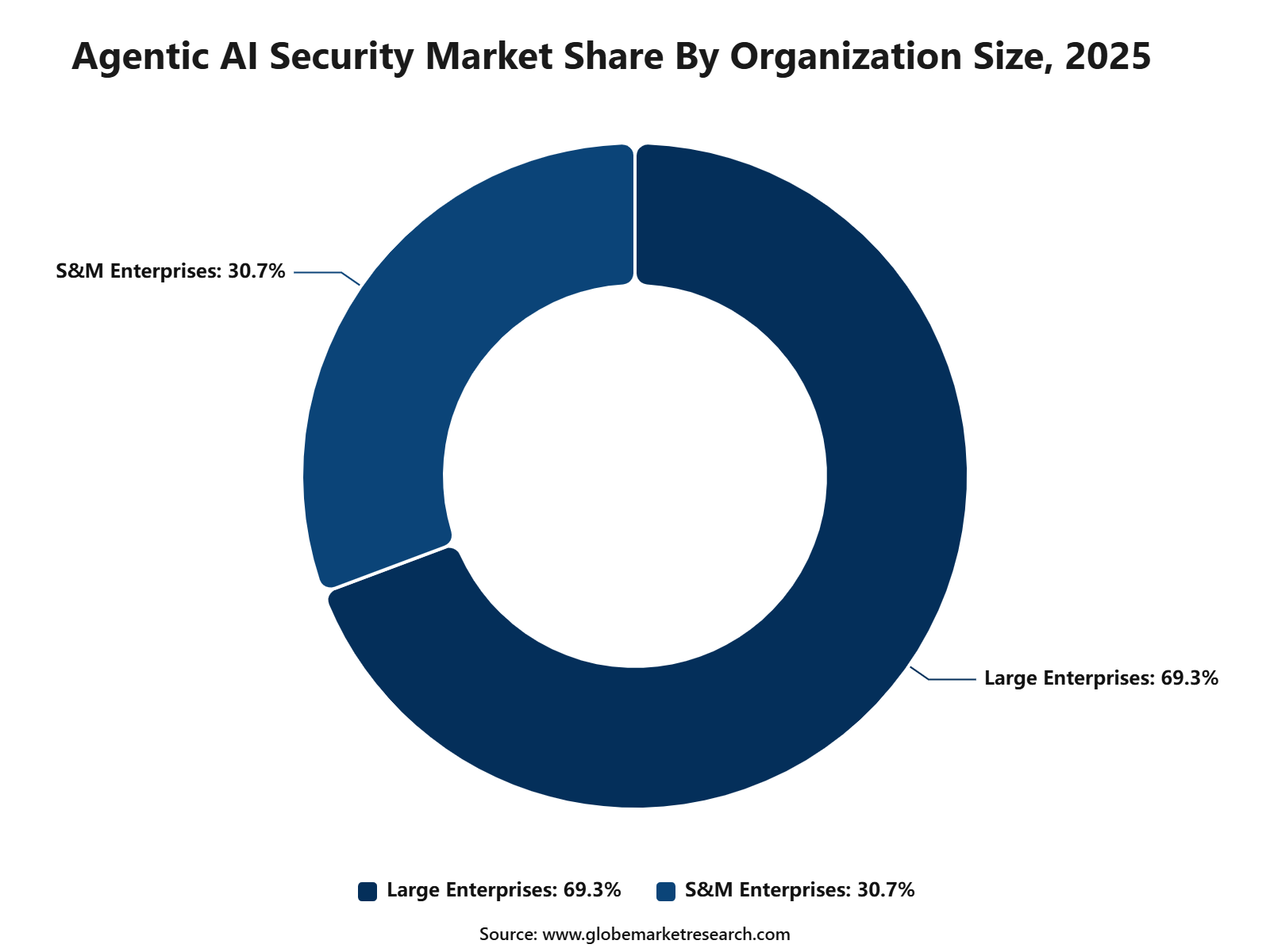
Large enterprises represented 69.3% share, driven by complex security needs, larger attack surfaces, higher cybersecurity budgets, and wider adoption of AI-based defense systems.
Enterprise IT security accounted for 33.4% share by application, supported by rising cyber threats, identity risks, data protection needs, and demand for automated security workflows.
BFSI led the vertical segment with 26.8% share, driven by strict compliance requirements, high-value digital transactions, fraud risk, and strong need for advanced threat protection.
North America led the agentic AI security market with 42.9% share, supported by mature cybersecurity infrastructure, high enterprise AI adoption, strong cloud usage, and rising investment in automated security technologies.
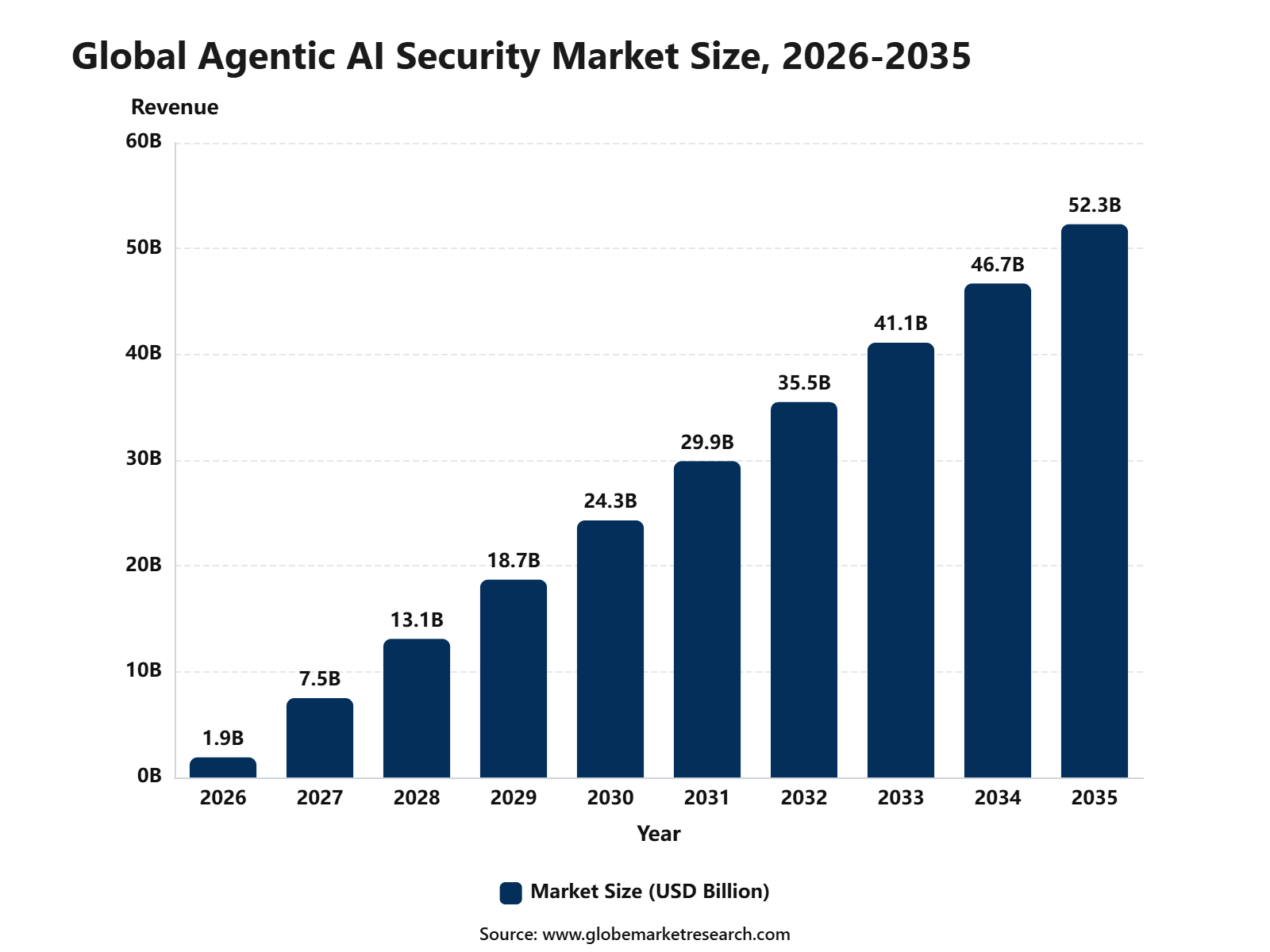 iThe graph shows projected market growth until 2035 based on CAGR analysis. Actual outcomes may vary depending on changing demand, competition, and economic factors.To gain greater insights - request a sample report PDF
What is Agentic AI security?
Agentic AI security includes technologies and controls designed to protect autonomous AI agents, their identities, data access, memory, tools, application programming interfaces and multi-step actions. Major solutions include agent discovery, behavioural monitoring, least-privilege access, prompt-injection protection, sandboxing, runtime detection, data-loss prevention and human approval for high-risk activities.
Demand is increasing because AI agents can independently access business systems, retrieve sensitive information and execute actions across connected applications. Enterprise adoption is creating an urgent need for specialised security controls. Microsoft reported in February 2026 that 80% of Fortune 500 companies were using active AI agents, increasing demand for agent visibility, governance and access management.
NIST launched the AI Agent Standards Initiative in February 2026 to support secure and interoperable autonomous systems, while the OWASP Top 10 for Agentic Applications identified major risks through collaboration with more than 100 security experts and practitioners. A production agent-security system deployed across more than 7,200 enterprise hosts processed over 10,000 agent sessions daily and detected hundreds of credential exposures, highlighting the operational risks created by tool-enabled AI agents.
Security Function Insights
Threat detection and response accounted for 25.6% of the Agentic AI Security Market by security function. Agentic systems can continuously examine network activity, endpoint behaviour, identities and cloud events to identify suspicious patterns. They can also collect evidence, prioritize alerts and recommend containment actions before security teams begin a manual investigation.
Agentic threat detection can reduce repetitive investigation work, but automated responses must be governed carefully. Organizations will require approval controls for disruptive actions such as blocking accounts, isolating devices or changing access permissions. Demand will favour platforms that combine rapid detection with explainable recommendations and complete activity records.
Security Function | Market Share |
|---|---|
Threat Detection and Response | 25.6% |
Identity and Access Security | 14.8% |
Data Security and Privacy | 12.6% |
AI Governance and Risk Platforms | 11.2% |
Security Orchestration, Automation and Response | 10.1% |
Vulnerability Assessment and Remediation | 9.0% |
Security Posture Management | 8.7% |
Deception Technology | 8.0% |
Offering Insights
Solutions accounted for 72.3% of the market by offering. This category includes agentic threat-detection platforms, identity-security systems, AI governance tools, security orchestration platforms and cloud-protection applications. Organizations generally prefer integrated solutions that combine monitoring, analysis and response within a common operating environment.
CISA reported that it published more than 1,600 cybersecurity products during 2025, including alerts, advisories, guidance and technical resources. The continuous release of defensive information creates demand for solutions that can automatically collect current threat intelligence and translate it into relevant security actions.
Solution providers are increasingly embedding security agents into existing dashboards rather than requiring customers to replace their complete technology environment. Buyers will evaluate integration coverage, response accuracy and compatibility with endpoint, identity, network and cloud systems. Platforms that require limited configuration while maintaining strong governance are likely to gain wider adoption.
Offering | Market Share |
|---|---|
Solutions | 72.3% |
Tools and Point Solutions | 10.4% |
Managed Security Services | 7.1% |
Professional and Integration Services | 6.0% |
Training and Certification Services | 4.2% |
Level of Autonomy Insights
Semi-autonomous systems represented 75.2% of the market by level of autonomy. These systems can investigate alerts, gather evidence and prepare response actions while keeping security professionals responsible for final approval. This operating model provides automation benefits without transferring complete decision-making authority to an AI agent.
An IBM study published in October 2025 found that only 24% of executives said AI agents were already taking independent action within their organizations. The figure indicates that fully autonomous operation remained limited, supporting stronger near-term adoption of supervised and semi-autonomous systems.
Semi-autonomous deployment is particularly important for identity suspension, data deletion and infrastructure changes that could interrupt business activity. Security teams require the ability to review the agent’s evidence and reasoning before approving high-impact actions. Clearly defined autonomy levels will therefore become an important product-selection criterion.
 iThe graph shows projected market growth until 2035 based on CAGR analysis. Actual outcomes may vary depending on changing demand, competition, and economic factors.To gain greater insights - request a sample report PDF
Deployment Layer Insights
The infrastructure layer accounted for 30.6% of the Agentic AI Security Market. This layer includes servers, networks, cloud resources, endpoints, storage systems and computing environments on which applications and agents operate. Protecting infrastructure is essential because compromised systems can provide attackers with access to multiple business services and data sources.
During 2025, CISA received more than 12,800 vulnerability reports from security researchers and other public contributors. The scale of vulnerability reporting illustrates the difficulty of manually assessing every weakness across enterprise infrastructure and prioritizing the issues that create the greatest operational risk.
Agentic security systems can evaluate vulnerabilities against asset importance, active threats and existing controls before recommending remediation. Infrastructure agents can also verify patches, identify configuration changes and monitor whether corrective actions were successful. Adoption will depend on accurate asset discovery and controlled access to administrative systems.
Deployment Layer | Market Share |
|---|---|
Infrastructure Layer | 30.6% |
Agent and Orchestration Layer | 19.4% |
Application Layer | 15.2% |
Data Layer | 13.1% |
Model Layer | 11.7% |
Integration Layer | 10.0% |
Deployment Mode Insights
Cloud-based systems accounted for 55.8% of the market by deployment mode. Cloud deployment allows security agents to process information from multiple locations, users and applications through a centralized environment. Providers can also distribute model, detection and policy updates without requiring separate upgrades at every customer site. Eurostat reported that 52.74% of EU enterprises purchased cloud-computing services in 2025.
The expanding use of cloud applications increases the number of identities, workloads and data flows that security teams must monitor, supporting demand for cloud-delivered agentic protection. Cloud-based agentic security can scale as event volumes increase and can support organizations with distributed operations. Buyers will still examine data location, service availability and access to sensitive security information. Hybrid controls may be required where agents must analyse cloud activity while keeping regulated data within private environments.
 iThe graph shows projected market growth until 2035 based on CAGR analysis. Actual outcomes may vary depending on changing demand, competition, and economic factors.To gain greater insights - request a sample report PDF
Organization Size Insights
Large enterprises accounted for 69.3% of the market by organization size. These organizations operate extensive networks, multiple cloud environments and large identity populations. Their security teams must process high alert volumes while coordinating policies across business units, countries and technology platforms.
Large enterprises are more capable of funding integration, testing and governance programs required for agentic security. However, they also face greater operational risk if an agent performs an incorrect action at scale. Centralized permissions, human approval thresholds and continuous model evaluation will remain major procurement requirements.
 iThe graph shows projected market growth until 2035 based on CAGR analysis. Actual outcomes may vary depending on changing demand, competition, and economic factors.To gain greater insights - request a sample report PDF
Application Insights
Enterprise IT security represented 33.4% of the market by application. Organizations are applying agentic AI to endpoint protection, access management, vulnerability remediation, incident investigation and security operations. Agents can connect information from several tools and create a unified view of an emerging incident. The FBI’s Internet Crime Complaint Center received 1,008,597 complaints during 2025.
Phishing, spoofing, extortion and investment-related schemes were among the most frequently reported categories, demonstrating the broad threat environment facing enterprise users, systems and communication channels. Enterprise IT teams can use security agents to investigate account activity, trace suspicious connections and prepare incident summaries. The technology can help reduce the time analysts spend moving between separate tools. Effective deployment will require accurate identity data, updated asset inventories and clear escalation procedures.
Application | Market Share |
|---|---|
Enterprise IT Security | 33.4% |
Cloud Security | 20.6% |
Financial Services Compliance | 17.2% |
Government and Defense | 15.1% |
Healthcare Data Protection | 13.7% |
Vertical Insights
BFSI accounted for 26.8% of the Agentic AI Security Market by vertical. Banks, insurers and financial-service providers manage valuable financial data, payment systems and customer identities. These organizations require continuous monitoring because successful attacks can create direct financial losses, regulatory action and disruption to essential services. The European Central Bank reported in March 2026 that 38% of major incidents reported by banks in 2025 had IT change as their root cause.
The finding shows that financial institutions must manage internal technology changes alongside external cyber threats and third-party risks. Agentic security can review configuration changes, identify unusual transactions and coordinate responses across identity, cloud and payment systems. Financial institutions will require strict auditability because automated decisions may affect regulated operations or customer access. Human supervision and explainable outputs will remain central to adoption.
Vertical | Market Share |
|---|---|
BFSI | 26.8% |
IT and ITES | 14.2% |
Healthcare and Life Sciences | 11.6% |
Government | 10.1% |
Defense | 9.0% |
Telecommunications | 8.2% |
Retail and E-commerce | 7.1% |
Manufacturing | 6.0% |
Energy and Utilities | 4.3% |
Other Verticals | 2.7% |
Regional Insights
North America accounted for 42.9% of the Agentic AI Security Market. The region benefits from a large cybersecurity industry, advanced cloud adoption and early enterprise use of AI agents. Demand is concentrated in the United States across technology, financial services, healthcare, government and critical infrastructure.
CISA stated that it triaged more than 30,000 reported cybersecurity incidents during 2025. The scale of response activity reflects the continuing security pressure faced by American public and private organizations and supports investment in automated detection, investigation and incident-management systems.
North American organizations are moving from isolated generative AI tools toward agents capable of taking actions across enterprise systems. Market development will depend on identity controls, agent monitoring and standards for secure interoperability. Providers that demonstrate dependable outcomes without removing human accountability are likely to receive stronger demand.
 iThe graph shows projected market growth until 2035 based on CAGR analysis. Actual outcomes may vary depending on changing demand, competition, and economic factors.To gain greater insights - request a sample report PDF
Regional Market | Insights |
|---|---|
U.S. Agentic AI Security Market Insight | In 2026, 37% of U.S. firms with at least 250 employees used AI. Wider enterprise adoption is increasing demand for autonomous threat detection, access control and AI-agent governance. |
Europe Agentic AI Security Market Insight | ENISA analysed 4,875 cybersecurity incidents in its 2025 threat landscape. The growing threat volume supports agentic systems that can prioritize alerts and coordinate responses. |
U.K. Agentic AI Security Market Insight | In 2026, 72% of U.K. businesses considered cybersecurity a high management priority. Demand is rising for AI agents that improve monitoring without increasing security-team workloads. |
Germany Agentic AI Security Market Insight | Cyberattacks caused 70% of total security-related business losses in Germany in 2025, equal to EUR 202.4 billion. This strengthens demand for automated detection and remediation. |
Asia-Pacific Agentic AI Security Market Insights | A 2025 regional study covered 550 security leaders across 11 Asia-Pacific markets and highlighted growing AI-powered attacks. Enterprises are adopting platform-based and automated cyber defence. |
Japan Agentic AI Security Market Insight | Japan’s 2025 industrial cybersecurity program involved nearly 200 government and industry practitioners from the Indo-Pacific. Training focused on practical exercises and cross-border threat response. |
China Agentic AI Security Market Insight | China amended its Cybersecurity Law in 2025 to address rapid AI development and stronger digital-security requirements. This supports demand for locally compliant AI governance and monitoring tools. |
Key Market Drivers
Rapid deployment of autonomous AI agents: AI agents are being introduced into customer service, software development, cybersecurity, finance, procurement, research, and enterprise administration. Their ability to take actions in real systems is increasing demand for security controls that go beyond traditional chatbot filtering.
Growing risk of agent hijacking: Indirect prompt injection can occur when malicious instructions are hidden inside emails, websites, files, code repositories, or other information processed by an agent. A successful attack may cause the agent to expose sensitive data, execute malicious code, or complete unauthorized actions.
Need to control agent identities and privileges: Agents may receive permission to access email, databases, financial platforms, source-code repositories, and internal applications. Excessive privileges can allow a compromised agent or tool to modify records, approve payments, delete information, or access data outside its intended task.
Expansion of tool-connected AI systems: Agentic applications increasingly use external tools and application programming interfaces to complete tasks. NIST identified tool functionality, access permissions, action severity, reversibility, reliability, and monitoring as important factors when assessing agent-system risk.
Growing adoption of Model Context Protocol integrations: MCP is being used to connect AI systems with enterprise applications and data sources. NSA guidance published in May 2026 identified security concerns involving dynamic tool invocation, context sharing, trust boundaries, authorization, message integrity, and agent misuse.
Need for continuous auditability: Agent actions can pass through several models, tools, memory stores, and sub-agents, making responsibility difficult to trace. Security platforms are therefore required to record identities, tool calls, parameters, outputs, approval decisions, and changes made to connected systems.
Emerging Agentic AI Security Trends
Dedicated identities for AI agents: Organizations are beginning to treat every agent as a separate digital identity. Each agent can be assigned defined permissions, credentials, ownership, risk levels, and access policies rather than operating through a shared employee or application account.
Dynamic least-privilege access: Static permissions are being replaced by context-based authorization. Access can be assessed for every tool invocation according to the agent’s identity, requested action, data sensitivity, user authority, and current operating conditions.
Runtime agent guardrails: Security controls are moving from development-stage testing into live execution. Runtime systems can inspect an agent’s intent, requested tool, input data, parameters, planned action, and expected effect before permitting execution.
Human approval for high-risk actions: Financial transfers, code deployment, account deletion, external communication, permission changes, and access to sensitive information are increasingly being placed behind human confirmation or multi-step authorization. Joint guidance recommends strong oversight and human control for agentic AI deployment.
Agent inventory and discovery: Security teams are seeking visibility into approved and unauthorized agents, MCP servers, models, tools, credentials, and data connections. NSA guidance recommends scanning networks for unauthenticated, vulnerable, outdated, or unauthorized MCP services.
MCP security gateways: Security gateways are being positioned between agents and MCP servers to manage authentication, authorization, input validation, tool allowlists, rate limits, data-loss prevention, and activity logging. NSA noted that MCP-aware security proxies are still developing and should be applied carefully in sensitive environments.
Sandboxed tool execution: Code execution, database queries, file operations, and external API calls are increasingly being isolated in restricted environments. NSA recommends strict resource boundaries and sandboxing to limit lateral movement and privilege escalation following a compromise.
5 Best Agentic AI Security Technologies
Agent Identity and Privileged Access Management: These platforms assign a verifiable identity to every agent and enforce least-privilege access. Core functions include short-lived credentials, role-based permissions, secrets management, approval workflows, access revocation, and continuous authentication.
Runtime Agent Security and Policy Enforcement: Runtime platforms inspect agent actions before execution. They can block unauthorized tools, restrict sensitive operations, enforce organizational policies, apply spending or resource limits, and require human approval for high-risk activities.
Prompt Injection and Agent Hijacking Protection: These systems analyze user prompts, retrieved content, tool responses, websites, documents, and agent-to-agent messages for malicious instructions. They are designed to prevent an attacker from redirecting an agent toward unauthorized objectives.
Agent Observability and Activity Monitoring: Observability platforms record prompts, decisions, identities, tool calls, parameters, outputs, data access, and workflow changes. The resulting records support anomaly detection, compliance, investigation, accountability, and incident response.
Agent Security Testing and Red-Teaming Platforms: These tools simulate attacks against models, memory systems, plugins, MCP servers, credentials, and multi-agent workflows. Testing helps organizations identify weaknesses before agents receive access to production systems or sensitive information.
Key Market Segments
By Security Function
Identity and Access Security
AI Governance and Risk Platforms
Threat Detection and Response
Data Security and Privacy
Vulnerability Assessment and Remediation
Security Orchestration, Automation and Response
Security Posture Management
Deception Technology
By Offering
Solutions
Tools and Point Solutions
Managed Security Services
Professional and Integration Services
Training and Certification Services
By Level of Autonomy
Semi-Autonomous Systems
Fully Autonomous Security Agents
By Deployment Layer
Model Layer
Agent and Orchestration Layer
Application Layer
Data Layer
Infrastructure Layer
Integration Layer
By Deployment Mode
Cloud-Based
On-Premises
Hybrid
By Organization Size
Large Enterprises
Small and Medium Enterprises
By Application
Enterprise IT Security
Financial Services Compliance
Healthcare Data Protection
Government and Defense
Cloud Security
By Vertical
BFSI
Healthcare and Life Sciences
Government
Defense
IT and ITES
Telecommunications
Retail and E-commerce
Energy and Utilities
Manufacturing
Others
By Region
North America
Europe
Asia Pacific
Latin America
Middle East and Africa
Market Dynamics
Drivers Impact Analysis
The Agentic AI Security Market is driven by rapid adoption of autonomous AI agents, enterprise copilots, AI workflow automation, model-connected applications, and multi-agent systems. As AI agents gain access to business tools, APIs, cloud systems, customer data, code repositories, and enterprise workflows, companies need stronger security controls.
North America leads the market due to high enterprise AI adoption, strong cybersecurity spending, mature cloud infrastructure, and early deployment of AI governance tools. The U.S. remains the main contributor because of large technology companies, financial institutions, healthcare systems, defense users, and enterprise software buyers.
Impact Factor | Estimated CAGR Impact | Regional Relevance | Market Impact |
|---|---|---|---|
Rapid enterprise AI agent adoption | +14.5% | North America, Europe, Asia Pacific | Drives demand for agent security platforms. |
Rising AI workflow automation | +12.8% | Cloud-first enterprises | Expands security needs across business tools. |
Growth in AI governance requirements | +11.6% | Regulated industries | Supports monitoring and compliance adoption. |
Rising concern over prompt injection | +10.4% | AI application developers | Increases demand for runtime protection. |
Expansion of API-connected AI systems | +9.2% | SaaS, cloud, fintech, healthcare | Raises need for identity and access controls. |
Restraints Impact Analysis
The market faces restraints from unclear security standards, limited buyer awareness, integration complexity, and difficulty measuring agent-level risk. Many enterprises are still experimenting with AI agents and may delay security spending until deployments become business-critical. Another restraint is the complexity of protecting autonomous behavior. Agentic systems can plan, call tools, retrieve data, trigger workflows, and interact with third-party systems, making traditional application security controls less complete.
Impact Factor | Estimated CAGR Impact | Regional Relevance | Market Impact |
|---|---|---|---|
Unclear AI security standards | -7.5% | Global enterprise markets | Slows procurement decisions. |
Limited buyer awareness | -6.8% | Early-stage AI users | Reduces near-term adoption. |
Integration with existing security stack | -5.9% | Large enterprises | Adds deployment complexity. |
Difficulty measuring agent risk | -5.0% | Regulated sectors | Delays security budgeting. |
Shortage of AI security talent | -4.2% | North America and Europe | Limits implementation speed. |
Opportunities Impact Analysis
Opportunities are strong in AI agent monitoring, runtime protection, identity governance, access control, prompt-injection defense, data leakage prevention, model risk management, and AI compliance platforms. These areas are becoming critical as companies move from AI pilots to production use. Higher-value opportunities are emerging in security for autonomous enterprise agents, AI SOC copilots, tool-use control, model behavior analytics, red-teaming platforms, and policy enforcement layers. Vendors that combine AI security, cloud security, and governance can capture strong enterprise demand.
Impact Factor | Estimated CAGR Impact | Regional Relevance | Market Impact |
|---|---|---|---|
AI agent runtime protection | +14.0% | North America and Europe | Protects live AI workflows. |
Agent identity and access control | +12.5% | Enterprise and cloud users | Secures tool and API access. |
Prompt-injection defense platforms | +11.2% | AI application teams | Reduces manipulation risk. |
AI governance and compliance tools | +10.0% | BFSI, healthcare, government | Supports regulated adoption. |
AI red-teaming and testing services | +8.7% | Large enterprises | Improves deployment confidence. |
Challenges Impact Analysis
The main challenge is securing AI agents without slowing business automation. Enterprises need protection that can inspect agent actions, permissions, tool calls, data access, and outputs while still allowing useful automation. Another challenge is keeping pace with fast-changing AI risks. Agentic systems introduce new attack surfaces across prompts, plugins, APIs, retrieval systems, memory layers, workflows, and third-party integrations.
Impact Factor | Estimated CAGR Impact | Regional Relevance | Market Impact |
|---|---|---|---|
Fast-changing AI threat landscape | -7.2% | Global AI security markets | Requires continuous product updates. |
Complexity of multi-agent systems | -6.3% | Advanced enterprise users | Makes monitoring harder. |
Balancing security with automation | -5.5% | Business workflow teams | Can slow adoption if controls are rigid. |
Third-party tool risk | -4.8% | SaaS and API ecosystems | Expands exposure points. |
Lack of mature benchmarks | -4.0% | Buyers and vendors | Makes solution comparison difficult. |
Agentic AI Security Market Case Study
Microsoft Uses Agentic AI to Automate Security Operations and Protect Enterprise AI Agents
Microsoft provides a practical example of how agentic AI is being used to automate cybersecurity operations while protecting enterprise AI agents. Its Security Copilot agents support phishing investigation, identity-policy management, insider-risk detection, data-loss prevention, vulnerability remediation, and threat intelligence. In 2025, Microsoft reported processing 84 trillion security signals per day, including around 7,000 password attacks per second, while more than 30 billion phishing emails were detected during 2024. By March 2026, the company stated that its security infrastructure was processing over 100 trillion daily signals, protecting approximately 1.6 million customers, one billion identities, and 24 billion Copilot interactions.
The company has also introduced security controls for AI agents that access emails, files, cloud platforms, databases, and enterprise applications. These controls include agent discovery, identity management, least-privilege access, prompt-injection protection, runtime monitoring, data-loss prevention, activity logging, and human approval for sensitive actions. Microsoft’s multi-model vulnerability scanning system coordinates more than 100 specialized AI agents to identify and validate software vulnerabilities. In June 2026, the system recorded a vendor-reported 96.55% score on the CyberGym benchmark, highlighting the potential of coordinated AI agents to support software-security testing and vulnerability prioritization.
However, independent testing shows that agentic AI systems remain exposed to prompt injection, agent hijacking, excessive permissions, malicious tools, and poisoned data. A NIST red-teaming exercise included more than 250,000 attack attempts, over 400 participants, and 13 frontier AI models, with at least one successful hijacking attack identified against every tested model. In another evaluation, an adaptive attack increased the success rate from 11% to 81%, while repeated attacks increased the average success rate from 57% to 80%. These findings indicate that market demand will be driven by agent identity security, runtime monitoring, behavioural analytics, AI red-teaming, secure tool integration, audit management, and human-controlled approval systems.
Recent Developments
Market News
Exabeam introduced AI agent security capabilities: In January 2026, Exabeam expanded its New-Scale security platform with Agent Behavior Analytics, secure MCP onboarding, AI agent behavioural detection, compliance assessments, and board-level agent risk dashboards. The platform is designed to detect unusual agent activity that could indicate compromised credentials, unauthorised actions, or misuse of enterprise resources.
NIST launched the AI Agent Standards Initiative: In February 2026, the National Institute of Standards and Technology introduced an initiative focused on secure, trusted, and interoperable AI agents. The programme includes research into agent authentication, identity infrastructure, security evaluations, open protocols, and voluntary industry standards.
Menlo Security launched a browser security platform for AI agents: In March 2026, Menlo introduced AI Agent Security as a guardian runtime for browser-based agent activity. The technology separates instructions from untrusted data to reduce goal hijacking, lateral movement, data leakage, and malicious prompt-injection attacks.
SentinelOne expanded agent discovery and governance: In March 2026, SentinelOne introduced Prompt AI Agent Security, Prompt AI Red Teaming, and expanded agentic investigation capabilities. The platform provides visibility into agents and MCP servers, real-time policy enforcement, posture management, privilege monitoring, and testing for prompt injection, jailbreaks, data poisoning, and unauthorised action chaining.
Unknown AI agents became a major enterprise risk: In April 2026, a Cloud Security Alliance survey found that 82% of organisations had discovered unknown AI agents operating within their infrastructure. Approximately 65% had experienced an AI agent-related incident during the previous 12 months, while only 21% had formal processes for decommissioning agents and removing their permissions.
Mergers
Large merger-of-equals activity remained limited: Through July 2026, specialist AI agent security companies were mainly expanding through acquisitions, funding rounds, product integrations, and strategic partnerships rather than mergers between similarly sized businesses. Major cybersecurity platforms were purchasing agent security, identity, gateway, and runtime technologies to add them to broader enterprise security portfolios.
Check Point and ControlPlane formed a strategic partnership: In February 2026, Check Point and ControlPlane announced a partnership designed to help enterprises deploy and scale AI and agentic systems securely across cloud-native environments. The collaboration combines AI security controls with cloud engineering, governance, and implementation capabilities without requiring a corporate merger.
Acquisitions
Palo Alto Networks completed its acquisition of CyberArk: In February 2026, Palo Alto Networks completed the acquisition of CyberArk to expand identity security across human users, machines, workloads, and AI agents. The combination strengthens privileged-access management and identity controls as autonomous agents receive access to sensitive systems and enterprise applications.
Torq entered discussions to acquire Jit: In April 2026, Torq was reported to be in advanced discussions to acquire security automation company Jit for approximately USD 50 million. The potential transaction would combine Torq’s agentic security operations platform with Jit’s automated application-security assistant, although the acquisition had not been completed at the time of reporting.
AI security talent acquisitions increased: In June 2026, Meta recruited several founders and team members from Virtue AI, including specialists in AI safety and agent security. The transaction was structured as a strategic team hire rather than the acquisition of the complete company, reflecting growing competition for specialised AI security researchers.
Funding
WitnessAI raised USD 58 million: In January 2026, WitnessAI secured USD 58 million to support international expansion and strengthen its AI agent security capabilities. Its platform monitors active agents, MCP servers, connected tools, exchanged data, and actions performed on behalf of employees and customers.
Fiddler raised USD 30 million: In January 2026, Fiddler completed a USD 30 million Series C round, increasing its total funding to USD 100 million. The capital is being used to expand its AI control plane, which provides visibility, risk management, explainability, monitoring, and governance for compound and agentic AI systems.
Armadin raised approximately USD 190 million: In March 2026, autonomous cybersecurity startup Armadin disclosed approximately USD 189.9 million in combined seed and Series A funding. The company is developing autonomous AI security agents designed to investigate threats and support cybersecurity operations.
NeuralTrust raised USD 20 million: In June 2026, NeuralTrust completed a USD 20 million seed round to expand its AI agent security platform across Europe. The platform includes an agent gateway for controlling LLM, MCP, and tool calls, a runtime threat-protection engine, and a posture-management system for discovering and monitoring enterprise agents.
Patronus AI raised USD 50 million: In June 2026, Patronus AI raised USD 50 million to build simulated digital environments for evaluating and stress-testing AI agents. The company’s technology helps AI developers identify reliability, security, and behavioural weaknesses before autonomous systems are deployed in production environments.
Competitive Landscape
The market is characterized by intense competition among established players and emerging companies. Strategic partnerships, mergers and acquisitions, and product innovation are key strategies employed by market participants.
Key Market Players
Palo Alto Networks, Inc.
CrowdStrike Holdings, Inc.
SentinelOne, Inc.
Okta, Inc.
Cloudflare, Inc.
Cato Networks Ltd.
Check Point Software Technologies Ltd.
Securiti
HiddenLayer
Microsoft Corporation
Obsidian Security
Other Key Players
Research Methodology
This market study is prepared using a combination of primary and secondary research. Primary research includes discussions with manufacturers, suppliers, distributors, consultants, industry experts, and end users. Secondary research covers company reports, government databases, trade associations, technical publications, regulatory sources, and trusted industry documents. The collected information is used to assess market demand, pricing trends, technology adoption, competitive activity, and regional performance.
AI language models are not used as primary data sources, and publicly available AI-generated content is not treated as market evidence. Computational tools may be used to support data processing, translation, data classification, and pattern identification. However, every published assessment is supported by verified sources, human review, and primary market discussions.
Market estimates are developed through top-down and bottom-up approaches and validated using data triangulation. Revenue, production, shipment, pricing, and application-level data are compared across multiple sources. Forecasts consider economic conditions, regulatory changes, investment activity, innovation, supply chain developments, and industry risks. All findings are reviewed through source verification and internal quality checks before publication.
Part I
Source Management & Input Data Standards
Who provides data, how sources are qualified, and what types of evidence are admissible.
Part II
Research Scope & Market Coverage
How we define the markets we assess and the parameters that govern each product.
Part III
Data Collection, Verification & Submission
The mechanics of gathering, cross-checking, and hierarchically ranking evidence.
Part IV
Assessment Determination & Quality Controls
How raw data becomes a published assessment — normalisation, expert judgement, and outlier exclusion.
Part V
Publication, Corrections & Revision
Our publication schedule, corrections policy, and methodology review cycle.
Part VI
Independence, Ethics & Complaints
Conflict-of-interest policies, editorial independence, and how clients raise concerns.
Google · Preferred Sources
Don't miss the latest market research insights and industry updates on Google.
Add Globe Market Research as a preferred source in the Google app to see our reports, analysis, and market stories in your news suggestions.
Meet the Team
This report was prepared by our expert analysts with deep industry knowledge and research experience.
Kimaya brings more than five years of experience in market research, content review, and industry analysis to Globe Market Research. She plays an important role in maintaining the accuracy, clarity, consistency, and relevance of research content across a wide range of industries. Her responsibilities include reviewing market data, segment analysis, competitive landscapes, industry trends, company developments, and strategic insights. Each report is carefully assessed to ensure that the findings are supported by reliable data, presented in a structured format, and aligned with the information needs of business decision-makers. Kimaya has research experience across healthcare, information technology, consumer goods, and several cross-industry domains.
Prashant S. is a Research Analyst at Globe Market Research with more than four years of experience in market research and industry analysis. He specializes in the Aerospace and Defence, Automotive and Transportation, Semiconductor and Electronics, Information and Technology sectors, with expertise in market sizing, trend analysis, competitive assessment, and industry forecasting. He applies primary and secondary research, data validation, company analysis, and market estimation methods to deliver reliable insights for strategic planning and business decision-making.
Frequently Asked Questions
Related Reports
More in Information and Technology
Shooting Games Market Size to hit USD 238.9 bn by 2035 | CAGR of 10.7%
Shooting Games Market Insights Analysis by Product (Shooting Gallery, Light Gun Shooter, First-Person Shooter, Third-Person Shooter, and Others), by Device Type (PC/MMO, Tablet, Mobile Phone, and TV/Console), by End User (Male and Female), Regional Insights, Technology Trends, Competitive Landscape, Strategic Opportunities, and Growth Forecast, 2026-2035
AI Data Centre Cooling Market Size to Reach USD 52.2 billion by 2035
AI Data Centre Cooling Market Size, Share, Trends and Growth Analysis Report By Cooling Type (Air Cooling, Liquid Cooling, Hybrid Cooling Systems), By Data Centre Type (Hyperscale Data Centres, Colocation Data Centres, Enterprise Data Centres, Edge Data Centres), By Cooling Component (Cooling Units, Chillers, Air Handling Units, Pumps, Heat Exchangers), By End User (Cloud Service Providers, Colocation Providers, Enterprises, Government and Defense), By Regional Insights, Technology Trends, Competitive Landscape, Strategic Opportunities and Growth Forecast, 2026-2035
South Korea Physical AI Market Size to Reach USD 3.6 billion by 2035
South Korea Physical AI Market Size, Share, Trends and Growth Analysis Report By Deployment (On-Device AI, Cloud-Based AI), By Component (Hardware, Software, Services), By Technology (Computer Vision, Speech and Natural Language Processing, Gesture and Movement Recognition, Reinforcement Learning and Control Systems, Other Technologies), By Robot Type (Service Robots, Humanoid and Social Robots, Collaborative Robots, Exoskeletons and Prosthetics, Mobile Robots and Drones, Industrial Robots), By Application (Healthcare, Manufacturing and Automotive, Logistics and Warehousing, Retail and Hospitality, Other Applications), By Technology Trends, Competitive Landscape, Strategic Opportunities and Growth Forecast, 2026-2035
Physical AI Market Size to hit USD 2,129.0 billion by 2035
Physical AI Market Size, Share, Trends and Growth Analysis Report By Component (Hardware, Software, Services), By Technology (Computer Vision, Machine Learning and Deep Learning, Natural Language Processing, Edge AI, Other Technologies), By Product (Robots, Exoskeletons, Autonomous Systems, Smart Appliances), By Application (Automation and Manufacturing, Logistics and Supply Chain, Healthcare, Automotive, Defense and Security, Retail, Education, Other End Uses), By Regional Insights, Technology Trends, Competitive Landscape, Strategic Opportunities and Growth Forecast, 2026-2035