

Revenue, 2026
USD 5.6 Bn
Forecast, 2035
USD 8.7 Bn
CAGR, 2026-2035
5.1%
Report Coverage
Global
Market Size and Forecast
The Global Carbon Monoxide Market was worth USD 5.6 billion in 2026 and is expected to reach USD 8.7 billion by 2035, growing at a CAGR of 5.1% from 2026 to 2035. Asia Pacific held the largest regional share of 42.40% in 2026, valued at around USD 2.3 billion, supported by strong demand from chemicals, metallurgy, pharmaceuticals, electronics, and industrial gas applications.
The Carbon Monoxide Market includes high-purity and industrial-grade carbon monoxide used as a chemical feedstock, reducing agent, and process gas. It is widely used in the production of acetic acid, phosgene derivatives, methanol intermediates, metal carbonyls, specialty chemicals, and certain pharmaceutical synthesis processes. The market is closely linked with industrial manufacturing, chemical processing, and controlled gas supply systems.
Market growth is being supported by rising demand for specialty chemicals, advanced materials, and industrial gases used in high-value manufacturing. Carbon monoxide plays an important role in carbonylation reactions, metal refining, and synthesis processes where controlled purity and stable supply are critical. Demand is also increasing from electronics and pharmaceutical applications that require precise gas quality and strict safety handling.
Key Parameter | Report Details |
|---|---|
Market Revenue, 2026 | USD 5.6 Billion |
Projected Revenue, 2035 | USD 8.7 Billion |
CAGR (2026-2035) | 5.1% |
Largest Region | Asia Pacific (42.40%, USD 2.3 Bn) |
Market Concentration | Medium |
Base Year | 2025 |
Forecast Period | 2026-2035 |
Asia Pacific is expected to remain the leading region due to its large chemical manufacturing base, expanding industrial production, and strong downstream demand from China, India, Japan, South Korea, and Southeast Asia. Regional growth is supported by investments in petrochemicals, specialty chemicals, electronics, and metal processing. Long-term market growth will depend on safe gas handling, regulatory compliance, reliable production capacity, and demand from high-purity industrial applications.
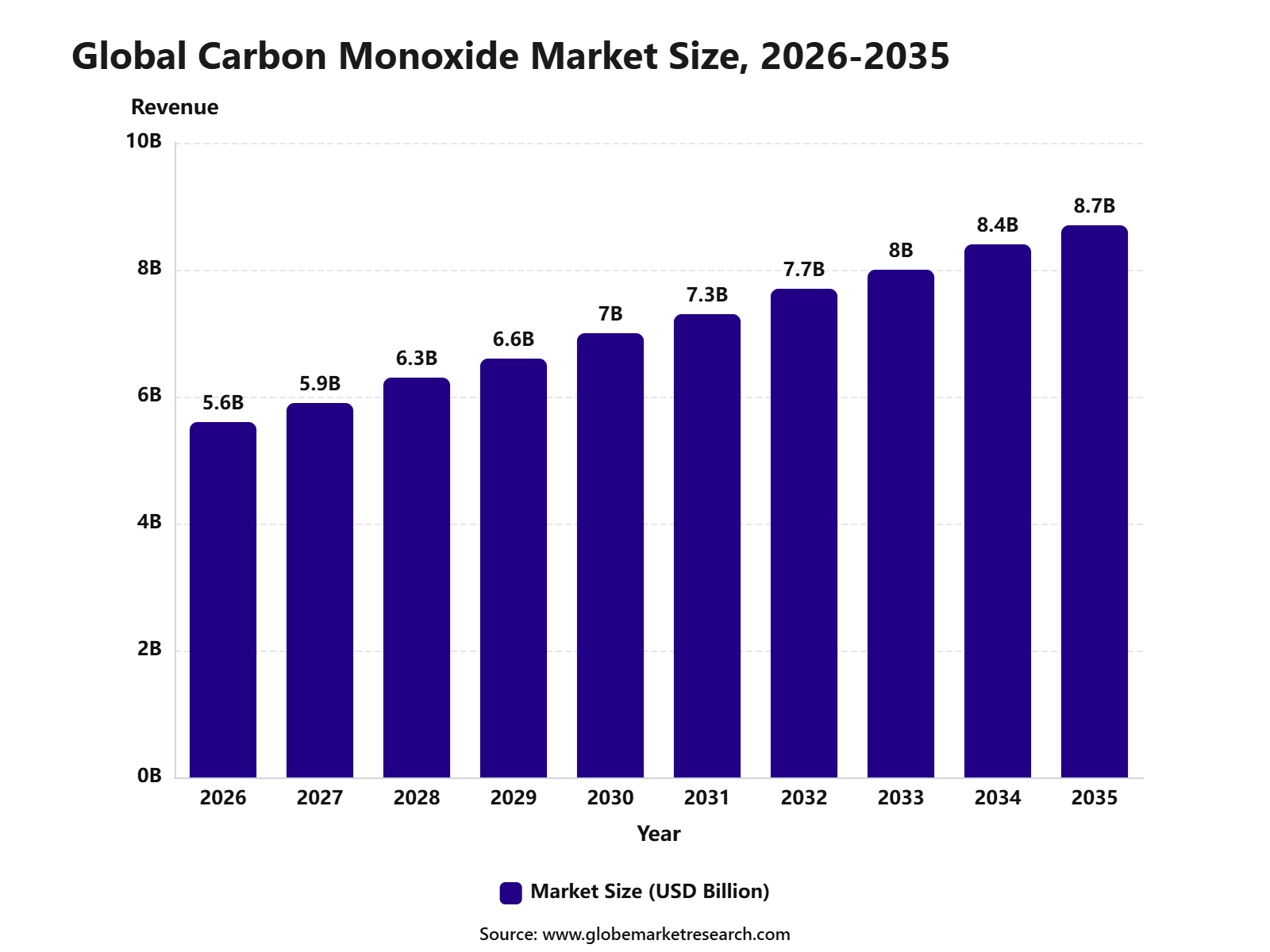 iThe graph shows projected market growth until 2035 based on CAGR analysis. Actual outcomes may vary depending on changing demand, competition, and economic factors.To gain greater insights - request a sample report PDF
Key Market Insights
Industrial grade carbon monoxide led the grade segment with 63.1% share, supported by its strong use in large-scale chemical production, metallurgy, synthesis gas processing, and industrial reaction systems.
Chemical intermediates accounted for 43.2% share by application, driven by wide use of carbon monoxide in producing acetic acid, phosgene, aldehydes, methanol, and other downstream chemicals.
Metal fabrication held 37.4% share by end use, supported by demand for carbon monoxide in reduction processes, welding gas mixtures, metal treatment, and industrial manufacturing operations.
Asia Pacific led the carbon monoxide market with 42.40% share, valued at USD 2.3 billion, supported by strong chemical manufacturing, expanding metal fabrication activity, and high industrial consumption across China, India, Japan, and Southeast Asia.
Top Funding and Investment
Top Investments
In November 2025, Abdullah Hashim Industrial Gases announced a planned SAR 600 million investment in a multiphase industrial-gas production and distribution facility at Oxagon, NEOM. Construction was scheduled to begin in February 2026, with initial operations planned for late 2026. The project will add production, storage, warehousing, and gas-distribution infrastructure for industrial customers.
In November 2025, Datang Group started commercial operations at China’s first coal-to-chemicals project integrated with green hydrogen. The facility converts coal into syngas, primarily comprising carbon monoxide and hydrogen, for downstream chemical production. It includes 150 MW of wind and solar capacity and is designed to produce 70.59 million cubic metres of hydrogen annually.
In August 2025, OCOchem and ADM announced plans to establish a carbon-conversion facility at an ADM production site. OCOchem’s electrochemical platform converts captured carbon dioxide and water into formate chemicals, providing a lower-emission route for producing chemical intermediates that are conventionally manufactured through carbon monoxide-dependent processes. The project’s financial value was not disclosed.
In May 2025, OCOchem commissioned a multicell electrochemical pilot plant in Richland, Washington. The system represented a substantial scale-up of its carbon-conversion technology and was designed to demonstrate continuous production of industrial chemicals from carbon dioxide, water, and renewable electricity. The company had raised USD 7.5 million from investors and USD 8.3 million through government grants by 2025.
In March 2025, Compact Syngas Solutions began a UN-supported project to install its 500 kW MicroHub gasification system in Kenya’s tea industry. The unit converts tea prunings and other agricultural residues into syngas containing carbon monoxide and hydrogen, supplying heat and electricity while reducing the consumption of fuelwood. The project runs from 2025 to 2028.
Top Funding Developments
In March 2025, Compact Syngas Solutions secured multimillion-pound funding through the United Nations Industrial Development Organization’s Accelerate-to-Demonstrate programme. The funding supports deployment of biomass gasification technology in Kenya, where agricultural residues are converted into carbon-monoxide-containing syngas for industrial heat and power generation.
In 2025, OCOchem reported cumulative financing of approximately USD 15.8 million, comprising USD 7.5 million in investor capital and USD 8.3 million in government grants. The financing supported the development of its large-format electrochemical cells, pilot plant, and carbon-conversion technology for producing industrial chemical intermediates. This was cumulative financing rather than a newly announced 2025 funding round.
Top Acquisitions
In August 2025, Air Liquide agreed to acquire South Korea-based DIG Airgas for EUR 2.85 billion, approximately USD 3.3 billion. Air Liquide acquired around 60 industrial-gas facilities, 220 kilometres of pipeline infrastructure, approximately 550 employees, customer contracts, and a portfolio of nearly 20 secured development projects. DIG Airgas generated approximately EUR 510 million in 2024 revenue.
By Grade
Industrial grade carbon monoxide accounted for 63.1% share of the Carbon Monoxide Market. This leading position is supported by its wide use in chemical synthesis, metal processing, fuel gas mixtures, and industrial reducing applications.
The segment is preferred because industrial grade carbon monoxide offers suitable purity and performance for large-volume manufacturing processes. It is used in the production of acetic acid, phosgene, methanol intermediates, metal carbonyls, and other chemical compounds.
Demand is expected to remain strong as chemical producers and metal processors continue to require reliable gas supply for controlled industrial operations. Its role as a reactive feedstock and reducing agent will continue to support segment leadership.
By Application
Chemical intermediates accounted for 43.2% share of the Carbon Monoxide Market. This dominance is driven by the strong use of carbon monoxide as a building block in producing acids, alcohols, aldehydes, isocyanates, and specialty chemicals.
Carbon monoxide is widely used in carbonylation, hydroformylation, and other synthesis processes where it helps create value-added chemical products. These intermediates are further used in plastics, coatings, pharmaceuticals, agrochemicals, solvents, and industrial materials.
The segment is expected to remain the largest application area as downstream chemical manufacturing continues to expand. Demand will remain supported by industrial-scale production of acetic acid, methanol derivatives, polyurethane inputs, and other carbon-based chemical intermediates.
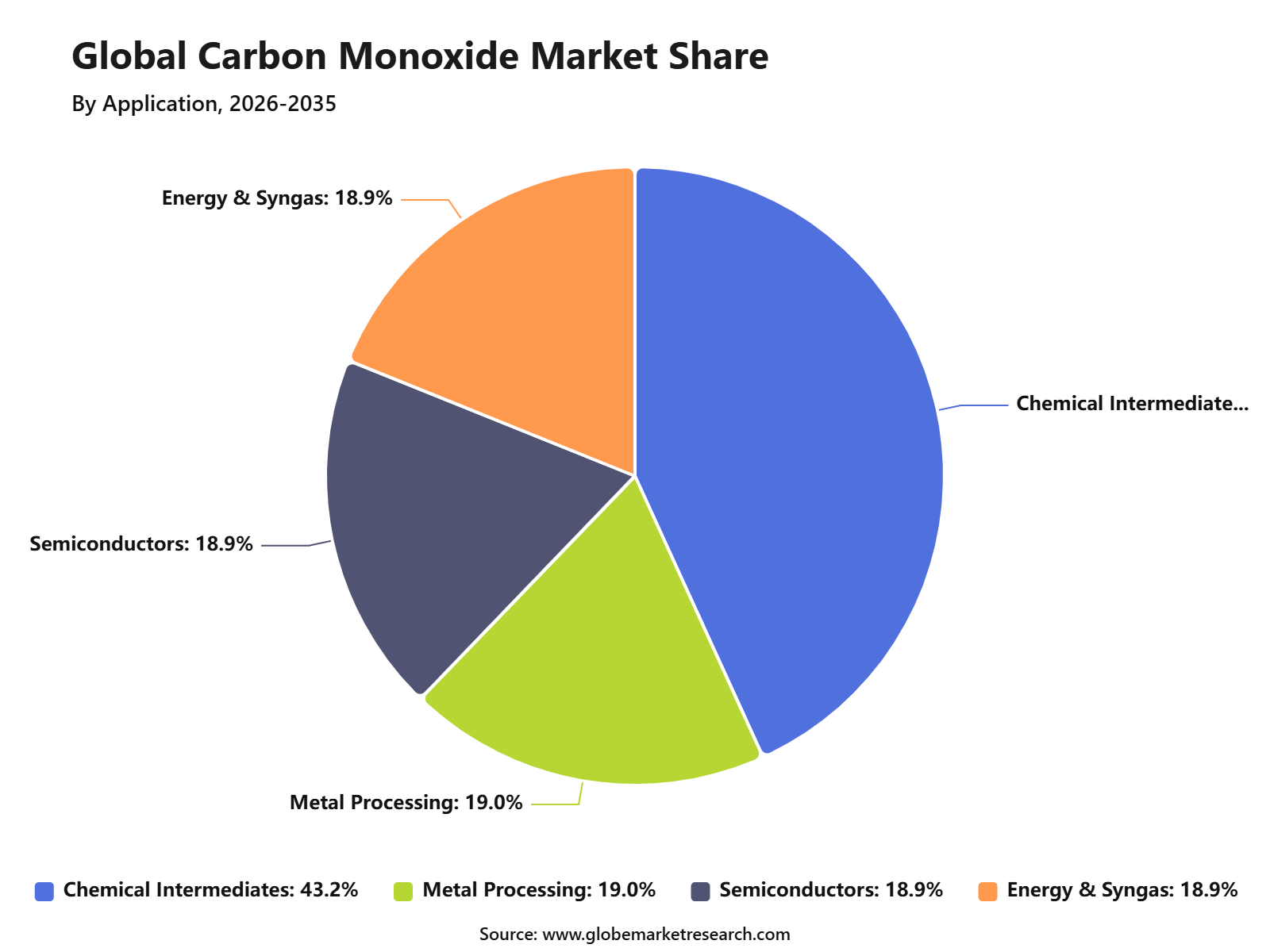 iThe graph shows projected market growth until 2035 based on CAGR analysis. Actual outcomes may vary depending on changing demand, competition, and economic factors.To gain greater insights - request a sample report PDF
By End Use
Metal fabrication accounted for 37.4% share of the Carbon Monoxide Market. This leading share is supported by the use of carbon monoxide in metal refining, reduction processes, heat treatment, and controlled atmosphere applications.
The gas is used as a reducing agent in metallurgical operations where oxygen removal and surface control are important. It supports metal processing activities involving steel, iron, nickel, and other industrial metals used in machinery, construction, automotive, and heavy equipment.
Demand from metal fabrication is expected to remain steady as manufacturing and infrastructure activity continue to require processed metals. The need for efficient reduction processes, high-quality metal output, and controlled industrial atmospheres will continue to support carbon monoxide usage.
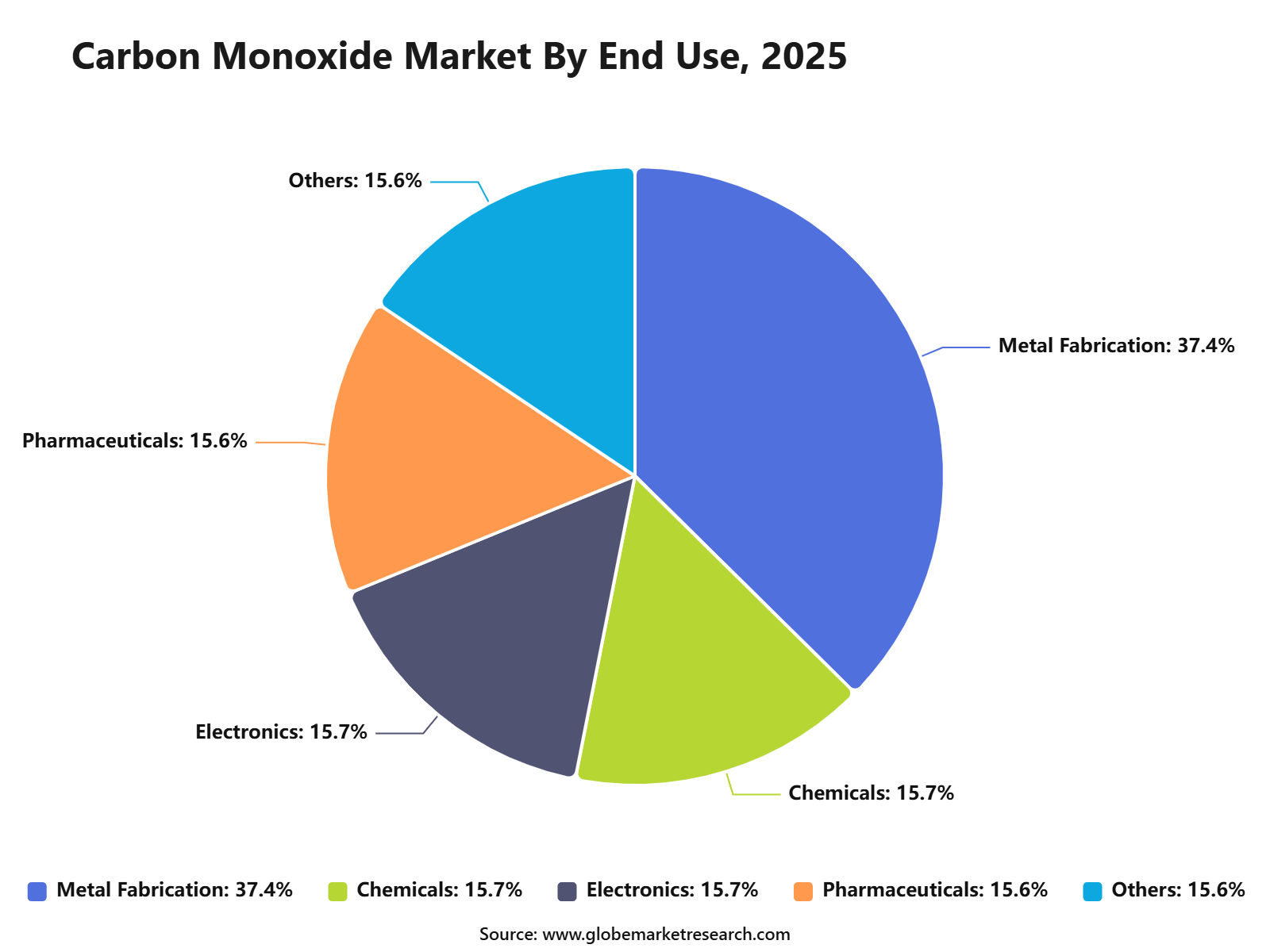 iThe graph shows projected market growth until 2035 based on CAGR analysis. Actual outcomes may vary depending on changing demand, competition, and economic factors.To gain greater insights - request a sample report PDF
By Region
Asia Pacific accounted for 42.40% share of the Carbon Monoxide Market, reaching USD 2.3 billion. The region’s leadership is supported by strong chemical manufacturing, metal fabrication, industrial gas demand, and expanding production capacity across major economies.
China, India, Japan, South Korea, and Southeast Asian countries are key contributors to regional demand. The region benefits from large-scale chemical plants, steel production, electronics manufacturing, and strong industrial activity requiring carbon monoxide as a feedstock and process gas.
Asia Pacific is expected to maintain its leading position as chemical intermediates, metal processing, and manufacturing output continue to expand. Demand will remain supported by industrial grade carbon monoxide, chemical synthesis, and its use in high-volume industrial applications.
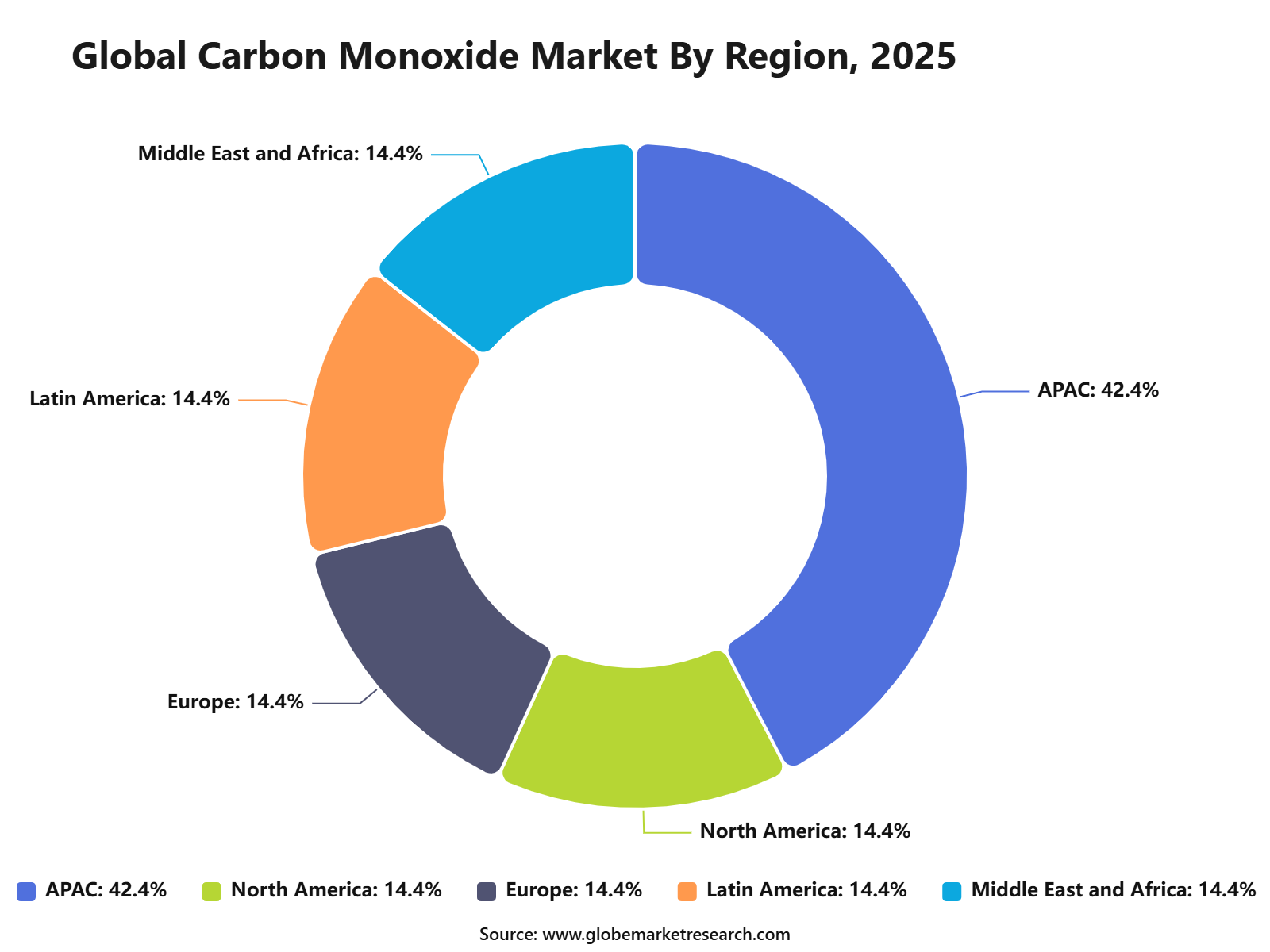 iThe graph shows projected market growth until 2035 based on CAGR analysis. Actual outcomes may vary depending on changing demand, competition, and economic factors.To gain greater insights - request a sample report PDF
Regional Impact Analysis
Asia Pacific leads the Carbon Monoxide Market with 42.40% share in 2026, valued at around USD 2.4 billion, supported by strong chemical production, metal processing, electronics manufacturing, and industrial gas demand. China, India, Japan, South Korea, and Southeast Asia remain key regional markets.
North America remains important because of specialty chemicals, refining, pharmaceuticals, and advanced industrial gas supply. Europe supports steady demand through regulated chemical processing, electronics, research laboratories, and high-purity gas applications.
Impact Factor | Estimated CAGR Impact | Regional Relevance | Market Impact |
|---|---|---|---|
Asia Pacific market leadership | +1.6% | Asia Pacific, 42.40% share in 2026 | Leads global value demand. |
China chemical manufacturing scale | +1.2% | China | Drives high-volume gas consumption. |
India pharmaceutical and chemical growth | +1.0% | India | Supports future demand expansion. |
Japan and South Korea electronics demand | +0.8% | Japan, South Korea | Adds high-purity gas opportunity. |
North America and Europe specialty demand | +0.6% | U.S., Canada, Germany, France, UK | Supports regulated and premium uses. |
Go-To-Market and Sales Economics
Carbon monoxide suppliers should prioritise on-site generation and pipeline supply for large chemical, refining, and metal-processing customers. Air Products reported fiscal second-quarter 2026 sales of USD 3.2 billion, up 9%, with volumes rising 4% and higher on-site demand supporting earnings. Take-or-pay contracts, backup systems, and remote monitoring can improve revenue visibility.
Merchant sales should target smaller factories, laboratories, heat-treatment operators, and calibration providers through specialised cylinder networks. Air Liquide generated EUR 6.786 billion in first-quarter 2026 revenue, while Industrial Merchant pricing increased 3.4%. Regional filling capacity, certified mixtures, scheduled deliveries, technical training, and detector-calibration support can strengthen customer retention and sales economics.
Chemical-sector selling should begin during process design because carbon monoxide purity, pressure, and continuity directly affect plant economics. Celanese reported first-quarter 2026 Acetyl Chain sales of USD 1.0 billion, increasing 10% sequentially as volumes rose 8%. Joint engineering, impurity specifications, and long-term supply agreements can improve conversion among acetyl producers.
Risk Factors & Market Barriers
Worker-safety requirements create a high entry barrier for storage, handling, and customer operations. OSHA limits carbon monoxide in enclosed marine-terminal areas to 50 parts per million over eight hours and requires employee removal above 100 ppm. Suppliers must fund continuous detection, ventilation, alarms, emergency training, medical protocols, and documented inspection programmes.
Transporting compressed carbon monoxide requires specialist equipment and regulatory compliance because it is classified as a Division 2.3 toxic gas under UN1016. PHMSA documentation also limits approved packaging, filling pressure, transport modes, and employee training. These obligations raise cylinder, insurance, logistics, and compliance costs, making local production commercially preferable for large users.
End-market cyclicality can reduce utilisation at dedicated generation units. World crude steel production reached 157.9 million tonnes in May 2026, but remained 0.3% below the previous year. Suppliers serving metallurgy should diversify across chemicals, pharmaceuticals, electronics, and specialty gas mixtures while using minimum-volume commitments to protect fixed-cost recovery during industrial slowdowns.
Revenue Potential Analysis
Revenue Landscape Across
Metals processing offers revenue through reducing atmospheres, annealing, heat treatment, and selected metallurgical operations. In May 2026, India produced 14.1 million tonnes of crude steel, up 1.9%, while U.S. output reached 7.5 million tonnes, up 9.2%. Local supply hubs can support mills and fabrication clusters with dependable industrial-gas service contracts.
Acetyl chemicals provide an important revenue channel because Celanese’s integrated chain begins with methanol and carbon monoxide. Its Acetyl Chain delivered first-quarter 2026 operating profit of USD 95 million. Suppliers can expand revenue through dedicated pipelines, purity guarantees, turnaround support, emergency backup, and multi-year agreements linked to customer plant operating rates.
High-purity and calibration mixtures create smaller but higher-value opportunities across electronics facilities, laboratories, emissions monitoring, and gas-detection systems. Air Liquide’s Electronics business increased comparable sales by 3% in the first quarter of 2026. Traceable certificates, precise blending, reusable cylinders, and rapid replacement services can support premium pricing and repeat orders.
Financial Impact
On-site supply can generate strong margins when assets operate under long-term customer commitments. Air Products recorded fiscal second-quarter 2026 adjusted operating income of USD 753 million, up 19%, and an adjusted operating margin of 23.7%. Carbon monoxide projects should use take-or-pay terms, energy pass-through clauses, and customer-backed capacity before capital is committed.
Large backlogs can improve financial visibility but increase construction and working-capital exposure. Air Liquide reported EUR 1.5 billion of investment decisions and a record EUR 5.5 billion backlog in the first quarter of 2026. Carbon monoxide suppliers should stage spending, collect milestone payments, secure feedstock, and align commissioning dates with customer production schedules.
Chemical-chain profitability shows the value of utilisation, pricing, and feedstock control. Celanese’s Acetyl Chain produced first-quarter 2026 operating EBITDA of USD 194 million at a 19% margin, despite higher feedstock costs. Gas suppliers should protect cash flow through fixed facility charges, indexed variable fees, maintenance recovery, minimum purchases, and disciplined customer credit controls.
Drivers Impact Analysis
The Carbon Monoxide Market is driven by rising demand from chemical intermediates, metal fabrication, refining, pharmaceuticals, electronics, and specialty gas applications. Carbon monoxide is widely used as a feedstock in chemical synthesis, reducing gas in metallurgy, and process gas in controlled industrial environments.
Asia Pacific leads the market due to strong chemical manufacturing, steel production, electronics fabrication, and industrial gas consumption. China, India, Japan, South Korea, and Southeast Asian countries remain key contributors because of large-scale manufacturing and expanding downstream chemical demand.
Impact Factor | Estimated CAGR Impact | Regional Relevance | Market Impact |
|---|---|---|---|
Growth in chemical intermediate production | +1.5% | Asia Pacific, Europe, North America | Drives core carbon monoxide consumption. |
Rising demand from metal fabrication | +1.2% | China, India, South Korea, Japan | Supports reducing gas applications. |
Expansion of specialty gas usage | +0.9% | Electronics and pharma sectors | Adds high-purity demand. |
Refining and syngas-related applications | +0.8% | Industrial and energy markets | Supports process gas demand. |
Growth in industrial manufacturing | +0.6% | Asia Pacific and emerging regions | Builds steady volume demand. |
Restraints Impact Analysis
The market faces restraints from toxicity risk, strict handling rules, storage complexity, and high safety compliance needs. Carbon monoxide is hazardous, so producers and users must manage leak detection, ventilation, cylinder handling, monitoring systems, and emergency controls.
Another restraint is demand sensitivity in downstream industries. Slowdowns in chemicals, metallurgy, electronics, or refining can affect carbon monoxide consumption, especially in project-based or cyclical industrial sectors.
Impact Factor | Estimated CAGR Impact | Regional Relevance | Market Impact |
|---|---|---|---|
Toxicity and safety risk | -0.8% | Global industrial gas users | Raises handling and compliance cost. |
Strict storage and transport rules | -0.6% | Chemical and specialty gas markets | Adds logistics complexity. |
Downstream industry cyclicality | -0.5% | Chemicals, metals, refining | Affects demand stability. |
High monitoring and detection cost | -0.4% | Industrial facilities | Increases operating burden. |
Substitute process routes | -0.3% | Selected chemical applications | Limits demand in some processes. |
Opportunities Impact Analysis
Opportunities are strong in high-purity carbon monoxide, specialty gas mixtures, electronics manufacturing, pharmaceutical synthesis, acetic acid intermediates, metal heat treatment, and advanced chemical processing. These areas benefit from demand for controlled gas quality and reliable supply.
Higher-value opportunities are emerging in semiconductor gases, fine chemicals, hydrogen and syngas integration, on-site gas generation, and long-term industrial gas supply contracts. Suppliers with strong safety systems, purity control, and local distribution can capture stronger demand.
Impact Factor | Estimated CAGR Impact | Regional Relevance | Market Impact |
|---|---|---|---|
High-purity carbon monoxide demand | +1.4% | Electronics, pharma, specialty chemicals | Adds premium gas value. |
Specialty gas mixture growth | +1.1% | Semiconductor and lab applications | Supports higher-margin demand. |
On-site gas generation systems | +0.9% | Large chemical and metal plants | Improves supply reliability. |
Pharmaceutical synthesis applications | +0.7% | India, China, Europe, U.S. | Adds regulated chemical demand. |
Long-term industrial gas contracts | +0.6% | Asia Pacific and global producers | Improves revenue visibility. |
Challenges Impact Analysis
The main challenge is ensuring safe production, storage, and delivery. Carbon monoxide requires strict operational controls because leaks can create serious health and safety risks in industrial plants, laboratories, and transport systems.
Another challenge is maintaining purity and supply consistency for sensitive applications. Electronics, pharmaceuticals, and specialty chemical users require reliable specifications, traceability, and technical support.
Impact Factor | Estimated CAGR Impact | Regional Relevance | Market Impact |
|---|---|---|---|
Safety management complexity | -0.7% | Industrial gas facilities | Increases operating requirements. |
Maintaining gas purity | -0.6% | Electronics and pharma users | Affects customer qualification. |
Cylinder and bulk logistics risk | -0.5% | Regional gas distribution | Raises delivery complexity. |
Compliance documentation needs | -0.4% | Regulated industries | Adds supplier workload. |
Skilled handling requirements | -0.3% | Chemical and laboratory users | Limits casual adoption. |
Market Trend Analysis
The market trend is moving toward higher-purity grades, specialty gas blends, on-site supply models, safer distribution systems, and process-specific gas solutions. Industrial users are looking for stable supply, stronger safety systems, and better purity control.
Asia Pacific remains the largest value region because of its strong chemical, steel, electronics, and industrial manufacturing base. North America and Europe support steady demand through specialty chemicals, pharmaceuticals, electronics, and regulated industrial applications.
Impact Factor | Estimated CAGR Impact | Regional Relevance | Market Impact |
|---|---|---|---|
High-purity grade adoption rises | +1.3% | Asia Pacific, Europe, North America | Supports specialty applications. |
On-site gas supply gains interest | +1.0% | Large industrial users | Improves safety and availability. |
Specialty chemical use expands | +0.8% | Chemical manufacturing hubs | Adds application-specific demand. |
Electronics gas demand grows | +0.7% | Japan, South Korea, Taiwan, China | Supports premium supply. |
Safer handling systems improve | +0.5% | Global industrial gas markets | Reduces operational risk. |
Investor Type Impact Matrix
Investors should focus on companies with strong gas purification capability, safe storage systems, reliable logistics, industrial customer relationships, and compliance expertise. Purity control, safety performance, distribution reach, and long-term customer contracts are key success factors.
Strategic investors can also target industrial gas producers, high-purity gas suppliers, specialty gas distributors, on-site generation providers, safety system companies, and chemical feedstock suppliers. Companies that combine reliable supply with strong safety management are better positioned for long-term growth.
Investor Type | Estimated CAGR Impact | Regional Relevance | Market Impact |
|---|---|---|---|
Industrial Gas Producers | +1.1% | Global | Expands core carbon monoxide supply. |
High-Purity Gas Suppliers | +0.9% | Electronics, pharma, specialty chemicals | Supports premium applications. |
Specialty Gas Distributors | +0.7% | Asia Pacific, Europe, North America | Builds customer access and service value. |
On-site Gas Generation Providers | +0.6% | Large industrial users | Supports secure supply models. |
Strategic Chemical Investors | +0.4% | Global industrial chemical markets | Funds capacity and safety upgrades. |
Recent Developments
In March 2026, Sasol opened its Destoning Plant at Secunda, improving coal quality before gasification and supporting higher-quality syngas for the company’s synthetic fuels, chemicals, carbon-monoxide-related production chability.
In February 2026, Messer reported EUR 747 million of 2025 investments, supporting new production plants, facility expansions and efficiency improvements across its industrial, medical, electronic and specialty-gas operations throughout Europe, Asia and the Americas.
In February 2026, Air Liquide completed the acquisition of NovaAir, an Indian industrial-gases producer and distributor, expanding its project portfolio, workforce and service capabilities across metals, automotive, electronics and healthcare.
Competitive Landscape
The market is characterized by intense competition among established players and emerging companies. Strategic partnerships, mergers and acquisitions, and product innovation are key strategies employed by market participants.
Key Market Players
Linde plc
Air Liquide
Air Products and Chemicals, Inc.
Praxair Technology, Inc.
Messer Group
Yingde Gases
Mitsubishi Chemical Group
Sasol Limited
Celanese Corporation
Sipchem
Mitsubishi Gas Chemical Company
Matheson Tri-Gas
BASF SE
Wanhua Chemical Group
Tosoh Corporation
Other Key Player
Research Methodology
This market study is prepared using a combination of primary and secondary research. Primary research includes discussions with manufacturers, suppliers, distributors, consultants, industry experts, and end users. Secondary research covers company reports, government databases, trade associations, technical publications, regulatory sources, and trusted industry documents. The collected information is used to assess market demand, pricing trends, technology adoption, competitive activity, and regional performance.
AI language models are not used as primary data sources, and publicly available AI-generated content is not treated as market evidence. Computational tools may be used to support data processing, translation, data classification, and pattern identification. However, every published assessment is supported by verified sources, human review, and primary market discussions.
Market estimates are developed through top-down and bottom-up approaches and validated using data triangulation. Revenue, production, shipment, pricing, and application-level data are compared across multiple sources. Forecasts consider economic conditions, regulatory changes, investment activity, innovation, supply chain developments, and industry risks. All findings are reviewed through source verification and internal quality checks before publication.
Part I
Source Management & Input Data Standards
Who provides data, how sources are qualified, and what types of evidence are admissible.
Part II
Research Scope & Market Coverage
How we define the markets we assess and the parameters that govern each product.
Part III
Data Collection, Verification & Submission
The mechanics of gathering, cross-checking, and hierarchically ranking evidence.
Part IV
Assessment Determination & Quality Controls
How raw data becomes a published assessment — normalisation, expert judgement, and outlier exclusion.
Part V
Publication, Corrections & Revision
Our publication schedule, corrections policy, and methodology review cycle.
Part VI
Independence, Ethics & Complaints
Conflict-of-interest policies, editorial independence, and how clients raise concerns.
Google · Preferred Sources
Don't miss the latest market research insights and industry updates on Google.
Add Globe Market Research as a preferred source in the Google app to see our reports, analysis, and market stories in your news suggestions.
Meet the Team
This report was prepared by our expert analysts with deep industry knowledge and research experience.
Pratiksha K. is a Senior Research Analyst with more than five years of experience in market research, industry analysis, competitive intelligence, and business strategy. She has contributed to detailed market reports, customized research studies, company profiling, market sizing, trend analysis, and strategic consulting projects for clients across different regions. Her industry expertise covers Chemical and Material, Consumer Goods, Food & Beverages and Energy & Power. She closely evaluates changing customer requirements, technology developments, regulatory conditions, supply chain structures, investment activity, and competitive strategies to provide clear and practical market insights.
Sayali brings more than 7 years of experience to Globe Market Research, supporting the accuracy, clarity, and relevance of research content across multiple industries. She reviews market data, segment analysis, competitive insights, and industry trends to ensure each report meets strong quality standards and provides practical value to business decision-makers. Her expertise spans healthcare, information technology, consumer goods, and diverse cross-industry domains. With a strong focus on data reliability, structured analysis, and clear presentation, Sayali helps ensure that each research output delivers well-reviewed insights for clients, investors, consultants, and industry stakeholders.
Frequently Asked Questions
Related Reports
More in Chemical and Material
Sulfuric Acid Market to Hit USD 61.5 Billion by 2035
Sulfuric Acid Market Size, Share, Analysis By Raw Material (Elemental Sulfur, Base Metal Smelters, Pyrite Ore, Others), By Application (Fertilizers, Chemical Manufacturing, Metal Processing, Petroleum Refining, Textile, Automotive, Pulp and Paper, Others), By Distribution Channel (Direct Sales, Distributors), By Regional Insights, Business plan and Project Report, Investment Opportunities, Profitability, Industry Trends, Leading Companies and Growth Forecasts by 2026-2035
Powder Metallurgy Market to Hit USD 17.0 Billion by 2035
Powder Metallurgy Market Size, Share, Analysis By Material (Ferrous Metals, Non-Ferrous Metals, Others), By Process (Additive Manufacturing, Powder Metal Hot Isostatic Pressing, Conventional Powder Metallurgy), By Application (Automotive, Aerospace and Defense, Healthcare, Electrical and Electronics, Industrial Machinery, Others) , By Regional Insights, Business plan and Project Report, Investment Opportunities, Profitability, Industry Trends, Leading Companies and Growth Forecasts by 2026-2035
Bromine Market to Hit USD 1.5 Billion by 2035
Bromine Market Size, Share, Analysis By Derivative (Organobromine, Clear Brine Fluids, Hydrogen Bromide, Others), By Application (Flame Retardants, Oil and Gas Drilling, Biocides, PTA Synthesis, Plasma Etching, Pharmaceuticals, Energy Storage, Others), By End-Use Industry (Chemicals, Oil and Gas, Pharmaceuticals, Electrical and Electronics, Automotive, Agriculture, Others), By Regional Insights, Business plan and Project Report, Investment Opportunities, Profitability, Industry Trends, Leading Companies and Growth Forecasts by 2026-2035
Hydrogen Cyanide Market to Hit USD 5.95 Billion by 2035
Hydrogen Cyanide Market Size, Share, Analysis By Product Form (Hydrogen Cyanide Liquid, Hydrogen Cyanide Gas), By Application (Adiponitrile, Acetone Cyanohydrin, Sodium Cyanide and Potassium Cyanide, Methionine, Cyanuric Chloride, Others), By End-Use Industry (Chemicals, Mining and Metallurgy, Pharmaceuticals, Agriculture, Textiles, Others), By Regional Insights, Business plan and Project Report, Investment Opportunities, Profitability, Industry Trends, Leading Companies and Growth Forecasts by 2026-2035