

Revenue, 2026
USD 2.9 Bn
Forecast, 2035
USD 9.1 Bn
CAGR, 2026-2035
13.6%
Report Coverage
Global
Market Size and Forecast
According to Globe Market Research, the global Micro Investing App Market was valued at USD 2.9 billion in 2026 and is projected to reach USD 9.1 billion by 2035, growing at a CAGR of 13.6% from 2026 to 2035. Asia Pacific accounted for around 40.4% of the market, equivalent to approximately USD 1.17 billion in 2026. The region’s strong position reflects its large smartphone user base, expanding digital financial services, growing participation by first-time investors, low-cost brokerage access and rising adoption of automated savings and investment tools.
Key Parameter | Report Details |
|---|---|
Market Revenue, 2026 | USD 2.9 Billion |
Projected Revenue, 2035 | USD 9.1 Billion |
CAGR, 2026-2035 | 13.6% |
Largest Region | Asia Pacific, 40.4% Share |
Asia Pacific Revenue, 2026 | USD 1.17 Billion |
Market Concentration | Medium |
Forecast Period | 2026-2035 |
Key Market Insights
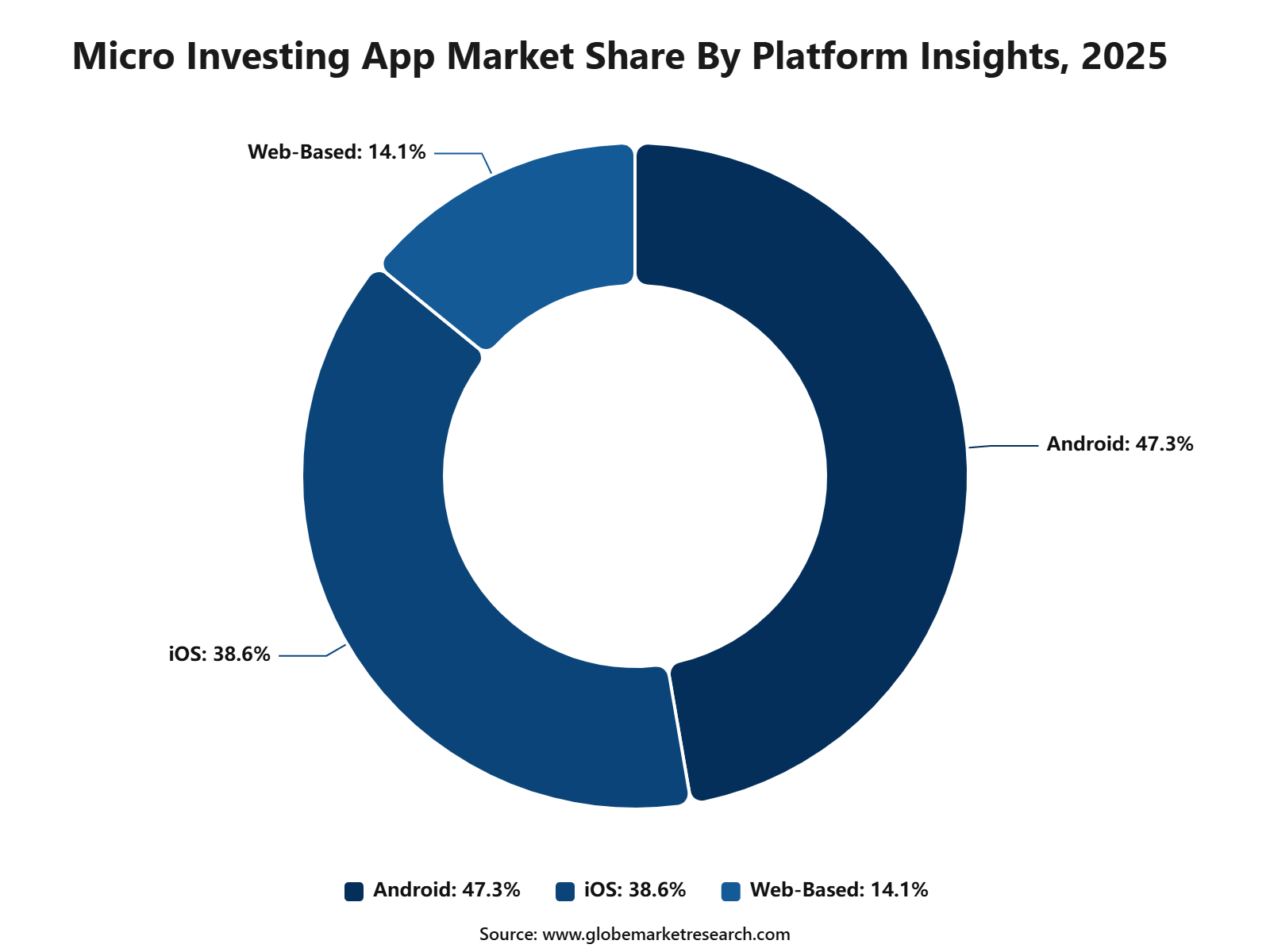
Android led the platform segment with a 47.3% share, supported by its broad global user base, affordable smartphone availability, and strong adoption of mobile investment applications.
Stocks accounted for 42.8% of the market by investment type, driven by growing interest in fractional investing, low-cost trading, and simplified access to listed companies.
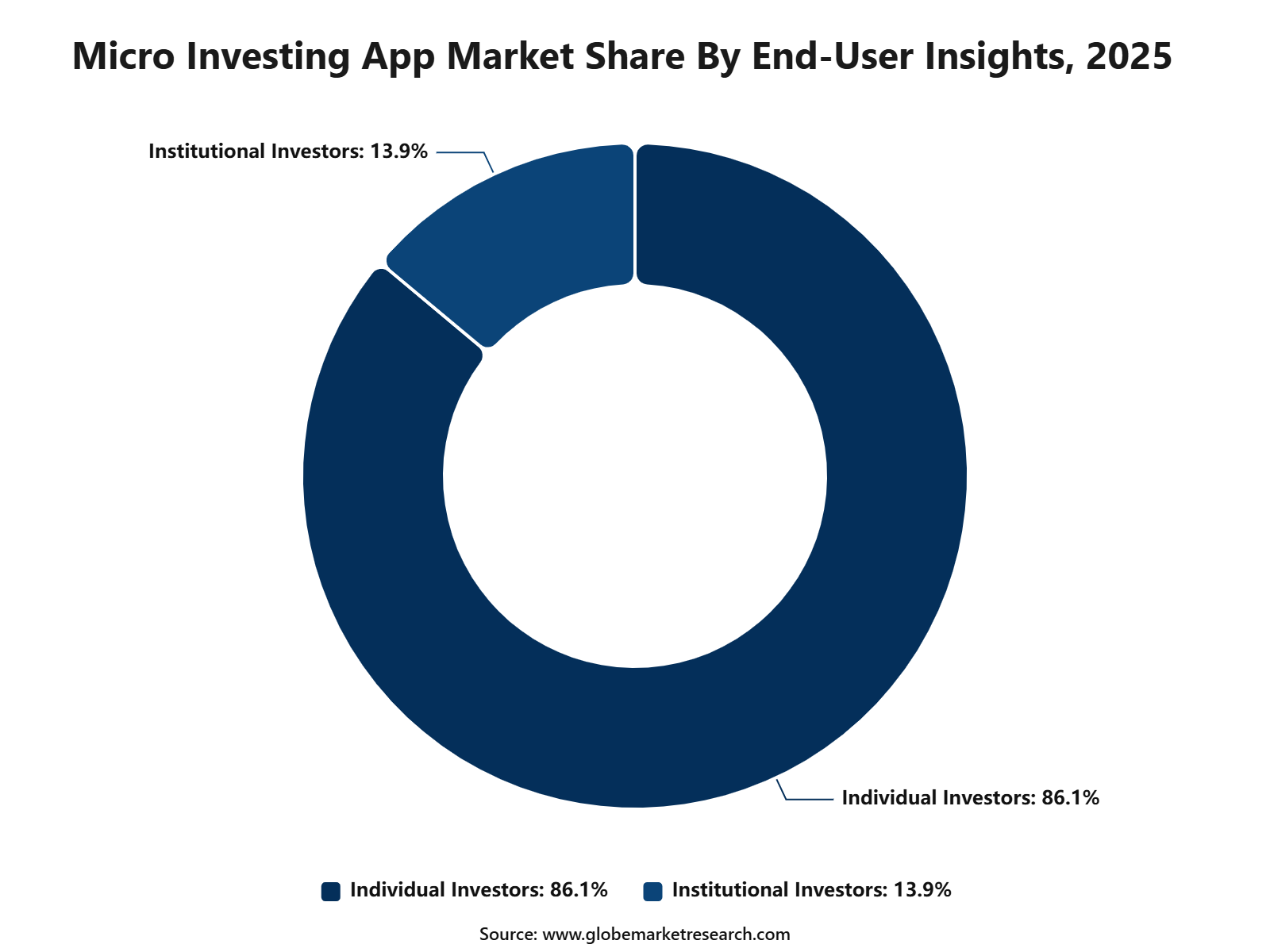
Individual investors dominated the end-user segment with an 86.1% share, reflecting increasing demand for accessible, low-value investment options and user-friendly digital platforms.
Millennials held a 39.5% share by age group, supported by high smartphone usage, greater financial awareness, and rising preference for self-directed investment tools.
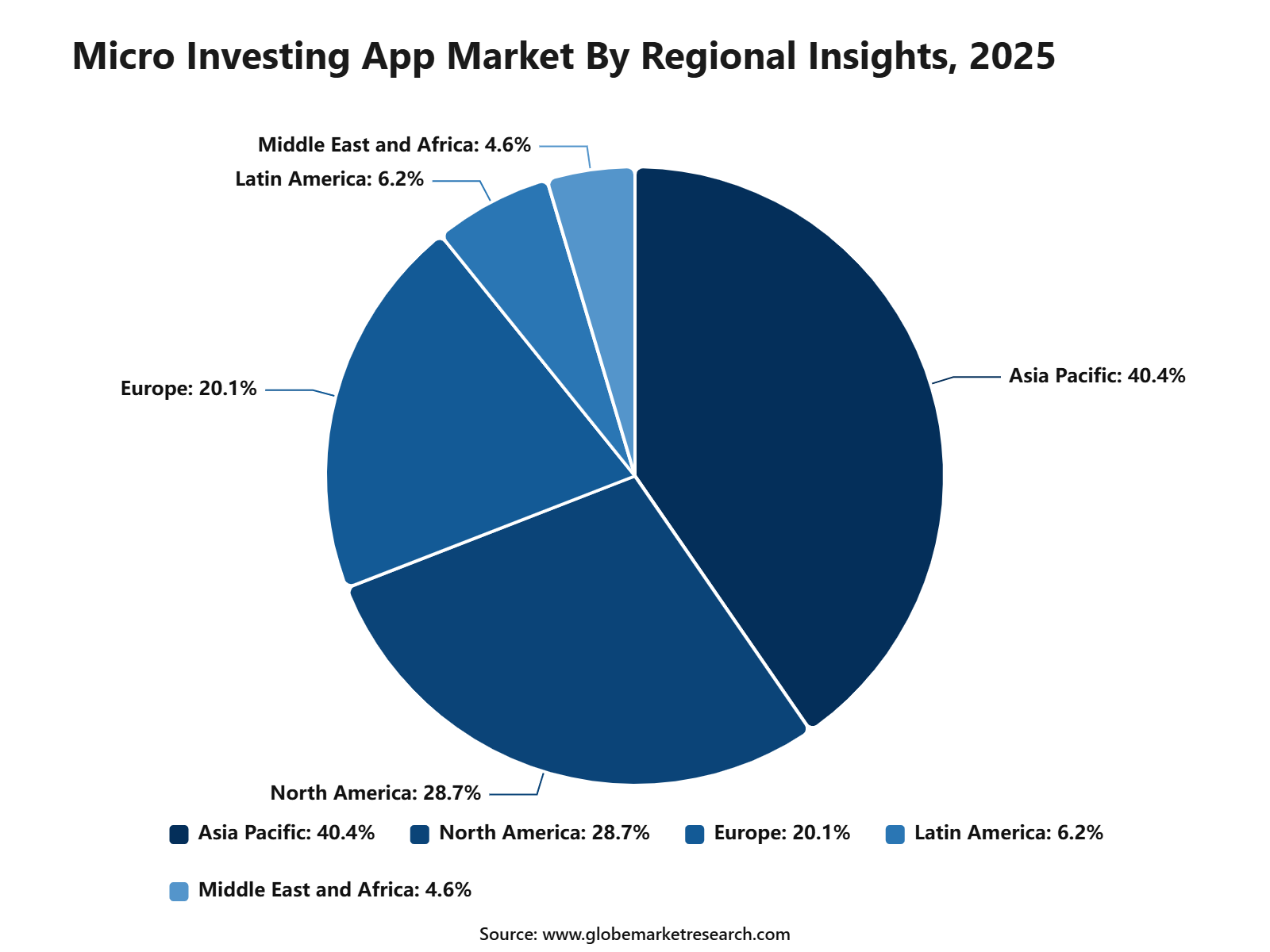
Asia Pacific led the micro investing app market with a 40.4% share, driven by expanding digital payment adoption, a large young population, increasing smartphone penetration, and growing participation in retail investing.
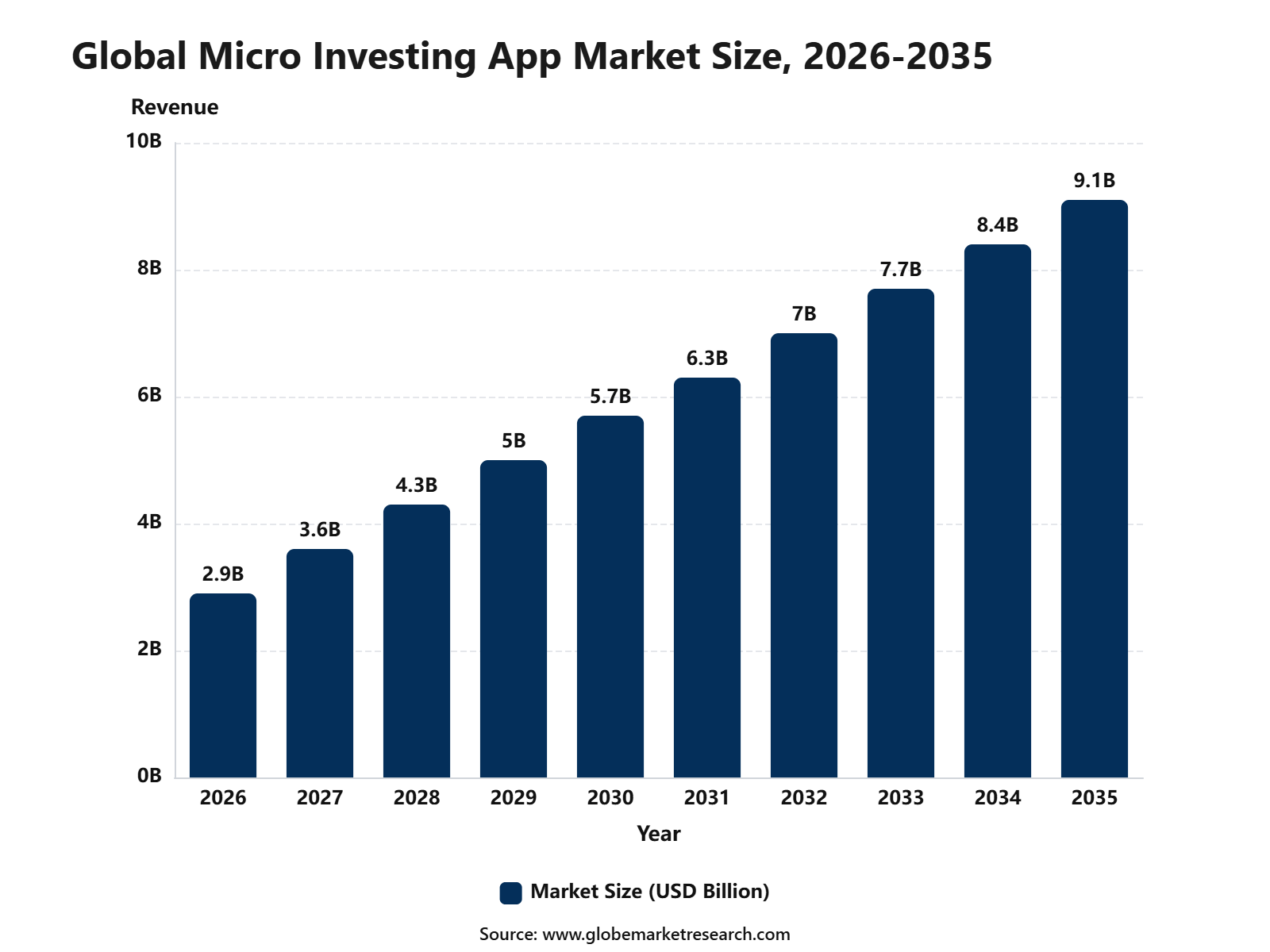 iThe graph shows projected market growth until 2035 based on CAGR analysis. Actual outcomes may vary depending on changing demand, competition, and economic factors.To gain greater insights - request a sample report PDF
Adoption Rate and Usage Statistics
According to the FINRA Investor Education Foundation, 65% of Gen Z investors used investing apps to manage investments or execute trades, compared with 55% of millennials and 38% of Gen X investors. Among Gen Z investors, 69% received investment information or suggestions through financial apps, and 67% of those receiving suggestions reported that the information influenced an investment or trading decision. These are the latest directly comparable FINRA figures focused on investing-app adoption across age groups.
Metric | Adoption Rate |
|---|---|
Gen Z App Use | 65% |
Millennial App Use | 55% |
Gen X App Use | 38% |
App Suggestions | 69% |
Suggestion Influence | 67% |
According to Acorns and Robinhood, Acorns had served more than 14 million customers, with over USD 30 billion invested through the platform by February 2026. Customers using its automated Round-Ups feature invested approximately USD 45 per month from spare change. Robinhood reported 27.6 million funded customers and USD 345.4 billion in platform assets in April 2026, demonstrating the scale of mobile-first and fractional investing activity.
Metric | Platform Usage |
|---|---|
Acorns Customers | Over 14 million |
Acorns Investments | Over USD 30 billion |
Monthly Round-Ups | Around USD 45 |
Robinhood Customers | 27.6 million |
Robinhood Assets | USD 345.4 billion |
Platform Insights
Android led the platform segment with 47.3% share. Android applications provide convenient access to fractional investing, recurring deposits, portfolio tracking, digital account opening, payment integration, market alerts, and educational content through smartphones. This segment leads because Android devices are available across a wide range of price points and remain widely used in emerging economies.
Micro-investing providers can reach first-time investors through lightweight applications, local payment options, multilingual interfaces, biometric login, and low-data features. Android represented 69.14% of the worldwide mobile operating system market in June 2026, compared with 30.79% for iOS. This large installed base supports wider distribution of mobile investment applications, particularly among cost-conscious and mobile-first users.
 iThe graph shows projected market growth until 2035 based on CAGR analysis. Actual outcomes may vary depending on changing demand, competition, and economic factors.To gain greater insights - request a sample report PDF
Investment Type Insights
Stocks accounted for 42.8% share by investment type. Micro-investing applications allow users to purchase individual shares with small amounts through fractional ownership, automated deposits, round-up investing, and recurring purchase plans. Stocks lead because they offer recognizable ownership, transparent market prices, liquidity, dividend opportunities, and direct exposure to listed companies.
Fractional investing also allows users to diversify across several companies without purchasing full shares, which may cost hundreds or thousands of dollars. FINRA stated in June 2025 that fractional shares had become an integral part of micro-investing and could provide access to higher-priced stocks and exchange-traded funds. Gallup also reported that 62% of Americans owned stocks in 2025, showing the continued importance of equities within household investment portfolios.
Category | Market Share |
|---|---|
Stocks | 42.8% |
Exchange-Traded Funds | 21.7% |
Cryptocurrencies | 14.6% |
Mutual Funds | 10.8% |
Bonds | 6.4% |
Others | 3.7% |
End-User Insights
Individual investors held 86.1% share of the Micro Investing App Market. These users commonly include first-time investors, salaried employees, students, gig workers, young professionals, and households seeking accessible investment options. This segment leads because micro-investing applications are primarily designed for self-directed investors with relatively small account balances.
Low minimum deposits, fractional shares, recurring contributions, simplified portfolio choices, and mobile account management reduce traditional barriers associated with brokerage services. Retail investors represented approximately 20% to 35% of daily trading volume in the United States, the United Kingdom, and South Korea during 2025. Their contribution reached approximately 40% in India and 80% in China, demonstrating the growing influence of individual investors across major capital markets.
 iThe graph shows projected market growth until 2035 based on CAGR analysis. Actual outcomes may vary depending on changing demand, competition, and economic factors.To gain greater insights - request a sample report PDF
Age Group Insights
Millennials led the age group segment with 39.5% share. This generation has extensive experience with mobile banking, digital payments, online financial services, and self-directed investment platforms. Millennials combine strong digital familiarity with longer employment histories and greater earning capacity than many younger users. Their requirements commonly include recurring investments, goal-based portfolios, fractional stocks, retirement planning, automated allocation, portfolio analysis, and digital financial guidance.
A 2025 global survey covering more than 13,000 respondents across 13 countries found that 15% of millennials began investing during university or early adulthood. It also found that 41% of millennials and Generation Z investors would permit an artificial intelligence assistant to manage their investments, highlighting demand for technology-supported financial services.
Category | Market Share |
|---|---|
Millennials | 39.5% |
Generation Z | 31.8% |
Generation X | 18.7% |
Baby Boomers | 10.0% |
Regional Insights
Asia Pacific led the Micro Investing App Market with 40.4% share. Regional growth is supported by large smartphone populations, increasing internet access, expanding securities accounts, digital payment adoption, and rising participation by first-time retail investors. India, China, Australia, Japan, South Korea, Singapore, and Southeast Asian economies represent important adoption centres.
Applications offering low investment thresholds, local payment systems, multilingual support, automated savings, and access to domestic and international securities are positioned to benefit from the region’s diverse investor base. NSDL recorded more than 45.6 million active client accounts in India as of June, 2026, including over 751,000 accounts added during that month. Demat account holders were present across 99.38% of Indian postal codes. Retail investors also generated around 40% of daily trading volume in India and 80% in China, supporting Asia Pacific’s leading position.
 iThe graph shows projected market growth until 2035 based on CAGR analysis. Actual outcomes may vary depending on changing demand, competition, and economic factors.To gain greater insights - request a sample report PDF
Report Segmentation
By Platform
iOS
Android
Web-Based
By Investment Type
Stocks
Exchange-Traded Funds
Bonds
Mutual Funds
Cryptocurrencies
Others
By End User
Individual Investors
Institutional Investors
By Age Group
Millennials
Generation Z
Generation X
Baby Boomers
By Region
North America
Europe
Asia Pacific
Latin America
Middle East and Africa
Top 5 Key Market Drivers
Low investment entry requirements: Micro-investing applications allow users to begin investing with small amounts instead of meeting large account or fund minimums. This is improving access for students, younger users, first-time investors, and lower-income consumers.
Growing adoption of fractional shares: Fractional investing enables users to purchase part of a stock or exchange-traded fund based on a fixed dollar amount. It also provides access to higher-priced securities and supports portfolio diversification with limited capital.
Expansion of automated investing: Recurring transfers and purchase round-up features automatically direct small amounts into investment accounts. This supports consistent saving and investing without requiring users to make a separate decision for every contribution.
Increasing mobile financial inclusion: Wider access to smartphones, internet services, digital payments, and formal financial accounts is expanding the potential user base for mobile investment platforms. The Global Findex 2025 covered approximately 148,000 adults across 141 economies, reflecting the growing importance of digital financial access.
Demand for affordable investment guidance: Automated digital advisory platforms can create and manage portfolios using information about users’ goals, risk tolerance, and financial circumstances. These services can provide investment management at a lower cost than many traditional advisory models.
Top 5 Emerging Trends
AI-based portfolio personalization: Applications are using AI to analyze financial goals, spending patterns, risk tolerance, account activity, and investment behaviour. This information is being used to deliver personalized portfolios, educational content, and investment suggestions.
Goal-based automated investing: Users are increasingly being offered separate portfolios for retirement, emergency savings, education, home purchases, and other financial objectives. Contributions and asset allocations can be automatically adjusted according to the selected goal.
Dollar-based portfolio construction: Fractional shares allow portfolios to be built using exact dollar allocations instead of whole-share quantities. This supports more precise diversification, rebalancing, and use of available account funds.
Consumer-protection-focused application design: Regulators are increasing their examination of app design, risk assessments, fair-value checks, disclosures, and potentially harmful gamification. Investment platforms are expected to provide clearer information and demonstrate that their services support suitable customer outcomes.
AI-supported security and compliance: Micro-investing platforms are adopting automated identity verification, fraud monitoring, transaction surveillance, cybersecurity controls, and anti-money-laundering systems. Strong data protection is becoming essential as applications process personal, banking, and investment information.
Market Dynamics
Drivers Impact Analysis
The Micro Investing App Market is driven by rising smartphone adoption, growing financial awareness, demand for low-cost investment services, and increasing participation by first-time retail investors. Fractional shares, automated savings, low minimum investment requirements, and simple mobile interfaces allow users to begin investing with limited capital.
Asia Pacific leads the market due to its large young population, expanding digital payment ecosystem, growing middle-income population, and rapid adoption of mobile financial services. China, India, Japan, South Korea, Australia, and Southeast Asian countries are key contributors, supported by increasing smartphone access, digital banking adoption, and interest in personal wealth creation.
Impact Factor | Estimated CAGR Impact | Regional Relevance | Market Impact |
|---|---|---|---|
Growth in first-time retail investors | +4.7% | Asia Pacific, North America, Europe | Expands the user base for accessible investment platforms. |
Rising smartphone and internet adoption | +4.2% | Asia Pacific, Latin America, Middle East | Improves access to mobile investment services. |
Increasing demand for fractional investing | +3.8% | North America, Europe, Asia Pacific | Allows users to invest in high-value assets with small amounts. |
Growing financial literacy | +3.3% | Global consumer markets | Encourages younger users to begin long-term investing. |
Expansion of digital payment systems | +2.9% | Asia Pacific and emerging economies | Simplifies deposits, withdrawals, and recurring investments. |
Restraints Impact Analysis
The market faces restraints from limited investor knowledge, concerns regarding financial losses, regulatory uncertainty, cybersecurity risks, and low customer trust. New investors may make decisions without fully understanding market volatility, fees, asset risks, or long-term investment strategies.
Another restraint is the high cost of customer acquisition and platform compliance. Micro investing apps must meet securities regulations, know-your-customer requirements, anti-money laundering rules, data protection standards, and financial disclosure obligations. Maintaining low fees while covering technology, licensing, security, and customer support costs can reduce profitability.
Impact Factor | Estimated CAGR Impact | Regional Relevance | Market Impact |
|---|---|---|---|
Limited financial knowledge among users | -2.5% | Emerging and developing markets | Increases the risk of poor investment decisions. |
Market volatility and investment losses | -2.2% | Global financial markets | Reduces user confidence and investment activity. |
Regulatory and compliance requirements | -1.9% | North America, Europe, Asia Pacific | Increases operational and legal costs. |
Cybersecurity and data privacy concerns | -1.6% | Digital financial service markets | Limits trust in mobile investment platforms. |
High customer acquisition costs | -1.3% | Competitive app markets | Reduces profitability and increases marketing spending. |
Opportunities Impact Analysis
Opportunities are expanding in automated investing, fractional shares, exchange-traded funds, cryptocurrency investing, goal-based savings, retirement planning, and recurring investment services. These features allow platforms to address different financial goals while improving user engagement and account activity.
Higher-value opportunities are emerging in AI-based portfolio recommendations, personalized financial education, embedded investing, subscription-based advisory services, and cross-border investment access. Platforms that combine investing, savings, budgeting, and financial learning within one application can attract users seeking an integrated personal finance experience.
Impact Factor | Estimated CAGR Impact | Regional Relevance | Market Impact |
|---|---|---|---|
Expansion of fractional share investing | +4.5% | North America, Europe, Asia Pacific | Makes diversified investing accessible to low-capital users. |
AI-based portfolio personalization | +4.0% | Developed digital finance markets | Improves investment recommendations and user engagement. |
Automated and recurring investments | +3.6% | Global consumer markets | Supports consistent investing and long-term asset accumulation. |
Embedded investing services | +3.2% | Banking, payment, and fintech ecosystems | Integrates investment features into widely used financial apps. |
Financial education and planning tools | +2.8% | Asia Pacific and emerging markets | Builds investor confidence and supports informed decisions. |
Challenges Impact Analysis
The main challenge is retaining users after initial account registration. Many users begin with small deposits but may become inactive due to market losses, limited financial understanding, low disposable income, or unclear investment goals. Platforms must provide relevant education, personalised guidance, and simple portfolio tracking to maintain engagement.
Another challenge is balancing accessibility with investor protection. Micro investing apps must simplify the investment process without encouraging excessive trading, unsuitable risk-taking, or misleading expectations. Platform providers must also maintain reliable transaction processing, transparent fees, secure account access, and accurate portfolio information across different asset classes.
Impact Factor | Estimated CAGR Impact | Regional Relevance | Market Impact |
|---|---|---|---|
Low user retention and inactive accounts | -2.4% | Global micro investing platforms | Reduces recurring revenue and long-term customer value. |
Investor protection and suitability concerns | -2.1% | Regulated financial markets | Increases scrutiny of app design and investment recommendations. |
Difficulty in achieving platform profitability | -1.8% | Low-fee investment platforms | Creates pressure to develop additional revenue sources. |
Transaction security and system reliability | -1.5% | Mobile financial service markets | Affects customer trust and platform reputation. |
Competition from banks and larger brokers | -1.2% | North America, Europe, Asia Pacific | Increases pricing pressure and customer acquisition costs. |
Micro-Investing App Market Case Study: Acorns
Acorns demonstrates how micro-investing apps can lower the entry barrier to investment through automation, fractional investing, and small recurring contributions. Users can begin with as little as USD 5, while the Round-Ups feature automatically invests the difference between a purchase and the next whole-dollar amount. Acorns reported more than 14 million all-time customers and over USD 30 billion invested through its platform as of February 13, 2026.
The platform combines micro-investing with retirement accounts, banking, financial education, and investment accounts for children. Acorns had more than 6 million subscribers, while customers using Round-Ups invested an average of approximately USD 45 per month from spare change as of July 2025. Its family-focused services had supported more than 1.2 million children, with families investing over USD 779 million toward children’s financial futures. These figures show how micro-investing platforms can expand customer relationships beyond basic retail investment accounts.
The case indicates that demand for micro-investing apps is being supported by automated deposits, fractional shares, low starting requirements, simplified portfolios, mobile access, and financial education. Acorns’ 2026 consumer study found that nearly one in three Americans had never opened an investment account, while 45% experienced anxiety linked to financial pressure. Future adoption will depend on transparent fees, secure account management, clear risk disclosures, personalized guidance, and the ability to help users maintain consistent long-term investment habits.
Recent Developments
Market News
March 2026, Robinhood introduced a family-focused investing experience: The company launched a family hub that allows customers to view and organise accounts by family member. It also introduced custodial accounts, trust accounts, account-sharing functions, and updates to Robinhood Strategies, its managed investment service.
March 2026, Stash agreed to transition Stockpile’s children’s investment accounts: Stockpile decided to wind down its service, while eligible children’s accounts were planned to move to Stash. The transition gives families continued access to investment tools, financial education, automated contributions, and long-term wealth-building features.
March 2026, Bachatt reported strong adoption of small-value mutual fund investing: The India-based platform reported more than three million users since its May 2025 launch. Its savings product starts at INR 100 and provides access to debt mutual funds from major asset management companies. Bachatt processed more than two million mutual fund transactions through its app in February 2026.
May 2026, Robinhood launched AI-controlled trading accounts: Customers were allowed to connect third-party AI agents to dedicated investment accounts through Model Context Protocol servers. Agents can analyse portfolios, monitor investment themes, rebalance holdings, and execute equity trades using funds specifically allocated by the customer.
July 2026, Robinhood expanded tokenised stock access internationally: Robinhood introduced new Stock Tokens through its digital wallet across more than 120 countries, subject to local restrictions. Eligible customers can trade tokenised financial products continuously and use them in decentralised finance applications. Robinhood reported serving nearly 28 million customers across 38 countries.
Acquisitions
January 2026, JPMorgan acquired WealthOS: JPMorgan completed the acquisition of the UK-based pensions and wealth technology platform. WealthOS employees in the United Kingdom and Sri Lanka joined JPMorgan, while its technology is expected to strengthen J.P. Morgan Personal Investing’s digital retirement and pension services.
February 2026, Grab agreed to acquire Stash Financial: Grab signed definitive agreements to acquire 100% of Stash. A 50.1% interest will be purchased at closing based on an enterprise value of USD 425 million, while the remaining interest will be acquired at fair market value over the following three years.
February 2026, the Grab-Stash transaction expanded super-app participation in investing: Stash had approximately USD 5 billion in assets under management and more than one million paying subscribers at the time of the announcement. Stash is expected to continue operating as an independent U.S. brand following completion of the transaction.
March 2026, J. Safra Sarasin completed its acquisition of a 70% stake in Saxo Bank: The transaction was valued at approximately EUR 1.1 billion, or USD 1.3 billion. Saxo’s digital trading architecture was identified as a major strategic factor behind the purchase, indicating rising demand for scalable investment technology and AI-supported wealth services.
March 2026, Stash agreed to acquire Stockpile’s children’s accounts: The agreement allows eligible Stockpile customers to continue investing through Stash following Stockpile’s decision to close its service. The transaction strengthens Stash’s position in family investing, custodial wealth management, and financial education for younger users.
Funding
January 2026, Autonomous Technologies Group raised USD 15 million: The company completed a pre-seed round led through a Y Combinator alumni investment vehicle, with participation from BoxGroup and Collaborative Fund. The funding supports Autonomous, an AI-powered financial strategist designed to provide portfolio monitoring, tax planning, risk management, and personalised financial guidance.
January 2026, AssetPlus raised INR 175 crore: The funding round was led by Nexus Venture Partners, with participation from Eight Roads Ventures and Rainmatter Fund. AssetPlus reported working with more than 18,000 mutual fund distributors, serving over 150,000 customers, and supporting more than INR 7,250 crore in assets under management.
March 2026, Bachatt raised USD 12 million: The Series A round was led by Accel, with participation from Lightspeed and Info Edge Ventures. The capital is being used to expand its savings product, acquire users, and introduce AI-supported wealth management and credit services for merchants and self-employed workers.
June 2026, Arca raised USD 48.5 million: The Series A round was led by General Catalyst, with support from Index Ventures and Venrock. Arca plans to expand its AI-native wealth platform, advisory workforce, and client base. Although Arca primarily serves wealthier households, its technology demonstrates how AI-based personalisation is spreading across the wider digital investment industry.
Competitive Landscape
The market is characterized by intense competition among established players and emerging companies. Strategic partnerships, mergers and acquisitions, and product innovation are key strategies employed by market participants.
Key Market Players
Robinhood Markets, Inc.
Acorns Grow Incorporated
Betterment LLC
Stash Financial, Inc.
Public Holdings, Inc.
Wealthfront Corporation
SoFi Technologies, Inc.
M1 Holdings Inc.
Wealthsimple Inc.
Raiz Invest Limited
Moneybox
Nutmeg Saving and Investment Limited
Moneyfarm
Other Key Players
Research Methodology
This market study is prepared using a combination of primary and secondary research. Primary research includes discussions with manufacturers, suppliers, distributors, consultants, industry experts, and end users. Secondary research covers company reports, government databases, trade associations, technical publications, regulatory sources, and trusted industry documents. The collected information is used to assess market demand, pricing trends, technology adoption, competitive activity, and regional performance.
AI language models are not used as primary data sources, and publicly available AI-generated content is not treated as market evidence. Computational tools may be used to support data processing, translation, data classification, and pattern identification. However, every published assessment is supported by verified sources, human review, and primary market discussions.
Market estimates are developed through top-down and bottom-up approaches and validated using data triangulation. Revenue, production, shipment, pricing, and application-level data are compared across multiple sources. Forecasts consider economic conditions, regulatory changes, investment activity, innovation, supply chain developments, and industry risks. All findings are reviewed through source verification and internal quality checks before publication.
Part I
Source Management & Input Data Standards
Who provides data, how sources are qualified, and what types of evidence are admissible.
Part II
Research Scope & Market Coverage
How we define the markets we assess and the parameters that govern each product.
Part III
Data Collection, Verification & Submission
The mechanics of gathering, cross-checking, and hierarchically ranking evidence.
Part IV
Assessment Determination & Quality Controls
How raw data becomes a published assessment — normalisation, expert judgement, and outlier exclusion.
Part V
Publication, Corrections & Revision
Our publication schedule, corrections policy, and methodology review cycle.
Part VI
Independence, Ethics & Complaints
Conflict-of-interest policies, editorial independence, and how clients raise concerns.
Google · Preferred Sources
Don't miss the latest market research insights and industry updates on Google.
Add Globe Market Research as a preferred source in the Google app to see our reports, analysis, and market stories in your news suggestions.
Meet the Team
This report was prepared by our expert analysts with deep industry knowledge and research experience.
Kimaya brings more than five years of experience in market research, content review, and industry analysis to Globe Market Research. She plays an important role in maintaining the accuracy, clarity, consistency, and relevance of research content across a wide range of industries. Her responsibilities include reviewing market data, segment analysis, competitive landscapes, industry trends, company developments, and strategic insights. Each report is carefully assessed to ensure that the findings are supported by reliable data, presented in a structured format, and aligned with the information needs of business decision-makers. Kimaya has research experience across healthcare, information technology, consumer goods, and several cross-industry domains.
Prashant S. is a Research Analyst at Globe Market Research with more than four years of experience in market research and industry analysis. He specializes in the Aerospace and Defence, Automotive and Transportation, Semiconductor and Electronics, Information and Technology sectors, with expertise in market sizing, trend analysis, competitive assessment, and industry forecasting. He applies primary and secondary research, data validation, company analysis, and market estimation methods to deliver reliable insights for strategic planning and business decision-making.
Frequently Asked Questions
Related Reports
More in Information and Technology
AI Agent Observability Market Size to Reach USD 14.0 Billion By 2035
AI Agent Observability Market Size, Share, and Trends Analysis by Offering (Monitoring and Alerting, Guardrails and Quality, Tracing and Evaluation, and Others), by Capability (Cost and Token Monitoring, Latency and Performance Monitoring, Agent Tracing, Prompt and Output Evaluation, and Others), by Model Type Monitored (Proprietary and Closed Models, Open-Source Models, and Fine-Tuned and Custom Models), by Deployment (Cloud, On-Premises, and Hybrid), by Organization Size (Small and Medium Enterprises and Large Enterprises), by End-User Industry (BFSI, IT and Telecommunications, Healthcare, Retail and E-commerce, Manufacturing, Government, and Others), Regional Insights, Technology Trends, Competitive Landscape, Strategic Opportunities, and Growth Forecast, 2026-2035
AI Agent Identity Management Market Size to hit USD 7.8 billion by 2035
AI Agent Identity Management Market Size, Share, and Trends Analysis by Component (Platforms and Services), by Identity Function (Agent Discovery and Registration, Authentication and Authorization, Identity Governance and Administration, Credential and Secret Management, Privileged Access Management, Behavioral Monitoring, Audit and Compliance, and Agent Revocation), by Agent Type (AI Copilots, Semi-Autonomous AI Agents, Fully Autonomous AI Agents, and Multi-Agent Systems), by Deployment (Cloud-Based, On-Premises, and Hybrid), by Organization Size (Small and Medium Enterprises and Large Enterprises), by End-User Industry (BFSI, Healthcare and Life Sciences, IT and Telecommunications, Government and Defense, Retail and E-commerce, Manufacturing, Energy and Utilities, and Others), Regional Insights, Technology Trends, Competitive Landscape, Strategic Opportunities, and Growth Forecast, 2026-2035
Shooting Games Market Size to hit USD 238.9 bn by 2035 | CAGR of 10.7%
Shooting Games Market Insights Analysis by Product (Shooting Gallery, Light Gun Shooter, First-Person Shooter, Third-Person Shooter, and Others), by Device Type (PC/MMO, Tablet, Mobile Phone, and TV/Console), by End User (Male and Female), Regional Insights, Technology Trends, Competitive Landscape, Strategic Opportunities, and Growth Forecast, 2026-2035
AI Data Centre Cooling Market Size to Reach USD 52.2 billion by 2035
AI Data Centre Cooling Market Size, Share, Trends and Growth Analysis Report By Cooling Type (Air Cooling, Liquid Cooling, Hybrid Cooling Systems), By Data Centre Type (Hyperscale Data Centres, Colocation Data Centres, Enterprise Data Centres, Edge Data Centres), By Cooling Component (Cooling Units, Chillers, Air Handling Units, Pumps, Heat Exchangers), By End User (Cloud Service Providers, Colocation Providers, Enterprises, Government and Defense), By Regional Insights, Technology Trends, Competitive Landscape, Strategic Opportunities and Growth Forecast, 2026-2035