

Revenue, 2025
USD 32.1 Bn
Forecast, 2035
USD 58.0 Bn
CAGR, 2025-2035
6.1%
Report Coverage
Global
Market Size and Forecast
The Global Flavors and Fragrances Market was worth USD 32.1 billion in 2025 and is expected to reach USD 58.0 billion by 2035, growing at a CAGR of 6.1% from 2025 to 2035. Based on this growth rate, the market is estimated to reach around USD 34.7 billion in 2026. Asia Pacific held the largest regional share of 32.4% in 2025, valued at around USD 10.4 billion, supported by rising demand from food and beverages, personal care, cosmetics, household products, and premium consumer goods.
The Flavors and Fragrances Market includes natural and synthetic ingredients used to improve taste, aroma, sensory appeal, and product differentiation. It covers flavor compounds, fragrance oils, aroma chemicals, essential oils, botanical extracts, and specialty blends used across packaged foods, beverages, perfumes, skincare, haircare, detergents, air care, and pharmaceutical products. The market is closely linked with consumer preferences, clean-label trends, product innovation, and brand experience.
Key Parameter | Report Details |
|---|---|
Market Revenue, 2025 | USD 32.1 Billion |
Projected Revenue, 2035 | USD 58.0 Billion |
CAGR (2025-2035) | 6.1% |
Largest Region | Asia Pacific (32.4%, USD 10.4 Bn) |
Market Concentration | Medium |
Base Year | 2024 |
Forecast Period | 2025-2035 |
The market outlook remains positive as consumers continue seeking better taste, pleasant scents, wellness-focused products, and natural ingredient-based formulations. Growth can be attributed to rising demand for functional beverages, premium personal care products, fine fragrances, and customized flavor and scent solutions. Asia Pacific’s large consumer base, expanding middle class, and strong manufacturing ecosystem are expected to support long-term market growth.
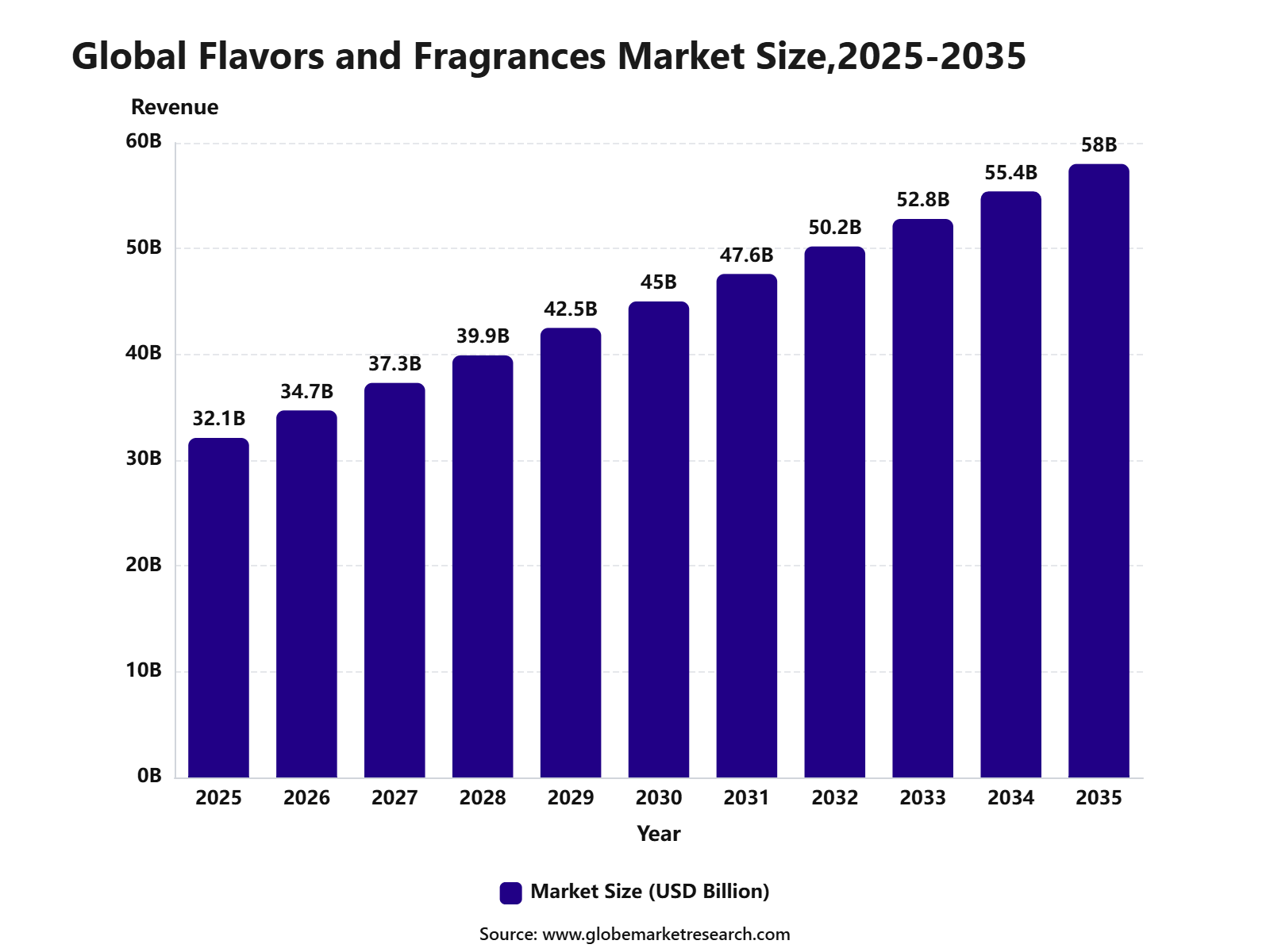 iThe graph shows projected market growth until 2035 based on CAGR analysis. Actual outcomes may vary depending on changing demand, competition, and economic factors.To gain greater insights - request a sample report PDF
Key Market Insights
Flavors led the product type segment with 55.5% share, supported by strong demand from food, beverages, confectionery, dairy, bakery, and processed food applications.
Synthetic sources accounted for 63.3% share, driven by cost efficiency, consistent quality, stable supply, and wider use in large-scale flavor and fragrance formulations.
Liquid form held 37.9% share, supported by easier blending, accurate dosing, better solubility, and strong use across food, beverage, cosmetic, and personal care products.
Fragrance applications captured 64.7% share, driven by rising demand from perfumes, deodorants, soaps, detergents, skincare, haircare, and home care products.
Asia Pacific led the flavors and fragrances market with 32.4% share, valued at USD 10.4 billion, supported by expanding food processing, growing personal care consumption, and rising demand across China, India, Japan, and Southeast Asia.
Top Funding and Investment
Top Investments
Givaudan started construction of a liquid flavor production facility in Reading, Ohio, representing an initial investment of CHF 187 million, equivalent to approximately USD 215 million. The facility will cover 24,000 square metres within a reserved area exceeding 100,000 square metres and is expected to create more than 300 jobs. It will expand Givaudan’s production capacity for liquid taste solutions supplied to food and beverage manufacturers across North America.
Givaudan announced a combined investment exceeding USD 160 million at its Pedro Escobedo site in Mexico. The program includes an expanded fragrance ingredients facility and a new fragrance compounding factory designed to reach annual capacity of approximately 20,000 to 25,000 tonnes by 2029. The investment will support fragrance production, ingredient processing, encapsulation technologies, and regional customer supply.
MANE began the second phase of its Pinghu manufacturing complex with a total investment of USD 70 million. The 14,000-square-metre expansion will focus on fragrance liquids, adsorption systems, spray drying, microencapsulation, and macroencapsulation. The new capacity is intended to support demand for stable and long-lasting scent delivery systems across personal care, home care, and consumer product applications.
IFF completed a EUR 10 million expansion of its LMR Naturals facility in Grasse, France. The project increased the site’s total area by 75% to 4,687 square metres and added a pilot hall for the development of natural fragrance ingredients. More than 30 research and development specialists will work at the expanded site, supported by direct access to botanical materials from a nearby experimental field.
dsm-firmenich announced investments in two Indian flavor manufacturing projects, including an expanded seasoning plant in Kerala and a new 56,000-square-metre greenfield facility in Gujarat. The Gujarat plant will manufacture sweet and savory flavors using liquid compounding, dry blending, encapsulation, automated packaging, and quality-control systems. More than 200 jobs are expected at the Gujarat facility, while the Kerala expansion will create around 150 positions. The investment value was not publicly disclosed.
Top Funding Transactions
Osmo raised USD 70 million in Series B funding to expand its artificial intelligence-based fragrance discovery and development platform. The company combines machine learning, olfactory science, neuroscience, and perfumery to identify fragrance molecules and develop customized scent formulations. Osmo also expanded to more than 100 employees and established a 58,000-square-foot manufacturing and research facility in Elizabeth, New Jersey.
AFYREN secured a EUR 10 million sustainability-linked loan for its AFYREN NEOXY biorefinery. A first tranche of EUR 6 million was released, while EUR 4 million was subject to subsequent conditions. The financing supports the industrial ramp-up of fermentation-derived bio-based acids intended for applications including flavor and fragrance formulations, nutrition, life sciences, and specialty materials.
EvodiaBio raised EUR 6 million in a financing round led by RA Capital, with participation from EIFO, Wild Radicals, and Francis Family Funds. The company produces volatile natural aroma molecules through fermentation for beverage and broader aroma applications. Its technology had already been used in more than 70 commercial brews and over ten projects involving leading international breweries when the funding was announced.
Top Acquisitions
Turpaz Industries, France, July 2025: Acquisition of Attractive Scent for EUR 27.4 Million
Turpaz Industries completed the acquisition of a 68.6% controlling stake in Attractive Scent SAS for EUR 27.4 million, equivalent to approximately USD 32.3 million. The acquisition was financed through long-term bank funding.
Turpaz acquired Attractive Scent’s fragrance formulation portfolio, production site, development laboratory, sales centre, customer relationships, and team of 61 employees. Attractive Scent develops fragrance extracts for fine fragrances, personal care products, cosmetics, air care applications, and candles. The agreement also includes a mechanism allowing Turpaz to purchase the remaining shares based on future business performance.
Givaudan, Brazil, September 2025: Acquisition of a Majority Stake in Vollmens Fragrances
Givaudan completed the acquisition of a majority stake in Vollmens Fragrances, a Brazilian fragrance house serving customers across Latin America, Central America, North America, and Africa. The transaction was financed from Givaudan’s existing resources, while the financial consideration was not disclosed.
Givaudan acquired a controlling interest in Vollmens’ fragrance creation capabilities, local manufacturing operations, customer portfolio, technical knowledge, and regional distribution presence. Vollmens would have added approximately CHF 25 million in pro forma sales during 2024. Its founding executives retained leadership roles, and the agreement provides options for Givaudan to increase its ownership in the future.
By Product Type
Flavors accounted for 55.5% share of the Flavors and Fragrances Market. This leading position is supported by strong demand from food, beverages, dairy products, bakery items, confectionery, snacks, nutrition products, and ready-to-drink formats. The segment is widely preferred because flavors help improve taste, product appeal, and brand differentiation.
Natural, synthetic, fruit, sweet, savory, spicy, and functional flavor profiles are commonly used to meet changing consumer preferences across packaged food and beverage categories. Demand for flavors is expected to remain strong as food producers continue to launch healthier, premium, and convenience-led products. Growth will be supported by rising consumption of processed foods, functional drinks, plant-based foods, and regional taste innovations.
By Source
Synthetic sources accounted for 63.3% share of the Flavors and Fragrances Market. This dominance is driven by cost efficiency, consistent quality, high stability, and easier availability for large-scale commercial production. Synthetic ingredients are widely used in flavor and fragrance formulations because they provide reliable aroma, taste, color stability, and longer shelf life.
They are especially important for mass-market foods, beverages, perfumes, detergents, cosmetics, and household care products. The segment is expected to maintain a strong position as manufacturers require scalable and standardized ingredients. However, demand for nature-identical and cleaner-label formulations is also increasing, which is encouraging producers to balance performance with consumer preference for safer and transparent ingredients.
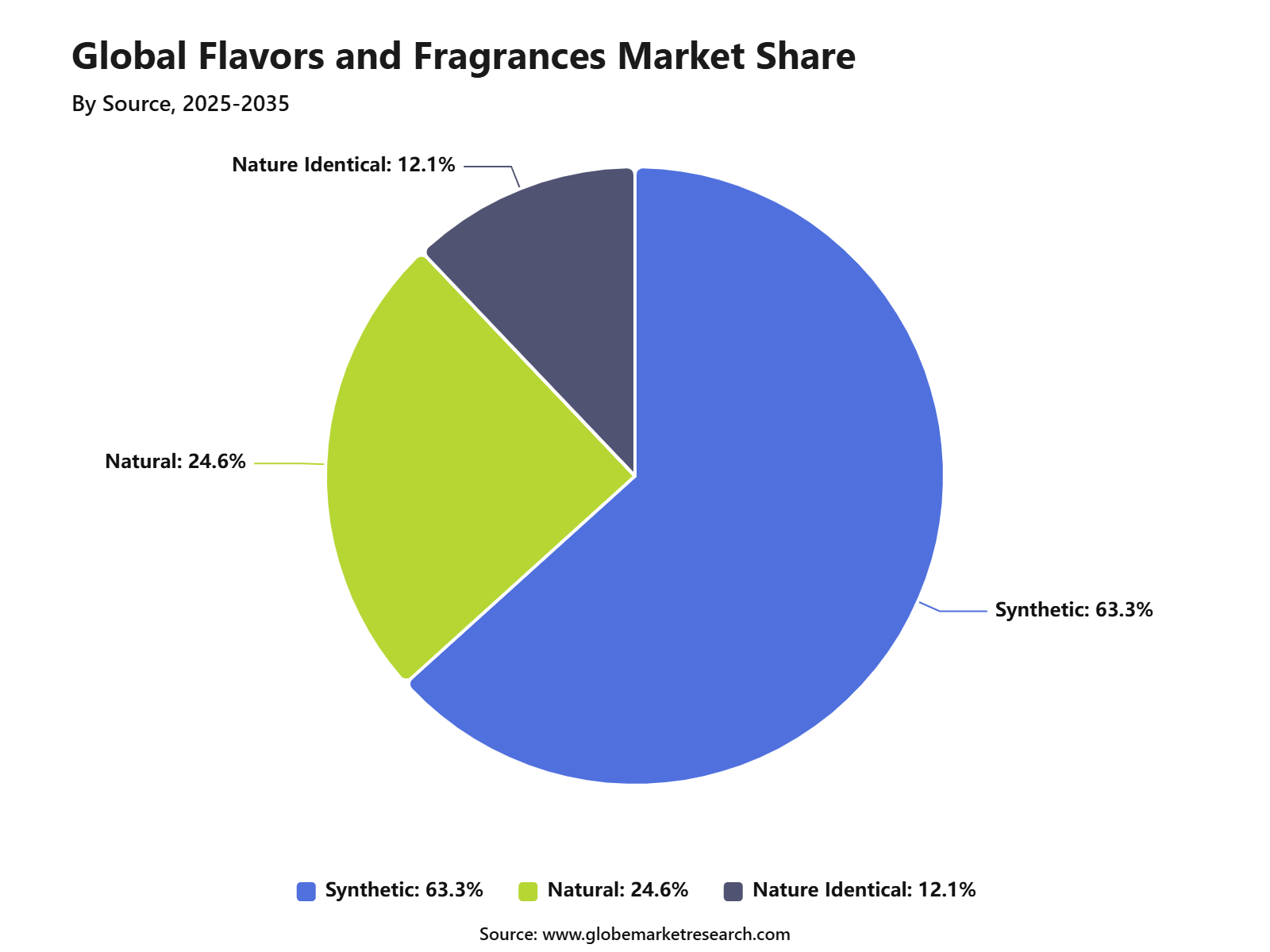 iThe graph shows projected market growth until 2035 based on CAGR analysis. Actual outcomes may vary depending on changing demand, competition, and economic factors.To gain greater insights - request a sample report PDF
By Form
Liquid forms held 37.9% share of the Flavors and Fragrances Market. This leading share is supported by easier blending, faster dispersion, and strong compatibility with beverages, dairy products, sauces, perfumes, cosmetics, personal care, and homecare formulations. Liquid flavors and fragrances are preferred because they can be dosed accurately and mixed smoothly into different product systems.
They also support uniform distribution, strong sensory performance, and flexible application across high-volume manufacturing lines. Demand for liquid formats is expected to remain steady as beverage, personal care, and household product manufacturers continue to expand production. Their ease of processing and suitability for both water-based and oil-based formulations will continue to support segment growth.
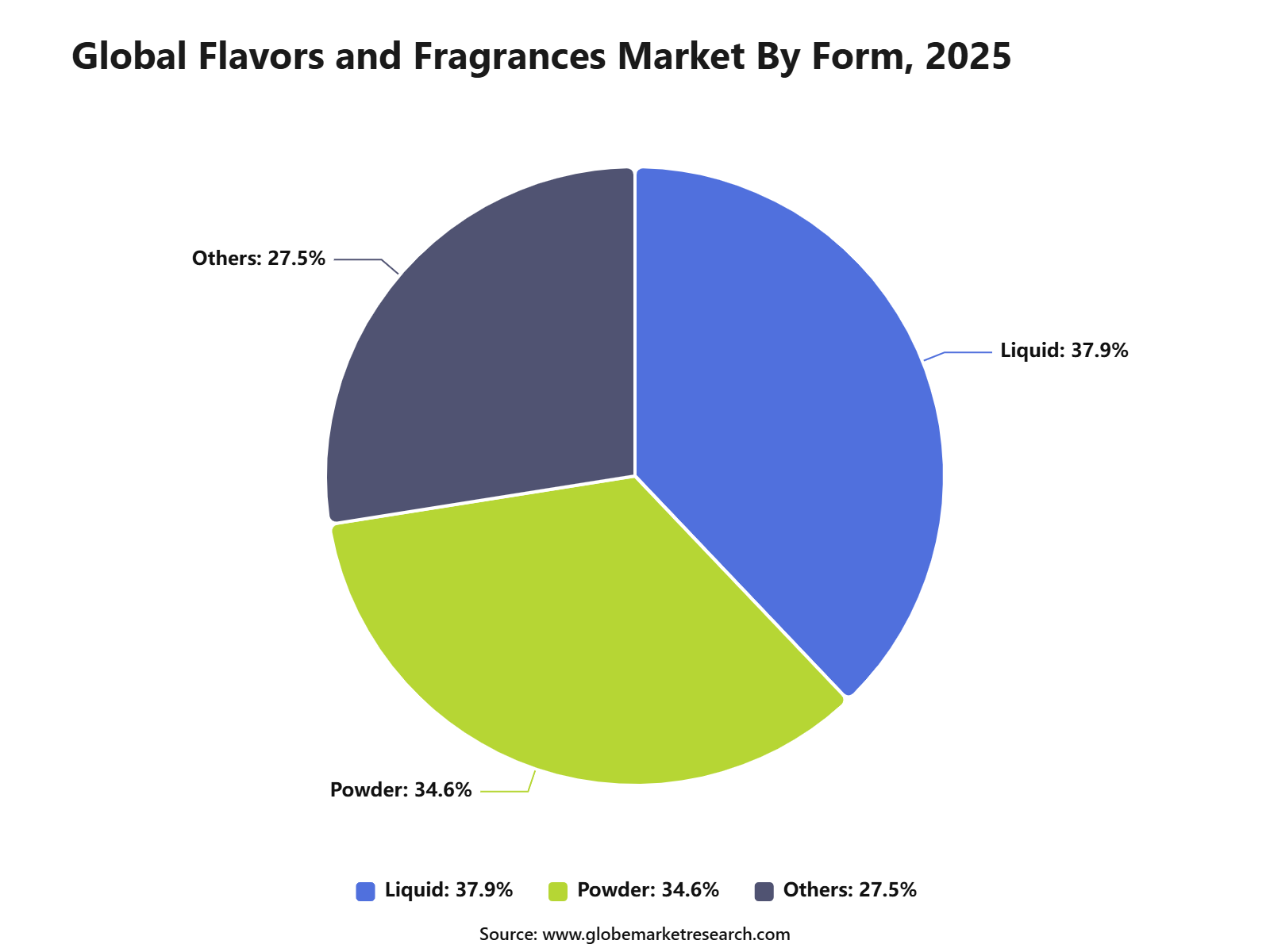 iThe graph shows projected market growth until 2035 based on CAGR analysis. Actual outcomes may vary depending on changing demand, competition, and economic factors.To gain greater insights - request a sample report PDF
By Application
Fragrance applications accounted for 64.7% share of the Flavors and Fragrances Market. This leading position is supported by high use in perfumes, deodorants, cosmetics, soaps, shampoos, detergents, air fresheners, fabric care products, and household cleaning products. Fragrances are important because they improve product identity, consumer appeal, freshness perception, and repeat purchase behavior.
Brands use floral, woody, citrus, fruity, oriental, herbal, and fresh scent profiles to create clear product positioning across personal care and homecare categories. The segment is expected to remain strong as consumers continue to spend on personal grooming, hygiene, and home fragrance products. Demand will be supported by premium perfumes, long-lasting scent technologies, clean-label fragrances, and wider product innovation in beauty and household care.
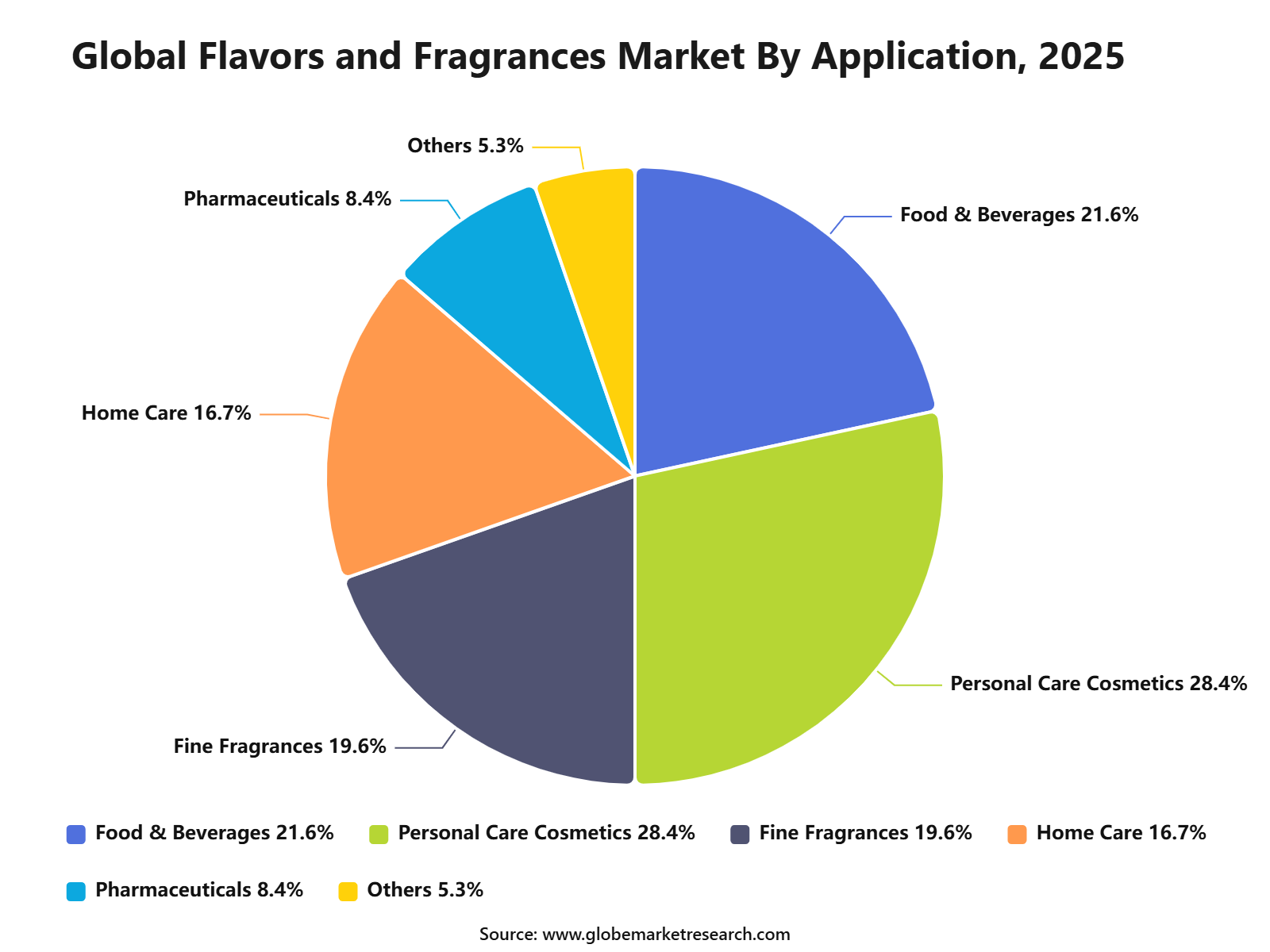 iThe graph shows projected market growth until 2035 based on CAGR analysis. Actual outcomes may vary depending on changing demand, competition, and economic factors.To gain greater insights - request a sample report PDF
By Region
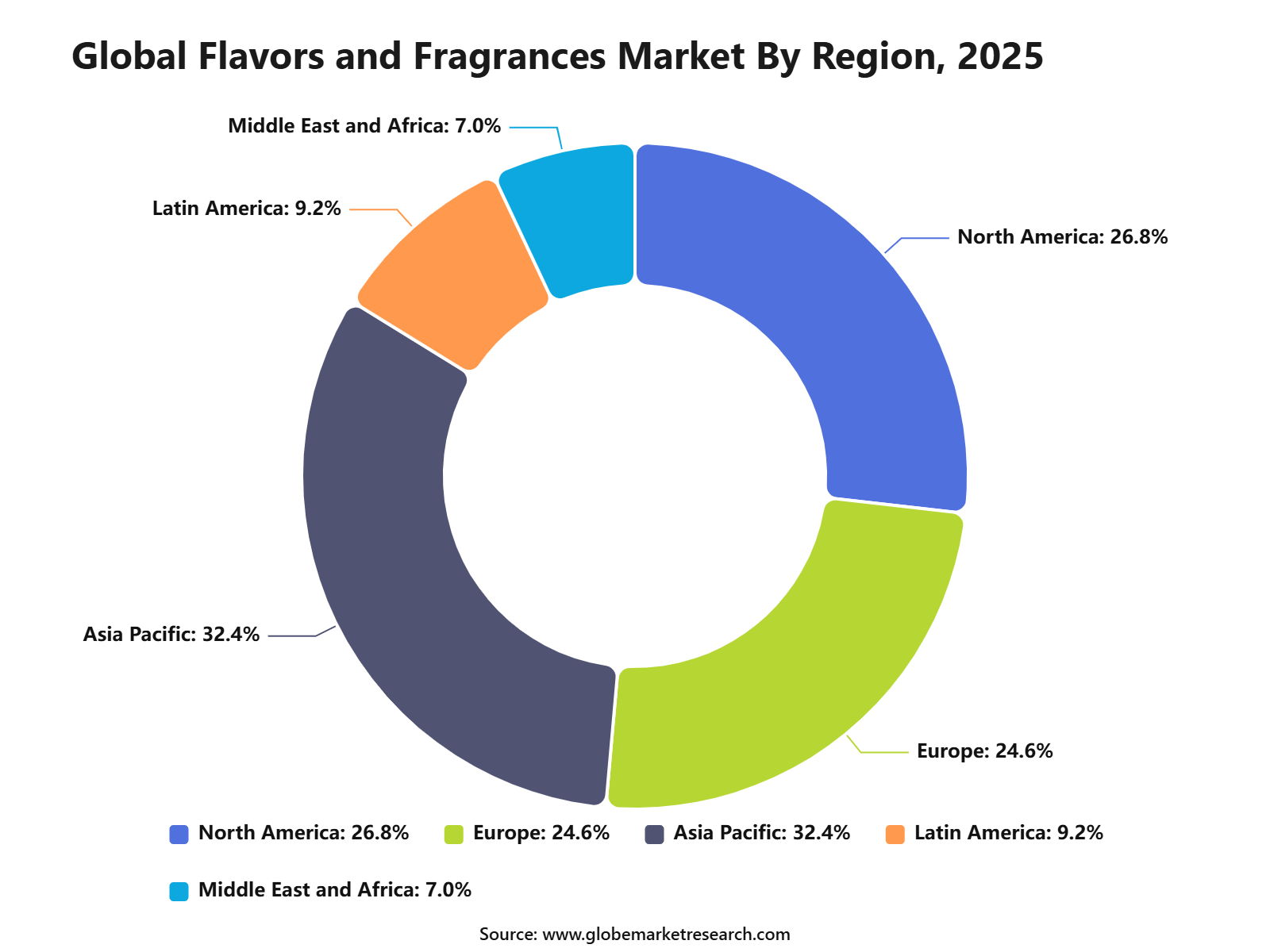
Asia Pacific accounted for 32.4% share of the Flavors and Fragrances Market, reaching USD 10.4 billion. The region’s leadership is supported by large consumer populations, rising disposable income, expanding packaged food demand, and strong growth in personal care and homecare products. China, India, Japan, South Korea, Indonesia, Vietnam, and other Southeast Asian economies are key contributors to regional demand.
The region benefits from fast-growing food processing, beverage production, cosmetics manufacturing, and household care consumption. Asia Pacific is expected to maintain a strong position as urbanization, retail expansion, and lifestyle changes continue to increase demand for flavored and fragranced products. Demand will remain supported by synthetic ingredients, liquid formats, fragrance applications, and rising product innovation across food, beauty, and homecare industries.
 iThe graph shows projected market growth until 2035 based on CAGR analysis. Actual outcomes may vary depending on changing demand, competition, and economic factors.To gain greater insights - request a sample report PDF
Regional Impact Analysis
Asia Pacific leads the Flavors and Fragrances Market with 32.4% share in 2025, valued at around USD 10.4 billion, supported by packaged food growth, cosmetics demand, home care consumption, and rising disposable income. China, India, Japan, South Korea, Indonesia, Thailand, and Vietnam remain major regional contributors.
Europe remains important because of premium fragrances, natural ingredients, fine fragrance heritage, and strict safety standards. North America supports steady value growth through processed foods, beverages, personal care, household products, and strong demand for clean-label and wellness-focused formulations.
Impact Factor | Estimated CAGR Impact | Regional Relevance | Market Impact |
|---|---|---|---|
Asia Pacific market leadership | +2.0% | Asia Pacific, 32.4% share in 2025 | Leads global value demand. |
China food and personal care scale | +1.4% | China | Drives large-volume consumption. |
India packaged food and beauty growth | +1.1% | India | Supports future demand expansion. |
Europe premium fragrance strength | +0.8% | France, Germany, UK, Italy | Adds high-value formulation demand. |
North America clean-label demand | +0.6% | U.S. and Canada | Supports natural flavor growth. |
Go-To-Market and Sales Economics
Flavor suppliers should prioritise beverage, dairy, snack, nutrition, and prepared-food manufacturers through direct technical selling. IFF reported first-quarter 2026 Taste sales of USD 656 million, with comparable currency-neutral sales increasing 2% across all regions. Joint formulation, sensory testing, reformulation support, and faster sample delivery can improve conversion while building recurring revenue from product extensions.
Fragrance companies should target beauty brands, household-care producers, retailers, and contract manufacturers with customised creation and compliance support. Givaudan recorded first-quarter 2026 Fragrance & Beauty sales of CHF 1.004 billion, increasing 5.9% like for like. Fine Fragrance grew 9.6%, while Consumer Products advanced 7.8%, supporting premium and mass-market account strategies.
Regional commercial teams should combine global account management with local consumer insight, application laboratories, and smaller production batches. Givaudan generated CHF 906 million from high-growth markets during the first quarter of 2026, with like-for-like sales rising 4.0%. Local flavor profiles, rapid customer trials, and distributor support can improve access to mid-sized manufacturers and emerging brands.
Risk Factors & Market Barriers
Currency movements can weaken reported revenue even when underlying customer demand remains positive. Givaudan’s first-quarter 2026 sales increased 2.8% like for like but declined 5.2% in Swiss francs, reflecting a 9.2% negative currency effect. Suppliers should use regional production, currency clauses, balanced sourcing, and regular price reviews to reduce earnings volatility across international contracts.
Freight, energy, and raw-material inflation can compress margins when customer pricing is delayed. dsm-firmenich reported first-quarter 2026 sales of EUR 2.276 billion, while a 6% foreign-exchange impact and higher logistics and energy costs affected reported performance. Procurement optimisation, formula flexibility, safety stocks, and indexed contracts are required to protect supply continuity and customer profitability.
Regulatory changes increase reformulation, labelling, traceability, and documentation costs. EU fragrance-allergen transition rules require newly placed cosmetic products to comply by 31 July 2026, while older compliant stock may remain available until 31 July 2028. Deforestation rules covering seven commodities also apply from 30 December 2026, affecting several natural ingredient supply chains.
Revenue Potential Analysis
Revenue Landscape Across
Food and beverage applications provide broad revenue across sweet goods, savoury products, beverages, dairy, snacks, and health-oriented formulations. IFF’s Food Ingredients segment generated first-quarter 2026 sales of USD 839 million, with comparable currency-neutral growth of 3%. Revenue can be expanded through natural flavors, taste modulation, texture systems, colours, preservation, and reformulation services.
Fine fragrance and consumer fragrance offer attractive opportunities because differentiation, brand identity, and product renewal remain important purchasing factors. IFF reported first-quarter 2026 Scent sales of USD 651 million, with comparable growth of 1%. Growth in Consumer Fragrances and Fine Fragrances offset weaker Fragrance Ingredients, indicating stronger potential in finished-product creation and customer-specific fragrance systems.
Pet food, personal care, and household products provide additional revenue beyond traditional food and perfume accounts. Symrise reported first-quarter 2026 Taste, Nutrition & Health sales of EUR 749 million and Scent & Care sales of EUR 500 million. Customer programmes can cover pet palatability, oral care, deodorants, detergents, air care, skin care, and wellness formulations.
Financial Impact
Flavor profitability improves when pricing, formulation expertise, and productivity are managed together. IFF’s Taste segment produced first-quarter 2026 adjusted operating EBITDA of USD 153 million and a 23.3% margin, while comparable EBITDA increased 18%. Higher-value taste modulation, natural solutions, and technical services can raise customer retention and reduce reliance on lower-margin commodity ingredients.
Fragrance earnings remain attractive, but input-cost recovery must be timely. IFF’s Scent segment delivered first-quarter 2026 adjusted operating EBITDA of USD 148 million and a 22.7% margin. Comparable EBITDA declined 2% because unfavourable price-to-input-cost effects exceeded volume and productivity benefits, showing the financial importance of disciplined pricing, sourcing, and product-mix management.
Cash conversion and cost control will determine how effectively sales growth supports investment. Symrise expects a 2026 adjusted EBITDA margin of 21.5% to 22.5% and adjusted business free-cash-flow margin above 14%. Strong working-capital controls, selective capacity expansion, customer-backed innovation, and shorter development cycles can improve returns while preserving funds for laboratories, digital tools, and acquisitions.
Drivers Impact Analysis
The Flavors and Fragrances Market is driven by rising demand from food and beverages, personal care, cosmetics, fine fragrances, home care, and pharmaceuticals. Companies use flavors and fragrances to improve taste, aroma, product identity, consumer appeal, and brand differentiation.
Asia Pacific leads the market due to large consumer populations, expanding packaged food demand, rising personal care spending, and strong growth in cosmetics and home care products. China, India, Japan, South Korea, Indonesia, Thailand, and Vietnam remain major contributors because of changing lifestyles and growing middle-class consumption.
Impact Factor | Estimated CAGR Impact | Regional Relevance | Market Impact |
|---|---|---|---|
Rising packaged food and beverage demand | +1.8% | Asia Pacific, North America, Europe | Drives flavor ingredient consumption. |
Growth in personal care and cosmetics | +1.5% | China, India, South Korea, Japan | Supports fragrance demand. |
Expanding home care product usage | +1.2% | Asia Pacific and emerging markets | Adds aroma-based product value. |
Premiumization in consumer products | +1.0% | Urban and higher-income markets | Supports specialty formulations. |
Innovation in natural and clean-label ingredients | +0.8% | Europe, North America, Asia Pacific | Improves consumer acceptance. |
Restraints Impact Analysis
The market faces restraints from raw material price volatility, strict safety regulations, allergen labeling requirements, and supply pressure for natural ingredients. Essential oils, aroma chemicals, botanical extracts, and specialty ingredients can face cost changes due to weather, crop yield, and logistics issues.
Another restraint is formulation complexity. Food, cosmetic, and fragrance products must meet taste, aroma, stability, safety, and regional regulatory requirements, which increases testing time and development cost.
Impact Factor | Estimated CAGR Impact | Regional Relevance | Market Impact |
|---|---|---|---|
Raw material price volatility | -0.8% | Global ingredient supply chains | Affects margins and pricing. |
Strict safety and labeling rules | -0.7% | Europe, North America, Asia Pacific | Raises compliance cost. |
Limited supply of natural ingredients | -0.6% | Botanical and essential oil markets | Restricts premium product scaling. |
Complex formulation and testing needs | -0.5% | Food, cosmetics, fragrances | Slows product development. |
Competition from low-cost suppliers | -0.4% | Emerging consumer markets | Pressures pricing. |
Opportunities Impact Analysis
Opportunities are strong in natural flavors, natural fragrances, plant-based ingredients, clean-label food additives, fine fragrances, functional beverages, premium cosmetics, and home care scents. These areas benefit from consumer preference for better sensory experiences and safer ingredient profiles.
Higher-value opportunities are emerging in encapsulated fragrances, biotechnology-based aroma molecules, personalized fragrance products, sugar-reduction flavor systems, and long-lasting scent technologies. Companies that combine quality, safety, and regional taste knowledge can capture stronger demand.
Impact Factor | Estimated CAGR Impact | Regional Relevance | Market Impact |
|---|---|---|---|
Natural flavor ingredient expansion | +1.7% | Asia Pacific, Europe, North America | Builds clean-label opportunity. |
Premium fragrance demand | +1.4% | Urban consumer markets | Adds value in beauty and personal care. |
Functional beverage flavor systems | +1.1% | Asia Pacific and North America | Supports health-focused products. |
Encapsulation and long-lasting scent technology | +0.9% | Home care and personal care | Improves product performance. |
Biotechnology-based aroma ingredients | +0.7% | Advanced ingredient markets | Adds sustainable innovation value. |
Challenges Impact Analysis
The main challenge is matching local taste and scent preferences across different markets. Flavors and fragrances are highly cultural, so companies need regional consumer insight, local testing, and flexible formulation capabilities.
Another challenge is balancing natural claims with stable supply and consistent performance. Natural ingredients can vary by crop, season, origin, and extraction method, which makes quality control very important.
Impact Factor | Estimated CAGR Impact | Regional Relevance | Market Impact |
|---|---|---|---|
Regional taste and aroma differences | -0.7% | Asia Pacific, Europe, North America | Requires localized product design. |
Natural ingredient consistency issues | -0.6% | Botanical supply chains | Affects product quality. |
Stability in complex formulations | -0.5% | Food, beverages, cosmetics | Increases testing needs. |
Managing allergen and safety concerns | -0.4% | Fragrance and personal care products | Raises compliance pressure. |
Short product innovation cycles | -0.3% | Consumer goods markets | Requires faster development. |
Segment Covered in the Report
By Product Type
Flavors
Fragrances
By Source
Synthetic
Natural
Nature-Identical
By Form
Liquid
Powder
Others
By Application
Food & Beverages
Personal Care & Cosmetics
Fine Fragrances
Home Care
Pharmaceuticals
Others
By Region
North America
Europe
Asia Pacific
Latin America
Middle East and Africa
Market Trend Analysis
The market trend is moving toward natural ingredients, clean-label flavors, premium fragrances, mood-based scents, functional food flavors, and sustainable sourcing. Consumers are looking for products that feel fresh, safe, pleasant, and aligned with wellness-focused lifestyles.
Asia Pacific remains the largest value region because of strong demand from food, beverages, cosmetics, personal care, and household products. Europe and North America support premium demand through natural ingredients, regulatory compliance, and higher spending on personal care and fine fragrances.
Impact Factor | Estimated CAGR Impact | Regional Relevance | Market Impact |
|---|---|---|---|
Natural and clean-label flavor demand rises | +1.6% | Asia Pacific, Europe, North America | Supports premium formulation growth. |
Premium personal care fragrances expand | +1.3% | China, India, South Korea, Japan | Adds brand differentiation. |
Functional and wellness product flavors grow | +1.0% | Beverages and nutrition markets | Supports health-focused innovation. |
Sustainable sourcing gains importance | +0.8% | Global ingredient buyers | Improves brand trust. |
Personalized fragrance concepts increase | +0.6% | Fine fragrance and beauty markets | Adds niche premium value. |
Investor Type Impact Matrix
Investors should focus on companies with strong sensory science, regional formulation capability, natural ingredient sourcing, regulatory expertise, and relationships with food, beverage, beauty, and home care brands. Innovation speed, quality consistency, and customer co-development are key success factors.
Strategic investors can also target natural flavor producers, specialty fragrance houses, aroma chemical suppliers, essential oil processors, biotechnology ingredient firms, and encapsulation technology providers. Companies that combine local consumer insight with sustainable ingredient supply are better positioned for steady growth.
Investor Type | Estimated CAGR Impact | Regional Relevance | Market Impact |
|---|---|---|---|
Flavor and Fragrance Manufacturers | +1.3% | Global | Expands core ingredient supply. |
Natural Ingredient Suppliers | +1.0% | Asia Pacific, Europe, North America | Supports clean-label demand. |
Specialty Fragrance Houses | +0.8% | Beauty and fine fragrance markets | Adds premium value creation. |
Aroma Chemical Producers | +0.7% | Global formulation markets | Supports scalable production. |
Strategic Consumer Ingredient Investors | +0.5% | Food, beauty, home care markets | Funds innovation and regional expansion. |
Recent Developments
In May 2026, IFF agreed to sell its Food Ingredients business to CVC Capital Partners for approximately USD 4.3 billion, sharpening its portfolio around Taste, Scent, Health, Biosciences, and Pharma Solutions.
In March 2026, Robertet made a strategic investment in Aethera Biotech, combining patented plant-cell CROP technology with Robertet’s natural-ingredient expertise to expand biotechnology-based cosmetic actives and strengthen its Health & Beauty division.
In January 2026, ADM announced a USD 26 million investment at its Erlanger facility, following USD 15 million invested during 2025, expanding customer co-creation capabilities for taste, flavor, color, and reformulation projects.
In February 2026, Givaudan announced a USD 110 million fragrance-compounding facility in Pedro Escobedo, Mexico, expanding regional production capacity, customer service, automation, and supply support across Latin American fragrance categories.
In February 2026, IFF reported continued Taste growth across the portfolio containing former Frutarom operations. No standalone Frutarom development was issued because IFF completed the company’s acquisition and integration in 2018.
Competitive Landscape
The market is characterized by intense competition among established players and emerging companies. Strategic partnerships, mergers and acquisitions, and product innovation are key strategies employed by market participants.
Key Market Players
Givaudan
dsm-firmenich
International Flavors & Fragrances Inc.
Symrise AG
Takasago International Corporation
Mane SA
Sensient Technologies Corporation
Robertet Group
Kerry Group
Archer Daniels Midland Company
Bell Flavors & Fragrances
T. Hasegawa Co., Ltd.
Frutarom
Firmenich
BASF SE
Other Key Players
Research Methodology
This market study is prepared using a combination of primary and secondary research. Primary research includes discussions with manufacturers, suppliers, distributors, consultants, industry experts, and end users. Secondary research covers company reports, government databases, trade associations, technical publications, regulatory sources, and trusted industry documents. The collected information is used to assess market demand, pricing trends, technology adoption, competitive activity, and regional performance.
AI language models are not used as primary data sources, and publicly available AI-generated content is not treated as market evidence. Computational tools may be used to support data processing, translation, data classification, and pattern identification. However, every published assessment is supported by verified sources, human review, and primary market discussions.
Market estimates are developed through top-down and bottom-up approaches and validated using data triangulation. Revenue, production, shipment, pricing, and application-level data are compared across multiple sources. Forecasts consider economic conditions, regulatory changes, investment activity, innovation, supply chain developments, and industry risks. All findings are reviewed through source verification and internal quality checks before publication.
Part I
Source Management & Input Data Standards
Who provides data, how sources are qualified, and what types of evidence are admissible.
Part II
Research Scope & Market Coverage
How we define the markets we assess and the parameters that govern each product.
Part III
Data Collection, Verification & Submission
The mechanics of gathering, cross-checking, and hierarchically ranking evidence.
Part IV
Assessment Determination & Quality Controls
How raw data becomes a published assessment — normalisation, expert judgement, and outlier exclusion.
Part V
Publication, Corrections & Revision
Our publication schedule, corrections policy, and methodology review cycle.
Part VI
Independence, Ethics & Complaints
Conflict-of-interest policies, editorial independence, and how clients raise concerns.
Google · Preferred Sources
Don't miss the latest market research insights and industry updates on Google.
Add Globe Market Research as a preferred source in the Google app to see our reports, analysis, and market stories in your news suggestions.
Meet the Team
This report was prepared by our expert analysts with deep industry knowledge and research experience.
Kimaya brings more than five years of experience in market research, content review, and industry analysis to Globe Market Research. She plays an important role in maintaining the accuracy, clarity, consistency, and relevance of research content across a wide range of industries. Her responsibilities include reviewing market data, segment analysis, competitive landscapes, industry trends, company developments, and strategic insights. Each report is carefully assessed to ensure that the findings are supported by reliable data, presented in a structured format, and aligned with the information needs of business decision-makers. Kimaya has research experience across healthcare, information technology, consumer goods, and several cross-industry domains.
Pratiksha K. is a Senior Research Analyst with more than five years of experience in market research, industry analysis, competitive intelligence, and business strategy. She has contributed to detailed market reports, customized research studies, company profiling, market sizing, trend analysis, and strategic consulting projects for clients across different regions. Her industry expertise covers Chemical and Material, Consumer Goods, Food & Beverages and Energy & Power. She closely evaluates changing customer requirements, technology developments, regulatory conditions, supply chain structures, investment activity, and competitive strategies to provide clear and practical market insights.
Frequently Asked Questions
Related Reports
More in Chemical and Material
Sulfuric Acid Market to Hit USD 61.5 Billion by 2035
Sulfuric Acid Market Size, Share, Analysis By Raw Material (Elemental Sulfur, Base Metal Smelters, Pyrite Ore, Others), By Application (Fertilizers, Chemical Manufacturing, Metal Processing, Petroleum Refining, Textile, Automotive, Pulp and Paper, Others), By Distribution Channel (Direct Sales, Distributors), By Regional Insights, Business plan and Project Report, Investment Opportunities, Profitability, Industry Trends, Leading Companies and Growth Forecasts by 2026-2035
Powder Metallurgy Market to Hit USD 17.0 Billion by 2035
Powder Metallurgy Market Size, Share, Analysis By Material (Ferrous Metals, Non-Ferrous Metals, Others), By Process (Additive Manufacturing, Powder Metal Hot Isostatic Pressing, Conventional Powder Metallurgy), By Application (Automotive, Aerospace and Defense, Healthcare, Electrical and Electronics, Industrial Machinery, Others) , By Regional Insights, Business plan and Project Report, Investment Opportunities, Profitability, Industry Trends, Leading Companies and Growth Forecasts by 2026-2035
Bromine Market to Hit USD 1.5 Billion by 2035
Bromine Market Size, Share, Analysis By Derivative (Organobromine, Clear Brine Fluids, Hydrogen Bromide, Others), By Application (Flame Retardants, Oil and Gas Drilling, Biocides, PTA Synthesis, Plasma Etching, Pharmaceuticals, Energy Storage, Others), By End-Use Industry (Chemicals, Oil and Gas, Pharmaceuticals, Electrical and Electronics, Automotive, Agriculture, Others), By Regional Insights, Business plan and Project Report, Investment Opportunities, Profitability, Industry Trends, Leading Companies and Growth Forecasts by 2026-2035
Hydrogen Cyanide Market to Hit USD 5.95 Billion by 2035
Hydrogen Cyanide Market Size, Share, Analysis By Product Form (Hydrogen Cyanide Liquid, Hydrogen Cyanide Gas), By Application (Adiponitrile, Acetone Cyanohydrin, Sodium Cyanide and Potassium Cyanide, Methionine, Cyanuric Chloride, Others), By End-Use Industry (Chemicals, Mining and Metallurgy, Pharmaceuticals, Agriculture, Textiles, Others), By Regional Insights, Business plan and Project Report, Investment Opportunities, Profitability, Industry Trends, Leading Companies and Growth Forecasts by 2026-2035