Introduction
AI in Digital Marketing Statistics: AI in digital marketing statistics are measurable data points showing how artificial intelligence is being adopted across online advertising, content creation, customer targeting, email campaigns, social media, search marketing, chatbots, lead generation, and sales automation. These statistics measure adoption rates, campaign performance, return on investment, productivity improvement, conversion rates, cost reductions, customer engagement, employment demand, and salary premiums.
AI in digital marketing includes machine learning, generative AI, predictive analytics, natural language processing and computer vision tools used across search advertising, social media, email marketing, content creation and customer relationship management. These technologies help businesses analyse customer behaviour, segment audiences, recommend products, generate advertising materials and adjust campaigns based on performance data. AI agents are also being introduced to coordinate multichannel marketing workflows and customer interactions.
AI is being used to analyse customer behaviour, identify audience segments, generate marketing content, personalize messages, forecast campaign results, score leads, automate bidding, and recommend the next best marketing action. 86.4% of marketers used AI tools in 2026, with content creation, media production, and administrative automation identified as major applications. 75% of marketers had adopted AI by early 2026, although 84% continued to run campaigns that were considered too generic. Discover the latest AI marketing statistics and the key trends shaping the industry’s future growth.
Editor’s Choice
86.4% of marketers were using AI tools in 2026, confirming that AI has become a standard part of marketing operations.
According to Globe Market Research, global Generative AI Market was valued at USD 109.3 billion in 2025 and is projected to reach USD 1,651.8 Bn by 2035, growing at a CAGR of 31.2%.
The global AI market was valued at USD 432.5 billion in 2025 and is projected to reach USD 7,268.1 billion by 2035, growing at a CAGR of 32.6%. North America led the market with a 42.4% share in 2025, while the U.S. market reached USD 133.2 billion and is expected to grow at a 28.9% CAGR, supported by supported by strong enterprise AI adoption, advanced cloud infrastructure, and rising investment in generative AI solutions.
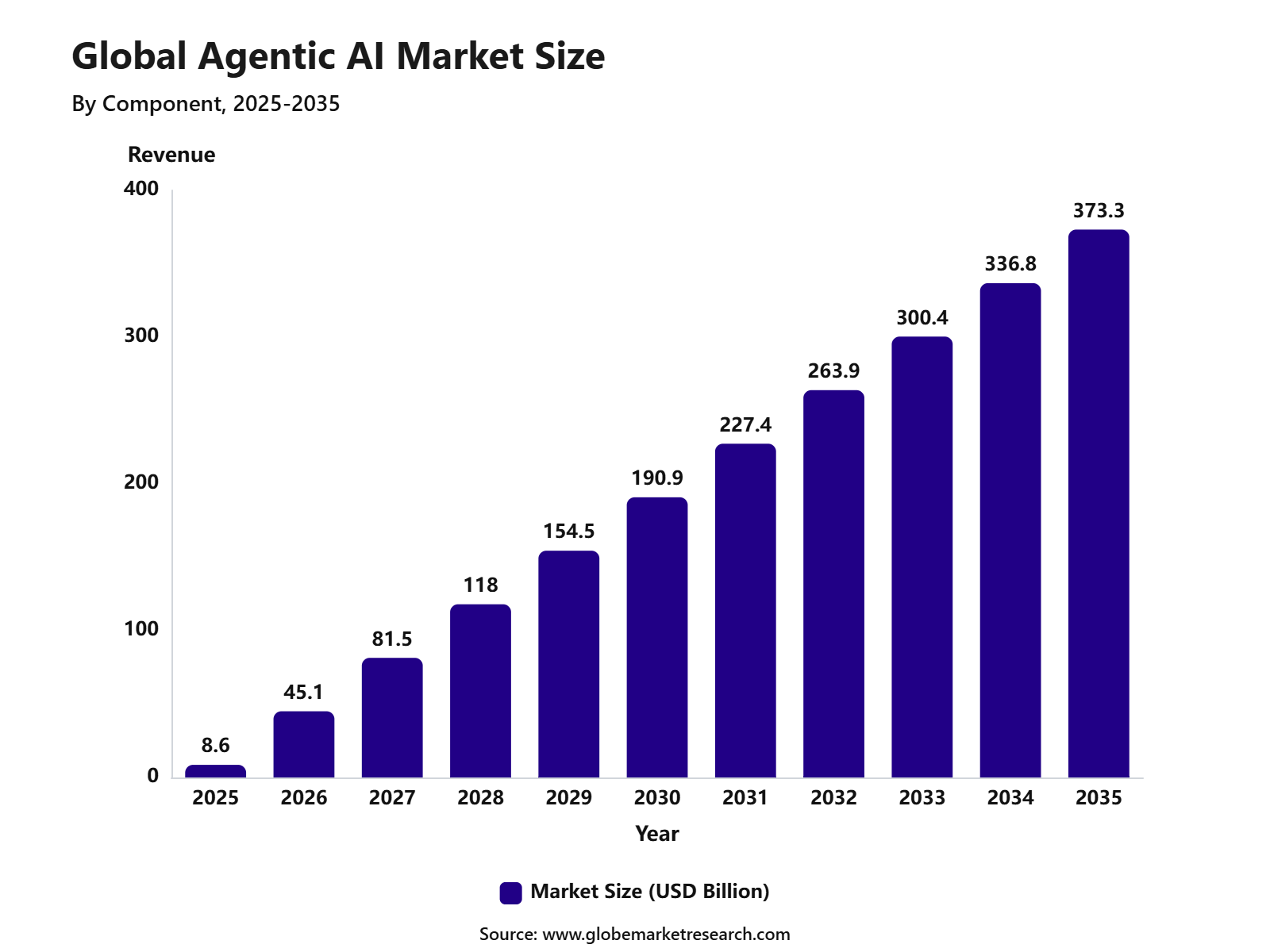
The global Agentic AI market was valued at USD 8.6 billion in 2025 and is projected to reach USD 373.3 billion by 2035, growing at a CAGR of 45.8% during the forecast period.
The global Edge AI Market reached USD 27.9 billion in 2025 and is expected to grow to USD 356 billion by 2035, registering a CAGR of 29%. North America accounted for 40% share in 2025
According to Salesforce, 75% of marketers were turning to AI to meet rising demand for personalized content.
80% of marketers used AI for content creation, while 75% used it for media production.
94% of social media marketers used AI in some part of their workflow, representing a 32% year-over-year increase.
50.77% of marketers used AI for email marketing and newsletter production, making email the most frequently reported AI-supported marketing channel in one 2025 survey.
Marketers applying AI effectively reported an average 20% improvement in ROI and a 19% reduction in costs.
Google reported that AI Max for Search typically generated 14% more conversions or conversion value at a similar CPA or ROAS.
For search campaigns relying mainly on exact-match and phrase-match keywords, AI Max produced a typical performance increase of 27%.
37% of sales representatives used AI tools in 2025, making AI the most widely used sales technology category in the survey.
83% of sales teams using AI reported revenue growth, compared with 66% of teams that were not using AI.
Jobs requesting AI skills offered salaries that were approximately 28% higher, equal to about USD 18,000 more annually, than comparable jobs without AI requirements.
The broader global wage premium for workers with AI skills reached 62% in 2026, increasing from approximately 57% in the previous study.
51% of consumers preferred interacting with a bot rather than a human when immediate service was required.

AI in Digital Marketing Market Size and Growth
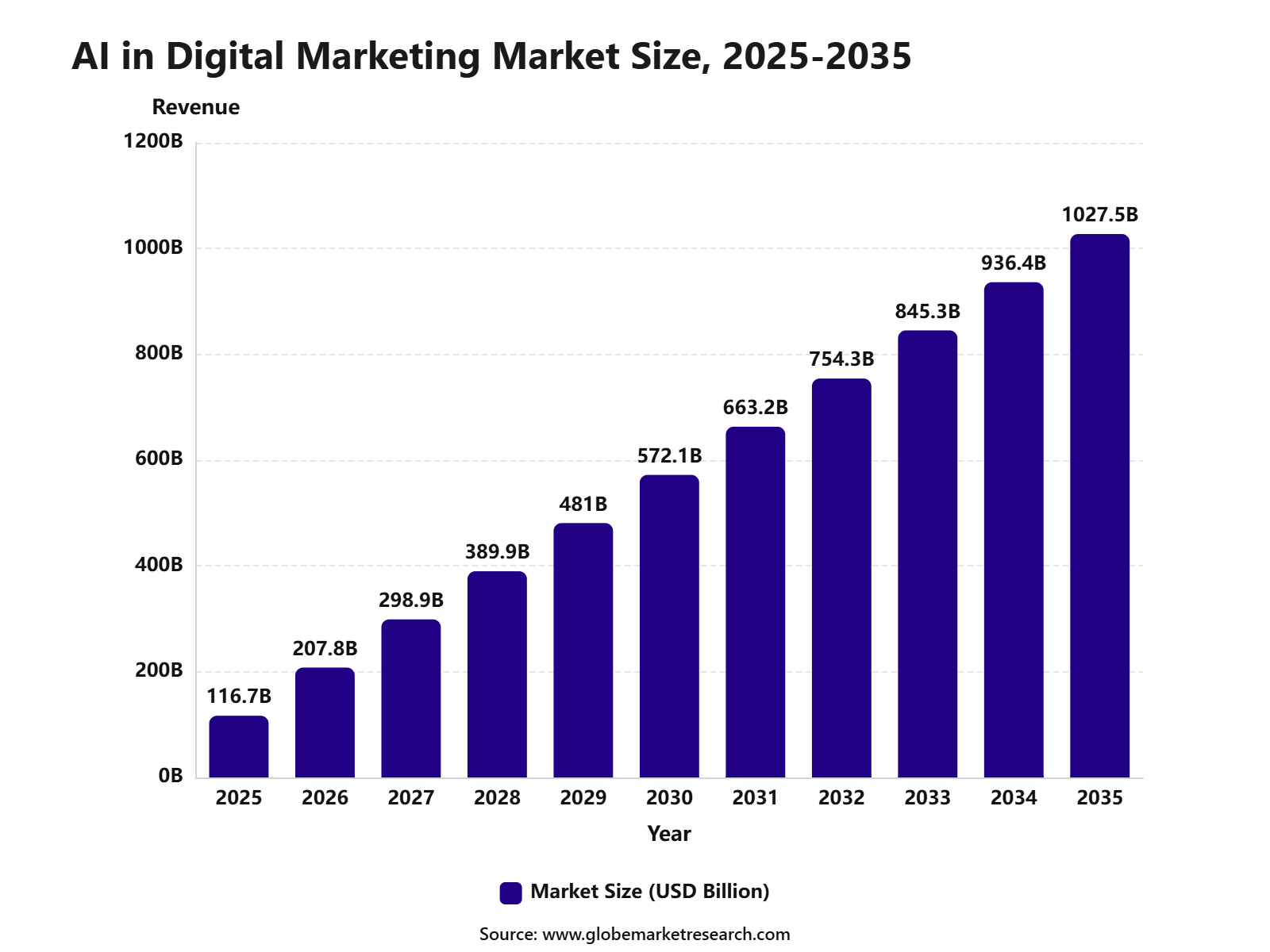
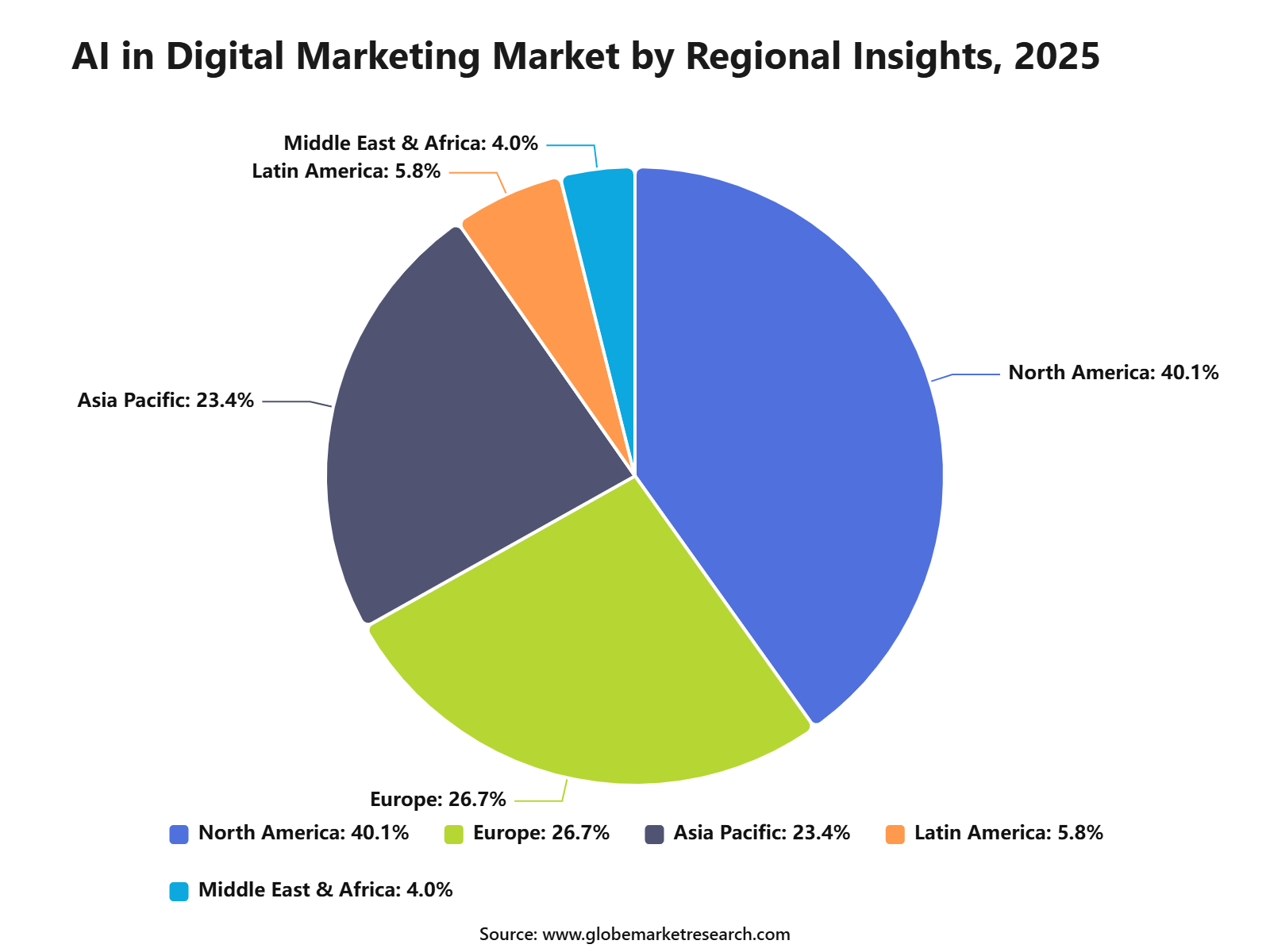
Findings from Globe Market Research suggest that global AI in Digital Marketing Market was worth USD 116.7 billion in 2025 and is expected to reach USD 1,027.5 billion by 2035, growing at a CAGR of 24.3% from 2025 to 2035. North America held the largest regional share of 40.1% in 2025, representing approximately USD 46.8 billion. Market growth is being supported by higher digital advertising expenditure, expanding e-commerce activity and rising demand for personalised customer engagement, automated content creation and real-time campaign optimisation.
Demand is also being influenced by the continued expansion of digital advertising and rapid adoption of AI among marketing teams. U.S. internet advertising revenue reached USD 294.6 billion in 2025, increasing by 13.9% from the previous year. Salesforce reported in February 2026 that 75% of marketers were using AI, although only 13% had adopted agentic AI. These figures indicate strong demand for AI-powered campaign management, personalisation, audience analytics, content generation and advertising automation tools.
Key Parameter | Report Details |
|---|---|
Market Revenue, 2025 | USD 116.7 Billion |
Projected Revenue, 2035 | USD 1,027.5 Billion |
CAGR, 2025-2035 | 24.3% |
Largest Region | North America, 40.1% Share |
Market Concentration | Medium |
Base Year | 2025 |
Forecast Period | 2025-2035 |
AI in Digital Marketing Market Share Statistics
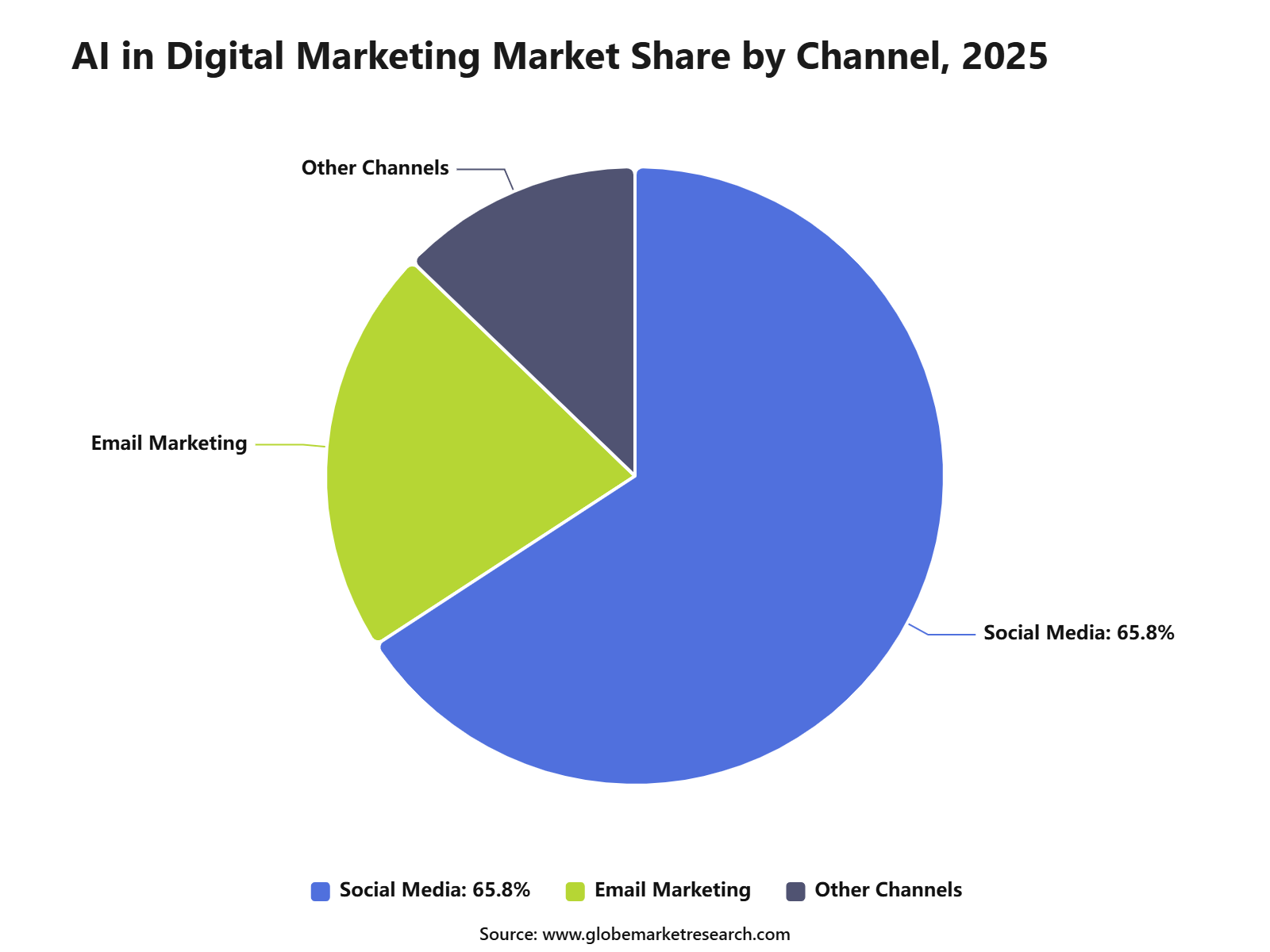
Social media marketing dominated the channel segment with a 65.8% share. Growth was supported by the increasing use of AI for audience targeting, content scheduling, sentiment tracking, personalized advertising, and campaign measurement.
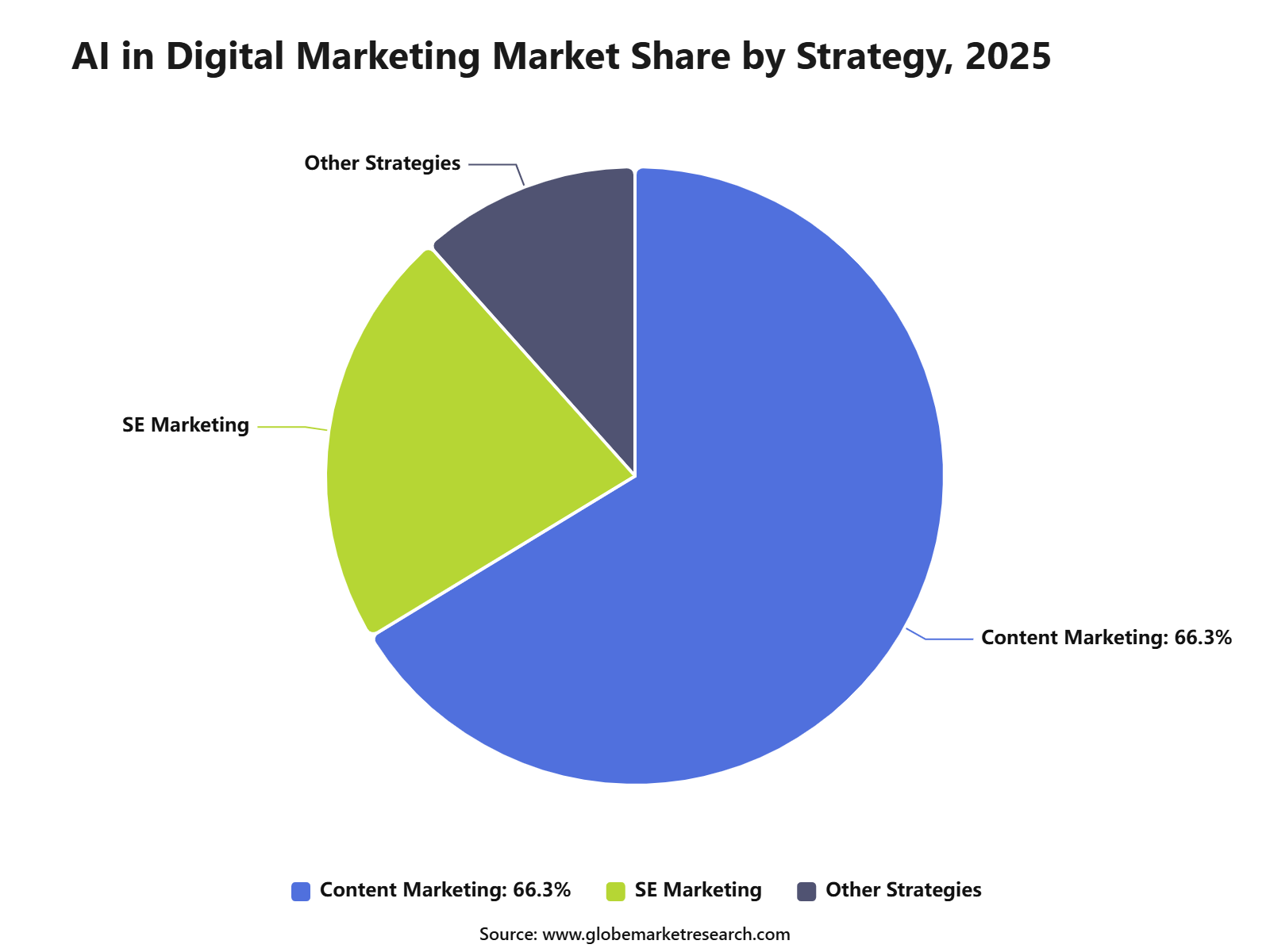
Content marketing held a 66.3% share of the strategy segment. AI tools are widely used to create content, improve keyword targeting, understand customer intent, and recommend relevant content to users.
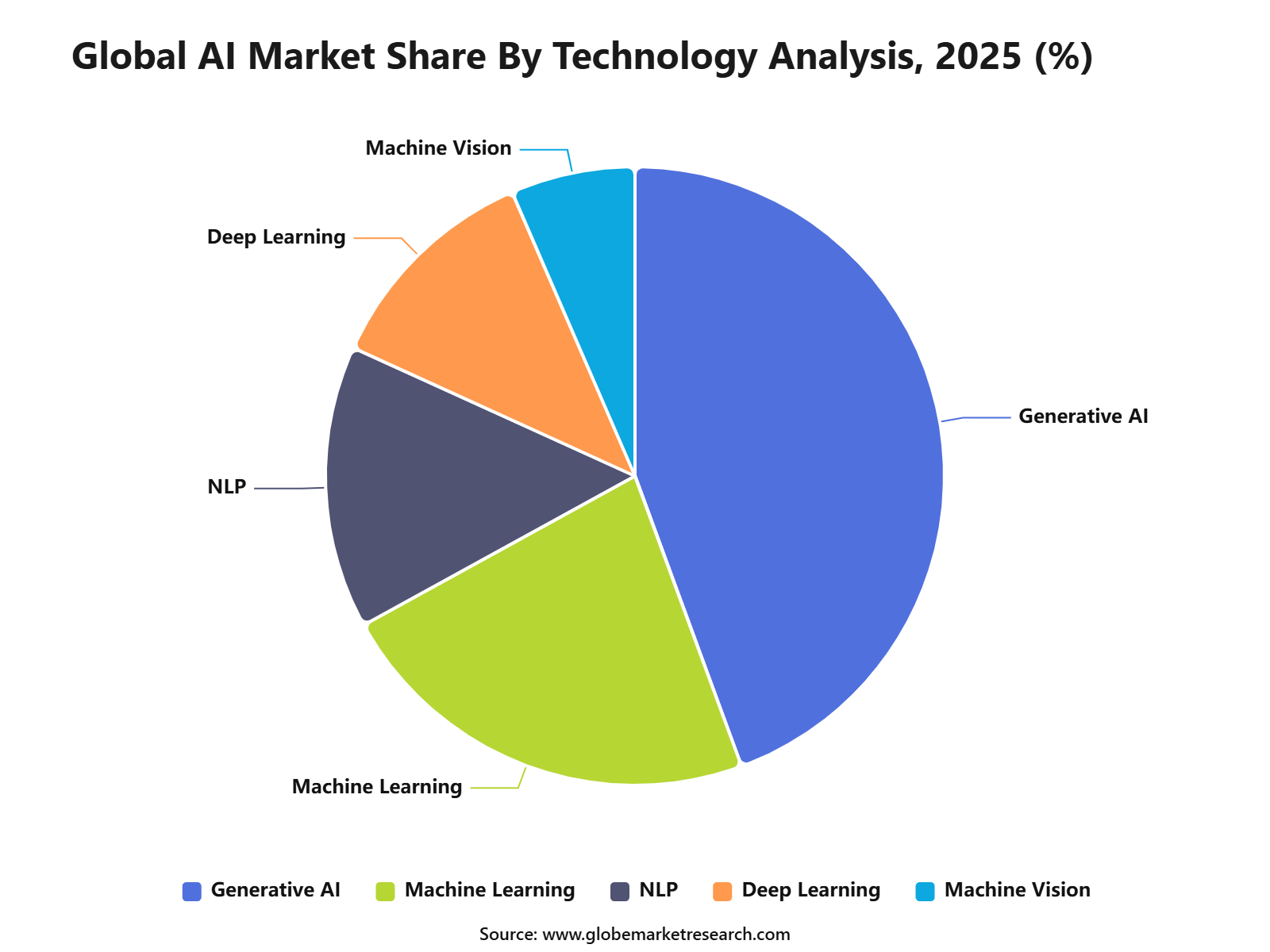
Machine learning accounted for a 63.2% share of the technology segment. Its leading position was driven by strong use in predictive analysis, customer grouping, lead scoring, campaign improvement, and real-time personalization.
Retail represented a 34.4% share of the end-user segment. Retailers are increasingly using AI for product recommendations, personalized offers, customer journey analysis, and improved sales conversion.
North America led the AI in digital marketing market with a 40.1% share. The region benefited from high digital advertising expenditure, early adoption of AI tools, advanced marketing technology, and strong demand for data-based customer engagement.
Impact of Agentic AI on the Digital Marketing Market
Agentic AI is improving digital marketing by automating audience segmentation, content creation, media buying, campaign scheduling and real-time performance optimization. According to Salesforce’s 2026 State of Marketing report, 75% of marketers have adopted AI, 85% said AI is changing their SEO strategies and 88% have started optimizing content for ChatGPT, Google AI Overviews and other AI-generated responses.
Agentic AI is also supporting personalized customer journeys across marketing, sales and service channels. According to Adobe’s 2026 research, 56% of B2B organizations expect agentic AI to coordinate these journeys in real time, while 59% ranked personalized customer experiences as their leading AI investment goal. However, only 41% have a unified customer data foundation, and 72% reported skills shortages as a major adoption barrier.

Recent Developments
In February 2026, a global survey of nearly 4,500 marketing leaders found that 75% had adopted AI, while 69% still struggled to respond to customers promptly and 84% continued to send generic campaigns.
In April 2026, Google moved AI Max for Search out of beta after adoption had expanded to hundreds of thousands of advertisers globally.
In May 2026, Google introduced new advertising formats within AI Mode. The company reported that 75% of surveyed users made faster and more confident decisions when using the AI-supported search experience.
In January 2026, Meta reported that advertising system improvements delivered a 7% performance lift during 2025. U.S. revenue from click-to-message advertisements grew by more than 50% year over year in the fourth quarter.
Adoption Rate Statistics
According to SurveyMonkey, 88% of marketers use AI in their day-to-day roles, showing that AI has become a regular tool for campaign planning, content work, customer engagement, and marketing productivity. 63% of marketers are using generative AI for marketing activities such as content creation, campaign development, customer messaging, and digital engagement.
According to Constant Contact, 87% of U.S. small businesses were using AI in marketing by April 2026, up sharply from 26% in 2023. 37% of small businesses clearly label AI-generated content, showing rising focus on transparency in digital marketing. 46% of consumers want businesses to clearly label AI-generated content, making trust and disclosure important for AI-led marketing.
88% of organizations reported regular AI use in at least one business function, supporting broader AI adoption across marketing, sales, service, and operations. 39% of organizations have started experimenting with AI agents, which may support future use of autonomous marketing workflows.
23% of organizations are already scaling agentic AI systems across at least one business function.
According to HubSpot, 47.18% of marketers said they understand how to include AI in their marketing strategy. 47.63% of marketers said they know how to measure the impact of AI in marketing strategy.
Usage Area Statistics
According to HubSpot, 80% of marketers use AI for content creation, including blogs, emails, captions, social posts, landing pages, and campaign copy. 75% of marketers use AI for media production, including videos, images, ad creatives, animations, and other visual assets.
93% of marketers use automation for administrative tasks such as scheduling, notes, documentation, and workflow support. 92% of marketers use automation for data analysis and reporting, helping teams track campaign performance more efficiently.
47% of marketers use automation to improve marketing process efficiency. 37% of marketers said leads are more informed because of AI-driven content, targeting, and customer education.
93% of marketers reported that personalization improves leads or purchases. 45% of marketers use smart or AI image editing tools for visual content creation.
44% of marketers use AI video or animation generators for marketing videos and motion content. 46% of consumers want businesses to clearly label AI-generated content, making trust and disclosure important for AI-led marketing.

AI Marketing Investment and ROI Trends
Marketers deploying AI effectively reported an average 20% improvement in marketing ROI and a 19% reduction in operating costs.
Marketing and sales produced some of the most frequently reported AI-related revenue increases across business functions in 2025.
Only 25% of enterprise AI initiatives had generated their expected ROI, showing that adoption does not automatically result in financial returns.
Only 16% of AI initiatives had been scaled across the enterprise, indicating that many businesses remained focused on pilot projects and individual use cases.
65% of CEOs said their organizations were prioritizing AI projects according to expected ROI, while 68% reported having clear measures for evaluating innovation returns.
Only about 6% of surveyed organizations qualified as AI high performers, defined as businesses reporting an AI-related EBIT contribution of at least 5% and significant business value.
One B2B implementation reduced campaign production time from 25 days to nine days, providing a practical example of how AI investment can improve operational efficiency before direct revenue gains are measured.
AI investments are producing stronger returns when customer data, campaign measurement, human review, workflow integration, and clear performance targets are established before deployment.
AI Advertising and PPC Statistics
Google reported that advertisers activating AI Max for Search typically achieved 14% more conversions or conversion value at a similar CPA or ROAS.
Campaigns relying mainly on exact-match and phrase-match keywords experienced a typical AI Max performance improvement of 27%.
Hundreds of thousands of advertisers had adopted AI Max globally by April 2026, leading Google to move the product beyond its beta stage.
Meta reported that AI-supported advertising improvements generated an overall 7% performance lift during 2025.
Meta’s Advantage+ Audience generated a reported 15% reduction in cost per result for brand-awareness campaigns.
An automotive advertising campaign using AI-supported placements generated an 18% increase in lead volume and a 34% reduction in cost per lead. Results were based on an individual campaign and should not be treated as a universal benchmark.
U.S. revenue from click-to-message advertising increased by more than 50% year over year during the fourth quarter of 2025.
Paid WhatsApp messaging exceeded an annualized revenue level of USD 2 billion during the fourth quarter of 2025, reflecting growing business use of conversational advertising.
75% of surveyed users said AI Mode helped them make faster and more confident purchase decisions, supporting the introduction of more personalized advertising inside AI search experiences.
AI in Sales Automation and Lead Generation
37% of sales representatives used AI tools in 2025, making AI the most frequently used sales technology category in the survey.
31% of sales representatives identified AI as the sales tool producing the highest ROI.
84% of AI-using sales professionals said the technology saved time and improved business processes.
83% said AI improved the personalization of prospect interactions, including emails, recommendations, sales calls, and follow-up communication.
82% said AI produced better insights from customer and sales data, helping teams identify opportunities and prioritize accounts.
83% of sales teams using AI recorded revenue growth, compared with 66% of sales teams that were not using AI.
Lead quality improved year over year for 68% of surveyed sales professionals, while AI was increasingly being used for lead scoring, prospect research, outreach preparation, and follow-up automation.
An AI-supported automotive campaign generated an 18% increase in lead volume and a 34% reduction in cost per lead, demonstrating the potential value of automated audience and placement optimization.
AI-related revenue increases were reported most frequently in marketing and sales, strategy and corporate finance, and product or service development during 2025.
Effective sales automation is being supported by predictive lead scoring, automated data entry, prospect prioritization, personalized outreach, conversation summaries, pipeline forecasting, and recommended next actions.
Common AI in Digital Marketing Usage Areas
Content marketing: AI is used for blog writing, captions, email copy, landing pages, product descriptions, and campaign messages.
Social media: AI supports post ideas, scheduling, hashtag suggestions, audience insights, and sentiment analysis.
SEO: AI helps with keyword research, content optimization, search intent analysis, topic clustering, and ranking improvement.
Paid advertising: AI is used for ad copy generation, creative testing, audience targeting, bid support, and performance tracking.
Email marketing: AI supports subject lines, customer segmentation, personalization, A/B testing, and send-time optimization.
Customer analytics: AI helps analyze customer behavior, churn signals, lead scoring, purchase prediction, and campaign response.
Creative design: AI supports image editing, video generation, design variations, brand assets, and campaign visuals.
Marketing automation: AI helps manage workflow routing, campaign triggers, CRM updates, reporting, and lead nurturing.
Conclusion
AI is becoming a standard part of digital marketing, with its use expanding across advertising, content creation, email campaigns, social media, customer service, lead generation, and sales automation. According to Salesforce, 75% of marketers were using AI to support personalization, while according to HubSpot, 94% of social media marketers had integrated AI into their workflows.
The strongest results are being achieved when AI is supported by reliable customer data, clear performance measures, human review, and well-defined marketing goals. Businesses should focus on conversion improvement, lead quality, customer acquisition cost, campaign speed, engagement, retention, and revenue impact rather than measuring success only through the volume of AI-generated content.